Separate the data center's wastewater streams
A Kingston, Jamaica data center should establish separate treatment pathways for cooling tower blowdown, domestic sewage, RO or softener backwash, equipment-cleaning wastewater, and air-handling condensate. Cooling blowdown is concentrated by evaporation and normally carries treatment chemicals, so a sanitary wastewater package cannot be assumed to handle it. The project team should document each stream’s design flow, temperature, chemical program, seasonal variation, and destination before selecting equipment. This boundary-setting follows the data center cooling blowdown treatment methodology while avoiding reliance on US regulatory frameworks.
Cooling tower blowdown is the principal process-wastewater stream. It is discharged to control the accumulation of dissolved minerals, suspended matter, and treatment chemicals in the circulating loop. Domestic sewage is a separate sanitary stream associated with restrooms, kitchens, and staff facilities. RSP Engineers describes these as separate wastewater streams with different discharge characteristics and permitting pathways; its article notes that sanitary flow is typically minor compared with the potential volume of blowdown.
Other streams belong in the site water balance even when their flows are smaller. These include softener regeneration waste, RO reject or backwash, equipment-cleaning wastewater, and air-handling condensate. Their destinations may differ: some may be suitable for controlled discharge after assessment, while others may be reusable or require segregation because of their chemical content.
| Stream | Design data to document | Treatment boundary |
|---|---|---|
| Cooling tower blowdown | Average and peak flow, temperature, cycles of concentration, chemical inventory | Characterize independently before discharge or reuse |
| Domestic sanitary sewage | Peak flow, fixture discharge characteristics, intended sewer route | Coordinate with the receiving wastewater system; do not combine by default |
| RO reject and softener backwash | Flow, salinity, regeneration chemicals, backwash frequency | Identify whether to segregate, pretreat, or reuse |
| Equipment-cleaning wastewater | Cleaning agents, episodic flow, holding requirements | Segregate if incompatible with the cooling-water train |
| Air-handling condensate | Seasonal flow, possible contaminants and discharge point | Evaluate separately; do not assume it is equivalent to blowdown |
The first procurement gate is therefore a signed stream register, not a treatment-skid quotation. Each entry should identify the intended destination, the party responsible for approval, and the water-quality data still needed. Until that register is complete, a single combined system remains an assumption rather than a defensible design basis.
Characterize Kingston cooling blowdown before choosing treatment
Cooling blowdown commonly enters treatment at a substantially different chemical quality from the water that supplied the cooling loop. HydropureWater’s 2026 guide gives benchmark values of 5,000–10,000 mg/L TDS and 50–200 NTU turbidity for data-center blowdown. These figures are screening benchmarks, not site measurements or Jamaican limits, so Kingston sampling must establish the actual design basis.
Begin with a representative sampling plan covering normal operation, peak loading, seasonal change, and chemical-program transitions. The analytical suite should include pH, conductivity or TDS, suspended solids, turbidity, temperature, residual chlorine or the selected biocide, corrosion inhibitors, antiscalants, phosphates, sulfates, chlorides, and relevant metals. Include the full cooling-water chemical inventory because active ingredients, concentrations, and dosing frequency affect both treatment compatibility and approval.
RSP Engineers indicates that a required pH range is often between 6.0 and 9.0 in its process-wastewater guide. Treat that value as a prompt to confirm the applicable jurisdiction-specific requirement, not as a Jamaican standard. A pH adjustment skid may address acidity or alkalinity, but it does not remove dissolved salts, suspended solids, residual treatment chemicals, or biocide compounds.
| Parameter or input | Why it controls the design | Evidence or required action |
|---|---|---|
| TDS and conductivity | Indicate dissolved-solids loading and concentration in the cooling loop | HydropureWater’s 2026 guide gives 5,000–10,000 mg/L TDS as a typical blowdown benchmark; sample the Kingston stream |
| Turbidity and suspended solids | Determine pretreatment needs before RO or sensitive reuse | HydropureWater’s 2026 guide gives 50–200 NTU as a typical benchmark |
| pH | Controls corrosion, chemical dosing, and biological compatibility | RSP Engineers gives 6.0–9.0 as an often-required range outside its example; confirm locally |
| Temperature | Affects biological activity, chemical reactions, and receiving-system constraints | Measure the design and maximum temperatures |
| Chemical inventory | Determines residual toxicity, membrane compatibility, and reuse constraints | Obtain product names, active ingredients, concentrations, and dosing data |
Cycles of concentration must be calculated from the actual operating data because they link blowdown volume to dissolved-solids loading. Makeup-water salinity, evaporation, chemical additions, operating temperature, and seasonal changes can all shift the mass balance. Equipment materials also matter where copper, zinc, or other metals may enter through corrosion. Where the result will drive membrane, biocide, or discharge treatment, request a vendor-funded automatic chemical dosing system specification that ties pH or chemical control to measured demand and operating interlocks.
Choose between discharge, non-potable reuse, cooling makeup, and zero liquid discharge

The end-use decision determines the required water quality, pretreatment, monitoring, and residual-management system. A Kingston project should compare four routes before selecting a skid: controlled discharge, non-potable reuse, cooling-makeup reuse, and zero liquid discharge. This comparison should use confirmed local requirements and actual reuse demand rather than generic equipment catalogues.
For controlled discharge, obtain written direction from the relevant Jamaican wastewater and environmental authorities. Identify the receiving sewer, connection requirements, pretreatment obligations, monitoring, and whether an industrial-user-type approval applies. The supplied research discusses US industrial-pretreatment and NPDES frameworks, but it provides no Jamaican numeric discharge limits. Those US mechanisms must not be presented as Jamaican law.
Non-potable reuse—examples identified by RSP Engineers include landscape irrigation, dust control, and toilet flushing—requires the receiving system’s water-quality and public-health criteria to be confirmed. The receiving user or authority should define acceptance parameters rather than leaving them to the equipment supplier.
Cooling-makeup reuse imposes additional corrosion, scaling, biological-control, and heat-transfer requirements. HydropureWater’s 2026 guide states that high-efficiency cooling loops may require effluent TDS below 1,000 mg/L. That value is a design benchmark from the source, not a Kingston permit condition or a universal site target. The final limit must follow the selected cooling configuration, makeup chemistry, and operating strategy.
Zero liquid discharge should be reserved for sites whose water value, residual-disposal route, energy demand, footprint, and staffing capability support its added complexity. It is not the automatic first choice. For a defined cooling-loop application, HydropureWater’s 2026 guide reports RO recovery of 75–90% once feed turbidity is below 1 NTU and antiscalant is used; the recovered water then requires a separate destination, while the residual brine requires a disposal plan.
| Treatment route | Primary objective | Key gate before equipment selection |
|---|---|---|
| Controlled discharge | Meet confirmed sewer or receiving-water requirements | Obtain local limits, approval route, pretreatment specification, and monitoring conditions |
| Non-potable reuse | Replace demand for potable or fresh water | Confirm end-use quality, public-health controls, storage, and distribution requirements |
| Cooling-makeup reuse | Recover blowdown as cooling makeup | Set site-specific chemistry, corrosion, scaling, and biological-control targets |
| Zero liquid discharge | Minimize liquid discharge through concentration and residual management | Prove brine disposal, utilities, footprint, energy, operator capability, and economics |
For a recoverable cooling-water basis, evaluate an industrial RO system for cooling-water reuse against the confirmed water-quality target, feed chemistry, recovery, membrane compatibility, and brine destination.
Build the pretreatment train that protects downstream equipment
Cooling blowdown requires pretreatment to prevent contaminants from impairing membranes, biological systems, reuse equipment, or receiving infrastructure. The train should follow the chemistry rather than follow a generic equipment list.
Start with equalization where flow, temperature, or composition varies. A holding tank can reduce short-term loads and, where necessary, cool the stream before biological treatment or discharge. RSP Engineers gives 150°F only as an example of a possible maximum-temperature limit in its guide; it is not a Jamaican requirement. The project must obtain the receiving-system temperature condition and use the actual Kingston blowdown temperature profile.
Where the confirmed receiving condition requires pH correction, use automatic acid or caustic dosing with a control strategy based on measured pH. This stage should have a defined target, alarm response, and chemical inventory. It should not be presented as complete pretreatment for a concentrated, chemically dosed stream.
Use a DAF system for cooling blowdown pretreatment where suspended solids, free or emulsified oil, FOG, or colloidal material must be removed before finer filtration. HydropureWater’s 2026 guide reports DAF removal of 92–97% of TSS and oils for high-turbidity pretreatment. That performance belongs to the cited source and application; the Kingston design must establish feed characteristics and guarantee an appropriate outlet basis.
Use multi-media filtration or ultrafiltration when the objective requires solids and colloid removal before RO. HydropureWater’s UF specification identifies 0.03-micron PVDF membranes, capacity from 2,000–40,000 L/h, automatic backwash, and air scour. These are equipment specifications, not a Kingston capacity recommendation. The selected system still requires flow, pressure, recovery, and feed-quality verification. A related UF water treatment system should be evaluated as a pretreating barrier where its specified performance matches the confirmed duty.
| Treatment function | Equipment response | Design limitation |
|---|---|---|
| Flow and temperature buffering | Equalization and controlled holding | Do not use an example temperature threshold as a local standard |
| pH correction | Automatic chemical dosing and monitoring | Does not remove TDS, solids, or dissolved treatment chemicals |
| Oil, FOG, and floatable solids removal | DAF with appropriate recycle and solids handling | Performance depends on feed and operating conditions |
| Suspended-solids and colloid barrier | Multi-media filtration or UF | Must be matched to flow, pressure, and downstream sensitivity |
| Chemical removal | Treatment selected for the specific compound and receiving route | Filtration does not automatically remove dissolved antiscalant, corrosion inhibitor, or biocide residuals |
Chemical removal or compatibility must be treated as a separate design input. A filter that removes particles does not necessarily remove dissolved antiscalant, corrosion inhibitors, or biocide residuals. Obtain product data sheets and membrane-compatibility statements before freeze.
Add biological, membrane, and disinfection stages only when the reuse target requires them
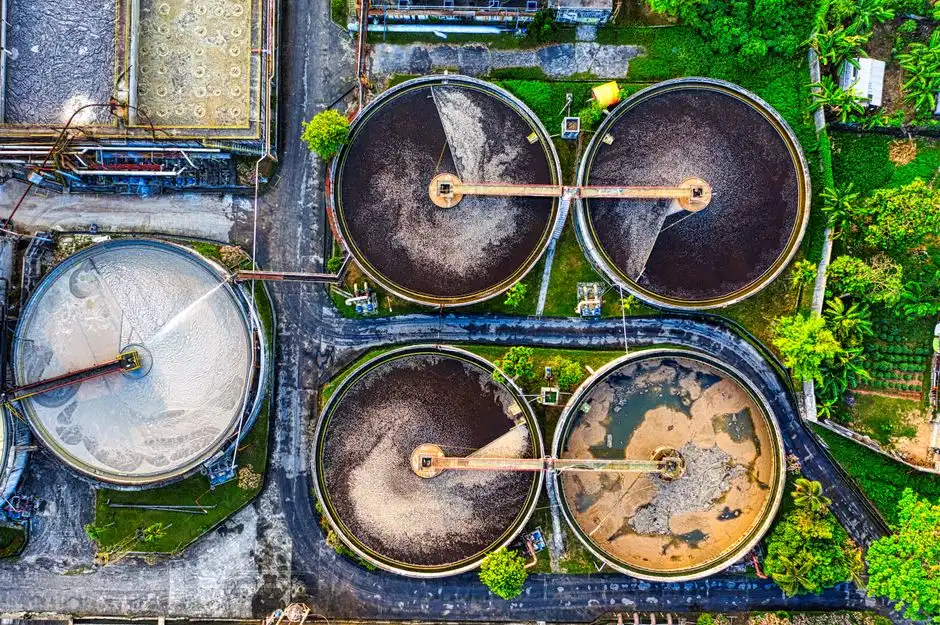
Advanced treatment should be justified by the confirmed reuse specification, not added as a generic sustainability feature. A biological stage, a membrane salt-removal stage, and a disinfection stage solve different problems, and selecting one does not substitute for the others.
Use an MBR where organic loading and membrane-quality reuse justify the added biological and solids-retention functions. HydropureWater’s 2026 guide identifies MBR for COD of 100–500 mg/L where the RO feed must remain below 1 NTU and reports effluent turbidity below 1 NTU. These values describe the cited application, not a presumption that Kingston blowdown contains that COD range. A MBR integrated wastewater treatment system should be selected only after representative COD, biodegradability, and flow data are available.
Use industrial RO when the reuse target requires dissolved-solids reduction. HydropureWater’s product catalogue states recovery rates up to 95%, while the same company’s cited cooling-loop application reports 75–90% recovery under suitable pretreatment conditions, including feed turbidity below 1 NTU and antiscalant use. The lower application-specific range is the more relevant benchmark for an early cooling-blowdown design, but the supplier must guarantee recovery against the actual Kingston feed and operating envelope.
Use chlorine dioxide where the treatment and reuse program requires on-site microbial control. HydropureWater lists industrial cooling loops and process wastewater among its applications for its chlorine dioxide generator. The project still needs to define the control objective, dose, contact arrangement, residuals, materials compatibility, and operator exposure controls.
DAF and filtration remove physical contaminants; they do not resolve the COD and biodegradability question. An MBR addresses organics and provides a solids-separation barrier, but it does not remove the dissolved-salt load addressed by RO. The advanced train should be assembled from measured objectives: organics, dissolved salts, particulates, and microorganisms.
Plan permitting, monitoring, footprint, and operations before ordering equipment
Jamaican regulatory confirmation is a critical-path project task because the supplied research contains no Jamaican numeric permit limits. Engage the relevant environmental and wastewater authorities early to confirm the discharge destination, pretreatment requirements, monitoring, sampling, and approval process. The project should not assume that a US industrial pretreatment, NPDES, or water-reuse framework governs the Kingston site.
Build a treatment mass balance rather than sizing from cooling-makeup flow alone. Include blowdown, segregated process streams, average and peak wastewater flows, evaporation, reuse demand, recovered-water storage, residual brine, treatment sludge, spent media, and chemical waste. Each residual needs a named destination and responsible party.
Reserve space for equalization, treatment skids, tanks, pumps, controls, chemical delivery, spill containment, drainage, maintenance access, and future resilience. RSP Engineers states that simple pH neutralization may occupy a few hundred square feet, while filtration and chemical precipitation can require several thousand square feet. Those figures are footprint examples from the cited source, not a Kingston allowance; the supplier’s packaged and installed dimensions should govern the site plan.
Specify monitoring for flow, pH, temperature, conductivity or TDS, turbidity, and treatment-specific parameters. Include representative sample points, calibration requirements, data logging, alarms, and the operating response for an upset. Permit reporting and laboratory analysis must also be assigned to the operations team.
| Pre-order package | Required content |
|---|---|
| Authority interface | Receiving point, applicable approvals, connection process, required analyses, and unresolved questions |
| Mass and residue balance | All wastewater streams, reuse demand, brine, sludge, spent media, and chemical waste |
| Site and utilities | Installed footprint, access, drainage, containment, power, water, drainage connections, and future expansion |
| Operations handover | Chemical inventory, membrane compatibility, controls, monitoring, cleaning, start-up, training, and spare parts |
Freeze the commercial specification only after receiving a complete chemical inventory, membrane-compatibility review, start-up sequence, cleaning plan, and trained-operator handover. The data center cooling blowdown treatment methodology provides a useful integration reference, but Kingston authority decisions and site chemistry remain the governing inputs.
Use a five-stage decision framework for Kingston data center procurement
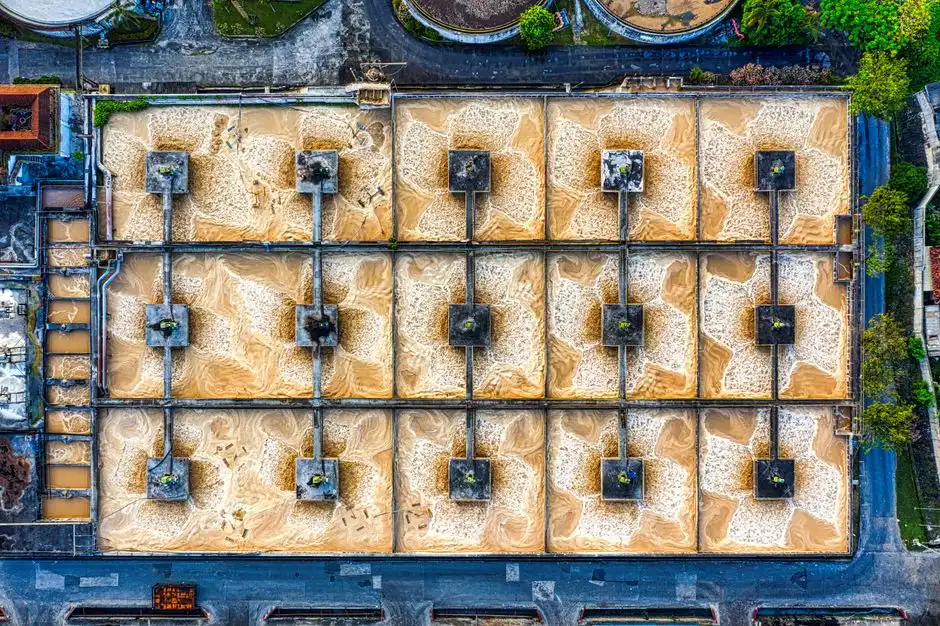
A five-stage design gate prevents treatment selection from outrunning the available data and local approvals. Each stage should have a documented output and a hold point: the project should not advance until the required evidence is accepted by the relevant design and operations leads.
- Establish the water balance and chemistry. Obtain cooling configuration, makeup-water quality, average and peak flows, cycles of concentration, chemical inventory, seasonal operating data, and representative samples.
- Confirm the destination and approval route. Identify the sewer or reuse destination and obtain written requirements from the relevant Jamaican authorities and receiving systems.
- Select pretreatment. Match equalization, temperature management, pH control, solids removal, and filtration to the confirmed receiving-water constraints.
- Add advanced treatment where justified. Introduce MBR, RO, disinfection, or zero-liquid-discharge stages only after the reuse specification, residual plan, and economics are defined.
- Issue the commercial package. Require performance guarantees, utility and footprint data, chemical and membrane consumption estimates, monitoring scope, commissioning tests, and local service capability.
| Gate | Decision question | Procurement output |
|---|---|---|
| 1. Basis | What streams exist, and what are their actual flows and chemistry? | Water balance, sampling report, chemical inventory, and seasonal dataset |
| 2. Route | Where will each treated stream go? | Authority correspondence, approved discharge concept, and reuse criteria |
| 3. Pretreatment | Which barriers are necessary to protect the receiving system or membranes? | P&ID, treatment criteria, footprint, utilities, and controls |
| 4. Advanced treatment | Does the water-quality target justify added complexity? | Technology selection, recovery basis, brine plan, and life-cycle cost inputs |
| 5. Commercial readiness | Can the supplier demonstrate performance and support operation locally? | Guarantees, commissioning plan, operator training, maintenance scope, and service commitments |
For comparison with another regional data-center context, the regional cooling-blowdown treatment guide can support market and technology review, but it cannot replace a Kingston-specific water balance, authority consultation, or site trial. The project should carry unresolved assumptions into the commercial schedule rather than hide them in preliminary equipment envelopes.
Frequently Asked Questions
What flow and water-quality information is needed to size treatment for a Kingston data center?
Size the system from all wastewater streams, not cooling makeup flow alone. Provide average and peak flows, temperature, TDS or conductivity, turbidity, suspended solids, pH, chemical composition, reuse demand, and the destination of residual brine, sludge, and spent media. Confirm the required effluent quality before selecting capacity. This approach is consistent with HydropureWater’s 2026 benchmark of 5,000–10,000 mg/L TDS and 50–200 NTU turbidity for typical cooling blowdown, but those benchmarks do not replace site sampling.
How should a buyer compare a cooling-blowdown treatment supplier?
Ask each supplier to demonstrate the intended treatment objective rather than offer a generic skid. The technical submission should address the confirmed feed chemistry, treatment train, Kingston service capability, chemical and membrane compatibility, controls, monitoring, commissioning tests, operator training, and performance guarantees. Require evidence for the claimed duty and identify who will provide preventive maintenance, membrane replacement, spare parts, and emergency response.
What compliance risks should be resolved before equipment selection?
The main risk is selecting equipment against assumed limits that the Kingston receiving authority has not confirmed. The supplied research contains no Jamaican numeric permit limits, so the project should obtain written confirmation of the discharge point, pretreatment requirements, monitoring, sampling, and approval process before freezing the design. The project team should document which requirements are confirmed, which remain pending, and how design changes will be managed.
How should treatment cost and budget be compared without relying on a generic price?
Request a total-cost comparison covering equipment, utilities, chemicals, membranes, sludge or brine disposal, maintenance, monitoring, commissioning, operator time, and site infrastructure. Ask vendors to state the performance assumptions, recovery basis, replacement intervals, and local service scope behind each estimate. Because the research supplies no Kingston quotation or verified installed-cost range, the buyer should request a site-specific offer and a sensitivity comparison for the confirmed reuse and disposal scenarios.