What a Taiz data center must treat
A Taiz data center needs two treatment trains: cooling-tower blowdown (CTBD) recovery and a separate sanitary-wastewater system. First, optimize the cooling loop and raise cycles of concentration (CoC) from 4 to 5–6 where chemistry and scaling permit; according to Genesis Water Technologies, this reduces blowdown from 25% to 20% of makeup, not by 50%. Then remove suspended solids before UF for non-critical reuse or conservative brackish RO for cooling makeup. Sanitary sewage from washrooms, kitchens and staff areas should use a separate biological package plant with disinfection. Final equipment, reuse targets and discharge routes must be based on measured flows, water chemistry, Taiz discharge acceptance conditions, generator availability and sludge-handling constraints.
Cooling-tower blowdown is the purge required because evaporation concentrates dissolved salts in circulating cooling water. It therefore carries concentrated dissolved solids, suspended matter, corrosion products and residual treatment chemicals. It is different from sanitary wastewater, which requires biological treatment and disinfection. Humidification condensate and controlled equipment-wash water may be routed according to measured contamination, but staff, kitchen and washroom flows should remain physically separate from the CTBD recovery line.
CTBD is normally the principal recoverable resource because it has already been collected as a continuous process stream. Depending on quality after treatment, it may support irrigation, toilet flushing or equipment washing; more advanced treatment can produce cooling-tower makeup. The final reuse destination must be defined before selecting a membrane system, and the Taiz receiving authority must confirm any sewer, soil or receiving-water discharge route. The supplied research does not establish a current site-specific Taiz discharge limit.
| Stream | Primary treatment objective | Permitted destination to confirm |
|---|---|---|
| Cooling-tower blowdown | Suspended-solids removal, optional dissolved-solids removal, disinfection where required | Non-critical reuse, cooling makeup or approved discharge |
| Sanitary sewage | Biological treatment, solids separation and disinfection | Authority-approved discharge or reuse route |
| Kitchen wastewater | Grease and solids control before the sanitary train | Sanitary treatment or accepted discharge |
| Humidification condensate | Quality verification; usually no conventional wastewater treatment | Reuse or approved discharge |
| Equipment-wash water | Filtration and contaminant assessment | Reuse or approved discharge |
Why Taiz conditions change the design
The Taiz design must be resilient to uncertain water supply, intermittent power and restricted logistics rather than copy a hyperscale reuse train. A 2025 Taiz preprint supports a strategic signal for dual-sourcing, but it does not provide a data-center treatment design or site-specific discharge criteria. The California Digital Library record identifies it as version 1 of a preprint that has not been peer reviewed.
That preprint proposes a solar-powered reverse-osmosis plant in Mocha, a GIS-optimized pipeline and decentralized DEWATS reuse for urban water security. It models approximately 0.8 kWh of electricity generated per cubic metre of treated wastewater and roughly $2.3 million in monthly national imported-energy-cost savings. These are model estimates requiring validation; neither supports a data-center power budget, equipment size or guaranteed saving in Taiz.
For the facility itself, the treatment skids should tolerate generator-supported operation, repeated start-stop conditions and limited operator staffing. Uncertain municipal-water reliability makes stored recovered water operationally important, while restricted spare-parts access favors factory-tested, modular equipment with a short consumables list and a documented regional service capability. Controls should route water to storage during outages rather than allow uncontrolled dumping.
Residual logistics also affect the process choice. A DAF or clarifier creates sludge that must be dewatered on site, stored in a container and removed through an approved route. If hauling is long, frequent truck movements can undermine the operating case and increase operational exposure. The tender should therefore include local service support, critical spare parts, PLC backups, drawings and a consumables list, not only equipment prices.
Build the water balance before selecting equipment
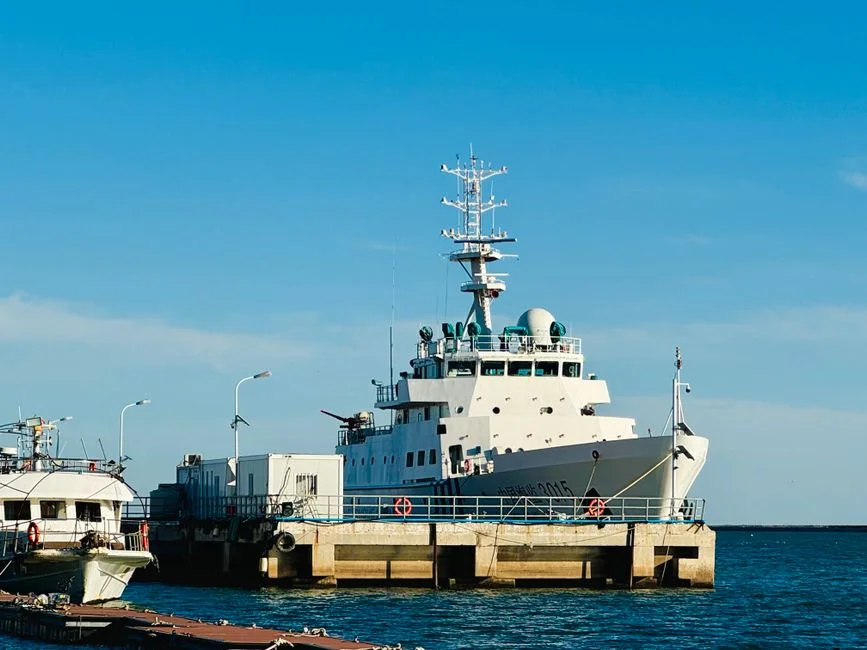
Equipment sizing must start with measured water flows and cooling performance, not a generic conversion from IT load. Install separate meters for makeup, blowdown, evaporation and each wastewater stream. Begin a baseline record of conductivity, pH and suspended solids, then reconcile calculated blowdown with actual discharge because uncontrolled operations can conceal losses.
- Measure daily and hourly makeup and blowdown, including abnormal discharges.
- Record evaporation estimate, cooling configuration, CoC, conductivity, pH and suspended solids.
- Repair leaks, eliminate unnecessary once-through cooling and optimize blowdown controls.
- Add self-cleaning filtration and chemical-control improvements before new treatment capacity.
- Size treatment, storage and power from verified peaks and the required outage interval.
The controlling relationship is blowdown fraction of makeup = 1/(CoC−1). At 4 CoC, theoretical blowdown is 25% of makeup; at 6 CoC, it is 20%. Moving from 4 to 6 CoC therefore reduces blowdown by five percentage points, equivalent to a 20% reduction in blowdown volume, rather than a 50% improvement (Genesis Water Technologies).
Operational losses matter as much as the formula. Genesis Water Technologies reports that unmeasured losses and emergency dumps can make actual blowdown exceed theoretical calculations by 15–30%. Treat the calculated value as a starting point, not a design flow. For orientation only, IDE Tech states that a 100 MW evaporatively cooled facility may require up to 2 million litres of water per day. That reference cannot be scaled linearly to a small Taiz site; the EPC should use measured site data.
| Water-balance input | Required evidence | Design use |
|---|---|---|
| Makeup flow | Daily, hourly peak and source data | Water availability and recovery target |
| Blowdown flow | Metered total, including dumps and bypasses | Treatment-plant capacity |
| Evaporation | Cooling-system estimate reconciled with the balance | Makeup reduction assessment |
| CoC and chemistry | Conductivity, pH, suspended solids and scaling indicators | Operating envelope and pretreatment |
| Wastewater streams | Separate flow and contamination records | Sanitary and reuse-train sizing |
Compare the CTBD recovery options
CTBD treatment should match the required water quality, not simply maximize recovery. Suspended-solids removal normally comes first: DAF pretreatment for cooling-tower blowdown can remove suspended matter, oil, corrosion products and colloidal material before membranes or non-critical reuse. A lamella clarifier is an alternative. Selection should follow measured turbidity, suspended-solids loading, oil characteristics and variability rather than a generic preference for one clarification technology.
Automatic-backwash multi-media filtration can polish clarifier overflow where required. For non-critical reuse, a modular UF system for CTBD non-critical reuse is the lower-complexity option. The supplied UF specification covers 2,000–40,000 L/h and uses 0.03-micron PVDF membranes to remove bacteria, colloids and suspended solids without chemicals. UF does not remove dissolved salts, so it cannot by itself produce low-conductivity cooling makeup.
For closed-loop cooling makeup, conservative industrial brackish RO is the relevant alternative because it removes dissolved solids. IDE Tech reports that conventional BWRO typically plateaus at 75–80% recovery before scaling becomes unmanageable. The design must therefore control silica, calcium carbonate, calcium sulfate, antiscalant dosage, recovery and concentrate disposal. A vendor may propose a lower operating recovery than the theoretical maximum; the tender should identify the guaranteed operating point and the associated water balance.
High-recovery brine-desalter and zero-liquid-discharge systems are exceptional choices for a small Taiz site. IDE Tech’s MAXH2O example operates at around 95% recovery, but the supplied Saltworks material states that membrane distillation still produces a high-salinity, low-volume brine requiring discharge, while ZLD carries the highest cost. These systems add equipment, controls, energy and residual-management obligations.
UV or on-site chlorine dioxide can provide disinfection where the reuse destination requires it. The supplied chlorine-dioxide generator specification covers 50–20,000 g/h and supports industrial cooling and process-wastewater duties. No single train simultaneously maximizes recovery, minimizes cost and eliminates liquid discharge; those objectives require different balances of pretreatment, membrane recovery, brine control and energy.
| Option | Best-fit use | Main limitation | Decision condition |
|---|---|---|---|
| DAF or lamella clarification | Suspended solids and oil removal | Sludge and chemical-intensive operation | Use when influent solids or oil require removal |
| Multi-media filtration | Overflow polishing | Does not remove dissolved salts | Use before UF or RO when required |
| UF | Non-critical reuse | Does not control dissolved solids | Use for low-complexity reuse |
| Conservative BWRO | Cooling makeup | Energy, pretreatment and concentrate management | Use when conductivity control is required |
| Brine desalter or ZLD | Exceptional high-recovery applications | Complexity, cost and residual handling | Use only after site-specific feasibility review |
Design the sanitary treatment train separately
Sanitary sewage requires a separate biological process because cooling-water chemicals, suspended solids and residual disinfectants change the treatment objectives. Staff, kitchen and washroom flows should be hydraulically isolated from CTBD recovery. Kitchen wastewater also needs local grease and solids control before entering the biological system.
A buried WSZ package plant for data-center sanitary sewage is appropriate where a low-footprint, automated anoxic-aerobic process is needed. The supplied specification covers 1–80 m³/h and includes anoxic/aerobic biological contact oxidation, sedimentation and disinfection. Equalization should be included where the sanitary profile has a peak that could overload the package plant.
An MBR is the alternative when a smaller footprint and near-reuse-quality effluent justify additional membrane maintenance. The supplied MBR specification covers 10–2,000 m³/day, provides filtration below 1 μm and is reported as 60% smaller than conventional systems. That comparison comes from the supplied commercial specification and should not be treated as a Taiz footprint guarantee.
Neither option establishes a lawful discharge route. The Taiz receiving authority must confirm the applicable effluent standard, sewer acceptance conditions and whether reuse or subsurface discharge is permitted. The package plant also needs standby power, maintenance access and a defined emergency response. Under generator outages, sanitary flow must remain contained and treated; it should not be mixed with the CTBD storage tank to conceal a capacity deficit.
| Sanitary option | Supplied scope | Selection basis | Buyer verification |
|---|---|---|---|
| WSZ package plant | 1–80 m³/h; anoxic/aerobic contact oxidation, sedimentation and disinfection | Automated, low-footprint biological treatment | Measured peak flow, soil conditions and authority route |
| MBR | 10–2,000 m³/day; filtration below 1 μm; reported 60% smaller than conventional systems | Footprint or near-reuse-quality requirement | Actual footprint, membrane maintenance and power demand |
Integrate controls, storage and residual management
Treatment reliability depends on storage, interlocks and residual handling as much as on the main units. A PLC-controlled chemical-dosing skid for consistent cooling-water treatment should regulate antiscalant, biocide, corrosion control and pH adjustment during manual staffing gaps. Dosing setpoints should follow measured water chemistry, with high/low alarms and locked limits to prevent overfeed after a generator transition.
Treated-water storage should be sized from measured cooling demand and the facility’s actual outage profile. The quantity must be enough to maintain the cooling loop through the permitted interruption sequence without discharging untreated blowdown. Storage analysis should include normal demand, peak demand, treatment-equipment outage, generator-changeover duration and the safe response if storage reaches its operating limit. Without this calculation, an apparent reuse project can create uncontrolled discharge.
Clarifier and DAF residuals should be dewatered using a plate-and-frame filter press for containerized sludge cake. Its supplied filtration-area range is 1–500 m², but the selected area must follow measured residual solids, hydraulic batch cycle and logistics. The contract should state cake moisture, expected sludge yield, filter-cloth consumption and approved storage or removal arrangements.
Automatic backwash, air scour or equivalent self-cleaning features reduce manual attendance and the likelihood of emergency blowdown. Instrument the train for flow, pressure, differential pressure, conductivity, turbidity, tank level and treatment-product quality. Provide interlocks for power failure, high conductivity, high turbidity, excessive flow, membrane differential pressure, storage level and UV or chlorine-dioxide dosage failure.
Critical consumables and spares should be held locally or through an agreed regional service arrangement. Include spare membranes, pumps, sensors, dosing components, PLC backups, as-built drawings, control narratives and a consumables list. The equipment must start and stop cleanly on generator power without uncontrolled chemical addition, membrane damage or loss of containment.
Make the investment case with total operating cost
The investment case must include avoided freshwater withdrawal, sewer or disposal charges, water trucking, chemical consumption, sludge hauling, energy and outage consequences. Water savings alone can conceal the operating burden of membranes, antiscalant, disinfection, generator fuel and residual removal.
Genesis Water Technologies provides a 15 MW reference case: recovering 60% of blowdown, or 3 million gallons per year, at a capital cost of $200,000 produces an illustrative 6.7-year simple payback on water alone and 3–5 years when total cost of water is included. These are cited reference-case values, not a Taiz price or guaranteed payback. Freight, import duties, local fabrication, generator power, storage and hauling may materially change the result.
The same source describes modular blowdown-treatment systems at 100–300 GPM and reports a 15–25% reduction in makeup demand from treatment and reuse. Saltworks’ 200 MW case study states that effective treatment and recycling can reduce cooling-system water consumption by up to 40%; it is a broader case-study reference, not a Taiz design guarantee.
Ask each vendor for a budgetary quotation tied to measured daily flow, hourly peak, target recovery, complete water analysis, storage duration, power conditions, sludge destination and recovery warranty. Compare like-for-like boundaries: treatment only versus treatment, storage, disinfection, controls, dewatering and generator integration must be priced consistently.
| Cost item | Evidence to request | Why it matters in Taiz |
|---|---|---|
| Capital equipment and skid | Measured flow, peak flow, recovery target and storage duration | Prevents hyperscale overbuilding |
| Freshwater and disposal | Current water and disposal invoices, trucking cost | Establishes avoided cost |
| Power | Generator fuel tariff and operating profile | RO and controls may consume significant energy |
| Chemicals and membranes | Consumption, change interval and local supply terms | Tests logistics resilience |
| Sludge | Wet and dry yield, hauling frequency and disposal charge | Prevents hidden recurring costs |
Issue a Taiz-ready request for proposal
A comparable EPC tender begins with a measured operating record and ends with enforceable acceptance criteria. Provide a 12-month water balance, hourly and diurnal flow profiles, cooling-system configuration, CoC history, raw-water and blowdown analyses, and current chemical-use data. State each CTBD, sanitary, kitchen, condensate and wash-water flow separately, with its intended reuse destination and relevant quality limits.
Do not assume sewer access, soil suitability or a receiving-water discharge route. Identify the proposed destination and require the bidder to state the supporting authority approval, assumptions and unresolved permits. The receiving authority’s written acceptance conditions should remain a tender hold point.
Each proposal should guarantee treated flow, product-water quality, system recovery, power consumption, chemical consumption, sludge yield and equipment availability. State generator-supported operating modes, footprint, noise limits, transport constraints, installation sequence, local-service capability, spare-parts list, PLC access and training requirements.
Require factory acceptance testing, site commissioning, a measured performance test, operator training, as-built drawings, control narratives, equipment manuals and a one-year performance guarantee. The performance test should use agreed feed-water conditions and independently measured flow and quality. Define what happens when feed quality falls outside the guaranteed envelope, including bypass, storage and shutdown responses.
- Issue the measured water balance, stream map and destination constraints.
- Obtain budgetary and technical proposals using one common basis.
- Evaluate alternatives on recovery, reuse quality, residual route, power and operator burden.
- Resolve receiving-authority conditions before freezing the design.
- Complete FAT, site testing, training and performance handover.
| Tender package | Minimum content | Vendor commitment |
|---|---|---|
| Design basis | Measured flows, chemistry, CoC, peaks and outages | Confirm design assumptions and exclusions |
| Process guarantees | Flow, quality, recovery, power, chemicals and sludge yield | State guaranteed values and test methods |
| Execution | Generator mode, transport, installation and local service | Provide schedule and responsibilities |
| Handover | FAT, commissioning, training, documents and one-year guarantee | Demonstrate completion and performance |
Frequently Asked Questions
What sizing data should a Taiz data center provide before requesting equipment?
Provide measured makeup and blowdown flow, hourly peak, actual CoC, complete water chemistry, reuse destination, required storage duration and generator operating profile. Size capital equipment from these inputs rather than IT load alone. Do not assign a Taiz capacity from the 100 MW water-use orientation or the 15 MW commercial payback example.
How should a buyer select a wastewater-treatment supplier for a Taiz site?
Ask for a comparable reference installation in a water-stressed location with unstable grid power, documented recovery performance and local service support. Require evidence that the proposed skid starts and stops cleanly on generator power, uses a manageable consumables list and can secure critical spares. Supplier capability in both CTBD treatment and separate sanitary treatment is a useful differentiator.
What budget and payback should be used for water reuse in Taiz?
Use a Taiz-specific quotation based on measured flow, recovery target, power conditions, storage and sludge disposal. The cited $200,000 capital cost and 6.7-year water-only or 3–5-year total-water payback belong to Genesis Water Technologies’ 15 MW reference case. They are benchmarks for comparing vendor assumptions, not quotations or guaranteed returns for a Taiz project.
Does pretreatment prove that treated wastewater can be discharged lawfully in Taiz?
No. Pretreatment demonstrates a treatment concept; it does not establish discharge authorization. Obtain confirmation from the Taiz receiving authority, including applicable permit conditions, sewer acceptance requirements and the permitted receiving route before fixing the process flow.
When should a Taiz data center choose UF instead of brackish RO?
Choose UF when the reuse destination is non-critical and removal of suspended solids, colloids and bacteria is sufficient without dissolved-salts control. Choose RO when cooling makeup requires dissolved-solids removal, while accepting additional pretreatment, energy, membrane maintenance and concentrate-management obligations. A site-specific water analysis must make that selection.
Related Equipment
- DAF pretreatment for cooling-tower blowdown — specifications, capacity range, and technical data