Choose Between Public Sewer and On-Site Treatment
Residential wastewater treatment in Senegal should begin with a site-level comparison between connecting to a public sewer and installing decentralized treatment at the property. A WSZ package plant is suited to compact residential, hospitality and rural deployments because it combines anoxic and aerobic biological contact oxidation, sedimentation and disinfection in a buried unit; its documented capacity range is 1–80 m³/h, and it can operate without a full-time operator. An MBR provides filtration below 1 μm, but it is normally justified for larger developments or reuse-sensitive projects. The final choice requires verified site flows, peak loads, soil and groundwater conditions, rainfall exposure, effluent destination and confirmation from the responsible Senegalese authority.
Start by obtaining written evidence of public-sewer availability at the exact parcel, including connection distance, available diameter, connection conditions, charges, approval responsibilities and whether the receiving sewer or treatment works has capacity. If that route is unavailable, assess whether a residential sewage treatment plant can meet the site’s hydraulic, land, installation and receiving-route constraints.
The historical infrastructure position does not justify assuming universal coverage. In 2005, ONAS operated 773 km of sewer network, 57 pumping stations and seven wastewater-treatment plants (Water supply and sanitation in Senegal, undated compilation of World Bank and historical ONAS data). Population access figures from 2015—75% with at least one basic water source and 48% with basic sanitation—also do not establish whether a specific property can connect to a public sewer (Water supply and sanitation in Senegal, undated compilation of World Bank data).
Apply the same site check to rural homes, peri-urban housing, lodges and small campuses, but do not treat these as separate regulatory classifications without project-specific confirmation. Dense urban sites may have little burial space, while rural sites may face access, power and service arrangements. Use the Senegal wastewater treatment guide to identify the relevant authority and receiving route, and review a packaged sewage treatment plant for a housing development for procurement framing rather than treating another market’s approvals as transferable.
| Decision point | Public-sewer route | On-site treatment route |
|---|---|---|
| Evidence required | Connection letter, network location, capacity confirmation, charges and conditions | Measured flows, site investigation, receiving-route approval and installation assessment |
| Main suitability | Parcels with confirmed access to a serviceable network and available connection capacity | Rural, peri-urban, remote, compact or reuse-driven projects without a viable connection |
| Principal risk | Assuming coverage from population statistics or paying for a connection that cannot be approved | Understating flows, groundwater, drainage, maintenance or residual-sludge requirements |
| Next technical action | Request a site-specific network and connection assessment | Prepare the design-basis brief in the next section |
Build a Senegal-Specific Design Basis
A defensible residential wastewater sizing request begins with measured and projected site conditions, not a generic per-capita factor. The project brief should define the wastewater contribution of each residence or unit, expected occupancy, current and peak flows, visitor or staff allowances, wastewater characteristics, service reliability, maintenance access and the operating model. The designer must state the loading basis, climate adjustments and assumptions used for the specific development.
Hydrography.com’s 2026 Senegal guide for containerized MBR systems in Dakar identifies flow estimation, population loading, container selection and Senegalese compliance as sizing inputs, but it does not establish a universal residential flow factor. Use a decentralized sewage treatment buyer’s guide to structure the brief and a housing-development package plant example to test whether supplier information is complete.
The site investigation should cover soil infiltration, groundwater, flood level, rainfall exposure, available footprint, installation depth and permanent access for maintenance. Decide whether the treatment unit will be buried with landscaping above or installed above grade. Also establish electrical supply, standby arrangements, odor control and whether a local lift is required. A treatment vessel may fit within the footprint while its pump chamber, transformer, control system, sludge storage and access routes do not.
Rainfall must be treated as a design condition rather than background context. The 2023 Dakar study on rainwater and wastewater management reports that drainage-network degradation, rehabilitation cost, variable and high rainfall, and urban growth affect the reliability of urban water-management arrangements; it does not provide a universal residential design factor. The design should therefore establish how storm flows enter the property system, whether inflow and wastewater streams are separated, and how flooding, saturated soil or high groundwater affect access, flotation, infiltration and maintenance.
Define the receiving route before selecting a process: sewer discharge, approved surface-water discharge, irrigation, toilet flushing or another reuse application. Confirm the responsible authority and any public-health, irrigation or reuse requirements for that route. The following schedule identifies the minimum information that should be handed to bidders.
| Design input | Information required | Why it affects selection |
|---|---|---|
| Flow and occupancy | Unit count, design occupancy, wastewater contribution, average flow and peak conditions | Sets hydraulic and biological duty |
| Wastewater quality | Expected domestic composition and any material kitchen, laundry or guest-house contributions | Determines process pretreatment and loading |
| Site conditions | Soil, groundwater, flood level, rainfall exposure, footprint and installation depth | Controls civil works, installation and resilience |
| Receiving route | Discharge or reuse destination and confirmed authority requirements | Sets the required treatment performance and monitoring |
| Operations | Access, utilities, staffing assumptions, maintenance intervals and service support | Determines whether automation is adequate and supportable |
Compare WSZ, MBR and Conventional Sewerage
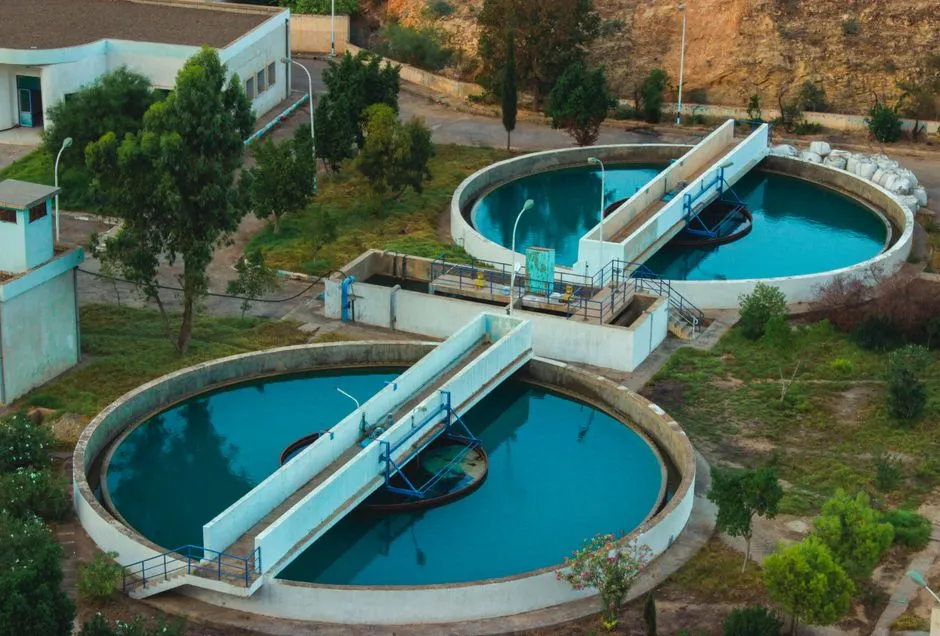
WSZ and MBR are not interchangeable quotations: WSZ is a compact process package, while MBR combines biological treatment with membrane separation. The documented WSZ range is 1–80 m³/h, with anoxic and aerobic contact oxidation, sedimentation and disinfection. The MBR range is 10–2,000 m³/day and uses submerged PVDF membrane filtration below 1 μm alongside activated-sludge treatment; the supplied equipment material states that its footprint is 60% smaller than conventional systems.
The practical distinction is project scale and reuse intent. WSZ is positioned for residential communities, hotels, hospitals, factories and rural areas, with buried or trailer-mounted deployment. MBR is positioned for municipal sewage, process water and reuse projects. A residential buyer should not assume that the larger equipment boundary automatically offers a better solution for a small development.
For WSZ, define the process sequence as preliminary screening and local pumping where applicable, followed by anoxic biological treatment, aerobic contact oxidation, sedimentation and disinfection. Sludge withdrawal, storage, dewatering or disposal, electrical supply and controls are separate scope items even though they are essential to operation. Review the WSZ underground package sewage treatment plant as one treatment option.
For MBR, ask the bidder to define biological loading, membrane configuration, permeate quality, backwashing, membrane replacement, pretreatment and the intended reuse duty. The integrated MBR wastewater treatment system should be evaluated against that evidence, not against a headline filtration value alone.
Neither equipment family automatically satisfies a Senegalese residential permit. The receiving point, reuse rules, project design and responsible authority must be confirmed. Sewerage remains the reference route where a confirmed public connection is technically available and approved.
| Criterion | WSZ package | MBR system | Conventional public sewer |
|---|---|---|---|
| Documented capacity boundary | 1–80 m³/h | 10–2,000 m³/day | Not an equipment selection; depends on confirmed network capacity |
| Core treatment | Anoxic and aerobic contact oxidation, sedimentation and disinfection | Activated sludge with submerged PVDF filtration below 1 μm | Centralized network and treatment infrastructure |
| Residential position | Compact decentralized package for small communities and remote sites | Positioned primarily for larger municipal, process-water and reuse projects | Preferred where connection is available and approved |
| Deployment | Buried or trailer-mounted package | Plant-based system with defined civil, utility and maintenance requirements | Network, connection works and utility-side approval |
| Key procurement question | Can the package cover verified peak duty and site conditions? | Does membrane performance justify the project’s reuse and operating requirements? | Is the parcel connected to a network with confirmed available capacity? |
Match Capacity to the Residential Development
Residential wastewater sizing should be calculated phase by phase and then tested against the manufacturer’s documented capacity range. For each phase, list occupied units, design occupancy, wastewater contribution, average flow, peak conditions, visitor or staff allowance and wastewater-quality assumptions. The peak factor must be identified as a project assumption rather than hidden inside an equipment selection.
Use the WSZ range of 1–80 m³/h and MBR range of 10–2,000 m³/day only as equipment boundaries, not automatic selections. The selected nominal capacity should respond to the calculated duty, documented operating margin, treatment stage limits and expected future expansion. A candidate capacity that merely covers average flow is not an adequate answer for a development with concentrated morning or evening discharge.
For phased housing, specify whether modules must permit future expansion and whether the civil works can accept additional capacity. A trailer-mounted WSZ arrangement may suit temporary or mobile deployment, but a permanent development still needs a defined wastewater route, service access and residual-management arrangement.
The design package should also address peak hydraulic loading, sludge accumulation, standby power, odor control, access, maintenance intervals and utility failures. Ask the manufacturer or process designer to state the selected capacity, process duty, design assumptions, power demand, footprint and installation conditions. For the WSZ underground package sewage treatment plant, verify the proposed installation against the actual site rather than relying on the equipment boundary alone. For the integrated MBR wastewater treatment system, require the same duty and installation evidence.
Where occupancy or flow data is uncertain, keep the design assumption visible and require a survey or monitoring plan before final selection. A defensible design records what is known, what is estimated, which party will verify it and what operating condition triggers modular expansion or equipment replacement.
Plan Compliance, Reuse and Sludge Management
Compliance begins by identifying the authority responsible for the specific receiving route and obtaining written confirmation of connection, discharge or reuse conditions. The supplied HydropureWater material repeatedly refers to ONAS compliance for Senegalese projects, but that general reference is not project approval. Determine whether ONAS, a local authority, a decentralized-service provider or another body must accept the proposal, and who is responsible for each approval.
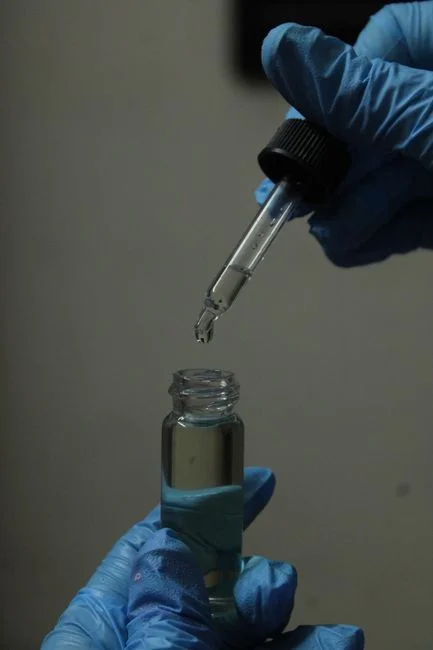
The WSZ treatment sequence includes integrated sedimentation and disinfection, but the required performance depends on the receiving point and intended use. Request a monitoring and commissioning plan tied to that requirement. The cited NS 05-061 natural-discharge TSS value is 50 mg/L, with 40/30 mg/L in the Annex, while the cited Dakar factory limits are COD below 125 mg/L and TSS below 35 mg/L (HydropureWater, 2026). These are source-specific values: they must not be presented as universal residential limits or used without confirming their applicability to the project.
If effluent is intended for irrigation or water reuse, define the quality objective, end use, public-health safeguards and whether further treatment is required. “Reuse quality” is not a sufficient procurement specification. A reuse buyer should also establish how the receiving application, seasonal demand and public access affect storage, distribution and contingency arrangements.
Sludge is part of the treatment obligation, not a residual detail. Define withdrawal frequency, storage, dewatering or disposal route, odor control, transport and responsible contractor. Where mechanical dewatering is considered, assess the plate-frame filter press against the actual sludge characteristics and operating resources. A buyer should use the Senegal wastewater treatment guide to verify the receiving route and applicable authority, then require the selected proposal to document sludge management explicitly.
Budget and Procure the Complete System
The supplied research does not provide a verified Senegal-specific residential package-plant price, so a turnkey cost range would be misleading. Request a site-specific quotation that separates the treatment unit from design, civil works, excavation, pumps, electrical supply, controls, installation, commissioning, training, maintenance, spare parts and sludge disposal. This is the correct basis for comparing a residential sewage treatment plant rather than comparing vessels alone.
Put WSZ and MBR bids on the same duty and receiving route. Require equivalent treatment objectives, biological-loading assumptions, footprint, buried or above-grade installation, utilities, automation, maintenance frequency, testing and reuse performance. If a bid assumes gravity sewerage, pumping, imported power, odor control or sludge removal outside its price, make that exclusion explicit.
Use a vendor document checklist. It should include a guaranteed process duty, selected capacity, applicable standards, electrical requirements, general arrangement and installation drawings, commissioning or FAT evidence, warranty scope, spare-parts list and local service capability. Ask who performs startup, operator training, preventive maintenance, membrane cleaning or replacement where relevant, and how quickly field service can be mobilized.
Before award, reconcile the technical proposal against the civil scope and the buyer’s approvals schedule. Confirm that consumables, sludge handling and utility connections are not assumed away. A compliant treatment unit does not remove the need for a compliant installation.
| Quotation component | Required clarification |
|---|---|
| Process equipment | Selected capacity, guaranteed duty, process description and treatment objectives |
| Civil and installation works | Excavation, backfill, burial depth, roads, fencing, drainage and local pumping |
| Utilities and controls | Electrical supply, controls, alarms, standby arrangements, utilities and access |
| Commissioning | Testing, training, performance demonstration, documentation and handover |
| Lifecycle services | Maintenance intervals, consumables, spare parts, sludge handling and local support |
| Commercial conditions | Warranty scope, payment milestones, delivery responsibility and approval responsibilities |
Frequently Asked Questions
What size residential wastewater treatment system does a Senegalese housing project need?
Size it from verified flows, occupancy, peak conditions and wastewater characteristics. Request a phase-by-phase capacity schedule and a design package that states its loading basis, operating margin, power demand and expansion provisions. The research does not establish a universal Senegalese residential flow factor, so the buyer should obtain the site-specific basis rather than accept a generic per-capita rate.
How much does residential wastewater treatment in Senegal cost?
Request a site-specific installed quotation because the supplied research does not provide a verified universal Senegalese residential price. Check whether the quotation includes design, civil works, excavation, pumps, electrical supply, controls, installation, commissioning, training, maintenance, consumables, spares and sludge disposal. Compare bids on the same scope and treatment duty.
How should a buyer select a WSZ or MBR supplier?
Require documented process duty, selected capacity, design assumptions, installation details, commissioning evidence, warranty terms, maintenance responsibilities and local service capability. A technical equipment sheet alone is insufficient. Verify that the supplier’s proposed configuration matches the site, receiving route and operating model documented in the design brief.
Does a package treatment plant automatically comply with Senegalese requirements?
No. Obtain written confirmation of the receiving route and the responsible Senegalese authority before relying on a general guide or manufacturer statement. The cited NS 05-061 and Dakar factory values are source-specific, not universal residential limits. Approval must be tied to the project’s discharge point, intended reuse, site design and applicable rules.