Separate the Wastewater Before Choosing Equipment
A Chandigarh data center should segregate cooling-tower blowdown, domestic sewage, RO reject, equipment washdown and other drains before selecting treatment equipment. Raw cooling-tower blowdown commonly contains 1,200–6,000 mg/L TDS and 10–50 mg/L suspended solids, so it usually needs solids removal, membrane pretreatment and RO before reuse as cooling make-up. The preferred base case is recovery for cooling-tower make-up; permitted discharge or zero liquid discharge should follow from source testing, the water balance and current Chandigarh consent conditions—not generic assumptions.
Create a separate flow inventory for each drain, including its average and peak flow, seasonal composition, intended discharge point, treatment endpoint and return location. Domestic sewage requires an organic and biological treatment basis; CTBD requires a dissolved-solids and scaling-control basis; RO reject requires a concentrate route; washdown and laboratory drains require their own contaminant assessment. HydropureWater’s Teni wastewater-treatment guidance specifically treats published blowdown ranges as screening benchmarks rather than substitutes for site-specific analysis. The same segregation principle is applied in its Kennedy data-center treatment guide.
Do not blend high-organic sewage with cooling blowdown. The combined stream would change membrane loading, chemical demand and recovery assumptions, making the resulting performance guarantees difficult to interpret. Define three parallel design cases: reuse as cooling make-up, treatment followed by permitted discharge, and contingency ZLD where liquid discharge is unavailable or prohibited. Keep each case linked to its own mass balance, equipment list and consent pathway.
| Stream | Primary design issues | Destination to define |
|---|---|---|
| Cooling-tower blowdown | TDS, hardness, silica, suspended solids, biocides, corrosion inhibitors and scale risk | Cooling make-up, permitted discharge or contingency ZLD |
| Domestic sewage | Organic load, nutrients, solids and biological treatment requirements | Separate sanitation treatment and approved reuse or discharge route |
| RO or membrane concentrate | Residual salt, antiscalant, concentrate volume and disposal route | Further concentration, controlled discharge or crystallization |
| Equipment and floor washdown | Detergents, oil, metals and episodic flow | Segregated collection and treatment |
| Laboratory and process drains | Variable composition and possible incompatible chemicals | Characterization before treatment selection |
Build a Chandigarh-Specific Water Balance
The treatment skid should be sized from the measured blowdown flow assigned to recovery, not from total data-center water demand or a generic capacity assumption. Collect cooling-tower circulation rate, make-up flow, evaporation, drift, blowdown, operating hours, design cycles of concentration and seasonal operating scenarios. The cooling-tower blowdown treatment engineering guide provides the broader sizing framework.
- Establish the circulating-water and make-up flows from vendor data and metering.
- Calculate evaporation and drift separately.
- Derive blowdown from the measured site water balance.
- Allocate the resulting flow among reuse, discharge and contingency treatment.
- Validate the assumptions during pilot operation.
Genesis Water Technologies reports that at 4 cycles of concentration, approximately 25–30% of make-up water may leave as blowdown, but this benchmark is not a universal Chandigarh result. The project value must be calculated from the selected cooling design. Similarly, IDE reports that a 100-megawatt data center may use as much as 2 million liters per day; that figure provides context only and cannot serve as a Chandigarh plant-design input without local load, cooling configuration and operating data.
Model each proposed operating point because increasing cooling-tower cycles of concentration reduces blowdown volume but concentrates silica, hardness, corrosion products and biological risks. The balance must also show how recovered permeate changes the cooling loop, subsequent blowdown concentration and freshwater demand. Pilot measurements should cover recovered-permeate chemistry, cooling-loop response and resulting blowdown quality before the skid is procured.
| Balance input | Evidence required for Chandigarh | Design use |
|---|---|---|
| Circulation and make-up flow | Vendor design data and site metering | Establish the cooling-water system boundary |
| Evaporation and drift | Measured or vendor-supported operating values | Complete the inlet–outlet balance |
| Cycles of concentration | Selected cooling chemistry and operating scenarios | Estimate blowdown flow and constituent concentration |
| Blowdown flow | Calculated balance confirmed by metering or pilot | Size equalization and treatment capacity |
| Recovered-water allocation | Approved operating scenario | Determine the design flow of the recovery skid |
Set the Reuse and Discharge Quality Targets
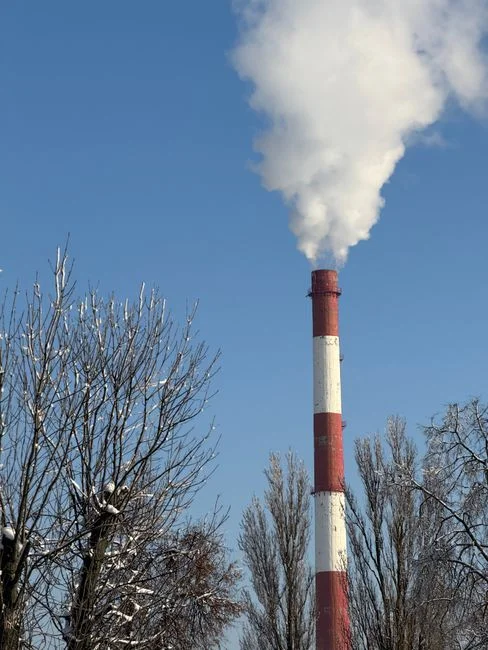
Cooling make-up quality, discharge quality and high-recovery requirements are three separate design decisions. A permeate suitable for cooling may not satisfy a discharge permit, while a technically high-recovery system remains unacceptable if its concentrate has no lawful destination. The data-center discharge compliance workflow provides the regulatory sequence to follow.
Genesis gives initial cooling make-up screening targets of 500–1,500 mg/L TDS, 200–400 mg/L hardness as CaCO₃, 10–25 mg/L suspended solids, pH 6.5–8.5 and 50–200 mg/L alkalinity as CaCO₃. These are preliminary benchmarks, not Chandigarh design limits. They must be replaced by site-specific limits derived from the selected cooling chemistry, heat-transfer materials, make-up source and operating cycles of concentration. The same source reports raw blowdown at 1,200–6,000 mg/L TDS and 10–50 mg/L suspended solids, which demonstrates why solids removal and dissolved-solids polishing are normally required before reuse.
For discharge, obtain the current Chandigarh consent conditions and the receiving-sewer or surface-water requirements. The supplied research does not establish a final Chandigarh permit limit, so none should be assumed. Require the selected chemical program to be reviewed for residual biocides, corrosion inhibitors, antiscalants, dispersants and phosphate or chromate legacy chemistry because these substances can affect membrane compatibility, biological control, reuse suitability and permit compliance.
| Decision | Target basis | Evidence required |
|---|---|---|
| Cooling make-up | Compatibility with the selected cooling-water program | Source characterization, site-specific quality limits and pilot evidence |
| Permitted discharge | Current Chandigarh consent and receiving-system requirements | Written conditions, applicable standards and proposed discharge route |
| High recovery | Stable concentrate chemistry and a lawful concentrate destination | Scaling projection, pilot recovery, concentrate analysis and disposal plan |
Match the Treatment Train to the Water Destination
The base-case CTBD treatment train is segregation and equalization, side-stream filtration, coarse screening where debris is present, membrane pretreatment, RO where dissolved-solids control is required, permeate storage, chemical conditioning and controlled return to the cooling tower. A UF pretreatment for cooling-tower blowdown can protect downstream membranes from solids, colloids and biological material. Where reuse requires low-TDS permeate, an industrial RO system for blowdown reuse addresses the dissolved-salts load that UF cannot remove.
Genesis reports that RO removes 95–99% of dissolved salts, commonly produces 10–50 mg/L permeate TDS, operates at 150–400 psi and achieves 50–85% recovery for blowdown. IDE reports that conventional brackish-water RO commonly reaches about 75–80% recovery before scaling becomes unmanageable. A higher-recovery claim therefore requires source-specific chemistry, antiscalant control, a defined concentrate route and pilot confirmation rather than reliance on membrane rejection alone.
Discharge treatment should be designed around the actual consent parameters, receiving system and concentrate implications. Reserve MVC, thermal concentration or crystallization for cases where reuse cannot meet the required endpoint, liquid discharge is prohibited or near-complete liquid recovery is required by the project’s water objective. A comparable data-center cooling blowdown guide shows how destination-led treatment selection should be structured.
| Destination | Core treatment logic | Key project gate |
|---|---|---|
| Cooling make-up reuse | Filtration, membrane pretreatment, RO as required, storage and controlled return | Pilot confirms cooling compatibility and dependable recovery |
| Permitted discharge | Treatment matched to each written consent parameter | Current Chandigarh consent and receiving-system conditions |
| Contingency ZLD | Membrane concentration, thermal concentration and crystallization | Concentrate or salt disposal route and life-cycle cost |
Protect Cooling Reliability During Treatment
Recovered-water equipment must fail without compromising cooling continuity. Define the response to membrane cleaning, high-blowdown operation, storage depletion, permeate-quality excursions and maintenance shutdown before selecting redundant pumps, membranes or tanks. The project’s critical-systems plan should identify whether the bypass or make-up-water response is automatic and what operating limits trigger it.
Include standby power, equipment redundancy, PLC controls, interlocks, permeate conductivity or equivalent quality instrumentation, tank-level control and an automatic bypass or make-up-water response. Equalization and permeate storage should absorb production variability, but storage duration must be calculated from measured flows, operating scenarios and credible maintenance outages. The Perm data-center treatment guide illustrates why the recovery train needs an explicit fail-safe, while the Esenyurt treatment guide provides a comparable data-center framework.
Commissioning should test the interaction among recovered-water chemistry, heat-transfer surfaces, biological control, cooling chemicals and subsequent blowdown quality. Include membrane-cleaning acceptance, cartridge replacement, chemical-dosing verification and residual-biocide monitoring. The objective is not merely to produce compliant permeate; it is to preserve cooling performance while the recovery plant changes the composition of the circulating loop.
Compare Equipment, Cost and Environmental Trade-Offs
Vendor comparisons should use guaranteed feed acceptance, permeate and concentrate quality, recovery at the stated design condition, availability, controls, pretreatment needs, maintenance obligations and concentrate fate. A headline rejection rate or maximum recovery does not establish what the skid will deliver from Chandigarh CTBD. The nanofiltration design guide can support comparison of NF and RO, but the selected endpoint must drive the choice.
Genesis reports an installed cost of approximately US$250,000–500,000 for a 50,000 GPD blowdown-RO installation and an operating cost of approximately US$1.50–3.00 per thousand gallons treated. These are US-market screening benchmarks, not Chandigarh quotations. A buyer should request itemized Indian pricing based on measured flow, source chemistry, recovery definition, feed-pressure requirement, antiscalant consumption, membrane replacement, energy, redundancy and concentrate handling.
Use UF to remove solids, colloids and bacterial material ahead of RO, and industrial RO for dissolved-solids control where the reuse or discharge target requires it. For segregated domestic sewage, evaluate MBR only as part of the wastewater train; it does not remove CTBD salts. Open Engineering’s 2026 life-cycle study reports that treatment energy accounted for roughly 80% of the global-warming-potential difference between its wastewater and freshwater scenarios. The same study reports an indirect water penalty of approximately 0.93 L/m³ for the assessed reuse train, less than 0.1% of the direct freshwater-displacement benefit.
| Comparison item | Information required from each bidder |
|---|---|
| Guaranteed performance | Permit-quality basis, feed envelope, actual recovery and concentrate quantity at the agreed design condition |
| Preliminary cost | Separate priced scenarios for reuse, permitted discharge and contingency ZLD |
| Environmental impact | Electricity, chemical use, freshwater displacement, concentrate disposal and life-cycle assumptions |
| Operational risk | Availability, redundancy, cleaning frequency, control philosophy and fail-safe response |
Plan the Approval, Pilot and Procurement Sequence

Source characterization and the site water balance must precede selection of the treatment endpoint, and current Chandigarh consent requirements must be confirmed before the specification is frozen. Sample each segregated stream rather than relying on a combined wastewater analysis. The pilot should examine membrane fouling, scaling tendency, biocide effects, actual recovery, concentrate generation, cooling-loop response and the quality of subsequent blowdown.
- Complete the drain inventory and representative source sampling.
- Develop and verify the cooling-water mass balance.
- Obtain current Chandigarh consent and receiving-system conditions.
- Run the representative pilot and close the design data gaps.
- Issue a performance-based procurement specification.
- Keep reuse, discharge and ZLD scenarios separately priced until evidence supports the base case.
The specification should define the feed envelope, permeate quality, recovery calculation, concentrate quantity, availability, controls, instrumentation, cleaning, redundancy and fail-safe operation. Suppliers should state all assumptions and identify any result that depends on a particular chemical program or concentrate route. The Zaria data-center treatment guide provides a comparable sequence for structuring approvals, pilot work and procurement. The Genesis figure of 25–30% blowdown at 4 cycles must be checked against the final Chandigarh design rather than presented as the project outcome.
Frequently Asked Questions
How much does cooling-tower blowdown treatment cost for a Chandigarh data center?
No Chandigarh quotation can be issued from the supplied research. Genesis gives US-market screening benchmarks of approximately US$250,000–500,000 installed for a 50,000 GPD blowdown-RO system and US$1.50–3.00 per thousand gallons treated for operation. Ask bidders for itemized Indian prices using the measured flow, water analysis, recovery definition, energy supply, concentrate route and redundancy requirements.
Should the data center choose RO, NF, UF or a full ZLD system?
Choose the process from the destination, not from technology preference. UF addresses particulates, biological material and membrane pretreatment; RO is appropriate where dissolved-solids control is required; NF may be sufficient where hardness rather than total TDS controls the endpoint. Treat full ZLD as a separately evaluated contingency until reuse and permitted-discharge conditions are confirmed.
What should a vendor guarantee in a cooling-blowdown recovery proposal?
Require guaranteed feed acceptance limits, permeate quality, recovery at the design condition, concentrate flow and chemistry, availability, pretreatment requirements, chemical consumption, cleaning intervals, controls, redundancy and automatic fail-safe operation. Also require the concentrate destination and exclusions that could invalidate the guarantee.
What wastewater samples are needed before final equipment sizing?
Obtain representative samples from each segregated source, including CTBD, domestic sewage, RO reject, washdown, laboratory drains and any other process discharge. Test across operating and seasonal conditions for the parameters relevant to each treatment train, including TDS, suspended solids, hardness, alkalinity, silica, conductivity, organics and residual treatment chemicals.
When does a Chandigarh data center need discharge treatment instead of reuse?
Use a discharge-treatment base case when the recovered water cannot meet the site-specific cooling requirements and current consent conditions permit a lawful route. The decision must follow source testing, water balance and written Chandigarh consent conditions; the supplied research does not provide a final numerical discharge limit, so procurement should not assume one.