Why Rwanda Textile Effluent Needs a Site-Specific Treatment Train
Textile wastewater treatment in Rwanda requires a source-specific train that addresses variable pH, dyes, suspended solids, oil and grease, biodegradable organics, metals, and possible bypasses before discharge. Rwanda-specific research found concerning compliance gaps: across five monitored industries, effluent compliance was below 50%; pH ranged from 6.93 to 9.82; COD reached 1364 mg/L in one untreated sample; and oil and grease compliance was 0%. High pH at a textile facility was associated with non-operation of treatment intended to reduce caustic soda used during bleaching and mercerizing. A practical design therefore combines equalization, pH adjustment, DAF pretreatment, biological treatment, targeted polishing, sludge handling, and verified monitoring against the site’s current Rwandan permit.
The MDPI study, Industrial Wastewater Discharge and Compliance, examined five Rwandan industries selected after audits or resident complaints involving REMA, Rwanda Environment Management Authority. It was not a textile-specific compliance survey, and its measurements are not universal design limits. Nevertheless, it provides direct operational evidence: only seven of 24 analyzed effluent samples complied with the applicable pH limit, all analyzed oil-and-grease results were noncompliant, and overall compliance for effluent discharged into the environment was below 50% (MDPI, 2022).
The process risk follows from the chemistry. A 2026 review in Sciencedirect identifies dyes, chemicals, heavy metals, and organic pollutants in textile wastewater and notes that conventional physical, chemical, and biological methods can face high operating costs, incomplete removal, and toxic by-product generation. No single unit can reliably control every one of these contaminants.
Utexrwa’s outlet pH of 9.82 was the highest result in the five-industry study. The researchers associated it with possible non-operation of treatment intended to reduce caustic soda used during bleaching and mercerizing. That finding links production chemistry to equipment reliability and control logic: pH adjustment cannot remain a discretionary manual operation. Before purchasing equipment, obtain the current site permit, applicable Rwanda discharge conditions, receiving-water information, production-stream inventory, and documented bypass controls.
Map Each Textile Wastewater Stream Before Sizing Equipment
Textile treatment capacity should be derived from segregated streams and event discharges, not from an average daily flow that mixes incompatible wastewaters. The MDPI study’s cross-industry measurements illustrate why this matters: reported BOD5 ranged from 1.79 mg/L at Sopyrwa to 249 mg/L at Bralirwa, while COD ranged from 4 mg/L at Sopyrwa to 1364 mg/L at Bralirwa (MDPI, 2022). These values came from five different industries and must not be transferred as design defaults.
Request flow and chemistry data separately for washing, dyeing, bleaching, mercerizing, rinsing, sizing, starch or finishing chemicals, and segregated process-water reuse. Identify batch dumps, continuous flows, floor drainage, cooling water, and laboratory or cleaning streams. For each stream, obtain pH, COD, BOD5, TSS, oil and grease, color, conductivity, metals, temperature, and the identities and concentrations of process-specific chemicals.
Metals require explicit treatment decisions. The OpenAlex-indexed work, Development of a low-cost alternative for metal removal from textile wastewater, treats metal removal as a defined process objective rather than an assumed function of biological treatment (OpenAlex, 2012). Identify streams containing metals and streams that are resistant to biological degradation before fixing the treatment sequence.
Use composite sampling to characterize normal production and event-based sampling to capture startup, dye changeover, cleaning, and chemical-dosing periods. An average day can conceal a caustic batch, a high-solids dump, or an untreated bypass. Record these events alongside production volumes so the design basis reflects the actual hydraulic and contaminant peaks.
| Design-basis request | Why it changes equipment selection | Required evidence |
|---|---|---|
| Stream segregation | Prevents incompatible pH, chemistry, or toxicity from destabilizing the whole train | Process map and segregated flow and chemistry data |
| Batch and peak flow | Determines equalization and pretreatment capacity | Production schedule, discharge logs, and event sampling |
| Contaminant inventory | Defines chemical, DAF, biological, and polishing duties | pH, COD, BOD5, TSS, oil and grease, color, conductivity, metals, and temperature |
| Discharge and reuse targets | Sets the required treatment objective and permit basis | Current permit, receiving environment, and internal reuse specification |
Equalization and Chemical Control Prevent Downstream Treatment Failures
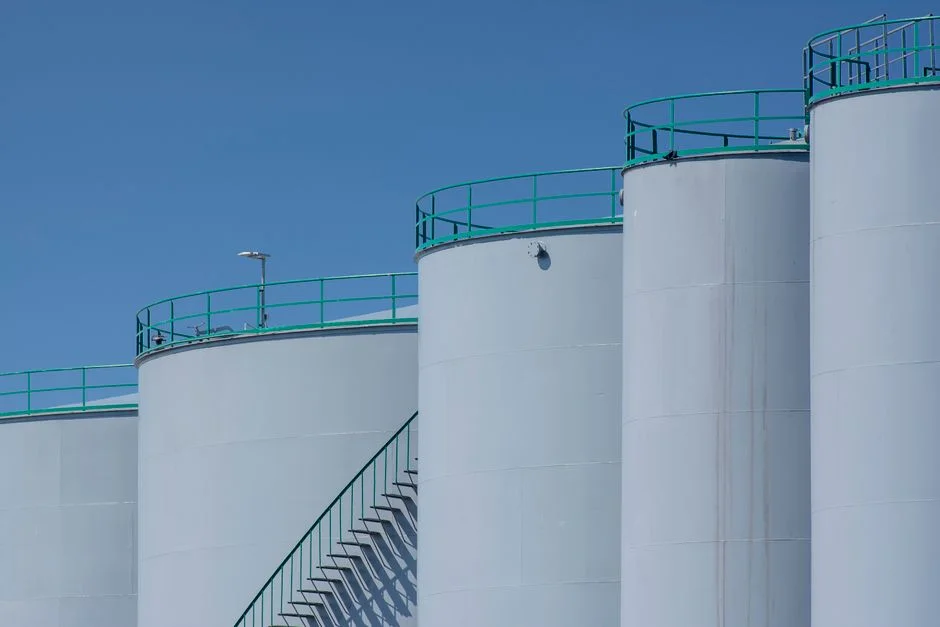
Equalization must absorb the actual batch-discharge behavior and blend incompatible streams enough to prevent local pH or chemical shocks. The MDPI study recorded effluent pH from 6.93 to 9.82 across five monitored industries and associated Utexrwa’s high result with possible non-operation of treatment used to reduce caustic soda from bleaching and mercerizing (MDPI, 2022). That operational evidence makes continuous pH control a core treatment function, not an accessory to the main package.
Specify tank working volume from measured batch releases, production schedules, and emergency containment requirements. Provide mixing suitable for the wastewater characteristics and a controlled withdrawal arrangement that does not continuously expose DAF or biological systems to concentrated slugs. If solids settle, equalization without adequate mixing can become a separate accumulation and treatment problem.
Use automatic dosing for coagulants, flocculants, pH adjusters, and specialty chemicals. A PLC-controlled automatic chemical dosing system should link chemical preparation, feed measurement, tank level, and dosing commands to the treatment control system. High-level interlocks and alarms are required for abnormal pH, flow, chemical feed, and equalization level.
Define the control response before commissioning: which measurements initiate dosing, what dose limits apply, which conditions stop feed, and how the operator investigates a failed control step. The MDPI study documented direct untreated wastewater discharge at monitored facilities, so bypass prevention must include physical containment, high-level diversion, tamper-resistant controls, and an alarm-escalation procedure—not only a normally closed valve.
The buyer should also define chemical storage, containment, compatibility, and supplier dosing calculations. These are necessary to compare automatic dosing quotations on the same basis and to prevent a control system from creating a secondary chemical-management risk.
Use DAF to Protect Downstream Biological Treatment
DAF is appropriate when textile pretreatment must remove floatable material, oil and grease, suspended solids, and colloidal material before biological treatment. The textile wastewater DAF pretreatment system offered by HydropureWater identifies textile among its application sectors, but the manufacturer’s equipment specifications are not plant-performance evidence.
HydropureWater publishes a DAF range of 4–300 m³/h across 13 standard models, using micro-bubble technology and automatic skimming. Treat this as a manufacturer selection reference, not as a recommendation for the project. A nominal flow rating does not establish chemical demand, flotation chamber performance, sludge handling capacity, or suitability for the actual wastewater.
The need for verified oil-and-grease pretreatment is supported by the MDPI study: all analyzed oil-and-grease samples from the five industries failed the applicable limits, representing 0% compliance (MDPI, 2022). DAF performance must nevertheless be confirmed with site samples and a written acceptance test covering the selected contaminants and the current permit conditions.
| Decision point | DAF | Conventional clarification |
|---|---|---|
| Floatable-contaminant capture | Explicitly suited to collecting floatable material in a float layer | Requires suitable clarification conditions to separate the relevant floatables |
| Solids handling | Produces a concentrated float sludge for separate collection | Produces settled sludge for separate collection |
| Chemical demand | May require coagulant or flocculant conditioning; quantity must be established with site samples | May require conditioning; quantity must be established with site samples |
| Footprint comparison | Ask the supplier to document the installed equipment, service clearances, and recovery system | Ask the supplier to document the installed equipment, service clearances, and sludge collection |
| Selection test | Verify the defined contaminant objective using representative wastewater and recorded operating conditions | Verify the defined contaminant objective under representative settling and loading conditions |
Require each bidder to state the wastewater basis for its quoted flow rate, applicable peak and average flow, solids and floatables characteristics, chemical condition, skimming and solids-removal arrangement, and acceptance method. Selecting a model from average daily effluent flow alone leaves the most damaging batch events unaddressed.
Select Biological Treatment for Organics and Reuse Objectives
Biological treatment should be selected after pretreatment, using the characterized organic load and the required effluent objective. The Rwanda study reported BOD5 from 1.79 mg/L at Sopyrwa to 249 mg/L at Bralirwa and COD from 4 mg/L at Sopyrwa to 1364 mg/L at Bralirwa (MDPI, 2022). These observations demonstrate the need for wastewater characterization; because they cover five industries, they are not transferable biological-loading criteria.
The decision sequence is:
- Remove or neutralize material likely to inhibit biology, including floatables and unsuitable suspended solids.
- Equalize flow, pH, and chemical dosing.
- Calculate biological loading from site-specific COD, BOD5, flow, temperature, and process characteristics.
- Select conventional activated sludge or MBR according to solids-separation, footprint, reuse, and treated-water requirements.
HydropureWater presents its MBR textile wastewater treatment system as a 10–2,000 m³/day package using submerged PVDF membranes, filtration below 1 μm, and a stated footprint 60% smaller than conventional systems. These are manufacturer specifications, not independent performance results or guaranteed project outcomes.
MBR becomes more relevant when compact solids separation, industrial effluent reuse, or a tighter treated-water specification has demonstrable value. Before comparison, request membrane flux, cleaning method, fouling control, redundancy, replacement provisions, operating attention, and life-cycle information. The industrial MBR process design guide provides a related framework for examining biological and membrane treatment.
| Selection issue | Conventional biological treatment | MBR |
|---|---|---|
| Primary sizing input | Characterized organic load and hydraulic profile | Same inputs plus membrane design and operating basis |
| Solids separation | Clarification must meet the stated effluent and reuse objective | Submerged membrane filtration is integral to the package |
| Footprint | Request the complete installed layout, including clarifiers and service clearances | Manufacturer states 60% smaller footprint than conventional systems; request the comparison basis |
| Reuse relevance | Depends on the required water quality and downstream use | Potentially relevant where compact separation or reuse has technical and commercial value |
| Before purchase | Provide site loads, temperature, pH, nutrients, toxicity, and performance targets | Add flux, cleaning, redundancy, membrane replacement, and fouling-control requirements |
The 2026 Sciencedirect review identifies hybrid systems, ozone-catalyst development, nanomembranes, and advanced bioremediation as future directions. It does not establish any one of them as the default for a Rwandan textile plant; each remains a site-specific evaluation.
Add Targeted Polishing for Residual Pollutants
Advanced treatment should be purchased against a defined residual pollutant or reuse requirement, not added because a general treatment package appears incomplete. The 2026 review in Sciencedirect reports that conventional physical, chemical, and biological methods can face high operating costs, incomplete pollutant removal, and toxic by-product generation.
Define the polishing objective through site measurements. If the target is an oxidizable residual compound, evaluate advanced oxidation and assess the relevant by-product risk. If the concern is dissolved contaminants or controlled solids, evaluate membrane treatment with the required pretreatment and reject conditions. Neither route should be assumed to remove every dye, metal, or organic compound without testing representative samples.
The same review identifies nanotech and hybrid systems as emerging areas and highlights ozone-catalyst development, nanomembranes, and advanced bioremediation as future research directions. These technologies should remain conditional options until the permit, reuse specification, residual chemistry, and economic case define a specific duty.
For each polishing option, request removal objectives by identified pollutant, treated-water analysis method, energy demand, chemical consumption, residual or by-product handling, membrane or catalyst replacement, control requirements, and pilot or site-sample evidence. Compare those inputs with the value of reuse or the compliance requirement. A polishing stage that does not solve a defined residual problem adds capital, operating burden, and another failure mode.
Control Sludge and Verify Performance Throughout Operation
Sludge handling belongs in the project scope from the outset because DAF, chemical precipitation, and biological treatment create residues that require controlled collection, thickening, dewatering, storage, and disposal. A treatment train evaluated only on liquid outlet quality can become uneconomic or noncompliant if sludge storage, transport, or disposal is omitted.
HydropureWater’s 2021 plate-and-frame filter press specification covers 1–500 m² filtration area with manual, hydraulic, or fully automatic PLC operation. It is a manufacturer specification for comparing dewatering options, not a guarantee of cake dryness, throughput, chemical demand, or project performance. The buyer must provide sludge characteristics, solids concentration, volume, desired dewatering result, and available operating hours.
The bypass evidence makes verification a core operating requirement. The MDPI study reported a COD of 1364 mg/L at Bralirwa in spent Kieselguhr effluent discharged directly to Lake Kivu without treatment. A 21 August 2020 Utexrwa sample to the wetland contained fecal coliforms of 820–8200 mg/L, confirming direct discharge without treatment (MDPI, 2022).
Require a site-specific acceptance protocol covering flow, pH, COD, BOD5, TSS, oil and grease, relevant metals, color, and permit-required parameters. Define sampling points, sample frequency, analytical methods, instrument calibration, alarm setpoints, bypass interlocks, and the response to a failed result. The plate-and-frame sludge-dewatering equipment should therefore be compared together with the liquid-treatment train and bypass-control obligations.
Operator training, preventive maintenance, chemical inventory control, DAF or membrane maintenance, spare-parts management, and a named noncompliance escalation procedure should be included in handover. Compliance depends on routine operation, not only commissioning performance.
Choose Equipment With a Transparent Design and Compliance Basis
A comparable bid starts with a common design basis and states whether each capacity is design flow, average flow, peak flow, or nominal equipment capacity. The current Rwanda permit, receiving environment, reuse requirements, stream inventory, wastewater characterization, and treatment objectives must be stated before suppliers select equipment.
Ask each supplier to identify the proposed equipment duty, process guarantees, utility consumption, chemical use, control philosophy, installation utilities, commissioning tests, training, spare parts, and performance support. Require the DAF and MBR ranges published by HydropureWater to be matched to the same duty definition before comparison; a quoted hourly DAF range and daily MBR range cannot be compared as equivalent capacities.
Use a risk-adjusted commercial comparison that includes the upfront equipment scope, foundations and utilities, chemical consumption, sludge handling, replacement parts, operator labor, and compliance exposure. No supported quotation or site-specific cost is available in the research, so the buyer should request priced alternatives and operating-cost assumptions rather than accept a generic budget figure.
| Bid comparison item | Information the supplier must provide | Buyer verification |
|---|---|---|
| Design basis | Peak and average flow, equalization volume, stream segregation, wastewater data, objectives, permit conditions, receiving environment, and reuse requirements | Confirm that every quotation uses the same site inputs and capacity definition |
| Equipment duty | Model, rated flow, operating basis, application limits, and treatment objective | Check that the rating addresses measured peak and batch-discharge behavior |
| Performance | Process guarantees, acceptance-test method, and supporting site-sample or reference data | Require textile-specific evidence and agreed test conditions |
| Operations | Utilities, chemicals, control philosophy, maintenance, training, and spare parts | Reconcile the offer with site infrastructure and operator competence |
| Commercial risk | Equipment scope, foundations, utilities, sludge handling, replacement parts, and compliance exposure | Compare whole-life obligations rather than headline price or capacity |
For containerized concepts, the containerized textile wastewater treatment guide provides a useful scope question: identify which equalization, pretreatment, biological, polishing, and sludge functions are genuinely contained on site and which still require civil works. International experience, such as the textile wastewater treatment engineering guide, can inform process questions, but it does not replace the Rwandan permit or site chemistry.
Finally, ask whether the proposed technology has been supported with textile-specific data, representative site samples, or relevant reference projects. Municipal or generic industrial experience may be useful but does not establish treatment of dyeing, bleaching, mercerizing, sizing, or finishing streams.
Frequently Asked Questions
What flow and wastewater data should a Rwandan textile plant provide before equipment sizing?
Provide peak and average flow, batch-discharge schedules, equalization requirements, segregated stream chemistry, and production-event data. The design must use characterized COD, BOD5, pH, TSS, oil and grease, color, conductivity, metals, and temperature from the actual plant. The MDPI study’s cross-industry BOD5 and COD ranges are evidence of variability, not default sizing values (MDPI, 2022).
How should DAF equipment be selected for textile wastewater?
Start with the plant’s flow profile, solids characteristics, floatables, chemical condition, and required treatment objective. HydropureWater publishes 4–300 m³/h across 13 DAF models, but that manufacturer range cannot establish the correct model without the wastewater basis and batch-flow data. Require performance verification with representative site samples and a written acceptance test.
What should procurement compare when evaluating treatment suppliers?
Require a common wastewater basis, equipment duty, process guarantees, utilities, chemical consumption, control philosophy, installation requirements, commissioning tests, operator training, O&M scope, spare parts, and relevant textile references. Clarify whether every quoted capacity refers to peak flow, average flow, design flow, or nominal capacity so bids remain technically comparable.
Does the Rwanda compliance evidence mean advanced treatment should be installed immediately?
No. The MDPI study found below-50% overall compliance and direct untreated discharges in its monitored sample set, so permit review, bypass prevention, operating controls, and performance verification are essential. The 2026 Sciencedirect review identifies hybrid, oxidation, nanomembrane, and advanced bioremediation approaches, but each should be selected only for a defined residual pollutant or reuse target and verified with site data.