Which Packaged Plant Fits a Medan Housing Development?
The best packaged sewage treatment plant for a Medan housing development is usually an underground WSZ A/O unit when the site has adequate space, reliable power and a standard domestic discharge route. Choose a packaged MBR when footprint is tightly constrained, water reuse is required or tighter ammonia and solids control justifies membrane treatment. Size the plant from verified household occupancy and wastewater flow, not housing units alone: HydropureWater's 2026 guide calculates about 200 m³/day average and 260 m³/day with a 1.3 peaking factor for 200 households. Final selection must also confirm the receiving route, applicable Indonesian permit limits, pretreatment, sludge handling, backup power and commissioning tests.
The selection rule is conditional. A conventional off-grid estate with sufficient land, dependable utilities and a verified domestic discharge route can start with the underground WSZ A/O sewage treatment package. A packaged MBR becomes the stronger candidate when land availability, reuse quality or ammonia control dominates the design.
The Pulo Brayan plant is a municipal benchmark, not a template for an estate package. According to BPPT's 2017 presentation, The Domestic Wastewater Management in Indonesia, Pulo Brayan has a 10,000 m³/day capacity and uses UASB followed by an aerated lagoon. Its reported effluent is COD 50–75 mg/L and BOD 40–55 mg/L. Those results do not establish compliance for a new housing estate: the project must demonstrate its own performance against the permit and receiving route.
The same 2017 BPPT presentation notes that businesses and developments without sewerage service must treat their domestic wastewater. It identifies activated sludge, anaerobic-aerobic biofilter, aerobic biofilter, rotating biological reactor and MBR as options used in Indonesia. Comparable housing decision logic is also available in the packaged sewage treatment guidance for Bandung housing and the Surat housing package-plant comparison.
Build the Design Flow From the Development
HydropureWater's 2026 residential-treatment guide calculates a 200-household estate at 4.6 occupants per household, 220 L/c/d per person, approximately 920 people and approximately 200 m³/day average flow; its 1.3 residential peaking factor produces approximately 260 m³/day, about 11 m³/h average and hourly peaks near 22 m³/h.
These figures are a preliminary calculation, not a completed design. The Domestic wastewater in Indonesia: generation, characteristics and treatment systems review, published in 2022, reports Indonesian municipal water withdrawal of 246 L/c/d and notes that wastewater-generation studies commonly use 70–90% of clean-water usage. Use those figures to challenge the assumed occupancy and water demand, not to replace site-specific information.
- Confirm occupied and planned units by development phase, expected occupancy, visitors and any commercial or community flows.
- Check metered or tariff-based water use, groundwater infiltration, illegal storm-water entry and the selected discharge or reuse route.
- Calculate average daily flow, peak hydraulic flow and organic loading separately.
- Confirm the selected unit covers the verified peak with an agreed standby and redundancy strategy.
| Design input | 200-household example | Verification required |
|---|---|---|
| Occupancy | 4.6 occupants per household; approximately 920 people | Unit schedule, phase occupancy and visitor assumptions |
| Per-capita flow | 220 L/c/d | Water-supply records and approved design assumptions |
| Average flow | Approximately 200 m³/day; about 11 m³/h | Calculation from verified flow and occupancy |
| Peak flow | 1.3 factor; approximately 260 m³/day; hourly peak near 22 m³/h | Diurnal profile, infiltration and receiving-system capacity |
Do not select equipment from the headline daily capacity alone. A package can meet average demand but fail during the morning and evening residential peaks, or receive an organic load that exceeds its biological capacity. The engineer should carry peak flow into the WSZ hydraulic selection and calculate biological loading from verified BOD and COD concentrations.
Set the Wastewater and Effluent Design Basis
HydropureWater's 2026 guide reports mixed residential wastewater at BOD 135–480 mg/L, COD 148–472 mg/L and TSS 25–1,148 mg/L; it recommends sizing the biological stage for BOD of at least 400 mg/L because kitchen FOG and laundry surfactants can produce variable loads.
The wide concentration ranges justify conservative preliminary design followed by site-specific testing. A package's claimed treatment performance is meaningful only when the bidder states the influent basis on which that performance was established.
| Parameter | Design or working value | Source and application |
|---|---|---|
| BOD | 135–480 mg/L | Mixed residential wastewater range reported by HydropureWater, 2026 |
| COD | 148–472 mg/L | Mixed residential wastewater range reported by HydropureWater, 2026 |
| TSS | 25–1,148 mg/L | Mixed residential wastewater range reported by HydropureWater, 2026 |
| Domestic wastewater maxima | pH 6–9; BOD 30 mg/L; COD 100 mg/L; TSS 30 mg/L; oil and grease 5 mg/L; ammonia 10 mg/L; total coliform 3,000 MPN/100 ml | BPPT's 2017 presentation of Regulation P.68/Menlhk/Setjen/Kum.1/8/2016 |
| Residential surface-water working targets | BOD at or below 30 mg/L; TSS at or below 30 mg/L; ammonia-N at or below 10 mg/L; fecal coliform at or below 1,000 MPN/100 mL | PP 22/2021 Lampiran VI working targets reported by HydropureWater, 2026 |
These values are not interchangeable. BPPT's 2017 presentation lists domestic-wastewater maxima for settlements, apartment and lodging wastewater, and municipal WWTP applications. HydropureWater's 2026 guide identifies PP 22/2021 Lampiran VI working targets for residential surface-water discharge and explains that irrigation reuse imposes different nitrogen and phosphorus considerations.
The current permit and receiving-water analysis must therefore determine the discharge envelope. Surface-water discharge, irrigation reuse and on-site disposal cannot be treated as the same route. Ask each bidder to identify the treatment train needed for the agreed route, including inlet protection, DAF pretreatment where FOG requires it, biological treatment, solids separation and UV disinfection where required. The biological reactor alone should not be credited for every upstream or downstream requirement.
Compare WSZ and Packaged MBR
HydropureWater's 2026 guide describes the WSZ as an integrated anoxic and aerobic contact-oxidation process with sedimentation and disinfection in a buried package, and gives its capacity range as 1–80 m³/h.
That range is a manufacturer selection envelope, not confirmation that a particular unit is adequate. The chosen WSZ must cover the verified peak hydraulic load, while equalization, standby provision and redundancy are addressed explicitly. The architecture is intended for automated operation without a dedicated onsite operator, but inspections, maintenance and sludge management remain necessary.
The same 2026 guide describes packaged MBR as activated sludge combined with submerged PVDF membrane filtration. It reports an MBR range of 10–2,000 m³/day, approximately 60% less footprint than conventional activated sludge, near-reuse-quality effluent and filtration below one micrometre. The packaged MBR membrane bioreactor therefore becomes relevant when the site has little usable land, a defined reuse requirement or a need for stronger solids separation and ammonia control. For the membrane element itself, request details of the DF series flat-sheet MBR modules.
| Decision factor | Underground WSZ A/O | Packaged MBR |
|---|---|---|
| Process architecture | Integrated anoxic/aerobic contact oxidation, sedimentation and disinfection | Activated sludge with submerged PVDF membrane filtration |
| Published capacity range | 1–80 m³/h | 10–2,000 m³/day |
| Main site advantage | Buried, integrated package with limited visible equipment | Approximately 60% smaller footprint than conventional activated sludge |
| Effluent emphasis | Integrated biological treatment and disinfection | Near-reuse-quality effluent and filtration below one micrometre |
| Operating dependency | Routine inspection, maintenance and sludge management | Membrane fouling control, air scouring, cleaning, blowers and reliable power |
| Selection condition | Conventional off-grid estate with sufficient space and utilities | Constrained land, reuse requirement or tighter solids and ammonia control |
Neither process is universally better. MBR shifts more performance assurance into membrane condition, air scouring, cleaning and replacement planning. WSZ reduces the number of process interfaces, but it still carries biological and sludge-management risks.
Supporting evidence from BPPT's 2017 presentation identifies easy operation and maintenance, relatively low operating cost and resistance to flow or concentration fluctuations as advantages of anaerobic-aerobic biofilter treatment. The same source warns that activated-sludge operation requires operators with relatively high skill and notes that poor operation has contributed to system failure. This is the relevant lifecycle question: select the package that the estate's operators and service network can sustain.
Plan Utilities, Sludge and Site Integration
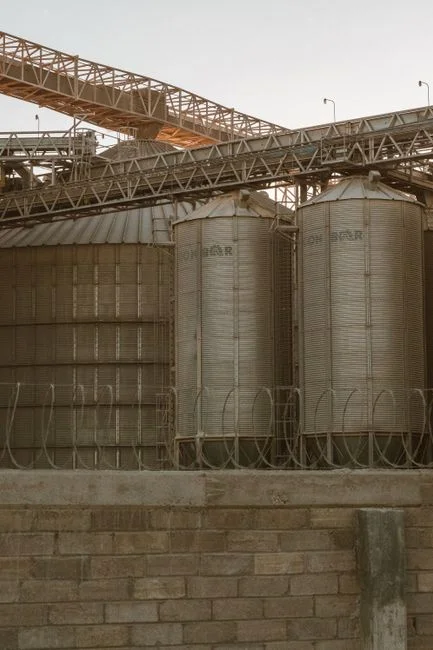
HydropureWater's 2026 guide gives a 200 m³/day MBR example with continuous power demand of 2–5 kW and recommends a UPS for the control panel plus a diesel generator for bioreactor blowers where grid reliability is uncertain.
Power resilience must be specified as a system rather than a backup-generator label. Ask for generator fuel availability, automatic changeover, protected controls, safe shutdown and restart behavior, and the operating priority between blowers, membrane scouring, pumps and controls. The [Surat housing package-plant comparison](/blog/12999-what-packaged-sewage-treatment-plant-fits-surat-housing-2026.html) provides a useful cross-check for utility and procurement scope.
The same 2026 guide estimates sludge output of 15–25 kg dry solids per day for the 200 m³/day example and approximately 80% cake-volume reduction through plate-and-frame dewatering. Those values must be reconciled with the final flow, influent strength, solids capture and actual operating duty. Specify an accessible sludge holding and dewatering route, including the plate-and-frame sludge filter press, collection containers, odor control, maintenance access and a lawful disposal destination.
For a buried WSZ, require the civil design to address excavation depth, groundwater, buoyancy, access openings, ventilation, bypass provisions and landscaping or traffic loading. A GX rotary mechanical bar screen may be relevant where inlet protection is needed, but its inclusion should follow the developer's wastewater survey rather than a standard package assumption.
For MBR, require confirmation of membrane access, air-scouring, backwash or cleaning, standby-blower strategy and replacement access. The 2026 guide's approximately 60% footprint reduction compares visible equipment with conventional activated sludge; the developer should still assess the full civil, access and maintenance footprint.
Build a Supplier and Commissioning Shortlist
HydropureWater's 2026 guide warns that imported-part lead times of 6–10 weeks can become a critical residential-plant project risk.
Request one traceable duty schedule covering average and peak flow, influent BOD, COD, TSS, ammonia, FOG and the final effluent values. Require the proposal to identify screening or inlet protection, equalization where needed, biological treatment, solids separation, disinfection, controls, sludge withdrawal, odor control and essential site works. The Phnom Penh housing wastewater guide provides a comparable structure for checking package scope and handover obligations.
For MBR bidders, require the membrane-replacement strategy, blower redundancy, control-panel protection, alarm handling, power-failure response and remote-monitoring options. For WSZ bidders, require the equivalent inspection, maintenance, aeration-control and sludge-management plan.
Make acceptance conditional on witnessed performance testing with site-relevant influent and the agreed discharge or reuse route. Require documented results for BOD, COD, TSS, ammonia, fecal indicators, pH and any reuse-specific parameters. Also require an itemized commercial schedule covering equipment, freight, taxes, civil works, installation, commissioning, training, initial chemicals or media, spares, warranty and sludge disposal. No research-supported package-plant price is available, so a bidder should quote the complete project scope rather than publish a generic unit price.
Frequently Asked Questions
What size package sewage treatment plant does a 200-home Medan housing development need?
HydropureWater's 2026 published example gives approximately 200 m³/day average flow and approximately 260 m³/day after applying a 1.3 residential peaking factor. Treat these as preliminary values: verify occupancy, water demand, infiltration, phasing and peak conditions before selecting the unit.
Is WSZ or packaged MBR better for a housing estate in Medan?
Choose WSZ where there is sufficient land, dependable utilities, a standard discharge route and no compelling reuse requirement. Choose MBR where land is constrained, reuse quality or ammonia and solids control dominates, and the owner can support membrane cleaning, blowers, power resilience and specialist maintenance.
How much does a packaged sewage treatment plant cost in Indonesia?
The supplied research does not establish a defensible package-plant price for this project. Request an itemized quotation for the treatment package, civil works, installation, commissioning, controls, sludge handling, power backup, initial consumables, warranty, spares and field service so that the budget compares complete scopes.
What should a developer check when selecting a sewage treatment supplier?
Check the verified duty schedule, Indonesian or ASEAN field-service coverage, commissioning support, operator training, critical-spares availability, delivery schedule and performance-test conditions. For MBR, also make membrane replacement, blower redundancy, alarm handling and power-failure response contractual deliverables.
What permits and effluent tests are required for a Medan housing wastewater system?
Confirm the current local permit and receiving route with the reviewing authority. BPPT's 2017 presentation cites domestic-wastewater maxima of pH 6–9, BOD 30 mg/L, COD 100 mg/L, TSS 30 mg/L, oil and grease 5 mg/L, ammonia 10 mg/L and total coliform 3,000 MPN/100 ml. HydropureWater's 2026 guide identifies PP 22/2021 Lampiran VI working targets for residential surface-water discharge as BOD at or below 30 mg/L, TSS at or below 30 mg/L, ammonia-N at or below 10 mg/L and fecal coliform at or below 1,000 MPN/100 mL; current applicability must be confirmed before design.