What Changes When Micron Acquires a Plant in India?
Wastewater requirements when Micron acquires a plant in India are determined by the site's existing environmental and water approvals. The buyer must verify current permits, characterize every wastewater stream, confirm applicable discharge or reuse limits, and assess whether treatment infrastructure meets site-specific consent conditions. Micron’s 2020 sustainability report identifies membrane filtration, ion-resin adsorption, precipitation, bio-oxidation and neutralization among site treatment methods, with routine discharge sampling used to demonstrate conformance. The acquisition may also change who must manage or renew approvals.
Separate the review into two workstreams. The transaction workstream examines whether a change in ownership, operator, production plan or wastewater destination affects approvals held by the acquired legal entity. The continuing-obligations workstream verifies whether the plant currently satisfies its environmental clearance, consent conditions, sewer agreement, monitoring programme and reporting duties. A buyer should not treat a change of control as the source of every requirement, nor assume that existing approvals remain transferable.
Identify the legal entity holding each approval, the operating company, the owner of the land and treatment infrastructure, and the party contractually responsible for sewer connections, reuse, sludge disposal and third-party treatment. This responsibility map prevents an approval gap from being hidden inside a shared-services arrangement.
Micron’s public water-stewardship disclosure is a useful operating baseline, not an Indian legal determination. Its 2020 sustainability report says manufacturing sites invest in treatment infrastructure, employ operating staff and routinely sample discharges. The supplied research does not establish a Micron acquisition in India, an Indian site-specific consent or a plant-specific discharge limit. The India plant-acquisition wastewater due-diligence guide provides a related transaction framework.
Wastewater Due Diligence Before Signing
A credible acquisition review tests the documents, operating records and infrastructure behind the plant’s environmental claims. Request the current environmental clearance, water-use permission, discharge consent, trade-off permission or connectivity approval applicable to the specific site, together with consent conditions, compliance reports, monitoring records, non-compliance notices and renewal history. Obtain the sewer agreement, reuse contract, industrial-estate conditions and receiving-authority records for every actual outlet.
- Build a mass-and-concentration balance covering incoming water, process wastewater, recycling, reject streams, storm water, sewage, sludge and hazardous waste. A coherent balance is more informative than an isolated discharge-test result.
- Review operating logs, laboratory data, calibration records, bypass history, upset events, treatment redundancy, sludge handling and the allocation of operations, laboratory and regulatory-reporting duties.
- Test whether the transaction or closure process could suspend, amend or require revalidation of approvals. Establish which regulator, municipal authority or industrial-estate operator must be notified.
- Model realistic post-acquisition changes, including production mix, recovery rate, groundwater status, sewer arrangements and reuse contracts. Do not assume that the acquired wastewater profile remains constant.
| Diligence item | Evidence to request | Decision exposed |
|---|---|---|
| Approvals and agreements | Current consents, conditions, sewer or reuse agreements, renewals and notices | Transferability, amendment and operating restriction |
| Water balance | Meter data, stream flows, recycling and reject records, discharge and sludge volumes | Unaccounted water, dilution and missing treatment capacity |
| Compliance performance | Laboratory reports, calibration records, bypass and upset logs | Historical exceedance and weak control of operations |
| Infrastructure and contracts | Asset register, maintenance records, O&M allocation, sludge route and third-party agreements | Hidden capital, closure and responsibility gaps |
| Post-transaction scenario | Production, recovery and destination change assumptions | Future consent, treatment and reuse exposure |
Environmental acquisition due diligence differs from an ordinary engineering review. A technically effective plant can still require consent changes, while a clean compliance history does not prove that the infrastructure can support revised production.
Characterize Each Semiconductor and Industrial Wastewater Stream
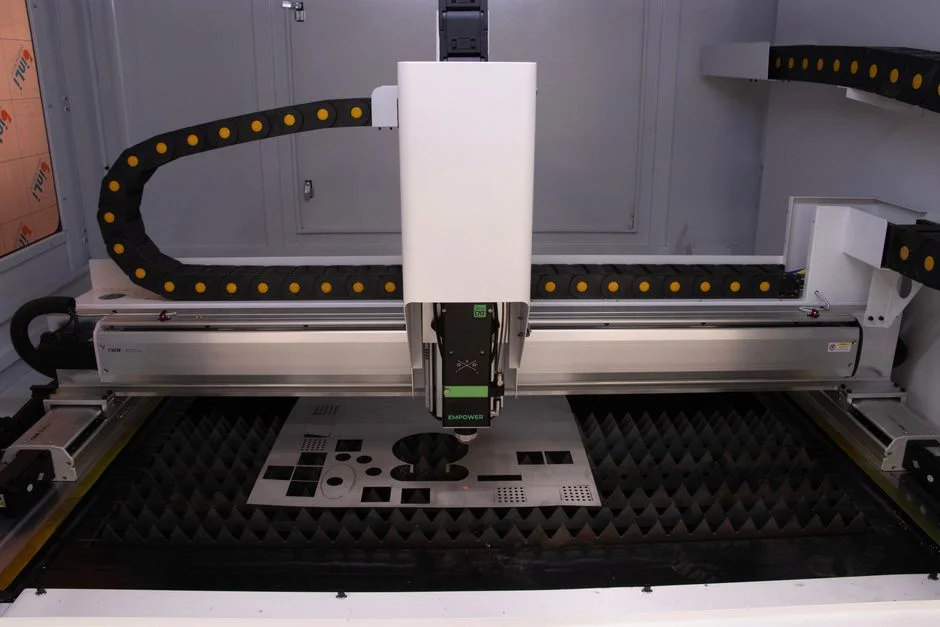
Semiconductor wastewater must be characterized by source because treatment, discharge and reuse requirements differ materially between streams. Create a matrix for process rinse and cleaning wastewater, equipment and floor cleaning, laboratory wastewater, cooling-water blowdown, sewage, storm water and sludge. Do not assign a combined flow or limit until source data is available.
For each stream, obtain pH, temperature, flow, hardness, suspended solids, oil and grease, metals, acidity or alkalinity, dissolved salts, chemical oxygen demand, biochemical oxygen demand, nutrients and any site-specific priority contaminants. Use the plant’s analytical records and confirm the laboratory’s accreditation scope. A long compliance history is not a substitute for source characterization, particularly where acquisitions or operating changes may alter the process mix.
| Stream | Characterization focus | Treatment or destination question |
|---|---|---|
| Process rinse and cleaning | Flow, pH, dissolved salts, metals, acidity or alkalinity, temperature | Can the stream be segregated, recovered or treated to the applicable discharge or reuse specification? |
| Equipment and floor cleaning | Suspended solids, oil and grease, colloids and cleaning chemicals | Is solids or FOG removal required before further treatment or sewer discharge? |
| Laboratory wastewater | Acidity or alkalinity, metals, organic loading and constituent variability | Should the stream enter the general plant treatment train or receive controlled pretreatment? |
| Cooling-water blowdown | Flow, temperature, chemistry, treatment chemicals and scaling constituents | Can it be reused, discharged or segregated under the applicable approval? |
| Sewage and storm water | Flow, contamination risk, cross-connections and segregation integrity | Is there a sanitary route, and can storm water be prevented from mixing with process effluent? |
| Sludge and treatment residuals | Origin, quantity, characteristics, storage and disposal route | Is the residual classified and traceable to an authorized disposal route? |
Micron’s 2020 sustainability report says treatment methods vary by site and lists membrane filtration, ion-resin adsorption, precipitation, bio-oxidation and neutralization. These methods address different functions; the list is not a universal process train. Discharge treatment may require less polishing than manufacturing-water reuse or a high-purity application.
Micron reported 39 million m³ of treated-wastewater discharge in CY2019, with 85% sent to publicly operated treatment works, according to its 2020 sustainability report. That company-wide historical context is not an Indian plant design basis. A semiconductor wastewater compliance guide can support stream-definition work, but site documents must control the final characterization.
Map Indian Consents, Sewer Conditions and Reuse Rules
Each outlet must be mapped to its actual recipient: a municipal sewer, industrial-pretreatment system, shared internal drain, inland surface water, groundwater recharge or approved reuse point. Obtain the consent, agreement or authorization governing that destination. CTE and CTO compliance should be tested at the project level against the site’s current pollution category, treatment, environmental clearance and consent conditions, rather than inferred from a generic process description.
Extract enforceable pH, temperature, flow, pollutant, toxic-substance, monitoring, sampling and reporting conditions from the acquired plant’s documents. Do not substitute a national or international limit for the terms that actually control the outlet. Check whether the same parameters also appear in a sewer-use agreement, state pollution control board consent, industrial-estate condition or reuse authorization. Where several controls apply, document the stricter requirement and the evidence supporting that conclusion.
Identify what the proposed acquisition changes regarding the permit holder, operator, process capacity, wastewater characteristics or destination. For each change, determine through the documents and competent-authority consultation whether notification, amendment or revalidation is required. The industrial pretreatment-limit guide illustrates the need to compare discharge conditions with the receiving system’s requirements.
Do not infer reuse permission from the existence of a reuse contract or ZLD equipment. Confirm the authorized reuse end use, water quality specification, monitoring responsibility and quantity limit. A manufacturing process change may alter the wastewater composition even when the buyer and legal entity remain unchanged.
Micron’s 2020 sustainability report supports the general compliance model of on-site treatment plus routine discharge sampling, but it does not supply India-specific consent terms. A plant’s approval file, receiving agreements and regulator correspondence are therefore the controlling diligence evidence.
Select Treatment and Reuse Systems from Verified Data
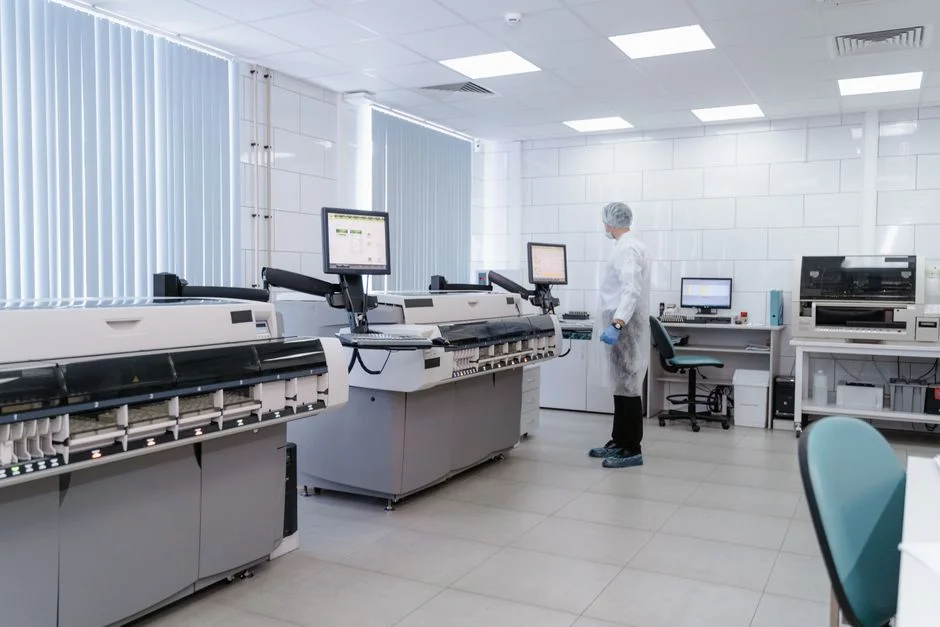
Treatment selection starts with verified stream composition rather than a preferred equipment type. Suspended solids, oil and grease, FOG or colloidal matter can justify an industrial DAF system for suspended solids, FOG and colloids, provided the selected unit is matched to measured flow and contaminant loading. An ultrafiltration system for colloidal and suspended-solid separation may be appropriate where its stated operating duty fits the stream.
| Potential equipment | Applicable function | Procurement evidence required |
|---|---|---|
| Dissolved Air Flotation system | Removal of suspended solids, oil and grease, FOG and colloidal material | Verified flow, pollutant loading, treated-water target, skimming and solids-removal route |
| Ultrafiltration system | Colloidal and suspended-solid separation or pretreatment | Feed-water turbidity, solids load, flow, membrane compatibility and recovery target |
| PLC-controlled chemical dosing | pH control, coagulation or flocculation | Jar and treatability testing, chemical consumption, storage and dosing-control requirements |
| MBR system | Activated sludge combined with membrane filtration where required effluent quality and footprint justify process complexity | Influent characterization, target outlet, hydraulic loading, membrane fouling risk, sludge handling and redundancy |
Chemical dosing demand must come from jar and treatability testing. For MBR, the required outlet specification and installation constraints determine whether the added biological and membrane complexity is justified. Equipment capacity cannot be selected from an assumed combined semiconductor flow.
Before issuing a purchase order, require an influent characterization, hydraulic and mass balance, target outlet, recovery expectation, utility demands, chemical storage, sludge route, automation requirements, redundancy, installation constraints and an acceptance-test protocol. The industrial DAF system, hollow-fiber UF system and integrated MBR system should be evaluated against those verified inputs rather than product capacity alone.
Build a Risk-Ranked Capital and Compliance Plan
Classify each finding as a closing condition, pre-close remediation, post-close capital expenditure, operating change, contractual allocation or monitoring item. This preserves the distinction between a defect that must be resolved before ownership transfers and an improvement that can be implemented under an agreed post-closing plan.
Price interventions using verified flow and pollutant data rather than purchase-order price alone. Include civil work, utilities, chemical supply, sludge disposal, monitoring, commissioning, operator training, contingency and long-term O&M. Tie every treatment guarantee to the applicable consent and receiving-agreement parameters, and specify sampling methods, alarm response, bypass management and minimum redundancy. A performance statement without a defined test route does not protect the buyer.
Use a staged sequence: correct permit and ownership issues, stabilize the existing treatment train, verify reuse feasibility, and only then expand capacity for revised production plans. This reduces the risk of buying equipment before the legal, hydraulic and water-quality basis is settled.
Infrastructure commitments can materially exceed the treatment skid. A 26 February 2026 report by NY State of Politics said Micron paid $150,000 for land for underground industrial wastewater lines in Clay, New York, while Onondaga County lawmakers had approved $549 million in Oak Orchard upgrades at the end of 2025. That example demonstrates the scale of off-site commitments that may accompany a large semiconductor site; it is not an Indian cost estimate.
Use the compliance-risk decision tree this way: if approval transfer or amendment is unresolved, make it a closing issue; if existing treatment cannot meet the current consent, require a funded remediation plan; if reuse quality is unproven, treat ZLD as an option rather than a committed design; if a production change alters the wastewater profile, re-size only after characterization and consent review.
Frequently Asked Questions
Does Micron’s acquisition automatically transfer the plant’s Indian wastewater approvals?
Approval status depends on the specific documents.
Frequently Asked Questions
Does acquiring a Micron plant in India automatically require new wastewater permits?
Yes, under the Water (Prevention and Control of Pollution) Act, 1974, Consent to Operate (CTO) permits are non-transferable. Upon acquisition, the new entity must apply for a fresh CTO and potentially a Consent to Establish (CTE) if the facility undergoes any physical modifications or process changes.
Applications must be submitted to the relevant State Pollution Control Board (SPCB). The process requires a comprehensive assessment of the existing environmental clearance (EC) to ensure the current capacity and discharge parameters remain consistent with the new ownership's operational profile.
What wastewater records should I request before completing a Micron plant acquisition in India?
You should conduct a thorough due diligence review of the last 36 months of Continuous Effluent Quality Monitoring System (CEQMS) data. This should include real-time logs for pH, Total Suspended Solids (TSS), Chemical Oxygen Demand (COD), and specialized semiconductor parameters like fluoride, ammonia nitrogen, and heavy metals.
Additionally, request the original Consent to Operate (CTO) documents, Hazardous Waste Authorization (HWA) certificates, and third-party NABL-accredited laboratory test reports. Reviewing the maintenance logs of the Zero Liquid Discharge (ZLD) system and the historical sludge disposal manifests is critical to identifying potential legacy soil or groundwater contamination liabilities.
How much does industrial wastewater treatment cost for a semiconductor plant acquisition?
Operational expenditures (OPEX) for semiconductor wastewater treatment in India typically range from $1.50 to $4.50 per cubic meter of treated water, depending on the complexity of the effluent stream and the recovery rate of the Zero Liquid Discharge (ZLD) system. This includes chemicals, energy consumption for reverse osmosis (RO) units, and membrane replacement cycles.
Capital expenditure (CAPEX) for upgrading or retrofitting an acquired plant's treatment infrastructure can range from $2 million to $15 million, contingent upon whether the facility requires advanced oxidation processes (AOP) or specialized ion exchange resins to meet stringent 2026 discharge standards for ultrapure water recovery.
Which treatment system should I choose for an acquired semiconductor plant in India?
For semiconductor manufacturing, a Zero Liquid Discharge (ZLD) configuration is the industry standard in India to ensure compliance with SPCB mandates. The system must integrate a combination of physical-chemical treatment, biological treatment (if organic solvents are present), and high-recovery multi-stage RO systems.
To reach 2026 standards, the system should incorporate thermal evaporation or mechanical vapor recompression (MVR) units to minimize brine discharge. Selection should prioritize modular designs that allow for the recovery of ultrapure water (UPW), which can reduce total freshwater intake costs by up to 60-70%.
What is the compliance risk of expanding production after acquiring a wastewater plant in India?
Expanding production capacity without a formal amendment to the environmental clearance (EC) and CTO is a violation of the Environment (Protection) Act, 1986. Increasing throughput often shifts the effluent load beyond the design capacity of existing ZLD systems, leading to non-compliance with the discharge norms set by the Central Pollution Control Board (CPCB).
The primary risks include the issuance of "Closure Directions" under Section 33A of the Water Act, which can mandate an immediate halt to manufacturing operations. Furthermore, failure to adhere to the increased load mandates can result in significant environmental compensation penalties, calculated based on the number of days of non-compliance and the volume of excess discharge.