German Site Law Governs the Wastewater Compliance Decision
When Saudi Aramco acquires a plant in Germany, the acquired facility normally remains accountable under German and applicable EU wastewater rules; Saudi corporate targets do not replace the site’s German permits. The buyer should first identify whether the plant discharges directly to surface water, groundwater or a public sewer, then confirm permit transfer or reissue requirements with the competent German authority. Due diligence should review monitoring records, permit limits, sewer acceptance conditions, pretreatment performance, sludge disposal, groundwater risk and ETP condition. A legacy plant may be retained if it can meet every legal requirement; otherwise, DAF pretreatment, biological optimisation or MBR replacement should be compared. Aramco’s reported interest in MABR and its 2030 ZLD target for new acquisitions may influence corporate investment criteria, but neither establishes a German discharge limit.
German site obligations should be separated from corporate reuse objectives before capital is committed. The non-negotiable compliance stack comprises the applicable German and EU rules, the site-specific permit, the actual discharge route, and any sewer or receiving-body requirements attached to direct or indirect industrial discharge. Voluntary Aramco reuse, sustainability and zero liquid discharge criteria sit outside that stack unless incorporated into German consent or another enforceable obligation.
HydropureWater’s 2025 Sustainability Report is described in its 2026 Saudi Aramco ETP acquisition due-diligence guide as establishing a target for ZLD in new acquisitions by 2030. That is an Aramco acquisition objective, not a German regulatory requirement. The distinction matters because a corporate target can justify a business case for advanced reuse, while the German permit determines what may lawfully be discharged and under which operating conditions.
Sweco’s 2026 acquisition commentary describes modernisation, climate resilience, ageing infrastructure and stricter EU requirements as drivers of German wastewater investment. The same commentary identifies severe floods in western Germany in 2021 and recurring drought and low-water periods since 2018 as reasons to improve resilience. These are current market and asset-risk considerations, not substitutes for determining the site’s permit conditions.
| Decision layer | Binding status for the German site | What the buyer should establish |
|---|---|---|
| German and applicable EU law | Non-negotiable | Applicable statutory requirements and the competent authority |
| Site permit and discharge consent | Non-negotiable | Limits, monitoring duties, conditions and validity status |
| Sewer or receiving-body conditions | Applicable through the selected discharge route | Acceptance criteria, capacity allocation, charges and pretreatment instructions |
| Aramco reuse or ZLD objective | Corporate objective unless contractually or regulatorily incorporated | Investment case, permitted route and residual-waste implications |
The broader treatment question is developed in the Aramco wastewater acquisition requirements for a US plant and the 2026 Manama effluent-treatment buyer guide, but neither provides a substitute for German permit due diligence.
Build a Germany Wastewater Due-Diligence File
A Germany wastewater treatment plant due-diligence file should connect permits, evidence and physical assets rather than collect monitoring data without an operating context. The first request is the current wastewater permit and every attachment, amendment and deviation approval. Obtain the discharge-point map, receiving-water or sewer particulars, monitoring plan, inspection records and enforcement correspondence. A missing attachment or undocumented deviation can conceal an operating constraint that is not visible from the nameplate capacity of the ETP.
Request representative influent and effluent records for flow, COD, BOD, TSS, nitrogen, phosphorus, pH and any substance- or sector-specific parameters. The seller should identify the sampling location, laboratory method, laboratory, sampling frequency and chain of custody. The buyer must also distinguish continuous monitoring from grab sampling, list periods for which data are missing, and provide an explanation for every exceedance, bypass, tank overflow, sludge-storage deviation and corrective action.
For indirect discharge, obtain the sewer-use contract, pretreatment instructions, discharge charges, allocated capacity and correspondence with the sewer operator. The permit and the sewer agreement may impose different obligations. Capacity allocation is particularly important where another industrial discharger can affect the receiving plant’s performance.
- Establish the discharge route and identify the permit, sewer agreement and responsible authority.
- Reconcile monitoring records with inspections, exceedances, deviations and corrective actions.
- Link permit limits to representative wastewater characteristics and operating records.
- Reconcile treatment-plant condition, sludge handling and groundwater evidence.
- Convert unresolved findings into permit conditions, capital estimates and contractual protections.
The existing Saudi acquisition article uses a five-year historical-data benchmark and a 12-month consecutive-compliance benchmark for specified Saudi permit novation. Those figures are not established by the supplied research as German requirements; the German authority must confirm the applicable record period and evidence standard. The 2026 MBR versus conventional activated-sludge comparison is useful for process screening, but it cannot establish Germany’s record-submission rules.
Groundwater review should cover tanks, process areas, wastewater lines, sludge beds, former disposal sites, spill records and known contamination. Determine whether consultant assessments are current, site-specific and suitable for transaction reliance. The 2026 MBR versus conventional activated-sludge guide for chemical wastewater can inform the process investigation, while responsibility for historical groundwater contamination liability remains a legal allocation issue.
| Document set | Minimum information to request | Diligence test |
|---|---|---|
| Permit and authority file | Permit, attachments, amendments, deviations, inspections, enforcement and discharge map | Does the authorised route and operating envelope match actual operations? |
| Monitoring evidence | Influent and effluent data, methods, locations, custody records and missing periods | Can compliance be demonstrated continuously and reproducibly? |
| Indirect-discharge file | Sewer agreement, pretreatment instructions, charges, capacity and correspondence | Are sewer constraints compatible with current and proposed production? |
| Asset and residue file | Equipment records, maintenance, sludge handling, spills and site assessments | What condition, capacity and environmental liabilities transfer? |
Confirm the Permit Path With the Competent Authority

The permit path depends on the site’s actual discharge route, and the competent German authority—not the buyer’s corporate headquarters—must determine the applicable change-of-ownership procedure. Map whether the facility discharges directly to surface water, discharges groundwater, sends industrial wastewater to a public sewer, or uses an off-site treatment route. These arrangements can trigger different consent, notification and operating requirements.
Ask the competent authority or a German permitting consultant to address a change in legal ownership, a change in operator, a change in production capacity, a change in process chemistry and a change in wastewater composition. The question is not simply whether the permit can remain in place, but whether the existing authorisation, monitoring plan or treatment description must be amended or replaced.
Distinguish the corporate purchaser from the party that operates the installation. Confirm who must sign monitoring reports, submit accident notifications and receive permit correspondence after closing. Require a written implementation plan covering the application, technical submissions, authority review, conditions precedent and the interim operating position.
Make any material permit confirmation a closing condition where the transaction structure permits. If the authority will not issue an advance determination, require the seller to support the application, disclose material changes and retain responsibility for pre-closing non-compliance until the required consent is effective. Transition operating support, access to authorities and responsibility for an incident at closing should also be addressed.
Saudi timelines must not be inserted into the German workplan. HydropureWater’s 2026 article reports a 90-day ownership-change notification for MEWA and a permit-novation period of 6–18 months in specified RCJ/RCY jurisdictions. These are Saudi examples only; the supplied research does not establish equivalent German deadlines. Advanced reuse, brine concentration or ZLD remains an optional investment path subject to German permitting, energy, residue and commercial analysis.
Assess the Existing Effluent Treatment Plant Asset
The existing ETP should be accepted as a useful asset only if its verified condition and performance support legal compliance. Audit hydraulic capacity, organic and nutrient loading, hydraulic shock, equalisation, biological treatment, clarification, filtration, disinfection, sludge handling, controls, power supply and redundancy against current permit conditions. The assessment should test the asset under present production and foreseeable operating scenarios, not merely compare the installed capacity with average flow.
Inspect corrosion, structural integrity, membrane condition, aerator and pump performance, chemical-dosing calibration, flow-meter accuracy, online-analyzer drift, backup power and alarm response. Review operating logs against maintenance records and verify whether alarms caused an operator response. Obsolete instrumentation or unavailable spares can turn an apparently compliant plant into a production constraint.
Assess the process train in sequence. If the site uses DAF or primary clarification, determine whether oil, grease, floatables and colloidal solids are removed before biological treatment. Review bubble-generation reliability, solids separation, skimming, sludge transfer and downstream handling. These questions link pretreatment performance to biological stability and membrane fouling rather than treating each unit as an isolated asset.
Review biological process stability, sludge settleability, sludge age, aeration efficiency, chemical-cleaning history and membrane condition. Where space or aeration performance is constrained, MABR may merit comparison with the existing biological process. MABR is an option for efficiency or retrofit, not evidence of German permit compliance.
Operational resilience also belongs in the asset case. Sweco’s 2026 acquisition announcement identifies climate pressures, ageing infrastructure, severe floods in western Germany in 2021, and recurring drought and low-water periods since 2018 as reasons to improve resilience. A retained ETP should therefore be tested against relevant flood, low-water, power-loss and supply-interruption scenarios.
| Assessment area | Evidence to inspect | Decision consequence |
|---|---|---|
| Hydraulic and process capacity | Flow, loading, shock, equalisation, redundancy and permit envelope | Determine whether retention has adequate margin |
| Mechanical and control condition | Corrosion, pumps, aerators, meters, analysers, power and alarms | Estimate repair, renewal and operating risk |
| Pretreatment and biological stability | DAF performance, FOG loading, sludge settleability and aeration | Determine whether DAF or process optimisation is required |
| Sludge and residue | Sludge handling, storage, disposal route and contamination history | Identify permit, cost and groundwater liabilities |
Do not apply HydropureWater’s Saudi retrofit estimate of SAR 0.9–1.4 million per 100 m³/day or its statement that legacy ETPs can incur 40% higher operating expenditure to Germany. The supplied research does not support those figures as German benchmarks. Obtain a Germany-specific engineering quotation covering capital works, energy, chemicals, labour, spares, disposal and renewal.
Choose Retention, Retrofit or MBR Replacement
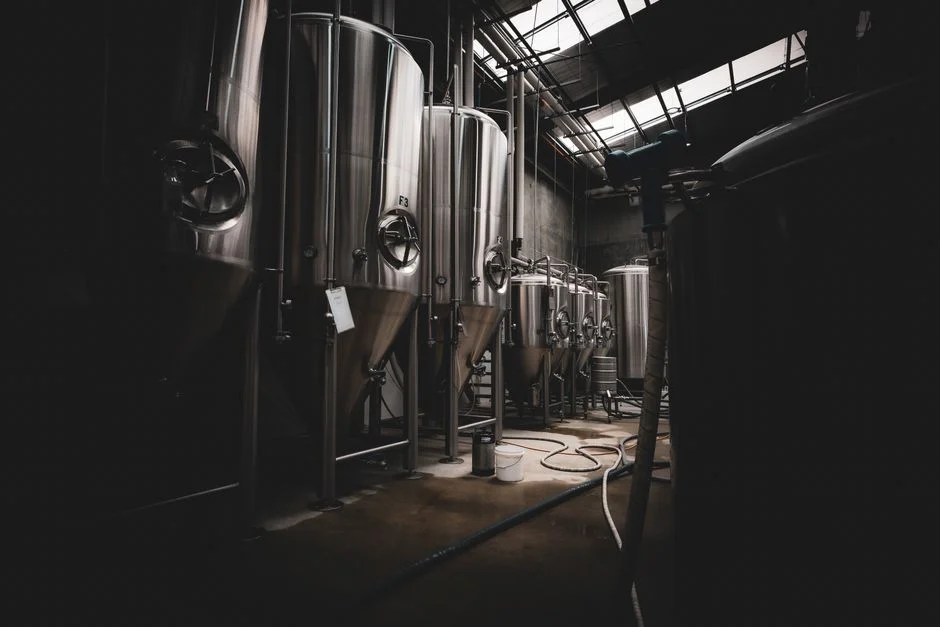
Equipment selection should begin with permit compliance, representative wastewater characteristics and verified site constraints. Retain and optimise the legacy ETP when it has adequate hydraulic and process margin, demonstrable compliance, acceptable condition and a defensible life-cycle cost. A low purchase price alone is not a reason to retain an undersized or poorly maintained plant. The process and MBR comparisons in the 2026 MBR versus conventional activated-sludge comparison provide a useful screening structure.
Add or upgrade DAF when representative testing shows that oil, grease, floatables or colloidal solids would impair biological treatment or membrane performance. Confirm the required separation objective before selecting a DAF system for industrial wastewater pretreatment. Hydraulic loading, waste-origin stream, recycle, sludge removal and downstream treatment must be included in the comparison.
Consider MBR where footprint is constrained, compact biological treatment is required, or the site has a credible reuse objective. HydropureWater states that its integrated MBR wastewater treatment system provides a 60% smaller footprint than conventional systems and BOD effluent consistently below 5 mg/L. Those are supplier statements subject to site-specific design and influent testing, not guaranteed outcomes for a German acquisition.
Evaluate MABR as an efficiency or retrofit option. Silicon Republic reported in June 2019 that OxyMem claimed MABR could reduce aeration energy consumption by up to 75%. This manufacturer claim requires site pilot data, an energy guarantee tied to site influent, and confirmation that the final configuration meets the German permit.
Compare each option on compliance certainty, footprint, energy, chemical use, sludge quantity and quality, automation, operator skill, maintainability, implementation time and residual asset value. A treatment claim must not be presented as a discharge guarantee before the effluent definition, receiving-water conditions, sewer limits and site influent are established.
| Condition found | Preferred path | Decision gate |
|---|---|---|
| Compliant asset with adequate margin, sound condition and acceptable life-cycle cost | Retain and optimise | Document performance, maintenance needs and renewal plan |
| Oil, grease, floatables or colloidal solids threaten biological treatment | Add or upgrade DAF pretreatment | Confirm with representative wastewater testing |
| Existing biological process cannot provide required capacity, stability or footprint | Retrofit or consider MBR | Compare site-specific process performance and permit compliance |
| Legacy asset has unacceptable condition, capacity or life-cycle cost | Replace with MBR or another process | Complete Germany-specific engineering, energy and residual-waste analysis |
| Reuse or ZLD is a credible corporate objective | Evaluate advanced reuse or brine concentration | Confirm German permit route, energy demand and residue handling |
The industrial ETP and DAF selection guide and the 2026 DAF engineering specifications and decision framework provide further equipment-screening detail, but the German permit and site data remain controlling.
Allocate Environmental Risk in the Purchase Agreement
The purchase agreement should convert technical findings into defined obligations at closing. Describe the permitted condition of the wastewater assets, including verified capacity, compliant operating status, monitoring systems, critical spares, outstanding maintenance and required capital works. Define what the seller must deliver and what the buyer may assume is operational on completion.
Allocate pre-closing permit violations, exceedances, spills, non-compliant sludge disposal, groundwater contamination and enforcement matters to the seller, subject to appropriate disclosure and survival periods. Require disclosure of all wastewater claims, regulator correspondence, third-party audits, remediation work, sampling plans, laboratory data and root-cause analyses. A generic “compliance with law” representation is insufficient if the historical evidence is incomplete.
Use completion accounts or a price adjustment for quantified upgrade costs. Where commercially appropriate, an escrow or holdback can remain tied to permit completion, corrective works and delivery of outstanding compliance records. Unquantified groundwater contamination should be addressed through a defined allocation mechanism rather than left as an open-ended operational cost.
The seller should support permit-transfer applications, provide historical records and grant access to authorities and site personnel. Transition operating support, notification responsibilities and responsibility for a wastewater incident at closing should be explicit. This is the point to distinguish a historical liability from the buyer’s obligation to operate the site lawfully after closing.
Frequently Asked Questions
What permits and approvals should be transferred or reissued when Saudi Aramco acquires a plant in Germany?
Start with the site’s discharge route. Direct surface-water discharge, groundwater discharge, public-sewer discharge and off-site treatment may require different approvals. The competent German authority should confirm whether a change in legal ownership, operator, production capacity, process chemistry or wastewater composition requires modification or reissue of the existing permit, and it should identify the responsible party for monitoring reports and accident notifications. The Aramco wastewater acquisition requirements for a US plant provides a transaction framing, but German authority confirmation is indispensable.
Does Saudi Aramco’s 2030 ZLD target for new acquisitions override German wastewater law?
No. HydropureWater’s 2026 acquisition guide describes the 2030 ZLD objective as a Saudi Aramco acquisition target. It may influence the buyer’s investment case, reuse strategy and equipment comparison, but it does not replace a German permit, applicable EU law, sewer conditions or groundwater obligations. Advanced reuse or brine concentration also creates its own permitting, energy and waste-residue requirements.
How much should the buyer budget for a German ETP retrofit or MBR replacement?
Request a Germany-specific engineering estimate rather than applying a Saudi cost figure. The estimate should cover capacity development, civil and mechanical works, controls and monitoring, DAF or MBR equipment, energy, chemicals, sludge handling, labour, spares, commissioning, disposal and renewal. Give the bidder the confirmed permit limits, representative influent and effluent data, site drawings, asset-condition report and required implementation milestones, then request an itemised capital estimate and life-cycle operating comparison.
When is DAF pretreatment needed before biological treatment or MBR?
DAF should be considered when representative influent testing shows that oil, grease, floatables or colloidal solids create a credible separation requirement or threaten biological treatment, sludge settleability or membrane fouling. A buyer should ask the supplier to define the waste stream, hydraulic loading, separation objective, recovery, skimming, sludge handling and downstream duty. The Saudi Aramco ETP acquisition due-diligence guide can support this screening, but the final selection must reflect the German site and permit.
Which documents should a buyer request before signing the plant-acquisition agreement?
Request the current permit and attachments, discharge map, monitoring plan, laboratory data, inspection and enforcement records, sewer agreement, pretreatment instructions, capacity allocation, asset maintenance records, sludge-disposal records, spill history and site-specific groundwater assessments. Also require a proposed permit-transfer plan, a condition schedule and a quantified remediation and capital-work estimate. The acceptance test is whether the seller can demonstrate both legal compliance history and the actual condition of the treatment assets, not merely provide a current compliance statement.