Aramco's Wastewater Strategy Signals Liability Awareness
Saudi Aramco’s strategic integration of MBR membrane bioreactor systems and its investment in proprietary membrane-aerated biofilm reactor (MABR) technologies signal a shift toward high-efficiency, compact treatment standards that legacy industrial effluent treatment plants (ETPs) rarely achieve. According to the 2025 Sustainability Report, Aramco has established a formal target for zero liquid discharge (ZLD) in new acquisitions by 2030, rendering traditional, high-footprint, and low-efficiency ETPs potential stranded assets or significant environmental liabilities. The Saudi Vision 2030 National Water Strategy mandates 100% industrial wastewater treatment compliance by 2025, and local enforcement data confirms that non-compliant facilities face penalties including fines up to SAR 5M, mandatory operational shutdowns, and permanent license revocation for repeated discharge violations (source: Emvees technical advisory, 2026). This proactive stance forces all industry players in the region to re-evaluate their water footprint, as the cost of inaction now outweighs the capital expenditure of modernizing outdated, polluting infrastructure.
Phase 1: Historical Compliance Audit & Permit Transferability
MEWA Ministerial Decree 2023/45 requires that the acquiring entity submit a complete 5-year discharge monitoring record (covering flow, BOD, COD, TSS, TDS, phenols, and sulfides) within 90 days of an asset transfer to maintain regulatory standing. Because pre-2018 facilities often rely on manual grab samples rather than continuous online analyzers, auditors must identify these evidentiary gaps early to avoid "blind spots" during the permit novation process. For facilities under the jurisdiction of the Royal Commission for Jubail and Yanbu (RCJ/RCY), the novation process is gated by a requirement for 12 months of consecutive compliant data and a clean third-party audit report. Failure to provide this data is the primary cause of project delays in industrial M&A activity across the Kingdom, often leading to temporary operational suspensions until the regulatory backlog is cleared through rigorous compliance testing.
| Permit Type | Transfer Requirement | Typical Lead Time |
|---|---|---|
| MEWA Industrial Discharge | 5-year historical data submission | 6-9 months |
| RCJ/RCY Operational Permit | 12-month compliance validation | 12-18 months |
| NWC Sewer Connection | Flow meter certification | 3-5 months |
Phase 2: Technical Asset Assessment of Existing ETP Infrastructure
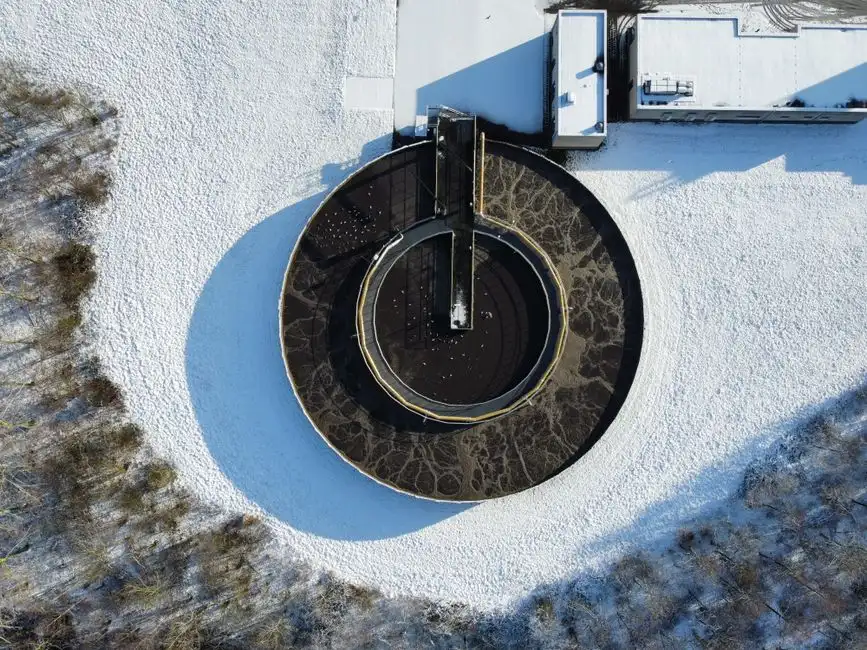
Legacy KSA ETPs designed before 2015 typically utilize extended aeration and secondary clarification, resulting in a footprint 3-5 times larger than modern MBR membrane bioreactor systems while struggling to meet the <10 mg/L BOD effluent targets required for Aramco-standard water reuse. An engineering assessment must prioritize the inspection of core mechanical components to quantify necessary capital expenditure versus operational optimization. DAF system for petrochemical wastewater units must be checked for bubble size distribution (target 30-50 μm) and recycle ratios of 15-30%; failures here often indicate poor FOG removal efficiency that directly impacts downstream biological health. Corrosion of internal steel components in high-salinity environments often necessitates a complete structural integrity survey, as rust-induced leaks can lead to cross-contamination of treated and untreated effluent streams.
| Component | Inspection Parameter | Performance Benchmark |
|---|---|---|
| Biological Media | Fill fraction / Biofouling | 50-65% fill; <8 years age |
| Sludge Dewatering | Plate frame filter press for sludge dewatering cycle time | <4 hours per batch |
| Dosing Systems | PLC-controlled chemical dosing system | 20-30% polymer reduction potential |
Phase 3: Legacy Contamination Characterization & Hydrogeological Risk
Saudi carbonate aquifers are highly susceptible to karst-related contamination, where subsurface features create preferential pathways that transport industrial pollutants 10-100 times faster than standard porous media models predict. Acquisitions must include a rigorous hydrogeological assessment, as unlined legacy evaporation ponds often exhibit seepage rates of 15-30 cm/year, leading to vertical plume migration of 3-6 meters over two decades of operation. Investigations must utilize EPA 8260/8270/6020 methods for TPH, BTEX, and heavy metals, with total remediation costs for plume extraction often ranging from SAR 18M to 42M per hectare depending on the depth and complexity of the contaminant profile. Mapping the subsurface stratigraphy using ground-penetrating radar confirms that no hidden sinkholes or fissures act as direct conduits to local groundwater aquifers, preventing potential environmental liability claims.
| Contaminant Class | Investigation Method | Remediation Threshold |
|---|---|---|
| BTEX | Multi-level monitoring wells | <1 mg/L (Natural Attenuation) |
| Heavy Metals | Soil borings (50m grid) | Per RCJ/RCY soil standards |
| Deep-Well Injection | Mechanical Integrity Test (MIT) | API 510/570 compliance |
Phase 4: Remediation Cost Modeling & Financial Provisioning
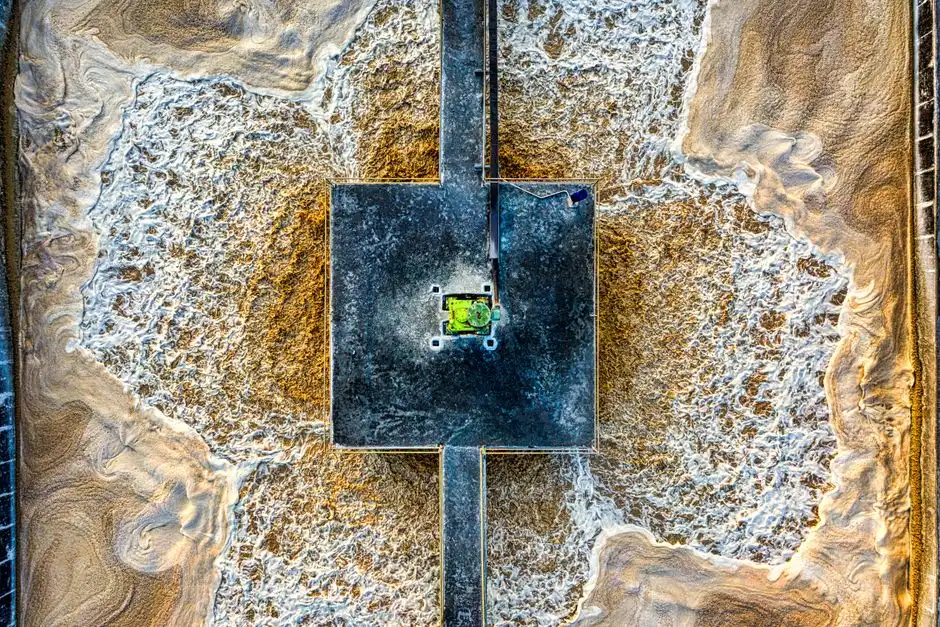
Financial provisioning for legacy wastewater liabilities follows a tiered contingency model, applying a 30% buffer for documented ETP retrofits and up to 75% for sites where karst-related groundwater contamination is confirmed. Under KSA Income Tax Law Article 18, remediation expenditures may be deductible if structured as asset retirement obligations incurred for business continuity. Engineers must distinguish between ETP retrofits—which carry a cost of SAR 0.9-1.4M per 100 m³/day but suffer from 40% higher OPEX—and full MBR replacements, which offer a 20-year service life and superior effluent quality for reuse applications. Investors should perform a sensitivity analysis on these figures, as the volatility of energy prices impacts the long-term operational viability of high-energy legacy systems compared to more efficient, modern modular treatment solutions.
| Liability Tier | Cost Model Accuracy | Contingency Range |
|---|---|---|
| Known (Permit gaps) | ±15% | 30% |
| Probable (Plume delineation) | ±35% | 50% |
| Possible (Historical leaks) | ±60% | 75% |
Phase 5: Post-Acquisition Compliance Roadmap & Technology Upgrade Path
A successful 100-day post-acquisition plan centers on the installation of continuous online analyzers for COD, BOD, TSS, and flow, requiring an initial investment of SAR 350-500K to establish a baseline for real-time reporting. By Year 2, the facility should transition toward a ZLD trajectory, utilizing advanced brine concentration and crystallizer technologies to minimize discharge volumes. For sites where space is constrained, replacing aging secondary treatment with MBR membrane bioreactor systems provides a 60% footprint reduction and BOD effluent levels consistently below 5 mg/L. All EPC contractors involved in these upgrades must hold 9COM pre-qualification, ensuring compliance with ASME U-stamp and API 650/620 standards essential for Aramco-tier infrastructure. Implementing these upgrades ensures regulatory compliance and improves the facility’s ESG score, increasing the long-term valuation of the asset.
Frequently Asked Questions
What MEWA permits transfer automatically vs. require new application in Aramco acquisition?
Most environmental discharge permits are tied to the physical site and operational parameters; however, MEWA requires a formal notification of ownership change within 90 days. If the production capacity or process chemistry changes significantly during the acquisition, a new Industrial Wastewater Discharge Permit application is mandatory.
How long does Royal Commission Jubail permit novation take for wastewater discharge?
Permit novation within RCJ/RCY jurisdictions typically ranges from 6 to 18 months. This timeline depends on the facility’s ability to provide 12 months of consecutive compliant monitoring data and the completion of a third-party audit.
What is the typical cost range for legacy groundwater remediation in Saudi carbonate aquifers?
Remediation costs for plume treatment in karst-prone aquifers range from SAR 18M to 42M per hectare. These costs vary based on the extent of the plume and the specific hydrogeological complexity of the site, necessitating professional 3D seismic and soil boring assessments.
Can Aramco use its OxyMem MABR technology to retrofit existing ETPs or only new builds?
Aramco’s MABR technology is modular and designed for retrofitting existing biological basins to increase capacity and energy efficiency without requiring massive civil works, making it a viable path for upgrading legacy ETPs.
What financial assurance instruments does MEWA accept for remediation guarantees?
MEWA typically accepts bank guarantees or specialized environmental insurance policies. These instruments must cover 150% of the estimated remediation cost and remain active for a minimum of 5 years post-acquisition to satisfy regulatory transfer requirements.