
Understand Muharraq’s Wastewater Infrastructure Before Choosing Equipment
Muharraq Island has a discrete sewerage catchment serving approximately 260,000 people, with all wastewater flowing to a single large sewage treatment plant, according to the Journal of Hazardous Materials Advances study published in 2022. The associated Tubli project is recorded by Samsung E&A as a 100,000 m³/d BOT facility with two sludge incinerators and sewer pipelines, completed in April 2014. This municipal infrastructure is useful context, but it does not prove that a particular private site has a practical connection or discharge approval. Site-level treatment should therefore follow a documented sewer-connection feasibility check rather than an assumption of network availability.
The public plant and its associated pipelines represent a centralized route, but a buyer must establish whether a connection point exists, whether upstream and downstream sewer capacity is available, and who bears the cost of any extension. The same review should record the route length, easements, pumping requirements, construction disruption, and the status of the connection application. A building, hotel, hospital, factory, or master-planned development may therefore need decentralized wastewater treatment in Bahrain even where municipal sewage treatment exists elsewhere on the island.
Use the municipal baseline to define the question, not to pre-select the answer. For private development, treated effluent reuse, a remote discharge route, or a constrained plot may be decisive. A broader review of Bahrain effluent treatment planning requirements should sit alongside the site-specific connection enquiry.
| Infrastructure fact | Verified evidence | Buyer implication |
|---|---|---|
| Public catchment | Approximately 260,000 people on Muharraq Island are served by a discrete sewerage catchment, with all wastewater flowing to one large plant, according to the Journal of Hazardous Materials Advances (2022). | Confirm the available connection point, permitted flow, and sewer-capacity status for the specific site. |
| Tubli BOT project | Samsung E&A records 100,000 m³/d treatment capacity, two sludge incinerators, sewer pipelines, and successful completion in April 2014. | Public capacity does not establish hydraulic availability, extension scope, or permission for a new discharge. |
| Private-site responsibility | Site flows, extension works, pretreatment requirements, and discharge acceptance are project-specific and are not quantified in the supplied research. | Document connection feasibility and authority requirements before ordering packaged treatment. |
Decide Between Centralized Sewage and On-Site Treatment
The centralized route should be investigated first where gravity sewerage is available and practical, because it can avoid unnecessary treatment-plant duplication if the authority confirms a usable connection and the downstream system has capacity. An on-site package plant becomes the stronger candidate when connection distance, land constraints, deployment time, or separation from the sewer network materially affects feasibility. The decision should be recorded rather than inferred from equipment marketing claims.
No connection distance, project flow, available footprint, capital cost, or approval threshold can be inferred from the supplied research for an individual Muharraq site. Request the connection point, permitted flow, application status, sewer-capacity status, proposed discharge route, and required documentation from the relevant authority. These outputs should be obtained before comparing commercial proposals because they can remove a route from consideration or define substantial upstream and downstream work.
For a decentralized project, define the final destination of the water: internal reuse, permitted discharge, or transfer to another party. Identify ownership of every stage, including incoming works, treatment, pumping, final effluent management, and residuals. A supplier’s treatment scope is not automatically a complete project scope.
The comparison below is a route-selection framework, not a claim that either decentralized technology is always preferable. It also supports more detailed review of domestic sewage treatment options in Manama while keeping the Muharraq site constraints central.
| Decision factor | Centralized connection | On-site treatment | Evidence required |
|---|---|---|---|
| Connection | Uses an identified public sewer route. | Does not depend on a direct public-sewer connection. | Authority confirmation of connection point, permitted flow, and capacity status. |
| Infrastructure | May require sewer extension, easements, pumping, and downstream upgrades. | Requires treatment, pumping where necessary, effluent management, and residual handling. | Route survey, site drawings, and responsibility schedule. |
| Deployment | Potentially slower where network extension is required. | Packages the main treatment process for site deployment. | Construction programme, access, commissioning plan, and authority approval route. |
| Effluent destination | Usually dependent on the public collection and treatment system. | Must be defined for reuse, discharge, or transfer. | Applicable Bahrain criteria and written route approval. |
Define the Wastewater Design Basis Before Sizing Equipment
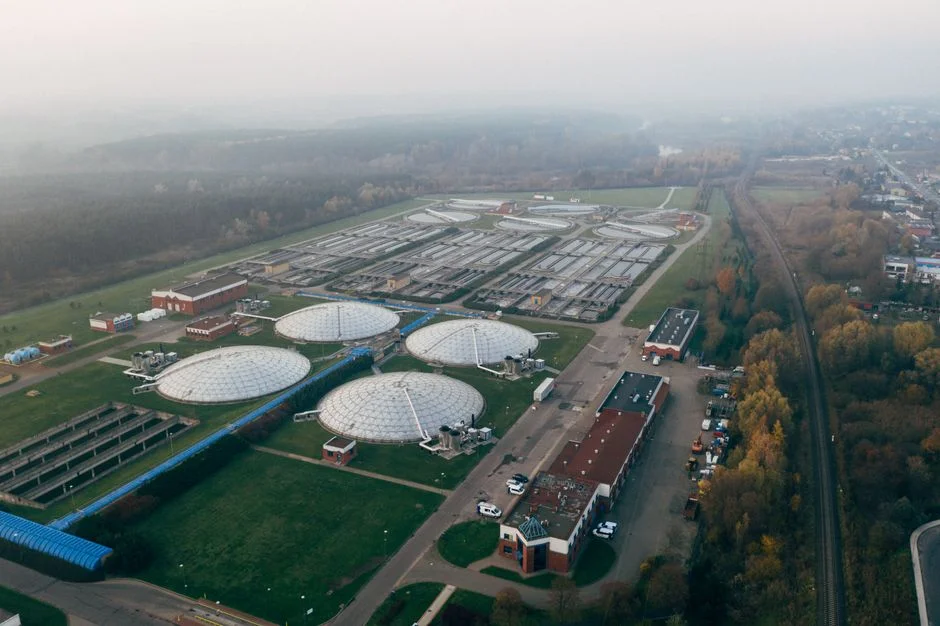
Domestic wastewater flow design cannot be completed from population or building use alone; the equipment brief must establish the quantities and loads that the selected process must handle. The design basis should include current and future wastewater flow, seasonal variation, influent COD and BOD, suspended solids, fats, oils and grease where relevant, pH, temperature, and any industrial contaminants. Sampling may be necessary where the wastewater character is uncertain or a reuse target depends on influent consistency.
The supplied research provides no site-specific influent values or effluent limits for any Muharraq project. Obtain the applicable Bahrain requirements and the authority’s confirmation of the permitted discharge or reuse criteria before finalizing process capacity. A laboratory characterization is especially important where a development includes kitchens, laundry, hospitals, laboratories, or industrial processes because those flows can change the biological and solids-handling requirements.
Express the approved design flow in both m³/h and m³/day so WSZ and MBR alternatives can be compared on the same basis. The daily flow must correspond to the design condition used for biological and membrane sizing, while the hourly flow governs peak hydraulic capacity. These values should remain traceable to the development schedule and wastewater calculation rather than to a product range.
Site constraints are part of the design basis. Confirm footprint, burial depth, maintenance access, power availability, drainage, odour control, and flood exposure. If reclaimed water is required, define the application and its quality target before selecting the biological, membrane, and disinfection configuration.
| Design input | Why it affects selection | Required project information |
|---|---|---|
| Flow | Sets hydraulic treatment capacity and buffer requirements. | Current and future average flow, peak flow, and seasonal variation in m³/h and m³/day. |
| Organic and solids load | Determines biological capacity and solids-separation duties. | COD, BOD, suspended solids, and relevant contaminant characterization. |
| Effluent objective | Determines treatment, disinfection, and reuse provisions. | Authority criteria, intended reuse application, and final discharge route. |
| Site and utilities | Controls configuration, installation method, and operability. | Survey, soil and groundwater information, power, drainage, access, burial depth, and flood exposure. |
Compare WSZ Package Plants and MBR Systems
The WSZ series is an underground integrated unit combining anoxic/aerobic A/O biological contact oxidation, sedimentation, and disinfection in one buried package, according to HydropureWater’s verified product catalog. It is fully automated, requires no operator, covers a catalog capacity of 1–80 m³/h, and is listed for residential communities, hotels, hospitals, factories, and rural areas. It can be installed below grade with landscaping above or mounted on a trailer for mobile deployment. These characteristics make the underground WSZ package sewage treatment plant relevant to defined-flow sites where a compact, integrated treatment train is required.
The cataloged MBR configuration combines activated sludge with submerged PVDF membrane filtration and covers 10–2,000 m³/day. HydropureWater’s catalog describes its effluent as near-reuse quality, with filtration below 1 μm, and states that its footprint is 60% smaller than conventional systems. These are product-catalog claims, not Muharraq field-performance results. The MBR membrane bioreactor wastewater treatment system should therefore be examined where membrane separation, compact civil works, or higher-quality reuse is central to the brief.
| Comparison point | WSZ package plant | MBR system | Still requiring confirmation |
|---|---|---|---|
| Process | Anoxic/aerobic A/O contact oxidation, sedimentation, and disinfection in an integrated package. | Activated sludge combined with submerged PVDF membrane filtration. | Upstream pretreatment, downstream disinfection, pumping, and residual handling. |
| Catalog capacity | 1–80 m³/h. | 10–2,000 m³/day. | Final size based on the approved flow, load, peak, and operating factors. |
| Footprint configuration | Buried installation with landscaping above or trailer-mounted deployment. | Catalog states a footprint 60% smaller than conventional systems. | Actual plot area, civil works, access, and installation method. |
| Reuse relevance | Disinfection is included in the package sequence; the project quality target remains site-specific. | Catalog describes near-reuse-quality effluent and filtration below 1 μm. | Authority criteria, intended use, and verification requirements. |
| Operation | Catalog states full automation and no operator required. | Membrane, aeration, controls, and routine maintenance must be included in the supplier scope. | Remote monitoring, alarm response, maintenance access, and O&M responsibility. |
Build the Treatment Process from Influent to Effluent

A defensible treatment train follows five functional stages: screening and primary handling, biological treatment, solids separation, disinfection, and final effluent management. The actual unit train must follow the design basis rather than the order used in a catalog photograph. Screening protects downstream equipment, biological treatment removes soluble and particulate organics, solids separation limits solids carryover, disinfection controls relevant microbial exposure, and the final route determines whether further storage, reuse preparation, pumping, or transfer is needed.
For WSZ, map the cataloged anoxic/aerobic contact-oxidation, sedimentation, and disinfection stages against the proposed package scope. Confirm how incoming wastewater reaches the unit, how the buried package is accessed for inspection, and where the separated solids go. An rotary mechanical bar screen may need to be considered upstream where incoming material could affect the treatment train, but the need must be established from the wastewater characterization.
For MBR, map activated sludge and submerged PVDF membrane separation to the proposed process, then define required upstream pretreatment and the downstream effluent route. Confirm whether additional treatment is required for the intended reuse application, including a disinfection stage such as the UV sterilizer for water treatment where justified by the approved quality target.
The critical supply-chain boundary is the incoming wastewater and final destination. A treatment plant’s quoted effluent performance does not establish the quality of the wastewater entering it, the adequacy of upstream works, or acceptance of the final discharge or reuse route. The IntechOpen study on integrated treatment concepts can support general scientific discussion, but it is not evidence of performance in Muharraq and cannot replace local design data.
Plan Procurement, Installation, and Lifecycle Responsibilities
A comparable tender requires one controlled design basis, not a collection of equipment descriptions. Include the design flow in m³/h and m³/day, influent characterization, effluent objective, utility data, site drawings, soil and groundwater information, access constraints, and required authority documentation. State the split between equipment, civil works, installation, commissioning, training, spares, routine maintenance, and long-term consumables so that quotations describe the same deliverable.
Require each supplier to provide a process flow diagram, duty and sizing calculation, equipment schedule, control philosophy, commissioning plan, and proposed O&M plan. Claims should be traceable to those documents. This is particularly important for distributed projects: the catalog description of WSZ as requiring no operator does not remove the need to assign alarm response, maintenance access, pumping, odour control, and effluent management; an MBR scope must explicitly address membrane, aeration, controls, and routine maintenance.
Assign an owner for screening, biological treatment, solids handling, disinfection, pumping, odour control, effluent reuse or discharge, and sludge disposal. A package supplier should identify which functions it supplies and which remain with the developer, facilities team, or specialist operator.
Use the packaged sewage treatment plant sizing guide as a structuring aid, while keeping Bahrain-specific authority and site inputs in the tender documents.
| Procurement package | Required quotation detail | Acceptance evidence |
|---|---|---|
| Equipment and civil works | Separate supply, civils, installation, commissioning, and training. | Process diagram, sizing calculation, schedule, and scope boundary. |
| Operations and maintenance | Routine maintenance, long-term consumables, spares, warranty, and support. | O&M manual, maintenance schedule, spares list, and named responsibility. |
| Residuals and effluent | Sludge handling, pumping, odour control, discharge, or reuse route. | Mass-balance and destination statement for each residual stream. |
Make the Final Equipment Selection with a Project Scorecard
The final award should follow a documented scorecard covering confirmed flow and load, compliance route, land fit, installation disruption, reuse value, automation, O&M burden, deliverability, and whole-life cost clarity. Score the centralized connection, WSZ, and MBR routes against the same project criteria. Do not allow a high reuse claim or compact footprint to compensate for an undefined discharge route or missing wastewater data.
For the decentralized options, the selected capacity must sit within the verified catalog range: 1–80 m³/h for WSZ or 10–2,000 m³/day for MBR. The final unit size still depends on the approved design basis. Select WSZ where its integrated buried configuration and listed flow range fit the brief. Investigate MBR where membrane separation, compact civil works, or reuse potential justifies the additional process scope.
Unresolved authority requirements, missing wastewater data, and an undefined effluent destination are design gaps, not minor quotation notes. Resolve them before final selection. For a detailed technical comparison, review the MBR and conventional activated-sludge comparison for wastewater treatment, while recognizing that the supplied research does not provide Muharraq installation prices, operating costs, or payback periods.
| Scorecard criterion | Centralized connection | WSZ | MBR |
|---|---|---|---|
| Flow and load | Confirm permitted connection flow and downstream capacity. | Check design flow against 1–80 m³/h. | Check design flow against 10–2,000 m³/day. |
| Compliance | Confirm connection and public-system acceptance. | Confirm discharge or reuse criteria for the integrated package. | Confirm criteria for the complete membrane process and final route. |
| Site fit | Account for extension, easement, and pumping constraints. | Assess buried or trailer-mounted installation and access. | Assess compact civil works, membrane access, and upstream pretreatment. |
| Lifecycle | Clarify extension and downstream obligations. | Define automation, routine maintenance, and residual handling. | Define membrane, aeration, controls, consumables, and maintenance. |
| Commercial | Price the authority’s infrastructure requirements. | Price the complete supplied and excluded scope. | Price the complete membrane-based scope and replacement-related items. |
Frequently Asked Questions
How much does a domestic sewage treatment system cost in Muharraq?
There is no supportable Muharraq price in the supplied research. Request itemized quotations covering equipment, civil works, installation, commissioning, training, routine maintenance, consumables, spares, and sludge or effluent management. Compare alternatives only after confirming that the quotations include the same process scope and authority requirements.
How should I size a sewage treatment plant?
Convert the approved design flow into both m³/h and m³/day, then compare the resulting duty with the verified ranges of 1–80 m³/h for WSZ and 10–2,000 m³/day for MBR. Confirm the load, peak conditions, treatment stages, and final duty in the supplier’s sizing calculation.
Which supplier should I select for a decentralized system?
Require a compliant process train, traceable sizing calculation, operating references, commissioning plan, warranty scope, spares list, and complete O&M documentation. Check that the supplier has defined membrane and controls maintenance for MBR or inspection and residual-handling responsibilities for an integrated WSZ package.
What compliance risk should be resolved before ordering?
Identify the required discharge or reuse criteria and obtain written confirmation of the permitted route from the relevant Bahrain authority before ordering. Undefined connection capacity, wastewater characteristics, or effluent destination prevents a defensible equipment selection.