What Rural Sewage Treatment in Bahrain Must Accomplish
Rural sewage treatment in Bahrain should be developed as a decentralized, site-specific system rather than copied from a municipal installation. Bahrain has about 4 million m³ of annual surface runoff and no rivers, perennial streams or lakes, while its groundwater is degraded by salinization and seawater intrusion, according to the Water Action Hub country profile. Treatment objectives must therefore balance groundwater protection, compliant discharge and treated sewage effluent reuse where technically and regulatorily feasible. For dispersed development, an underground integrated sewage treatment plant can combine biological treatment, sedimentation and disinfection within a compact package.
For this project context, rural sewage treatment in Bahrain means the collection, treatment, disinfection and compliant management of wastewater generated by scattered communities, farms, hospitality properties and other remote developments. The receiving environment determines whether the treated outlet should connect to a drain, discharge to the sea, support a controlled reuse application or be treated as a contained disposal stream.
Water Action Hub reports that Bahrain’s groundwater reserves suffer from severe degradation in quality and quantity because of over-extraction and seawater intrusion. Any infiltration, subsurface drainage, storage arrangement or land application therefore needs site-specific review of groundwater depth, salinity, soil conditions and the relevant discharge route. The project engineer should not treat generic treatment performance as evidence that groundwater protection is achieved.
Rank the three objectives explicitly:
- Groundwater protection: control infiltration, seepage and the movement of untreated or insufficiently treated wastewater.
- Compliance at the point of discharge or reuse: obtain the current effluent and reuse requirements from the relevant Bahrain authority before fixing process guarantees.
- Water recovery: evaluate treated sewage effluent reuse where the application, water quality, infrastructure and approval pathway are viable.
This framework supports equipment selection and procurement. It is not a permit, hydraulic model, contamination assessment or site-specific process approval.
Assess the Site Before Selecting a Treatment System
Comparable bids require a defined wastewater basis, receiving environment and operating boundary before vendors select equipment. A nominal flow alone cannot establish capacity, because the treatment unit must be matched to daily, seasonal and peak conditions and to the consequences of power, solids and reuse interruptions.
Issue a common data request to every bidder. The engineering team should document the design horizon, occupancy assumptions, wastewater-return factor, current and projected water demand, and whether industrial, food-processing or other non-domestic flows enter the system. Where variable septicity, grease, solids or unusual industrial contributions may affect biological treatment and disinfection, require wastewater characterization rather than relying on domestic-sewage assumptions.
| Assessment area | Required buyer input | Decision affected |
|---|---|---|
| Wastewater flow | Average daily flow, peak-hour flow, peak-day flow and seasonal variation | Hydraulic and biological capacity |
| Demand and occupancy | Current and projected water demand, occupancy, wastewater-return factor and design horizon | Design basis and future expansion |
| Wastewater quality | Suspended solids, organics, septicity, grease and any industrial contribution | Headworks, biological loading and solids separation |
| Receiving environment | Sea, surface drainage, land, irrigation area or controlled reuse point | Discharge route and groundwater safeguards |
| Subsurface and terrain | Groundwater depth, salinity, soil permeability, flood exposure and buried-installation constraints | Infiltration controls, civil works and siting |
| Operations | Power availability, backup requirement, access, odor, noise and maintenance responsibility | Automation, resilience and operating cost |
Also define landscape, agricultural or process reuse objectives. These are not interchangeable: an approved irrigation outlet requires a different quality basis, receiving-area assessment and public-health review from controlled reuse within the development.
The domestic sewage treatment buyer guide and packaged sewage treatment plant selection guide provide useful structures for checking whether bids address operating assumptions and package boundaries.
Wastewater microbiology also needs project-specific attention. A November 2025 Nature Communications study analyzed 1,240 sewage samples from 351 cities across 111 countries and found distinct geographic patterns in acquired antimicrobial-resistance genes. This is global research context, not a Bahrain limit, but it supports a broader requirement: characterize wastewater where local health, industrial inputs or reuse exposure make the microbial basis relevant to the design.
Compare Decentralized and Centralized Treatment Routes
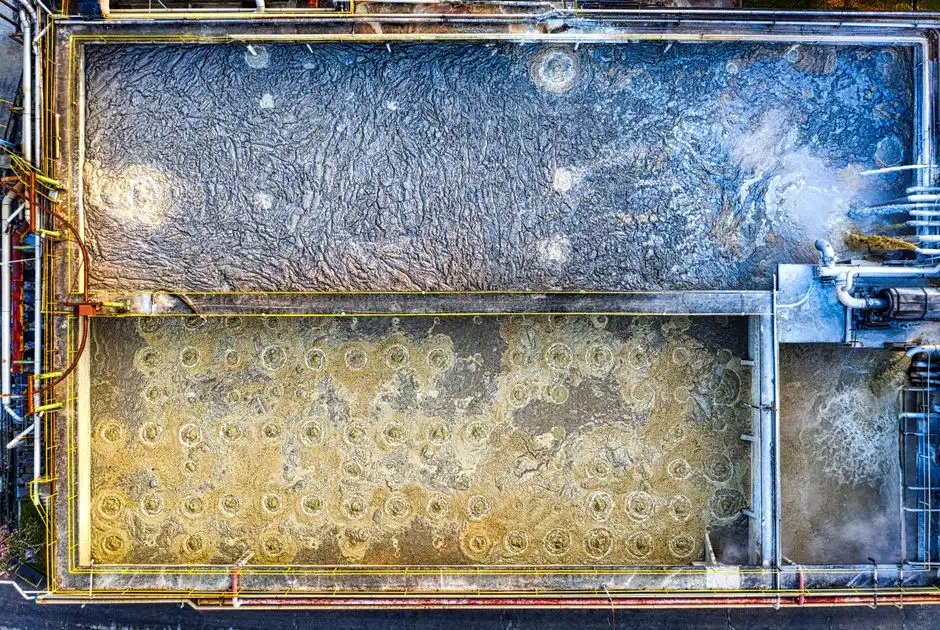
Delivery model should follow the settlement pattern and the receiving environment, not a general assumption that one route is cheaper. Decentralized treatment reduces dependence on a distant sewer connection, but it transfers collection, operation, sludge handling and renewal obligations to the site owner or a nominated operator.
| Issue | Decentralized package | Decentralized multi-unit plant | Connection to a centralized system |
|---|---|---|---|
| Collection requirement | Local sewer or septic collection, pumping and headworks | Local collection plus a more permanent receiving and treatment arrangement | Connection to an existing sewer or wastewater network |
| Site footprint | Potentially compact, with buried installation possible | More space for multiple units, auxiliary systems and maintenance access | Treatment footprint generally avoided at the development, but network access is required |
| Operator demand | Higher reliance on automation, monitoring and remote support | May permit more hands-on operation and staged servicing | Operational burden transferred to the centralized operator |
| Redundancy and expansion | Requires explicit standby and future-capacity provisions | Can be designed around unit duplication and staged growth | Depends on available centralized capacity and network constraints |
| Residual obligations | Sludge, media, disinfection, spares and eventual renewal remain with the owner | Same obligations, generally across a larger installation | Connection charges and future capacity commitments must be defined |
Water Action Hub reported that Tubli Water Pollution Control Centre produced about 160,000 m³/day of secondary-treated effluent in 2005, while eleven minor plants had a combined designed capacity of about 9,720 m³/day. These are historical figures and must not be treated as current capacity, spare capacity or evidence that a connection is available.
A decentralized package is a candidate where scattered buildings make a conventional collection network long or impractical, provided the site has a defensible outlet, adequate maintenance access and a sustainable operating plan. Compare the full local lifecycle: collection and pumping, civil works, utilities, operator support, residuals, consumables, biological-media or membrane replacement, disinfection, monitoring and plant renewal. Do not infer lower cost from the word “decentralized”; compare all network and life-cycle obligations for the actual site.
Select the Treatment Process and Package Format
A complete treatment train must cover inlet protection, biological treatment, solids separation, disinfection and the final discharge or reuse route. A conventional sequence is:
- Inlet works and flow measurement.
- Equalization where the wastewater profile requires it.
- Biological treatment.
- Solids separation and residual management.
- Disinfection.
- Storage, transfer, reuse or controlled discharge.
For a compact rural installation, biological contact oxidation may be suitable where the wastewater is predominantly domestic, the design flow is established and a low surface footprint is valuable. The verified WSZ process sequence is anoxic/aerobic biological contact oxidation, sedimentation and disinfection in one buried package, with full automation and no routine operator attendance stated by the manufacturer. Its verified capacity range is 1–80 m³/h. The correct model must still be matched to the project’s flow and effluent basis.
Underground installation can preserve the surface for landscaping, although installation depth, buoyancy, access and groundwater conditions still require engineering review. Trailer mounting can support mobile deployment, but it does not remove the need for a suitable site, incoming wastewater collection, utilities, residuals management and an approved outlet.
| Option | Verified product scope | Where it merits comparison | Questions to resolve |
|---|---|---|---|
| Underground WSZ package | Anoxic/aerobic contact oxidation, sedimentation and disinfection in one buried unit; 1–80 m³/h; automated operation | Distributed rural or remote applications requiring a compact treatment footprint | Model-specific duty, effluent basis, civil works, access, odor control, power resilience and residual handling |
| MBR membrane bioreactor system | Activated sludge with submerged PVDF membrane filtration; offered from 10 to 2,000 m³/day | Projects where membrane-based solids separation or a smaller footprint is specifically advantageous | Peak and average hydraulic loading, membrane fouling control, cleaning, replacement exposure and lifecycle cost |
| Multi-unit decentralized plant | Not a single specified product route; configuration follows project requirements | Staged development, operating redundancy or multiple treatment objectives | Unit allocation, standby strategy, expansion plan and shared auxiliary systems |
Do not choose MBR merely because it is the more advanced-sounding option. Compare the required effluent quality, reuse conditions, footprint, operator competence, fouling sensitivity and whole-life cost against a packaged biological alternative.
Sludge is a designed output, not a residual afterthought. Before accepting bids, define the expected quantity and characteristics, dewatering route, storage duration, transport method, final disposal or authorized reuse, and the responsible party. A plate-and-frame filter press may form part of that route, but the complete residual-management train must be priced and assigned.
Match Capacity, Reuse Value and Operating Resilience
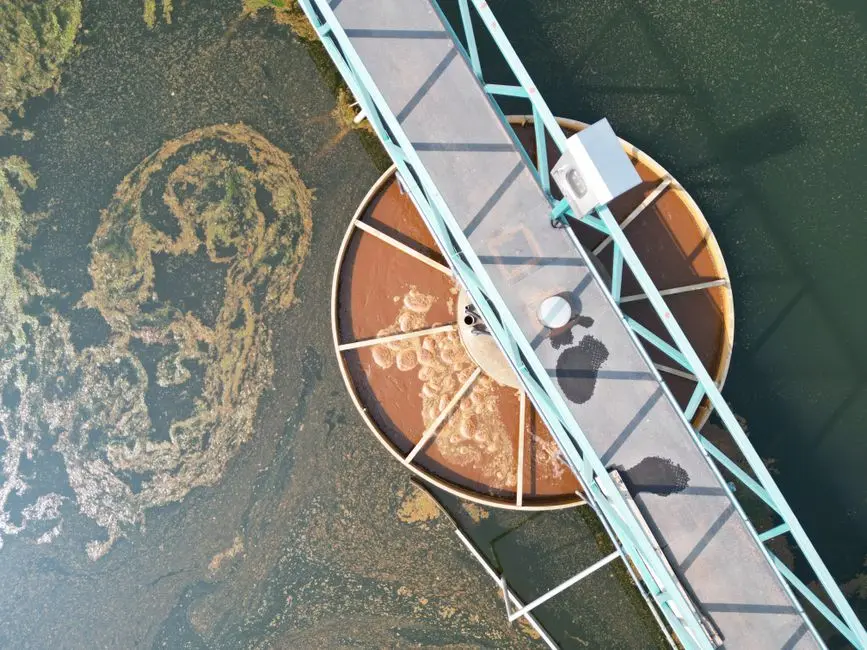
Capacity selection must connect hydraulic and biological duty to storage, standby, disinfection and the consequences of reuse interruption. A quoted nominal flow is only one part of the equipment guarantee. The design basis should also state how seasonal peaks, power failures, equalization and equipment outages affect the discharge or reuse point.
| Design element | Information required from the project engineer | Supplier statement required |
|---|---|---|
| Hydraulic capacity | Average flow, peak-hour flow, peak-day flow and seasonal profile | Guaranteed treatment flow and the operating conditions attached to that guarantee |
| Hydraulic retention and biological loading | Selected process calculations and wastewater characterization | Design basis, process calculations and performance assumptions |
| Solids separation | Sludge production, separation duty and dewatering route | Residual quantity and characteristics with the proposed handling route |
| Disinfection | Required treatment standard and contact conditions | Method, control arrangements and maintenance requirements |
| Storage and standby | Operational, maintenance and reuse-interruption scenarios | Storage duty, redundancy, bypass and emergency-response arrangements |
| Reuse | Intended use, quality requirements and receiving-site conditions | Water-quality basis, storage, transfer and monitoring scope |
Reuse has strategic value in Bahrain because the country’s water balance has historically included treated sewage effluent. Water Action Hub reported that in 2003, Bahrain’s 357.4 million m³ total water use included 16.3 million m³ of treated sewage effluent. It also cited a historical cost comparison based on FAO/WHO figures from 2001: tertiary-treated effluent cost about US$0.317/m³, compared with about US$0.794/m³ for desalinated water. These are historical policy and cost data, not 2026 quotations.
Require suppliers to state guaranteed flow, redundancy, power-failure response, odor control, remote monitoring, maintenance frequency and emergency-bypass arrangements. The 2026 sewage treatment plant cost guide can support lifecycle-cost structuring, but local civil works, utilities and site conditions must still be priced for Bahrain.
For irrigation reuse, require review of the required water quality, soil, crop and public-health implications. Successful treatment does not create unrestricted agricultural reuse permission. The proposed standard, monitoring regime and receiving area must be confirmed with the relevant Bahrain authority before committing to a reuse revenue or volume assumption.
Issue a Bahrain-Ready Supplier Request for Proposal
A comparable RFP should define the same technical and commercial basis for every bidder. Do not invite a bare equipment price: that approach conceals civil work, utilities, residuals, commissioning and operating assumptions until after award.
| RFP package | Minimum requested information | Buyer check |
|---|---|---|
| Design basis | Design flow, wastewater characterization, design horizon, reuse or discharge objective and applicable requirements | All assumptions are identified and traceable to project data |
| Technical proposal | Process route, preliminary hydraulic calculations, dimensions, buried or above-grade arrangement, media, disinfection and utilities | Peak-flow treatment, residuals and operating assumptions are documented |
| Performance and commissioning | Effluent guarantees, test methods, commissioning tests, training and handover deliverables | Acceptance criteria and unresolved dependencies are explicit |
| Lifecycle cost | Equipment, freight, installation, civil works, power, consumables, sludge handling, monitoring, maintenance, operator support and major replacements | Costs are separated and assumptions are consistent between bidders |
| Supplier evidence | Comparable references, relevant experience, spare parts, warranty and preventive-maintenance schedule | Claims are supported by verifiable records rather than generic capability statements |
Ask bidders to provide a site-specific process basis, preliminary hydraulic calculations, commissioning tests, operator training, a spare-parts list, warranty scope and a preventive-maintenance schedule. Confirm experience with similar climate, wastewater characteristics, groundwater or salinity conditions and applicable Bahrain requirements, and request verifiable references.
Reject proposals that guarantee only nominal treatment capacity without explaining peak-flow treatment, residual management, power interruption, maintenance access and documented operating assumptions. Use the 2026 sewage treatment plant cost guide for costing structure and the packaged sewage treatment plant selection guide for option comparison, then apply the actual Bahrain project inputs.
Frequently Asked Questions
How much does rural sewage treatment cost in Bahrain?
There is no defensible project price without verified flows, civil scope, discharge or reuse requirements, utility conditions, sludge handling and site information. Request an itemized lifecycle price separating equipment, freight, installation, civil works, power, consumables, residuals, monitoring, maintenance, operator support and major replacement items. Historical unit costs cited for Bahrain are not quotations and should not be carried into a 2026 budget as current prices.
What size sewage treatment plant does a rural property in Bahrain need?
Size the plant from verified average flow, peak-hour flow, peak-day flow, seasonal variation and the selected design horizon, then check biological loading, retention, disinfection, storage and standby requirements. The WSZ range is 1–80 m³/h, but that range is not a project recommendation; ask the engineer to document the selected duty and model.
Which treatment system is best for a remote site?
A fully automated buried package may suit a small distributed development, but the correct decision depends on effluent quality, reuse requirements, space, operator capability, maintenance access and lifecycle cost. Compare that package with an MBR configuration, a multi-unit plant and any feasible centralized connection using the same design basis.
Can treated sewage from a rural Bahrain site be reused?
Yes, where the treated effluent meets the required quality standard for the intended use and the project has site-specific technical, operational and regulatory approval. Assess the receiving soil, crop or process, public-health exposure, monitoring and storage arrangement. Do not assume that a treatment-system certificate authorizes irrigation or unrestricted reuse.
What should buyers check before selecting a supplier?
Check verifiable similar projects, the documented design basis, peak-flow and residual assumptions, effluent guarantees, commissioning evidence, utilities, site constraints, maintenance support, spare parts, warranty and total-cost transparency. The wastewater equipment supplier evaluation guide provides a further structure for distinguishing documented capability from unsupported claims.