What 'Reliable' Actually Means for a Wastewater Treatment Equipment Supplier
A reliable wastewater treatment plant equipment supplier in 2026 proves process performance under the buyer's real influent conditions, rather than generic lab conditions. The 2019 Water Science & Technology study of the Great Lakes Water Authority WRRF, serving 3.1 million residents in Southeast Michigan, found that limited-duration, undersampled wastewater characterization produces unreliable model predictions with significant economic consequences for facility upgrade, expansion, and operational decisions.
The first reliability test is whether a supplier demands a site-specific characterization before sizing equipment or quotes from assumed values. Reliability also means offering hybrid mechanistic and data-driven process controls: a 2026 Environmental Science & Technology study raised sulfide, sulfur, and sulfate prediction R² from 0.30, 0.09, and 0.02 to 0.66, 0.77, and 0.74, while cutting extreme deviations by 78.2%. Always verify compliance documentation against EPA NSPS, EU Industrial Emissions Directive 2010/75/EU, EU Drinking Water Directive 98/83/EC, EU Urban Waste Water Directive 91/271/EEC, and WHO drinking-water guidelines.
Brand reputation and warranty length are not the same as evidence. The GLWA work is explicit that the modeling error class originates upstream of the equipment—in how the influent was sampled and characterized—and propagates downstream into every sizing decision a supplier makes. A vendor who quotes without asking for flow diurnal data, BOD/COD fractions, sulfide/sulfate, FOG, and metals on the buyer's site is replicating that error class on the buyer's dime. A vendor who produces pilot test reports, reference plants of comparable scale and influent, and a written statement of which characterization parameters were measured on-site versus assumed is the only vendor who has earned the right to issue a process guarantee.
The Five-Pillar Framework for Vetting a 2026 Wastewater Plant Supplier
The GLWA finding that poor characterization drives unreliable model predictions with significant economic consequences serves as the basis for the first pillar. A supplier's qualification score should be built from five pillars, each mapped to a document or test result the buyer can request before issuing a PO.
Pillar 1 — Characterization discipline. The supplier must define minimum influent data requirements (sample count, duration, parameters) and state what they will measure on-site versus assume. A supplier who cannot produce this protocol forces the buyer to inherit the same error class flagged in the GLWA study.
Pillar 2 — Process-fit proof. Matched reference installations with disclosed flow rates, influent ranges, and effluent quality. The 2026 HyDIM work (Environ Sci Technol, 60(23):16651-16661) showed that fidelity under dynamic, not static, influent conditions is essential; therefore, a reference under steady lab loading is not sufficient evidence.
Pillar 3 — Control maturity. Ask whether the supplier supports hybrid mechanistic and data-driven controls. HyDIM cut extreme deviations by 78.2% versus a data-driven-only model and lifted sulfide, sulfur, and sulfate R² to 0.66, 0.77, and 0.74 respectively; these are the figures to anchor the question.
Pillar 4 — Compliance documentation. Map equipment to applicable standards: EPA NSPS, EU Industrial Emissions Directive 2010/75/EU, EU Drinking Water Directive 98/83/EC, EU Urban Waste Water Directive 91/271/EEC, and WHO Guidelines for Drinking-water Quality.
Pillar 5 — Lifecycle support. Defined commissioning, spares, and uptime commitments, with named response windows for catastrophic failure.
| Pillar | Evidence the buyer must request | Pass/fail criterion |
|---|---|---|
| Characterization discipline | Minimum influent data protocol, on-site vs assumed parameters | Protocol exists; buyer can compare across bidders |
| Process-fit proof | Reference plants with disclosed flow and influent range | ≥3 references at comparable scale and influent |
| Control maturity | Dynamic-condition performance data, hybrid control architecture | Evidence of paired static vs dynamic testing |
| Compliance documentation | Standard mapping to EPA, EU 2010/75/EU, 98/83/EC, 91/271/EEC, WHO | All applicable standards explicitly addressed |
| Lifecycle support | Commissioning plan, spares list, uptime SLA, response window | Named response window for catastrophic failure |
Matching Equipment Categories to Process Duties: What to Ask Each Supplier
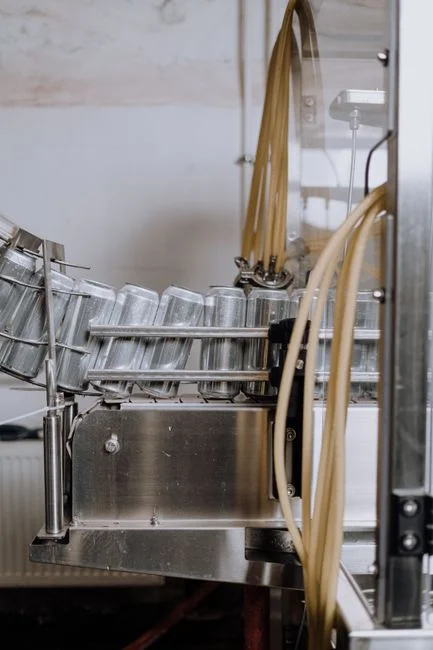
Headworks screening must be specified for continuous duty. A rotary mechanical bar screen for headworks protection should be evaluated for documented rake and brush cleaning duty, sized to protect downstream biological and membrane stages from ragging and grit carryover. If a supplier cannot name the screening aperture and the downstream protection it enables, the bid is incomplete.
Biological treatment selection depends on effluent quality target and footprint. For reuse-grade or compact sites, an MBR membrane bioreactor system for reuse-grade effluent with submerged PVDF modules is documented from 10 to 2,000 m³/day. For larger free-standing plants, suppliers must justify aeration strategy against the HyDIM finding that purely mechanistic models can collapse under dynamic influent—meaning a controls story must accompany the biology bid.
Membrane modules for modular scaling are documented at 0.1 μm pore size with 80–225 m² configurations producing 32–135 m³/day, and individually replaceable elements—directly relevant to buyers adding capacity in steps. Package or decentralized duty can be met with a WSZ underground package sewage treatment plant documented at 1–80 m³/h with full automation, suited to communities, hotels, hospitals, factories, and rural deployments where footprint and operator availability are constraints. Sludge dewatering closes the train: a plate and frame filter press for sludge dewatering is documented from 1 m² to 500 m² filtration area, with manual, hydraulic, or PLC-controlled operation; the operational risk on solids handling should be priced separately from the liquid train.
| Process stage | Equipment category | Documented spec to verify | Buyer question |
|---|---|---|---|
| Headworks | Rotary mechanical bar screen | Aperture, cleaning duty, downstream protection | What aperture protects the next stage? |
| Biology / reuse | MBR submerged PVDF | 10–2,000 m³/day range, control architecture | Dynamic or static influent basis? |
| Membrane modules | MBR flat-sheet | 0.1 μm, 80–225 m², 32–135 m³/day, replaceable elements | Modular add-on path documented? |
| Package / decentralized | Underground A/O integrated | 1–80 m³/h, full automation | Operator availability and footprint fit? |
| Sludge dewatering | Plate and frame filter press | 1–500 m², manual / hydraulic / PLC | Cake dryness guarantee and spares? |
For a deeper read on the MBR duty cycle, the MBR plant operation and maintenance guide covers membrane cleaning intervals and integrity testing. For a broader plant-level context, the integrated wastewater treatment plant selection guide maps process flow against selection criteria. Buyers sourcing components can also review sourcing partners for wastewater equipment components in North America, and for modular builds the skid-mounted treatment plant specifications provide data on standards alignment.
Reading Supplier Performance Claims: What the HyDIM Numbers Tell a Buyer
A supplier that quotes a single static removal percentage should be questioned. The HyDIM study (Environ Sci Technol, 2026) explicitly notes that static parametrization causes mechanistic models to lose fidelity under dynamic influent, and that data-driven models alone produce unstable predictions—both failure modes a buyer can inherit through an over-simplified guarantee.
Ask for dynamic-condition performance data, not steady-state guarantees. HyDIM's improvement from R² 0.30, 0.09, and 0.02 (mechanistic only) to 0.66, 0.77, and 0.74 (hybrid) on sulfide, sulfur, and sulfate is the kind of paired comparison a serious supplier should be able to produce. Ask for extreme-deviation behavior, not just averages. HyDIM reported a 78.2% reduction in extreme deviations relative to a purely data-driven model; this is the metric closest to the buyer's real risk of a permit excursion. Finally, ask whether the supplier can engineer dual objectives such as 96% sulfide removal and 91% sulfur recovery, the figures HyDIM achieved with a 41% sulfur-recovery improvement over the mechanistic-only strategy. A "yes" with documented test data is a strong reliability signal; a "yes" without paired static-and-dynamic evidence is not.
Building a Shortlist: How to Convert This Framework into an RFQ
Score each shortlisted supplier against the five pillars. Eliminate any supplier who cannot produce site-specific characterization protocols or dynamic-condition performance evidence, as these are the two failure modes the GLWA and HyDIM evidence highlights. Demand the same characterization dataset from every bidder so modeling is comparable; inconsistent characterization is itself a source of unreliability. Require explicit compliance mapping to EPA NSPS, EU Industrial Emissions Directive 2010/75/EU, EU Drinking Water Directive 98/83/EC, EU Urban Waste Water Directive 91/271/EEC, and WHO Guidelines for Drinking-water Quality; the absence of any of these in a supplier's documentation is a red flag. Request at least three reference plants of comparable scale and influent type, with permission to contact the end user. Pricing and lead time should be requested only after the five-pillar score is recorded; quoting first invites the buyer to optimize on cost before reliability is established, which is precisely the trap the GLWA characterization finding warns against.
Frequently Asked Questions
How should we score wastewater treatment plant supplier qualification in an internal RFQ?
Use the five pillars—characterization discipline, process-fit proof, control maturity, compliance documentation, and lifecycle support—and weight each pillar against your plant's risk profile. Require a written characterization protocol and dynamic-condition performance data from every bidder; the GLWA WRRF study and the 2026 HyDIM paper both show that missing or static data drives unreliable predictions.
What compliance documentation should a reliable ETP equipment manufacturer provide?
Explicit mapping of the offered equipment to applicable standards. For US sites this includes EPA NSPS; for EU sites, EU Industrial Emissions Directive 2010/75/EU, EU Drinking Water Directive 98/83/EC, and EU Urban Waste Water Directive 91/271/EEC; and for any site with a reuse or potable contact pathway, the WHO Guidelines for Drinking-water Quality. A supplier whose documentation omits any of these is a red flag.
How do we size an MBR membrane bioreactor for an industrial wastewater duty?
Size from your own site-specific influent characterization, not from a generic loading curve. Submerged PVDF MBR systems are documented from 10 to 2,000 m³/day; flat-sheet modules at 0.1 μm pore size are documented at 80–225 m² producing 32–135 m³/day with individually replaceable elements. Request a paired static-and-dynamic performance basis from the supplier before accepting the sizing.
What is the typical delivery lead time for a packaged sewage treatment plant?
Lead time depends on plant capacity, factory schedule, and shipment terms. Ask each shortlisted vendor for a written lead-time commitment tied to a specific configuration and shipping terms, and treat any verbal figure as non-binding until it appears in the PO.