What Domestic Sewage Treatment in Entebbe Must Solve
Domestic sewage treatment in Entebbe requires matching a decentralized treatment route to measured wastewater flow, treatment objectives, site constraints and the receiving environment. Constructed wetlands, vermifiltration and integrated package plants are decentralized options; a 2024 IntechOpen study describes vermifiltration as viable, less expertise-intensive and suitable for domestic septic-tank sewage. The buried WSZ package sewage treatment plant combines anoxic/aerobic contact oxidation, sedimentation and disinfection, with a product-specific capacity of 1–80 m³/h. For compact sites requiring advanced clarification, the MBR membrane bioreactor wastewater treatment system is rated at 10–2,000 m³/day with filtration below 1 μm. Final selection still requires project flow and wastewater testing, local discharge confirmation and engineering review.
Define the wastewater stream before evaluating equipment. For a home, hotel, institution or housing development, domestic sewage may include wastewater from kitchens, toilets, bathrooms and laundry. Do not add industrial influent to the design basis unless a separate assessment establishes its flow and contaminants.
The core design parameters identified in the 2010 LUT University study are biochemical oxygen demand (BOD5), chemical oxygen demand (COD) and total suspended solids (TSS). The research does not provide Entebbe-specific values, so laboratory analysis is required rather than imported assumptions.
Request the following project information:
- Current average and peak flows, wastewater sources and expected expansion;
- Available land, access for tank lifting and desludging, and vehicle routes;
- Groundwater and flood exposure, confirmed through local investigation;
- Power reliability, operating scenarios and sludge-removal arrangements;
- The receiving environment, intended effluent use and applicable authority requirements.
Decentralized treatment can address infrastructure gaps, but it does not remove the need for local design. The LUT University study reported that Blantyre municipal treatment capacity was 23.5% of wastewater generated, with inadequacy contributing to pollution risk. That figure provides regional context, not an Entebbe design factor. No verified Entebbe discharge limits, groundwater conditions or unit costs appear in the supplied research; confirm them with the relevant authority and a local design engineer. A regional guide to domestic sewage treatment in Mozambique provides adjacent context but does not replace Entebbe-specific approvals.
Build the Project Brief Before Choosing Equipment
Sewage treatment plant sizing must start with a documented design basis, not a catalogue capacity. The supplied research contains no Entebbe peak-flow factors or per-capita generation rates, so these values must be obtained through project measurement, wastewater sampling and local engineering analysis.
Use measured daily flow as the base and document peak factors, stormwater ingress and infiltration separately. Confirm whether the sewer is separate or combined, and whether groundwater enters the collection system. If no flow record exists, the survey method and assumptions should be stated explicitly in the brief.
Ask for laboratory analysis of BOD5, COD and TSS, matching the parameter set used in the 2010 LUT University study. Add pH, oil and grease, ammonia and other contaminant analyses only where they arise from the actual sewer. For hotels or commercial facilities, kitchen and laundry flows should be identified separately because their load characteristics can differ from sanitary flows.
Define the complete treatment train and operating scenarios before requesting equipment quotations.
- Establish inlet screening and grit control where the wastewater source requires them.
- Provide equalisation, biological treatment, solids separation and disinfection in a process compatible with the treatment objective.
- Identify sludge collection, storage, dewatering and final disposal.
- Specify behaviour during normal flow, peak flow, power interruption, high organic loading and odour events.
- Define the emergency bypass, containment or storage response.
| Design brief item | Information or evidence required | Procurement consequence |
|---|---|---|
| Flow | Measured or reliably estimated average flow, peak condition, expansion and stormwater ingress | Sets hydraulic and biological capacity |
| Wastewater quality | Laboratory BOD5, COD and TSS results, plus applicable source-specific contaminants | Determines biological loading and treatment objectives |
| Site | Land, excavation access, lifting route, desludging access, groundwater and flood exposure | Controls installation method and footprint |
| Operations | Power supply, maintenance access, sludge route, odour controls and emergency response | Defines lifecycle scope beyond the treatment unit |
The mechanical pretreatment reference for a [rotary mechanical bar screen](https://www.hydropurewater.com/product/13-rotary-mechanical-bar-screen-gx.html) is appropriate only after screening its duty against the actual flow and debris loading. Sludge dewatering may require a [plate-and-frame filter press](https://www.hydropurewater.com/product/9-plate-frame-filter-press.html), but its suitability depends on the solids characteristics generated by the selected process.
Compare Decentralized and Packaged Treatment Options
Technology selection should follow the project’s land, effluent, automation, sludge and operator constraints. Constructed wetlands provide biological treatment and filtration, but they need sufficient land, an appropriate hydraulic regime and provisions for odour, vector control and maintenance. They are best evaluated against seasonal site conditions rather than selected by footprint alone.
A 2024 IntechOpen study describes vermifiltration as efficient, viable, requiring less expertise and suitable for decentralized treatment of domestic septic-tank sewage. Its statutory comparison belongs to the Zimbabwe study context and cannot be applied directly to Entebbe. The local receiving environment and permit conditions must still govern any proposed application.
The WSZ product specification combines anoxic/aerobic A/O contact oxidation, sedimentation and disinfection in one buried package unit. HydropureWater’s verified product catalogue, current in 2026, states a capacity of 1–80 m³/h, fully automated operation without an operator, below-grade installation with landscaping above, or trailer mounting for mobile deployment. These are product-specific claims, not general Entebbe performance data.
The MBR product specification gives a capacity of 10–2,000 m³/day, submerged PVDF membrane filtration below 1 μm and a stated footprint 60% smaller than conventional systems. The comparison is product-specific. The supplied research does not include a side-by-side effluent dataset for WSZ and MBR, so the buyer should require comparable test conditions before using either route to claim superior performance.
| Selection factor | WSZ package plant | MBR system | Decentralized biological alternatives |
|---|---|---|---|
| Process | Anoxic/aerobic contact oxidation, sedimentation and disinfection | MBR process with submerged membrane filtration | Constructed wetland or vermifiltration, depending on verified design |
| Stated capacity | 1–80 m³/h, product-specific | 10–2,000 m³/day, product-specific | No capacity value supplied in the research |
| Installation | Below grade or trailer-mounted | Compact configuration stated; site details require review | Land-dependent |
| Automation | Fully automated; no operator required stated | Controls and membrane operation require review | Operation and maintenance depend on the process |
| Footprint | Not quantified in the supplied research | Stated as 60% smaller than conventional systems | Constructed wetlands generally require more land; vermifiltration requires project-specific layout review |
| Solids management | Integrated sedimentation; sludge route must be specified | Membrane separation; retained solids and cleaning waste require a route | Biomass and solids handling remain project-specific |
| Best fit | Projects seeking an integrated packaged treatment route | Compact sites or projects requiring advanced clarification | Sites able to accommodate and maintain decentralized biological processes |
Conventional treatment should remain a comparison baseline, not an assumed local default. The research provides no Entebbe conventional-plant design or cost dataset. A practical decision sequence is: choose the required effluent quality first, eliminate options that cannot meet the site and receiving-environment constraints, then compare verified process evidence, lifecycle obligations and total installed scope.
Follow the Wastewater from Inlet to Final Discharge
A defensible process flow connects every treatment stage to a measurable duty and a defined maintenance action. Screening, biological treatment, solids separation, disinfection and sludge handling should be reviewed as one system rather than separate products.
Inlet: Protect downstream equipment from rags, plastics and fibrous debris. The GX rotary mechanical bar screen is also applicable to industrial wastewater headworks, but the domestic installation must be selected for its actual hydraulic and debris load. A screen does not remove the need to assess grit, grease and soluble organic load.
Biological treatment: In the WSZ route, anoxic/aerobic contact oxidation forms the biological stage. The supplied catalogue confirms the configuration but provides no Entebbe-specific removal efficiency. Design must therefore examine aeration, biological loading, equalisation and the effects of variable flow rather than applying an unverified performance percentage.
Solids separation: The WSZ unit uses an integrated sedimentation stage, while the MBR route separates solids through submerged membranes specified below 1 μm. These are different maintenance models. The MBR requires access for membrane cleaning and a replacement strategy; the WSZ requires sludge collection, storage and removal planning.
Disinfection: Select the method after defining the treatment objective and final effluent route. The [UV sterilizer for water treatment](https://www.hydropurewater.com/product/22-uv-sterilizer-water-treatment.html) is a product reference, not evidence that UV alone satisfies every permit. The final destination, reuse intention and applicable local conditions must be confirmed.
Sludge: Add collection, storage, dewatering and disposal to the process flow. A [plate-and-frame filter press](https://www.hydropurewater.com/product/9-plate-frame-filter-press.html) can be considered where the selected process produces a dewaterable sludge stream requiring solid–liquid separation. The sludge destination and handling frequency belong in the supplier’s scope.
Design Installation, Automation and Maintenance for Entebbe
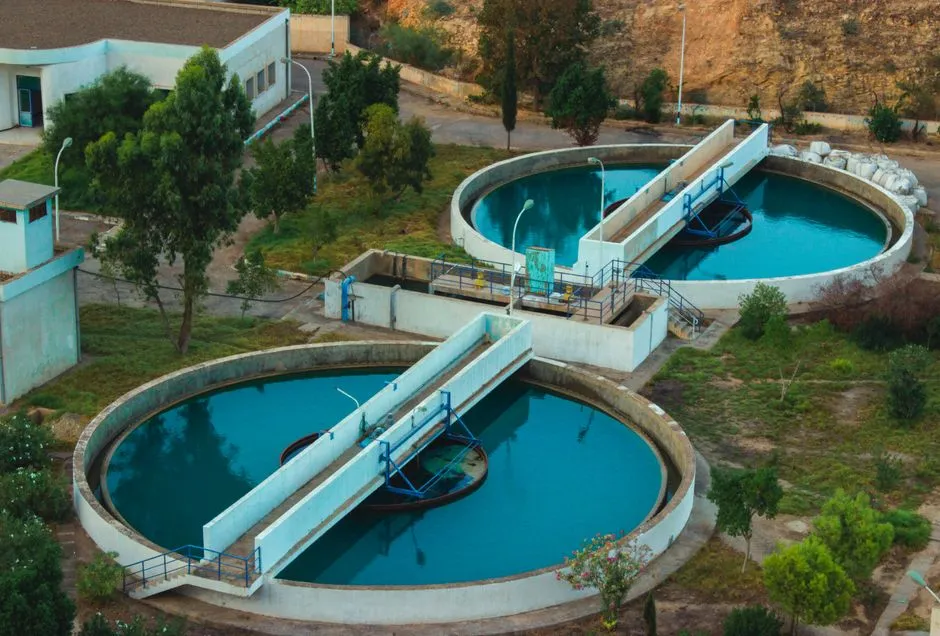
Installation access and maintenance obligations can eliminate an otherwise suitable package. The WSZ route offers two documented deployment modes in HydropureWater’s 2026 product catalogue: permanent below-grade installation with landscaping above, or trailer mounting for mobile deployment. The chosen mode must match excavation, lifting, inspection and sludge-removal arrangements.
Before fixing the footprint, obtain local information on ground conditions, groundwater and flood exposure. The supplied research contains no Entebbe-specific values for these conditions, so the supplier’s generic installation drawing is not a substitute for a site-specific design. Confirm electrical supply, control-cable routes, access for heavy vehicles and the consequences of a power interruption.
For an MBR installation, review membrane cleaning, replacement, aeration, controls and access to every serviceable component. The product’s stated footprint advantage does not remove these lifecycle requirements. For a WSZ installation, full automation and no operator requirement are procurement advantages stated in the 2026 product catalogue, but they do not remove inspection, desludging, housekeeping and alarm-response duties.
Require a written preventive-maintenance schedule, spare-parts list, local or remote alarm protocol, and a defined response route for faults. Handover should include as-built drawings, controls documentation, operating procedures, commissioning records, operator training where needed and the agreed maintenance responsibilities.
Commissioning acceptance should be tied to the contracted design flow, wastewater characteristics and agreed treatment objectives. The buyer should identify which parameters will be tested, how samples will be taken, who will perform the work and what corrective action applies if results do not meet the agreed criteria. The supplied research provides no Entebbe-specific acceptance limits, so they must be established in the contract rather than assumed from product literature.
Ask Suppliers for Evidence That Reduces Project Risk
A comparable quotation should expose the design basis behind every price and capacity. Ask each bidder to show the process stages, duty assumptions, sludge route and exclusions in enough detail that an engineer can review the proposal.
| Supplier response required | Evidence to request | Risk addressed |
|---|---|---|
| Duty-based selection | Design flow, peak-flow assumptions, process stages, sludge production, power demand and capacity calculation | Undersized or unsuitable equipment |
| Performance evidence | Test reports and conditions relevant to the proposed wastewater and treatment objective | Unsupported performance claims |
| Installation scope | General arrangement, civil interfaces, lifting requirements, electrical supply and controls description | Site and construction omissions |
| Operations scope | Commissioning criteria, maintenance intervals, spare parts, warranty and response time | Post-handover performance risk |
| Compliance responsibility | List of discharge, construction and site requirements requiring local confirmation | Unverified permit assumptions |
| Total project cost | Equipment, collection works, power, civil works, sludge disposal, taxes, logistics, installation and commissioning | Apparent price differences caused by unequal scope |
Do not accept an unsupported generic removal percentage, particularly because the supplied research contains no Entebbe-specific performance dataset. A credible test evidence package should identify the wastewater tested, test conditions and the parameters reported.
Ask the supplier to identify what must be confirmed with the relevant Entebbe authority. No verified local discharge thresholds appear in the supplied research, and quoted systems should not be presented as compliant until the permit basis is established.
Separate equipment cost from the complete project scope. Compare like-for-like quotations that distinguish delivery, civil works, installation, commissioning, training, sludge disposal, taxes and after-sales support. The packaged sewage treatment guide for housing developments and domestic sewage treatment guide for Lobito, Angola provide additional procurement context, but neither supplies Entebbe costs or local standards.
Frequently Asked Questions
Which treatment option is most suitable for a domestic sewage project in Entebbe?
Choose after defining the effluent objective and site constraints. A constructed wetland or vermifiltration may suit an appropriate decentralized layout, while a WSZ package plant or MBR may better suit a constrained site. Request flow, BOD5, COD and TSS data, then ask each supplier to demonstrate how its process meets the project brief.
What information is needed to size a sewage treatment plant?
The brief needs average and peak flow, peak-flow assumptions, expansion, stormwater ingress and infiltration, together with laboratory BOD5, COD and TSS results. The research supplies no Entebbe peak factors or per-capita flow values, so the sizing engineer must derive them from local data or a documented estimation method.
How should the budget for domestic sewage treatment be assessed?
Compare the complete installed scope rather than the treatment-unit price alone. Request itemised costs for collection works, civil works, power, installation, commissioning, sludge handling, disposal, logistics and taxes. Because the supplied research contains no Entebbe unit costs, obtain a site-specific quotation before setting the budget.
How can a buyer verify a wastewater treatment supplier?
Request the duty calculation, relevant test evidence, installation drawings, controls description, maintenance schedule, spare-parts list, warranty scope and support response time. A buried WSZ package sewage treatment plant should be assessed against the same documentation as every alternative.
What compliance risks remain before discharge in Entebbe?
Confirm the receiving environment, intended reuse, discharge route, permit conditions and local authority requirements with the relevant Entebbe authority. No verified Entebbe discharge limits appear in the supplied research. Product claims alone do not establish site-specific compliance, and the regional guide to domestic sewage treatment in Mozambique should not be used as a substitute for local approval.