Why Lobito Needs Decentralized Domestic Sewage Treatment in 2026
Decentralized, modular plants are the practical default for domestic sewage treatment in Lobito, Angola in 2026. Angola's domestic wastewater discharge volume is rising annually, while centralized treatment is constrained by high investment cost and the difficulty of pipeline network construction, as documented in an analysis of Angola's domestic wastewater treatment needs (Liding Environmental, lidingep.com, undated market analysis). The same analysis lists five demand drivers relevant to Lobito: accelerated urbanization, increasing environmental pollution pressure, stricter policies and discharge regulations, limited infrastructure funding, and growing public health awareness.
The failure mode of collapsed municipal sewerage is visible in the Lobitos (Peru) case documented by EcoSwell, where all municipal sewage systems are collapsed and untreated domestic wastewater spills into the environment in at least seven main spots, and 46% of residents sit in socioeconomic tiers D and E — the segments most exposed to health risk. The Peru case is not Angola, but the operational lesson is the same: when trunk sewers fail, modular plants protect the most vulnerable first. Lobito's tropical coastal climate and load variability from tourism, port activity, and informal settlement require corrosion-resistant, modular equipment with built-in flow balancing, matching the same Angola analysis. The wider Angola wastewater treatment context reinforces this direction for secondary cities like Lobito.
Angola's Regulatory and Climate Constraints for Domestic Sewage
The Angolan government is implementing more stringent environmental regulations and higher wastewater discharge standards, which the Liding Environmental analysis identifies as a key demand driver for upgraded domestic treatment. Decentralized packaged systems provide a practical solution where centralized treatment investment is not feasible, especially in secondary cities like Lobito. A Lobito engineer must design within this regulatory envelope: stricter discharge limits are coming, but the current permission structure accepts modular, buried, decentralized plants as compliant.
Lobito's coastal location means effluent management must protect both marine receiving waters and any on-site reuse for irrigation or toilet flushing, raising the bar on BOD, suspended solids, and pathogen removal. Comparing coastal municipal practice in similar climates is useful background — see the parallel engineering framing for domestic sewage treatment in South Africa — but Lobito's permitting authority remains the Angolan supervising ministry. The defensible engineering move is to request the current applicable standard from the Lobito municipality or the supervising ministry before final design, then size the plant to meet the strictest plausible limit class.
Process Options: A/O Packaged, MBR, SBR, Vermifiltration and CW-MFC
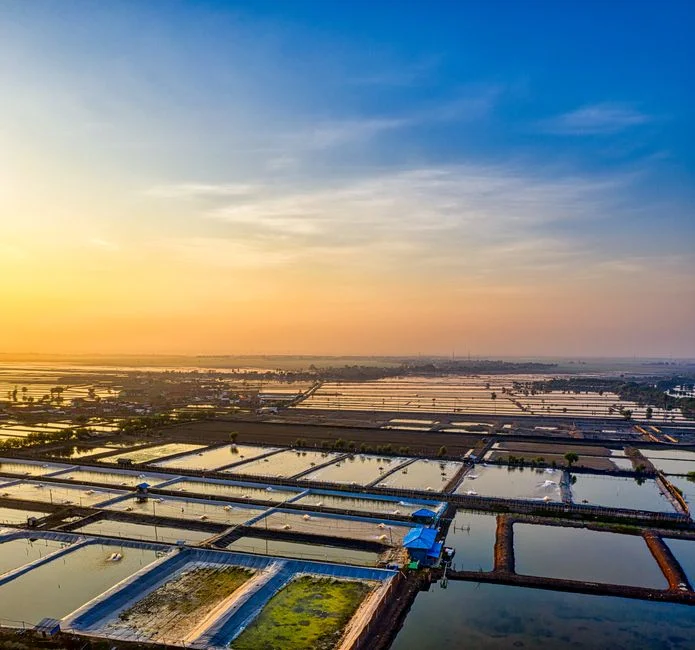
The process menu for Lobito includes A/O packaged plants, MBR membrane bioreactors, SBR sequencing batch reactors, vermifiltration, and constructed wetland–microbial fuel cell (CW-MFC) hybrids. The A/O packaged underground plant combines anoxic/aerobic biological contact oxidation with sedimentation and disinfection in a single buried or trailer-mounted unit, is fully automated, and covers 1–80 m³/h for residential communities, hotels, hospitals, factories, and rural areas (HydropureWater WSZ series product data, hydropurewater.com). The MBR membrane bioreactor integrates activated sludge with submerged PVDF membranes for near-reuse-quality effluent at <1 μm filtration, occupies 60% less footprint than conventional systems, and covers 10–2,000 m³/day for municipal sewage and water reuse (HydropureWater MBR product data, hydropurewater.com). The Liding Environmental Angola analysis cites an AOO+MBBR variant for efficient removal of COD, BOD, and ammonia nitrogen using high-efficiency biological fillers, with effluent meeting international discharge or reuse standards.
SBR is a well-established fill–react–settle–decant cycle option for variable domestic loads where continuous flow equalization is impractical. Vermifiltration combines filtration with earthworms; an IntechOpen study on vermifiltration for domestic sewage in Zimbabwe reports that the technique is efficient, requires less expertise, can be decentralized, and was benchmarked against the national Environmental Management Agency Statutory Instrument, which makes it a credible low-tech option for Lobito compounds and rural peri-urban sites. CW-MFC is an emerging domestic wastewater route with simultaneous electricity co-production, demonstrated in the academic literature for domestic sewage (IntechOpen, "Treatment of Sewage and Electricity Production by Integrating Constructed Wetland with Microbial Fuel Cell"). The table below summarizes the five options on parameters that matter for a Lobito buyer.
| Process | Indicative flow range | Footprint vs conventional | Operator skill required | Effluent quality | Best-fit Lobito scenario |
|---|---|---|---|---|---|
| A/O packaged (WSZ-style, buried or trailer) | 1–80 m³/h (HydropureWater WSZ product data) | Small; buried, landscaping above | Low; fully automated (HydropureWater WSZ product data) | Meets international discharge standards; disinfection stage included (Liding Angola analysis) | Residential compounds, hotels, hospitals, port camps, schools |
| MBR membrane bioreactor | 10–2,000 m³/day (HydropureWater MBR product data) | 60% smaller than conventional (HydropureWater MBR product data) | Moderate; membrane cleaning and integrity testing required | Near-reuse quality at <1 μm filtration (HydropureWater MBR product data) | Sites with reuse for irrigation or toilet flushing |
| AOO+MBBR variant | Customizable to local need (Liding Angola analysis) | Compact; modular biological fillers | Low to moderate; automated (Liding Angola analysis) | Discharge or reuse compliant (Liding Angola analysis) | Angola tropical-climate sites needing low-energy biological removal |
| SBR (sequencing batch reactor) | Site-specific; common in small municipal plants | Moderate; above-ground tanks | Moderate; cycle and decant control | Good for variable domestic loads | Highly variable flows where continuous equalization is impractical |
| Vermifiltration (earthworm + filter) | Site-specific; decentralized (IntechOpen, Zimbabwe study) | Large; land-based | Low; less expertise required (IntechOpen, Zimbabwe study) | Benchmarked against Zimbabwe EMA Statutory Instrument (IntechOpen) | Compounds and peri-urban sites with low operator capacity |
| Constructed wetland–MFC (CW-MFC) | Site-specific; research-scale (IntechOpen CW-MFC chapter) | Large; land-based with electrodes | Low; emerging technology | Demonstrated for domestic sewage with electricity co-generation (IntechOpen) | Low-density sites with land available and reuse interest |
Selection should match flow variability, available footprint, operator skill, and reuse targets. Practical pointers for the two HydropureWater platforms are on the A/O packaged underground sewage plant and the MBR membrane bioreactor product pages.
How to Size and Pre-Treat Domestic Sewage for Lobito
Sizing starts with occupancy and fixture counts, not with a generic plant catalog. Domestic sewage flows for Lobito housing, hotels, schools, hospitals, and port camps should be estimated from occupancy, fixture units, and peak factors; the WSZ platform covers 1–80 m³/h and the MBR platform covers 10–2,000 m³/day, so most Lobito schemes fall inside packaged ranges (HydropureWater WSZ and MBR product data). The design must apply an explicit peak factor, not a daily average, because tourism seasonality, port shift changes, and school calendars will create diurnal peaks well above the mean.
Pre-treatment should include screening to remove rags, plastics, and fibrous debris that would damage downstream biological or membrane stages; a rotary mechanical bar screen is the standard headworks choice for municipal and packaged systems, and the rotary mechanical bar screen covers that role. Where load variability is high, an upstream equalization tank or a buffer in the A/O packaged unit itself is required to keep the biological stage within its design band. Chemical dosing for pH correction or phosphorus removal can be added with an automatic chemical dosing system if the receiving-water or reuse target demands it. The engineer must obtain measured BOD, COD, TSS, ammonia, fats-oils-grease, and peak flow from the site or a comparable coastal Angolan catchment before final sizing.
Lobito Decision Framework: Matching Plant to Site
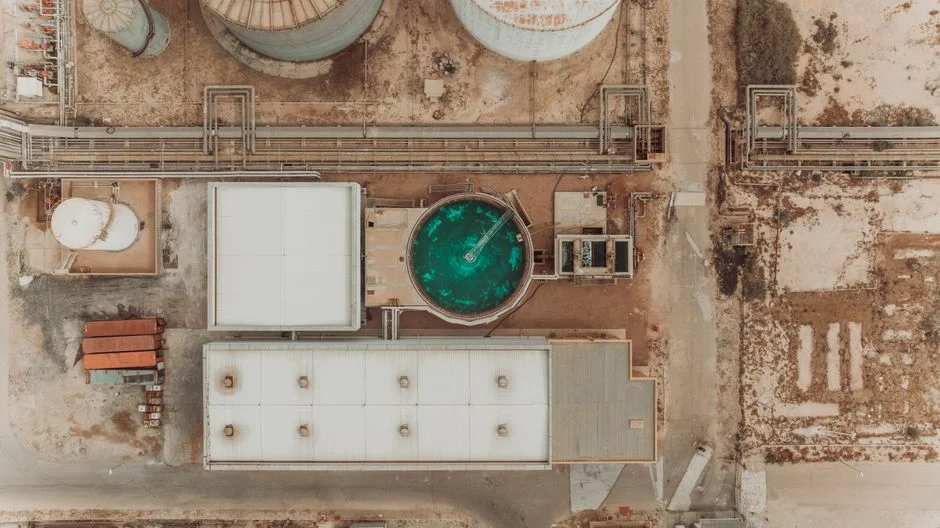
Choose by reuse target, footprint, operator skill, and climate exposure. If reuse for irrigation or toilet flushing is the priority, prefer the MBR for its <1 μm effluent quality and 60% smaller footprint, or an A/O packaged unit with disinfection where reuse is non-critical (HydropureWater MBR product data, HydropureWater WSZ product data). If site footprint is unrestricted and operator skill is low, vermifiltration or a constructed wetland–MFC hybrid offers the lowest energy demand and the least chemical use, backed by the IntechOpen Zimbabwe vermifiltration study and the IntechOpen CW-MFC chapter.
If flow is highly variable and the site must remain visible above ground, an SBR or a trailer-mounted A/O packaged unit offers flexibility, consistent with the WSZ trailer-mount option (HydropureWater WSZ product data). If pipeline access is poor and climate exposure is high, choose corrosion-resistant buried units with automation and remote monitoring, matching the Liding Environmental Angola analysis on decentralized, climate-suited equipment. The framework for packaged sewage plant sizing for African housing applies the same logic to a comparable coastal-urban context.
Evaluating Lobito Sewage Treatment Suppliers in 2026
Run the supplier shortlist on documented criteria, not on lowest price. Evaluate effluent class, flow range, automation level, material specification, and remote monitoring capability, then weight them against Lobito's climate and service-reach reality (Liding Angola analysis, HydropureWater WSZ product data). Tropical-climate suitability is a hard gate: the Liding analysis specifies corrosion-resistant and high-temperature-resistant materials built for Angola's tropical climate, and a Lobito supplier should meet or exceed that baseline.
Confirm post-install service reach into Benguela Province and availability of spare membranes, diffusers, and disinfection consumables, because downtime in coastal Angola is operationally and reputationally costly. Require reference plants in coastal or tropical African conditions rather than only temperate-climate installations. The specific inputs the reader should request from each supplier are capex per m³/day, installed power, chemical consumption, sludge yield, maintenance interval, and remote-monitoring subscription terms. A useful comparison of how these line-items are normally structured for containerized plants is in the containerized wastewater treatment pricing guide, which can be used as a request-for-quotation template.
Frequently Asked Questions
What is the best domestic sewage treatment process for a small residential development of 200 homes in Lobito?
For a 200-home Lobito scheme where the priority is low operator intervention and minimal land take, an A/O packaged underground plant in the WSZ family (1–80 m³/h, fully automated) is the most defensible first choice, and a useful parallel for the load class is packaged sewage plant sizing for African housing. Switch the specification to an MBR only if the project requires reuse for irrigation or toilet flushing, where the <1 μm effluent quality and 60% smaller footprint of an MBR membrane bioreactor justify the higher membrane maintenance load.
What cost drivers should I request from each Lobito supplier in 2026?
Do not accept a supplier's headline price per m³/day without line items. Request capex per m³/day, installed power (kW), chemical consumption, sludge yield and handling cost, maintenance interval, and remote-monitoring subscription terms, then compare offers on the same envelope. A defensible RFQ structure for similar packaged plants is outlined in the containerized wastewater treatment pricing guide.
Frequently Asked Questions
What is the best domestic sewage treatment process for a small residential development of 200 homes in Lobito?
For a development of 200 homes, assuming an average occupancy of 5 people per household and a per capita water consumption of 150 liters per day, the system must handle approximately 150 cubic meters of sewage per day. A Membrane Bioreactor (MBR) is the most efficient choice for this scale in Lobito, as it provides high-quality effluent suitable for non-potable reuse in local landscaping, which is critical given the region's periodic water scarcity.
Alternatively, if land availability is not a constraint, an Extended Aeration Activated Sludge system is a robust, lower-maintenance alternative that handles the fluctuating organic loads typical of residential developments while meeting standard discharge requirements without the higher operational costs of membrane replacement.
What cost drivers should I request from each Lobito sewage treatment supplier in 2026?
Request a detailed breakdown of capital expenditure (CAPEX) including shipping logistics to the Port of Lobito, crane hire for site offloading, and the cost of civil works for concrete containment pads. Operational expenditure (OPEX) quotes must itemize electricity consumption per cubic meter of treated water, specialized chemical dosing requirements, and the annual cost of sludge disposal services within the Benguela province.
Additionally, demand a three-year forecast for critical spare parts, specifically membrane modules for MBR systems or blower components for aeration systems, and the quoted lead time for shipping these parts from international hubs to the project site to avoid extended system downtime.
Which Angola discharge standard applies to a packaged domestic sewage plant in Lobito in 2026, and how does that change the choice between A/O and MBR?
All discharge must comply with the Decree 261/11 (Regulamento sobre a Qualidade da Água), which sets stringent limits for Biochemical Oxygen Demand (BOD), Total Suspended Solids (TSS), and nutrients. If the treated effluent is discharged into the Atlantic coastal waters or sensitive local groundwater, the regulatory thresholds for nitrogen and phosphorus are often lower than conventional treatment can achieve.
An Anaerobic/Oxic (A/O) process is generally sufficient for basic BOD and TSS removal, but it often struggles to meet strict nutrient discharge limits without additional tertiary stages. An MBR system is preferred in 2026 because it consistently achieves effluent quality that exceeds the Decree 261/11 requirements, effectively eliminating the risk of regulatory fines or site closure due to non-compliance.
How do I size a packaged sewage plant for a Lobito hotel with seasonal occupancy?
Sizing must be based on the peak flow capacity rather than the annual average to prevent system failure during high-season occupancy. Calculate the design flow using a peak factor of 1.5 to 2.0 times the average daily flow, accounting for 250 liters per guest per day and 150 liters per staff member per day, plus a 20% safety margin for laundry and kitchen loads.
In low-occupancy periods, implement a modular treatment approach or an equalization tank to prevent the biological biomass from starving. An MBR system is particularly advantageous here, as it allows for the recirculation of treated permeate to keep the biomass active during periods of low influent flow, ensuring the system is ready for immediate operation when peak season returns.
What climate and after-sales questions should a Lobito buyer put to a sewage treatment supplier?
Inquire about the corrosion resistance of all exposed metal components, specifically requesting 316L stainless steel or high-grade epoxy-coated carbon steel to mitigate the impact of the humid, saline coastal air in Lobito. Ask for proof of UV-resistant materials for all external control panels and instrumentation to prevent degradation from intense equatorial solar exposure.
Regarding after-sales support, require the supplier to provide a local service level agreement (SLA) that guarantees a technician response time within 48 hours for critical failures. Request a comprehensive list of local partners or authorized representatives in Benguela or Luanda who hold stock of essential consumables, such as chlorine tablets or spare sensors, to ensure the plant remains operational without waiting for international customs clearance.