Industrial wastewater treatment in Huambo, Angola must meet Decreto Presidencial 256/18 limits (TSS below 30 mg/L, COD below 125 mg/L) despite COD loads up to 7,000 mg/L and 12-hour daily power outages.
Wastewater Treatment in Huambo, Angola: Industrial Loads, Limits and Enforcement
Huambo's industrial plants design to Decreto Presidencial 256/18 (TSS <30 mg/L, COD <125 mg/L) while absorbing COD up to 7,000 mg/L and 12-hour outages. MBR delivers near-reuse-quality effluent through <1 μm filtration; DAF cuts TSS 92–97% at AOA 5M–20M CAPEX for 50–300 m³/day plants. Fines start at AOA 5M (about $6K USD) and can trigger shutdowns.
Huambo's industrial landscape is shifting rapidly. The Huambo Industrial Park and the Caála Agro-Industrial Hub generate a combined 12,000 m³/day of wastewater, yet 2024 Angolan Ministry of Environment data indicates that 60% of this volume is discharged without adequate treatment. This regulatory gap is closing fast. Untreated discharge into the Cubango River basin has been linked to regional cholera outbreaks between 2018 and 2022 and significant ecosystem collapse. In response, provincial authorities have intensified enforcement of Decreto Presidencial 256/18, moving beyond warnings to aggressive financial penalties.
The financial risk is no longer theoretical. In 2023, a textile facility in nearby Benguela was hit with a AOA 50M fine and a mandatory 3-month operational shutdown because its Total Suspended Solids (TSS) reached 38 mg/L — just 8 mg/L over the legal limit. For a facility in Huambo, where water scarcity projections for 2025 suggest a 40% supply deficit, the inability to treat and reuse water is a direct threat to business continuity. National context sharpens the case: access to a stable water supply in Angola rose from 42% in 1990 to 54% by 2012, and water supply and sanitation remain an ongoing challenge (Wikipedia, Water supply and sanitation in Angola). Without high-efficiency filtration, such as MBR systems for Huambo's high-COD industrial wastewater, facilities are forced to rely on expensive municipal water or dwindling groundwater reserves.
Three discharge scenarios dominate Huambo's industrial sector, and each carries severe exposure. Direct river discharge leads to immediate environmental litigation; evaporation ponds often fail during the heavy rains of November to March, causing overflow and groundwater contamination; and illegal tanker dumping results in criminal liability for facility directors. Transitioning to an engineered treatment solution is the only pathway to legal and operational security. The equipment logic parallels general industrial wastewater treatment practice, but Huambo's grid and rainfall demand local adaptations covered below.
What Does Decreto Presidencial 256/18 Require for Discharge in Huambo?
Compliance in Huambo is not merely about meeting a single parameter but maintaining a stable chemical and biological balance across multiple indicators. For most industrial sectors, the baseline for discharge into surface water or public sewers is rigid. The table below sets the permit values against WHO irrigation guidance and the raw influent we typically sample in the province.
| Parameter | Standard Limit (Decreto 256/18) | WHO Irrigation Guideline | Typical Huambo Raw Influent |
|---|---|---|---|
| Total Suspended Solids (TSS) | <30 mg/L | <50 mg/L | 500 – 1,200 mg/L |
| Chemical Oxygen Demand (COD) | <125 mg/L | N/A | 2,000 – 7,000 mg/L |
| Biochemical Oxygen Demand (BOD₅) | <25 mg/L | <10 mg/L | 800 – 3,500 mg/L |
| pH Range | 6.0 – 9.0 | 6.5 – 8.5 | 2.0 – 12.0 (Industry dependent) |
| Fecal Coliforms | <1,000 CFU/100mL | <1,000 CFU/100mL | Variable |
The WHO column above follows the four-volume Guidelines for the safe use of wastewater, excreta and greywater in agriculture and aquaculture (WHO, 2006). Volume 2 of that set covers wastewater use in agriculture, the baseline for irrigation reuse decisions.
The Industrial Wastewater Permitting Process in Huambo, Step by Step
The industrial wastewater permitting process in Huambo follows a 6-step workflow that averages 90 days. It begins with a pre-application meeting with the Provincial Directorate of the Environment, followed by an Environmental Impact Assessment (EIA). Once the Ministry of Environment grants approval, the facility must undergo quarterly audits and an annual permit renewal. Crucially, on-site testing must be verified by ISO 17025-accredited labs every six months. In Huambo, facilities often utilize the services of the University Jose Eduardo dos Santos labs or specialized private consultants for third-party verification. One caution from practice: confirm the exact diploma and values cited in your own consent before design freeze, since provincial permits sometimes reference national water-quality regulations with locally tightened values.
Sludge management is a frequent point of failure during audits. Regulations dictate that sludge must be dewatered to less than 10% moisture content before transport. Utilizing sludge dewatering solutions for Huambo's compliance requirements ensures that waste meets the transport standards for the Caála Waste Management Center, the only licensed facility in the province. Common compliance failures — such as missing Environmental Impact Assessments or unpermitted sludge disposal — now trigger the 2025 amendments to Angola's Environmental Law, which include criminal liability for repeat offenders and fines up to AOA 50M.
Huambo's Industrial Sectors: Wastewater Characteristics and Treatment Challenges
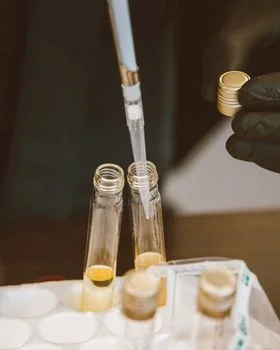
Engineering a treatment system in Huambo requires accounting for sector-specific influent profiles and the province's unique infrastructure constraints. The textile industry produces effluent with high pH (9–12) and intense dye concentrations, requiring robust chemical oxidation or MBR technology to break down complex organic chains. In contrast, the beverage sector, exemplified by the local Coca-Cola operations, faces COD levels peaking at 7,000 mg/L due to high sugar content. For these high-load scenarios, Rotating Biological Contactor (RBC) systems are often preferred for their ability to achieve 90% COD removal with minimal energy input.
The mining sector in the surrounding Huambo province (targeting diamonds and gold) faces a different challenge: massive TSS concentrations (up to 50,000 mg/L) and heavy metal contamination. These sites require chemical precipitation for phosphorus removal in Huambo and heavy metal stabilization, often paired with lamella clarifiers to handle high solids flux. Food processing facilities must contend with Fats, Oils, and Grease (FOG) levels up to 1,500 mg/L, making DAF systems for Huambo's food processing and metalworking wastewater essential for protecting downstream biological units.
| Sector | Primary Challenge | Recommended Technology | Energy Sensitivity |
|---|---|---|---|
| Textile | Dyes & High pH | MBR + Neutralization | High (Requires UPS) |
| Beverage | High COD (7,000 mg/L) | RBC or Anaerobic | Low (Resilient to outages) |
| Mining | TSS & Heavy Metals | Lamella + Filter Press | Medium |
| Food Processing | FOG & BOD | DAF + Aerobic Digestion | Medium |
Huambo's 12-hour daily power outages are a critical design factor. Biological systems like MBR require continuous aeration to keep the biomass alive; therefore, any design must integrate 24-hour battery backups or automatic generator synchronization. Seasonal rainfall from November to March can dilute influent but also introduces heavy stormwater contamination, requiring equalization tanks sized for 1.5x the average daily flow to prevent system washout. Most industrial wastewater treatment projects in Huambo, Angola that succeed pair a DAF front end with biology sized at conservative loading rates, accepting a larger tank volume in exchange for outage tolerance.
MBR vs DAF vs RBC for Huambo's Industrial Wastewater
Choosing the right technology involves balancing effluent quality requirements against the reality of Huambo's operating costs. Membrane Bioreactors (MBR) offer the highest quality effluent, with TSS levels consistently below 5 mg/L, making the water suitable for cooling towers or landscaping. However, the CAPEX for a 300 m³/day MBR system can reach AOA 150M, with significant OPEX due to membrane replacement and energy-intensive aeration (0.8–1.2 kWh/m³).
Dissolved Air Flotation (DAF) is the standard for physical-chemical pretreatment. It is highly effective at removing 92–97% of TSS and 95% of FOG, which is vital for the food processing plants in the Caála hub. DAF systems are more affordable, with CAPEX ranging from AOA 5M to 20M, but they require a steady supply of coagulants and flocculants, which can be subject to supply chain delays in Angola. For facilities prioritizing low energy use, the Rotating Biological Contactor (RBC) is the most resilient option, treating high-load beverage wastewater using about 11 kWh for a 700 m³/day flow.
| Feature | MBR (Membrane Bioreactor) | DAF (Dissolved Air Flotation) | RBC (Rotating Bio-Contactor) |
|---|---|---|---|
| Effluent TSS | <1 mg/L (Superior) | 20–50 mg/L (Good) | 30–60 mg/L (Moderate) |
| Energy Use | 0.8 – 1.2 kWh/m³ | 0.3 – 0.5 kWh/m³ | 0.05 – 0.1 kWh/m³ |
| Footprint | Smallest (Compact) | Moderate | Large |
| Sludge Yield | 0.1 – 0.2 kg/m³ | 0.3 – 0.5 kg/m³ | 0.2 – 0.4 kg/m³ |
Failure modes in Huambo are often tied to local conditions. MBR membranes are prone to fouling if the screening process is bypassed, a common issue during night shifts with limited supervision. DAF systems frequently suffer from chemical overdosing, where operators attempt to compensate for variable influent by using excess polymer, leading to "sludge bulking." RBC systems are mechanically simple but require high-quality bearings; a power surge can damage drive motors if not protected by voltage stabilizers. Understanding these risks is essential for implementing wastewater treatment strategies for arid climates like Huambo's dry season.
RBC Wastewater System for Unstable Power Supply: The Resilient Choice
An RBC wastewater system for unstable power supply conditions outperforms suspended-growth biology because the biofilm stays attached to the rotating disks and survives stoppages that would kill suspended biomass. Energy draw runs at 0.05–0.1 kWh/m³, a fraction of MBR aeration, so a modest generator or battery bank carries the plant through the 12-hour outages. Beverage and food plants in the Caála hub are the natural fit, with COD removal near 90% on sugar-rich feeds. Specify low-speed drives, hardened bearings, and voltage stabilizers on the motors; those three items are the difference between a five-year RBC and a two-year one on Huambo's grid.
Compliance Blueprint: Permitting, Testing, and Penalty Avoidance in Huambo
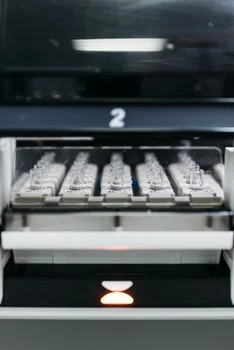
Securing a permit and avoiding fines in Huambo requires a proactive engineering and administrative strategy. The first step is a comprehensive wastewater characterization study conducted during both the peak production season and the rainy season. This data forms the backbone of the Environmental Impact Assessment (EIA). Facility managers should partner with approved local firms, such as AmbiÁfrica or similar accredited consultants, to ensure the EIA meets the specific expectations of Huambo's provincial regulators.
The submission to the Ministry of Environment must include detailed plant layouts, process flow diagrams, and a documented emergency response protocol for power failures or chemical spills. Once operational, the facility must prepare for unannounced audits. Inspectors will check calibration records for pH meters and flow sensors, operator training logs, and the manifest system for sludge disposal at the Caála Waste Management Center. Falsifying test reports or missing a single quarterly ISO 17025 lab report is the fastest way to trigger a "Red Notice" and an immediate AOA 5M fine.
To stay audit-ready, implement an internal "Pre-Audit" every 60 days. This includes checking the moisture content of sludge coming off the sludge dewatering solutions and ensuring all quarterly test results from the past five years are organized and accessible. If your facility produces high-salinity waste, consider integrating RO systems for high-salinity industrial wastewater to ensure total dissolved solids (TDS) remain within local discharge limits, even if not explicitly capped by Decreto 256/18, as they impact downstream agricultural use.
CAPEX and OPEX Breakdown: Budgeting for Wastewater Treatment in Huambo
Budgeting for wastewater treatment in Huambo must account for both the initial investment and the long-term operational costs influenced by local labor and energy prices. For a 100 m³/day system, CAPEX varies widely based on technology. An MBR system represents a significant investment of approximately $300,000 (USD), whereas a DAF system for the same capacity might cost $60,000. However, the MBR system's ability to produce water for reuse can offset these costs over time.
| Cost Component | Estimated Unit Cost (Huambo 2026) | Annual Impact (100 m³/day plant) |
|---|---|---|
| Electricity | AOA 500 / kWh | AOA 1.8M – 7.2M |
| Labor (2 Operators) | AOA 250,000 / month | AOA 6.0M |
| Chemicals (Coagulants) | AOA 1.2M / ton | AOA 2.4M – 4.8M |
| Fine Avoidance | AOA 5M – 50M (Potential) | Value: High Risk Mitigation |
The Return on Investment (ROI) for a textile plant installing an MBR system is often achieved within 3.5 years. This calculation includes the avoidance of AOA 50M in potential fines, a reduction in municipal water purchases by AOA 30M/year through reuse, and lower sludge disposal fees due to high-efficiency dewatering. For facilities struggling with upfront costs, Angola's Fundo Ambiental offers 5-year loans at approximately 8% interest for projects that demonstrate a direct reduction in environmental impact.
When negotiating with suppliers, prioritize turnkey solutions that include design, installation, and at least six months of operator training. Modular systems are increasingly popular in Huambo, allowing facilities to deploy a DAF system for immediate compliance and later add an MBR module as production capacity — and budget — increases.
Who This Covers and Next Steps
This guide targets plant engineers and procurement leads at textile, beverage, food, and mining facilities in Huambo province facing Decreto 256/18 enforcement. The practical next step is a characterization study followed by a technology-specific budget: send your flow, influent loads, and permit values through our Huambo treatment system quote request for a DAF/MBR/RBC comparison with an OPEX model. Teams also operating in the Gulf can cross-check permit regimes in the Ajman Industrial Effluent Guide: 2026 Specs and Compliance, while European-linked exporters track the EU Urban Wastewater Treatment Directive: Compliance, Deadlines & Tech timeline.
Frequently Asked Questions
What is the quickest way to achieve compliance in Huambo?
The fastest route is installing a modular DAF system for solids and FOG removal, paired with a robust equalization tank. This addresses the most visible discharge issues — TSS and oils — within 60–90 days. For full COD compliance under Decreto 256/18, a biological stage (MBR or RBC) is usually required. Most sites we quote phase the two steps across budget cycles.
How do I handle the 12-hour power outages with a biological system?
You must design for resilience from day one. RBC systems are naturally resilient because the biomass stays attached to the disks and remains moist even when not rotating. For MBR or activated sludge, you require a backup generator with an automatic transfer switch (ATS) to maintain aeration, as anaerobic conditions can kill the biomass in as little as 4 hours. Batteries covering control systems are a cheaper add than replacing a biology.
Can I use treated industrial wastewater for irrigation in Huambo?
Yes, provided it meets the WHO Guidelines for Safe Wastewater Use (<1,000 CFU/100mL fecal coliforms). MBR technology is the reference standard here because its membrane barrier (0.03 μm) physically removes pathogens, ensuring the effluent is safe for irrigating the green belts around industrial zones or local agricultural plots. Pair it with the reuse storage sizing from your dry-season water balance.
Where can I legally dispose of wastewater sludge in Huambo?
All industrial sludge must be sent to the Caála Waste Management Center, the only licensed facility in the province. You must provide documentation that the sludge has been dewatered (typically via a plate-and-frame filter press) and is free of hazardous concentrations of heavy metals, as verified by a certified lab. Keep the manifests current — auditors check them first.