Why Sewer Connection Comes Before Plant Selection
Munich’s public sewage system is the primary option to investigate. The federal context explains why: the BMUKN reports that around 97 percent of Germany’s population is connected to public sewage systems and that almost 9,000 public plants serve the country. For a Munich housing development, the relevant city, district and water authority need to be involved while the wastewater strategy is still open, not after a package has been ordered.
The formal sewer-feasibility check should establish connection capacity, the proposed route, the construction programme and whether a connection will be available when the first homes are occupied. It must also distinguish a connection that is technically possible from one that can meet the development’s required stage. Capacity limitations, construction sequencing or an unresolved connection constraint can justify a decentralized sewage treatment route for an interim or permanent phase.
Packaged plants provide a solution when a mains connection is unavailable, not feasible at the required stage, or requires further technical review. Tricel describes shared treatment using this principle; however, its Irish and Northern Irish consent examples cannot be transferred to Munich. The German legal and authority route must be confirmed locally. The German AbwV and WHG wastewater technology guide provides the relevant regulatory starting point.
Do not begin with a product catalogue. Begin with a sewer-availability and approval-feasibility review, then retain the off-mains option if connection is unavailable, delayed or technically unresolved.
Build the Population Equivalent and Flow Case
Population equivalent (PE) provides a common basis for comparing wastewater load, but the calculation must represent the complete development and its occupancy sequence. Tricel specifically warns against sizing from the number of houses alone and requires the load to cover all houses, apartments, communal facilities and future phases.
For a preliminary European conversion, Clearfox identifies 1 PE as 60 g BOD and 150 L per day, and gives 1.5 persons per bedroom as an occupancy heuristic. Neither figure replaces a project-specific loading assessment. The designer still needs the unit mix, expected occupancy, wastewater contribution per unit or use, and the phasing schedule.
| Design input | Preliminary reference or required project information | Why it matters |
|---|---|---|
| Population equivalent | Clearfox: 1 PE equals 60 g BOD and 150 L/day | Provides a common preliminary loading and flow basis |
| Occupancy | Clearfox heuristic: 1.5 persons per bedroom | Supports preliminary PE estimates until project-specific occupancy is established |
| Development load | Houses, apartments, communal facilities and future phases | Prevents a partial scheme from being mistaken for the full load |
| Flow pattern | Average demand, residential peak flow, overnight low flow and early-phase flow | Tests both hydraulic capacity and biological performance |
| Phasing | First occupation, intermediate phases and full build | Prevents underloading initially and inadequate capacity later |
Clearfox identifies morning, late-afternoon and evening residential peaks, while Tricel highlights lower overnight flows and potentially very low flow before all dwellings are occupied. Designing for the full range is essential. Average daily flow alone cannot demonstrate that the plant handles a morning peak, and peak capacity alone does not demonstrate stable biological treatment at minimum flow.
Prepare at least three operating cases: initial occupation, intermediate phasing and full development. Each case needs its own hydraulic flow, organic loading, biological performance and sludge-management assumptions. The final calculation should be a project-specific hydraulic and loading assessment, not a Munich approval and not a conversion from house count alone.
Match the Plant to the Discharge Route
The discharge route determines the required treatment performance and must be fixed before comparing equipment. Direct discharge to surface water, indirect discharge through a sewer, infiltration to ground and reuse within the development are different design cases. A process train suitable for one route cannot be assumed suitable for another.
BMUKN states that untreated wastewater may not be discharged into rivers and lakes. It also notes that section 57(1) of the Federal Water Act permits wastewater discharge into waters only where the pollution load is reduced to the lowest level achievable in line with the best available technology. Specific requirements for municipal and industrial or commercial wastewater are set out in the AbwV. The applicable limits depend on the receiving route and regulatory classification; a named package plant does not carry automatic approval for a Munich site.
Ask the competent authority to confirm the discharge standard, sampling requirements, groundwater-protection conditions, permit conditions and the evidence expected to demonstrate best available technology. For a groundwater-sensitive site, infiltration should not be assumed to be available merely because the development owns the land. The groundwater level, soil and percolation information, sensitive receptors and the proposed infiltration arrangement all require review.
If treated water is to be reused, specify the use before selecting the process. Toilet flushing, irrigation and washing demand different water-quality assurances from potable use, and the required evidence must be agreed before equipment procurement. The German AbwV and WHG wastewater technology guide should be used alongside the authority’s written requirements.
Do not import the Irish registration or consent thresholds cited by Tricel, as those statements apply to the Republic of Ireland and Northern Ireland, not Bavaria or Germany.
Apply the Munich Site and Construction Filters
A groundwater-sensitive Munich site can be eliminated before process comparison if the plant envelope, access or discharge arrangement cannot fit. The site investigation should record levels, available footprint, groundwater, soil and percolation information, flood-risk context, vehicle or equipment access, and nearby sensitive receptors.
| Filter | Evidence required | Selection consequence |
|---|---|---|
| Ground and water | Groundwater level, soil/percolation information and relevant site constraints | Determines feasibility of infiltration, excavation method, ballast and discharge options |
| Space | Scaled plant envelope, access zones and utility routes | Screens buried packages against surface-mounted or multi-unit arrangements |
| Construction | Access for delivery, excavation, lifting and commissioning | Rules out packages that cannot be safely constructed on the site |
| Operations | Routes for inspection, desludging, sampling and maintenance | Excludes layouts without safe and practical servicing access |
| Development programme | First-occupancy, intermediate and full-build scenarios | Tests underloading, peak demand and future expansion |
A below-grade installation preserves surface area but requires suitable excavation, structural and groundwater conditions. A surface-mounted container can simplify delivery and phased deployment, but it still consumes space and needs access for inspection, sludge removal and servicing. A single compact buried package may simplify underground utility coordination; a multi-unit arrangement can provide operating flexibility but generally requires more footprint and pipework.
The construction programme is a technical criterion, not merely a commercial one. The installation must operate during initial occupation without relying on the later phases to provide minimum flow. At the same time, additional capacity should be added without replacing the complete installation. Confirm whether future expansion is by parallel treatment modules, staged commissioning or replacement of a larger unit.
No supplied research establishes a universal Munich groundwater level, percolation rate or required setback. Those remain site-specific inputs. This matters especially where groundwater or sensitive receptors make infiltration a doubtful discharge route.
Compare a Buried A/O Package with MBR
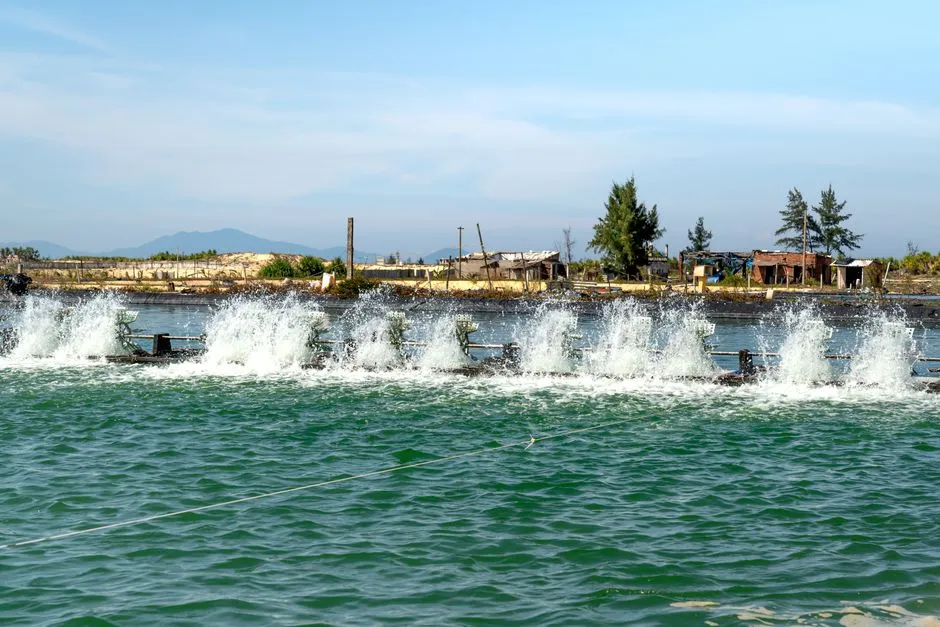
A buried A/O biological contact oxidation package and an MBR are candidates for different combinations of footprint, treatment objective and operating complexity. Neither is a default answer for a Munich housing scheme.
| Decision factor | WSZ package | MBR |
|---|---|---|
| Catalog capacity | 1–80 m³/h | 10–2,000 m³/day |
| Process train | Integrated A/O biological contact oxidation, sedimentation and disinfection | Membrane bioreactor with filtration |
| Treatment objective stated in catalog | Package treatment beneath the site, with landscaping above | Near-reuse-quality effluent with filtration below 1 μm |
| Installation | Below grade, or on a trailer for mobile deployment | Containerized installation |
| Footprint | Buried format preserves surface area where ground conditions permit | Catalog states 60% smaller footprint than conventional systems |
| Automation and maintenance | Fully automated operation; sludge and mechanical access still require planning | Adds membrane-system maintenance considerations that must be defined by the supplier |
| Expansion | Assess parallel units or staged replacement against the development programme | Assess modular capacity addition where the catalog configuration permits |
The underground WSZ package sewage treatment plant is the simpler buried-package route. Its catalog flow range is 1–80 m³/h, and the stated train includes A/O biological contact oxidation, sedimentation and disinfection. It is a potential value option for a suitable residential application, provided the site can support excavation and the treatment objective matches the approved discharge route.
The integrated MBR wastewater treatment system is the higher-quality, compact alternative. Its catalog states 10–2,000 m³/day, near-reuse-quality effluent, filtration below 1 μm and a 60% smaller footprint than conventional systems. These are catalog claims, not evidence of Munich permit compliance.
Clearfox adds useful market context: it reports SBR BOD removal of 85–95 percent and describes fixed-bed biological reactor configurations from 10 to 3,000 m³/day. Packaged treatment is not one single technology. The defensible choice is the architecture that satisfies the confirmed effluent standard, site envelope, phasing and operating plan.
Move From Candidate Plant to Approval-Ready Design
A shortlist becomes approval-ready through a defined sequence rather than a general brochure submission. Use this order:
- Confirm sewer feasibility, including capacity, route, construction timing and first-occupancy availability.
- Calculate PE, average daily demand, peak flow and minimum-flow cases for the full development and each phase.
- Fix the discharge route and obtain the competent authority’s applicable requirements.
- Complete the site, groundwater, flood, soil, access and sensitive-receptor investigation.
- Select and size the process against the confirmed loading, treatment objective and layout.
- Prepare the authority submission and operating evidence.
- Order, install, commission, monitor and document performance.
The scaled site plan should show the plant, safe access, utilities, gravity routes, pumping requirements, sludge collection, separate stormwater management and the connection to the approved receiving route. Where rainwater is managed separately, the plan should make that separation explicit so that the plant is not designed around an unverified combined flow.
Include a commissioning and operating plan covering automatic controls, aeration, sludge management, inspection access, effluent monitoring, maintenance and owner training. A phased-build simulation should test initial occupancy, intermediate occupancy and full load, including minimum-flow periods and the step increase when another phase connects.
Responsibility must be assigned before ordering: developer, civil contractor, treatment supplier, operations contractor and local authority each need a defined duty. The approach in the packaged sewage treatment plant for European housing developments can support the brief, but German and Munich requirements must replace the cited jurisdiction’s approval assumptions. The containerized MBR sizing for residential projects also provides a useful structure for testing phased capacity.
Frequently Asked Questions
What is the cheapest reliable packaged sewage treatment plant for a Munich housing development?
The WSZ may be the lower-complexity value option for a suitable buried residential application, but there is no sourced development-level price in the supplied research. Request an installed cost split into equipment, excavation, groundwater protection, pumping, discharge works, monitoring, commissioning, authority evidence and long-term operation. Compare that package with the MBR’s equipment, membrane-related maintenance and operating requirements.
How many housing units can one WSZ or MBR unit serve?
Unit count alone cannot answer this. The WSZ catalog covers 1–80 m³/h, while the MBR catalog covers 10–2,000 m³/day. Capacity must be calculated from expected occupancy, wastewater contribution, residential peak flow, low flow and phase-by-phase loading, then checked against the selected unit’s treatment envelope. Request a written sizing calculation that states these inputs and any duty limits.
Which process should a developer choose for a difficult Munich site?
Choose a WSZ where a compact below-grade