Why a Containerized MBR Fits a Phnom Penh Estate or Camp
A containerized MBR is a pre-engineered membrane bioreactor assembled inside a standard 20 ft or 40 ft high-cube ISO container, combining activated-sludge biology with submerged ultrafiltration (UF) at a nominal pore size of 0.04 µm, with field units demonstrating 0.01 µm solids rejection on domestic sewage (Pure Aqua MBR-C datasheet, 2025; RODI 2,500 gpd project sheet, 2024-04). The fixed process train is a 1.5 mm drum screen, an anoxic/aerobic biological stage, then a submerged PVDF UF membrane tank before disinfection. On-site civil work shrinks to a concrete pad, an inlet drop, and a discharge line — no reactor casting, no clarifier excavation.
Phnom Penh projects with no municipal sewer access (peri-urban Boreys, SEZ worker housing, and out-of-town hotel plots) match the typical residential and camp sewage envelope of BOD 200–400 mg/L and TSS 200–350 mg/L without pretreatment upgrades beyond the 1.5 mm drum screen. The stock design envelope runs at 20–30°C with a 20°C design point, and Phnom Penh ambient of 26–32°C sits inside that band, so no heating or cooling is specified (Pure Aqua MBR-C datasheet, 2025). Effluent typically meets BOD <5 mg/L and TSS <1 mg/L, which supports on-site irrigation or toilet-flushing reuse where the receiving environment and the Ministry of Environment discharge requirements allow it. For a fuller process walk-through that supports this format, the home sewage treatment plant buyer's guide covers the same envelope in residential terms.
Step 1: Build the Design Population and Average Daily Flow
Design population is the primary sizing input and is frequently under-counted; add 5–10% for visitors and guests before multiplying by per-capita flow (S1 worked example, HydropureWater 2026). The Pure Aqua stock baseline of 50 gpd (≈190 L/c/d) is a Western default, not a tropical rule, and applying it to tropical estates can underdesign flow capacity by 30–60% against observed consumption (HydropureWater field data, 2026).
For Cambodian residential and gated communities, use 60–80 L/c/d as a working range, with 70 L/c/d as the defensible middle value; this matches Sierra Leone field data and is closer to typical South-East Asian domestic consumption than the 50 gpd stock default. For camps with shared showers, canteens, and laundry, lift per-capita to 100 L/c/d (the catering-camp assumption from the Freetown sizing guide), and to 130–180 L/c/d for full-fixture residential where occupants are full-time and fixtures are limited.
Worked example for a 250-resident Phnom Penh gated community: 250 × 70 L/c/d = 17,500 L/day = 17.5 m³/day average dry weather flow (ADWF). Get the occupancy profile right before you commit: full-time residential is steady, seasonal construction is peak for 3–6 months, and a shift-worker camp produces a sharp daytime peak that affects the next step.
Step 2: Apply a Peak Factor That Carries Monsoon I&I and Shift-Change Surge
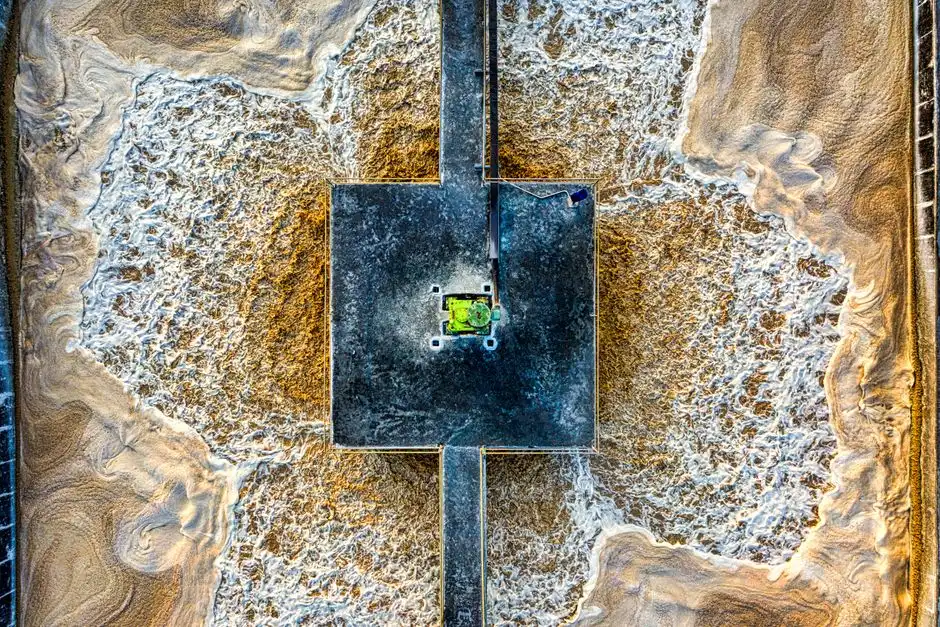
A membrane bioreactor's flux is rate-limited, so the unit must be sized for peak wet weather flow (PWWF) rather than average. Apply a peak factor of 2.0–2.5 for camp occupancies and 2.0–2.5 for estate projects where wet-season inflow and infiltration (I&I) is a concern (Freetown sizing guide, HydropureWater 2026). Use 2.25 as a defensible working value unless the layout is fully sealed and roof-drained.
Phnom Penh's May–October monsoon routinely drives inflow and infiltration into shallow sewers and soakaways; a sealed, roof-drained estate layout is the exception rather than the rule. For shift-worker camps (garment, construction, SEZ manufacturing), add an explicit morning wash-block surge to the diurnal pattern; if the camp's peak profile is extreme — for example, a single wash block serving 300 workers in 90 minutes — specify external buffer storage of at least 4–6 hours of Qpeak (S1, HydropureWater 2026).
PWWF calculation for the 250-resident example: 17.5 m³/day × 2.25 = 39.4 m³/day. Schools with kitchens and guesthouses should carry an additional 10–15% industrial safety margin on top of ADWF before rounding up to the nearest standard packaged size (10, 25, 50, 100 m³/day). For a 100-personnel work camp with catering, lift per-capita flow to 100 L/c/d: 100 × 100 = 10 m³/day ADWF, 22.5 m³/day PWWF.
Step 3: Size the Biology and the Membrane Area
Flow alone does not size the biology — load does. BOD load (kg/day) = ADWF (m³/day) × BOD concentration (g/m³); for the 250-resident example at 300 g/m³, 17.5 × 0.300 = 5.25 kg BOD/day. This is the figure the aeration basin and MLSS setpoint must absorb.
Target MLSS of 8,000–12,000 mg/L (higher than the 3,000–5,000 mg/L used in conventional activated sludge) holds F/M at 0.05–0.15 kg BOD/kg MLSS·day, which defines a well-loaded MBR (HydropureWater field data, 2026). Hold SRT at 20–30 days for full nitrification in the 26–32°C Phnom Penh window; HRT typically lands at 6–10 hours. Reactor volume (m³) = ADWF × HRT; for 17.5 m³/day at 8 h HRT, 17.5 × (8/24) = 5.8 m³ — small enough to fit inside a 20 ft container alongside the membrane cassette.
Membrane area (m²) = design flow (L/h) ÷ design flux (L/m²·h). At 20 L/m²·h, 17,500 L/day ÷ 24 h = 729 L/h; 729 ÷ 20 = ≈ 36 m² of PVDF area. Aeration is sized at 0.4–0.6 kW of blower power per m³/day of design flow, split between coarse-bubble membrane scour and fine-bubble biology aeration. For catering camps, FOG loading of 30–60 mg/L in raw influent must be removed with a dissolved air flotation unit or a simple grease trap upstream of equalization; FOG on the membrane surface halves flux within weeks. The membrane cassette is typically the DF-series flat-sheet MBR membrane module (0.1 µm PVDF, 32–135 m³/day per module), which can be swapped or expanded without replacing the container.
| Design parameter | Working value | Source / scope |
|---|---|---|
| Per-capita flow, residential (L/c/d) | 60–80 (70 working) | HydropureWater field data, 2026 |
| Per-capita flow, catering camp (L/c/d) | 100 | Freetown sizing guide, HydropureWater 2026 |
| Peak factor (PWWF/ADWF) | 2.0–2.5 (2.25 working) | Freetown sizing guide, HydropureWater 2026 |
| MLSS (mg/L) | 8,000–12,000 | HydropureWater field data, 2026 |
| F/M ratio (kg BOD/kg MLSS·day) | 0.05–0.15 | HydropureWater field data, 2026 |
| SRT (days) | 20–30 | Pure Aqua MBR-C datasheet, 2025 |
| HRT (hours) | 6–10 | Freetown sizing guide, HydropureWater 2026 |
| Design flux (L/m²·h) | 15–25 (20 working) | Freetown sizing guide, HydropureWater 2026 |
| Aeration power (kW per m³/day) | 0.4–0.6 | Freetown sizing guide, HydropureWater 2026 |
| FOG in raw camp influent (mg/L) | 30–60 | Freetown sizing guide, HydropureWater 2026 |
Step 4: Match the Container and Add Spare Capacity
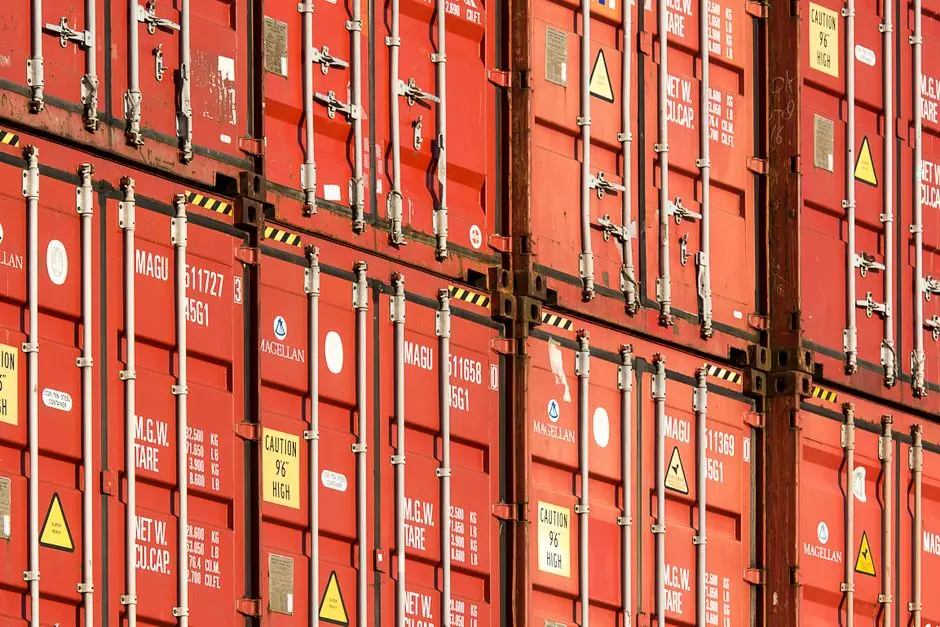
Use the flow envelope: a 20 ft HC for up to ~50 m³/day and a 40 ft HC for 50–200 m³/day (Pure Aqua MBR-C datasheet, 2025; WaterAcademia, 2025). Add 20–30% spare capacity above Qpeak for population growth, seasonal load spikes, and future reuse upgrades (S1, HydropureWater 2026).
For the 17.5 m³/day (39.4 m³/day PWWF) worked example, a single 20 ft HC is correct. For a 300-person camp at ~57 m³/day average, a 40 ft HC is the safer call because a 20 ft would be at the upper edge of its envelope and leave little spare capacity. For phased Phnom Penh developments, install a 20 ft now, plumb the second pad, and add the second 20 ft when occupancy hits 70% of design. Multiple 40 ft units can be paralleled; MENA-Water packs up to 1,200 m³/day in a single 40 ft by staging modules (MENA-Water, 2025). For a quotation-ready spec, request the containerized MBR membrane bioreactor system datasheet.
| Design flow envelope | Container | Indicative population (at 70 L/c/d) | Indicative population (at 190 L/c/d) | Notes |
|---|---|---|---|---|
| Up to ~50 m³/day | 20 ft HC | ≈ 700 residents | ≈ 260 residents | Standard flatbed; tight sites |
| 50–200 m³/day | 40 ft HC | 700–2,800 residents | 260–1,000 residents | Standard flatbed; needs longer clear approach |
| > 200 m³/day | Multiple 40 ft parallel | 2,800+ residents | 1,000+ residents | MENA-Water up to 1,200 m³/day, 2025 |
| Phased build | 20 ft now, second 20 ft at 70% occupancy | — | — | Reserve second pad from day one |
Step 5: Cambodia-Specific Site Checks Before You Sign the PO
Power is the most operationally fragile input. Cambodia's grid is 400V/3Ph/50Hz, while most containerized MBR stock is built for 460V/3Ph/60Hz (Pure Aqua MBR-C datasheet, 2025). Specify a step-down transformer or order a voltage-matched build at quotation. A typical Phnom Penh site sees 4–8 hours of grid interruption per week, and a membrane plant without backup power will trip on the first sustained outage — size the genset to the duty blower plus permeate pump with auto-changeover.
Phnom Penh ambient of 26–32°C sits inside the 20–30°C operating band, so no HVAC is needed; on sites with high groundwater, the container's sealed floor and zero-leakage wall design (Pure Aqua MBR-C datasheet, 2025) matter for flood resilience. Confirm the receiving environment (drain, canal, wet well, irrigation) and the relevant Ministry of Environment and PPWSA discharge requirements before specifying effluent polishing — reuse for irrigation typically needs additional disinfection such as a packaged UV sterilizer. For combined or septic-tank-fed estates, a 1.5 mm drum screen is the minimum to protect the membrane from rags, sand, and plastics; specify it explicitly in the scope. The MBR design criteria guide walks through the same scope items in more detail.
Frequently Asked Questions
What per-capita flow should I use for a Phnom Penh gated community or camp?
For residential and gated communities, use 60–80 L/c/d with 70 L/c/d as the working middle value; this matches the Freetown field data and avoids the 30–60% underdesign that comes from applying the 50 gpd (≈190 L/c/d) Western stock default (HydropureWater field data, 2026). For catering camps with shared showers, canteens, and laundry, lift to 100 L/c/d; for full-fixture residential with limited fixtures, 130–180 L/c/d is appropriate (S1, HydropureWater 2026).
How do I choose between a 20 ft and 40 ft container for a 100–500 person project?
Apply the flow envelope: 20 ft HC for up to ~50 m³/day, 40 ft HC for 50–200 m³/day (Pure Aqua MBR-C datasheet, 2025; WaterAcademia, 2025). At 70 L/c/d, 50 m³/day covers roughly 700 residents; at 190 L/c/d it covers roughly 260. For phased projects, install the 20 ft now, plumb the second pad, and add the second 20 ft when occupancy hits 70% of design (S1, HydropureWater 2026).
What is the indicative cost and lead time for a containerized MBR STP in Cambodia?
No quotation is supplied in the available research, so the buyer must request a site-specific quote that bundles the voltage-matched build (400V/3Ph/50Hz), the genset sizing for the duty blower plus permeate pump, and the FOG removal step for catering camps. Request the containerized MBR membrane bioreactor system datasheet, the FOG handling scope, and the genset sizing basis in writing before signing the PO.
How do I verify a Phnom Penh vendor's compliance and capacity claim?
Confirm the receiving environment and the relevant Ministry of Environment and PPWSA discharge requirements in writing, and request a voltage-matched build certificate for 400V/3Ph/50Hz rather than relying on an external transformer. Ask for the membrane cassette model and the membrane area in m² at the quoted design flux (15–25 L/m²·h at 20–30°C), and for the blower kW per m³/day of design flow (0.4–0.6 kW). The supplier selection inputs the buyer must obtain are: a written compliance statement for the receiving environment, the membrane model and area at design flux, and the standby-power sizing basis.