Why Bengaluru Housing Developments Need Site-Specific Sewage Treatment
The best packaged sewage treatment plant for a Bengaluru housing development is a decentralized, below-grade system selected after confirming sewer access, peak wastewater flow, land availability, effluent quality and the intended discharge route. A WSZ-style A/O package is a practical starting point because it integrates biological treatment, sedimentation and disinfection. An MBR should be considered when tighter solids separation or reuse is required. Bengaluru’s sewer and treatment system is under capacity pressure, while on-site STPs are expected to add 400–500 MLD by 2035, making early engineering and authority coordination essential.
Bengaluru’s wastewater infrastructure does not extend equally across the city. The academic study The Recycling of Sewage Generated in Kormangla-Chellaghatta Valley of Bengaluru India reports 1,853 MLD of water consumption, approximately 1,400 MLD of sewage generation, and 26 secondary STPs with a combined capacity of 1,360 MLD. The study reports 711 MLD of treated-water outcome, including 462.9 MLD recycled and 248.5 MLD flowing into drainage or lakes. These city-scale figures explain infrastructure pressure; they do not size an individual housing development.
WELL Labs, in Bengaluru’s Real Estate Boom is Redesigning Wastewater Future, describes a parallel on-site STP system emerging as gated apartment complexes, villa enclaves and plotted developments expand beyond public sewerage coverage. It reports that these systems could add 400–500 MLD of treatment capacity by 2035. That context supports early coordination, not a predetermined technology choice.
A development with immediate BWSSB access may be able to connect to the public system, subject to the relevant approval and pretreatment conditions. A development without dependable access must either provide an approved pretreatment route or develop a defensible on-site treatment and disposal system. The appropriate plant is therefore the one that matches verified flows, site geometry, effluent objectives, authority conditions and long-term operating capability. The sequence in this packaged sewage treatment plant selection for housing applies that principle to development planning.
Turn the Development Brief into an Engineering Basis of Design
Residential flow varies materially through the day, so a package should not be selected from occupancy or average flow alone. Biocell Water’s Residential Development Wastewater Treatment identifies mornings, late afternoons and evenings as typical residential peak periods and emphasizes that the system must handle significant peaks alongside prolonged low-flow periods. The wastewater treatment planning framework should record how that variability is represented in the design basis.
- Define occupancy and contributing sources. Record current and future residential occupancy, commercial activities, vehicle washing, kitchen effluent, laundry discharge and any industrial contribution.
- Establish flow conditions. Obtain the approved average daily flow, peak-flow basis, diurnal profile, inflow and infiltration allowance, and any groundwater-intrusion condition.
- Characterize the wastewater. Test for COD, ammonia, suspended solids, oil and grease, pH, and any relevant industrial contaminant or toxicity indicator.
- Separate three design questions. Hydraulic capacity, process loading and effluent quality are related, but they are not interchangeable.
- Record site and disposal constraints. Confirm footprint, excavation depth, groundwater, maintenance access, vehicle loading, odour, noise, expansion provisions and the discharge point.
Biocell Water notes that residential ammonia and COD can be high, including the effects of disinfectants and cleaning products, and that grease traps may be absent. A developer should therefore verify the presence and condition of kitchen and commercial grease interceptors rather than assume them. No universal litres-per-person rate or peak factor is established in the supplied research; those values must come from the approved design basis, measured project data or the applicable authority requirement.
| Design input | Evidence required before plant selection | Why it changes the decision |
|---|---|---|
| Occupancy and development phases | Current and projected occupancy or contributing population | Determines hydraulic and organic loading and phasing |
| Flow | Average daily flow, peak-flow basis, diurnal variation, infiltration and groundwater conditions | Controls equalization, treatment hydraulics and pumping |
| Wastewater quality | COD, ammonia, suspended solids, oil and grease, pH and relevant contaminants | Sets biological loading, pretreatment and process requirements |
| Effluent and discharge | Authority conditions, receiving route and intended reuse | Defines treatment targets and documentation |
| Site and operations | Land, depth, access, power, sludge route, odour, noise and expansion requirements | Determines plant format and lifecycle feasibility |
Choose the Treatment Process and Plant Format Together
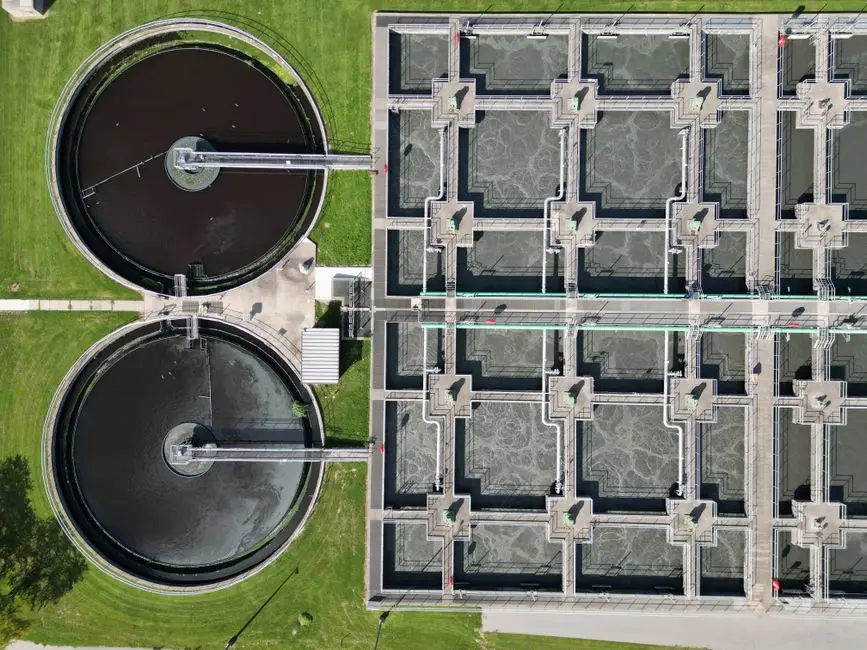
Process technology and physical format should be selected as one decision. The integrated underground sewage treatment plant in the WSZ Series combines A/O biological contact oxidation, sedimentation and disinfection in one buried package, with a stated capacity range of 1–80 m³/h. That range is a product parameter, not a universal sizing rule for Bengaluru housing developments.
Biocell Water identifies MBBR and SBR as common below-ground options. Its containerized formats can use fixed-bed biological reactors, MBBR or MBR, with selection based on site restrictions, effluent requirements and budget. A/O packages provide an integrated biological process in a compact installation. SBR operates through cyclic biological phases. MBBR provides flexible biological loading, while MBR adds membrane separation of solids from treated water.
For higher separation requirements, the MBR membrane bioreactor system uses submerged PVDF membranes and states filtration below 1 μm, a claimed 60% smaller footprint than conventional systems, and a capacity range of 10–2,000 m³/day. These are manufacturer-stated product characteristics. They support evaluation, but do not replace project-specific hydraulic calculations, wastewater analysis or a compliance demonstration.
| Process or format | Where it is most relevant | Main engineering or procurement questions |
|---|---|---|
| Integrated A/O below-grade package | Compact sites needing biological treatment, sedimentation and disinfection in one installation | Can it accept the verified peak and organic load, and can the tank be maintained safely? |
| SBR below-grade | Residential systems requiring cyclic biological operation and staged treatment | How are cycle timing, flow balancing and sludge handling controlled? |
| MBBR below-grade | Sites requiring flexible biological loading within a concrete-tank arrangement | What media, loading and maintenance requirements apply? |
| Fixed-bed containerized system | Above-ground installations where access and constructability favour modular equipment | What land, odour, noise and service-access impacts arise? |
| MBR containerized system | Projects requiring membrane solids separation or evaluating reuse-oriented treatment | What membrane cleaning, replacement, monitoring and operator capability are required? |
Format is also a site decision. Limited footprint may favour buried equipment; difficult excavation or groundwater may favour above-ground modules. Conversely, containerized systems require land, vehicle access and odour control. Confirm maintenance access, lifting arrangements, safe sludge withdrawal, power-failure response, future expansion and whether the discharge route can be gravity-fed. Final selection must be checked against detailed wastewater analysis and the project’s consent conditions; the supplied research does not establish one effluent standard for every Bengaluru development.
Match the Plant to Effluent, Discharge and Reuse Objectives
Discharge compliance and reuse suitability are separate design objectives. Before ordering equipment, confirm whether BWSSB requires connection, permits a decentralized system, requires pretreatment at the connection point, or sets discharge conditions for the selected route. Biocell Water states that the required effluent standard and licensed discharge route are location-specific. The authority or the project’s environmental consultant should therefore define the applicable requirements rather than leave them to a supplier’s generic package description.
Basic authorized disposal can have different process needs from landscape irrigation, toilet flushing, construction use or another reuse application. Reuse also introduces additional questions about storage, distribution, public-health controls, monitoring and the recipient system. The MBR’s stated filtration below 1 μm makes it relevant where tighter solids separation is needed, but filtration performance alone does not establish legal suitability for a specific reuse route.
The approval file should include the process basis, preliminary process and hydraulic calculations, site layout, civil and mechanical interfaces, power supply, control philosophy, instrumentation, commissioning plan, operating and maintenance manual, monitoring plan and responsibility matrix. The Indian wastewater-requirements guide for plant purchases provides a useful basis for checking requirements before supplier selection.
A practical reuse decision follows three steps. First, obtain the authority or client’s written treatment objective. Second, define the intended end use and any applicable source-control requirements. Third, confirm that the selected process, disinfection provisions, storage and monitoring can support that end use throughout the year. The consultant should state any residual uncertainty explicitly rather than infer permission from a generic effluent specification.
Plan for Peaks, Maintenance and Reliable Operation
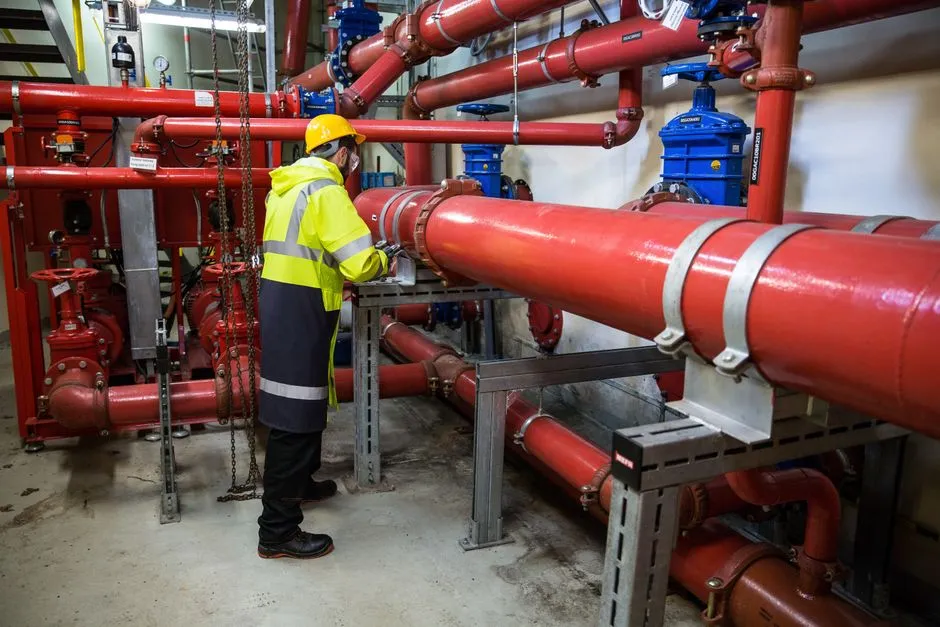
Reliable operation depends on how the package handles residential peaks and routine maintenance. The treatment and equalization arrangement should be checked against the morning, late-afternoon and evening peaks identified by Biocell Water. Confirm that the civil design provides sufficient buffering and reliable flow distribution, particularly if commercial or vehicle-washing flows enter the same sewer.
Before accepting a proposal, inspect access to aeration equipment, pumps, membranes or media, sludge removal points, sampling points, odour-control provisions and control cabinets. Ask the supplier to identify operator tasks, task frequency, response time, routine consumables, membrane-cleaning provisions, sludge-disposal route, power-failure response, remote alarms, spare-parts strategy and every exclusion from the supplied scope.
Biocell Water identifies maintenance simplicity and alarm systems as contributors to reliable residential-system operation. It also describes submerged components without moving parts, maintenance without emptying tanks, operator access, component alarms and optional GSM alarm dialout or SCADA monitoring. These are that supplier’s design statements, not evidence that packaged plants generally require little operator involvement.
For a developing site, require a phased implementation plan. The selected arrangement should preserve the ability to add treatment capacity as occupancy increases, without applying an unsupported expansion allowance. The smart-monitoring upgrade guide is relevant to alarm hierarchy, instrument status and operating records, while an automatic chemical dosing system should be specified only where the approved treatment train requires chemical addition.
Developers should also assign ownership. Identify who will operate the plant, respond to alarms, remove sludge, maintain membranes or media, submit samples, maintain records and manage consumables. An installed package without a named operating responsibility is not a complete development solution.
Turn the Comparison into a Procurement and Approval Checklist
A defensible tender compares bidders against the same site-specific basis rather than package price or nominal capacity alone. Each submission should state design average and peak flow, wastewater characteristics, treatment objectives, hydraulic losses, equalization or backwash provisions, and the proposed discharge route. The scope should identify process, civil works, mechanical equipment, electrical supply, controls, instrumentation, commissioning, training, warranty, consumables, sludge handling and long-term spares.
| Buyer check | Required supplier response | Approval or acceptance evidence |
|---|---|---|
| Treatment basis | Average and peak flow, wastewater characteristics, process calculations and effluent objectives | Signed design memorandum tied to the approved development brief |
| Site and format | Layout, excavation, foundations, access, odour, noise, power and discharge-point details | Reviewed drawings and site-interface schedule |
| Compliance route | Public sewer, pretreatment, decentralized discharge or reuse pathway | Authority correspondence and agreed consent conditions |
| Operations | Operator tasks, frequency, alarms, sludge route, consumables and spares | O&M manual, commissioning plan and responsibility matrix |
| Delivery and support | Supply boundary, manufacturing or delivery assumptions, installation sequence, training and warranty | Contract schedule with dependencies and exclusions |
Programme documentation should also cover sewer-connectivity status, discharge permissions, consent conditions, inspection points, testing, records and sampling responsibilities. The WSZ Series is a candidate for a compact integrated installation; the MBR is a candidate where membrane-grade separation or reuse objectives justify the additional process and operating demands. The decentralized and packaged domestic sewage treatment buyer’s guide provides a useful structure for comparing vendor submissions. A mechanical bar screen should be considered only if the wastewater basis shows screening is required.
Frequently Asked Questions
What packaged sewage treatment plant fits a housing development in Bengaluru, India?
No plant can be selected from a generic capacity chart. The candidate must fit verified average and peak flow, organic and solids loading, available land, excavation or container geometry, groundwater, access, effluent conditions, discharge route and operating capability. A WSZ-style A/O package may suit a compact integrated installation; an MBR warrants closer review where membrane-grade separation is required. The final choice follows approval of the project-specific design basis, not the reverse.
Should we choose A/O, SBR, MBBR or MBR for a housing development?
Choose A/O when an integrated biological, sedimentation and disinfection package suits the site and objectives. Evaluate SBR for cyclic biological operation, MBBR for flexible biological loading and MBR where membrane solids separation is justified. The comparison must include footprint, civil works, maintenance, sludge handling, controls and operator requirements. The supplied research does not establish a universal process ranking for every Bengaluru site.
How should we select a supplier and avoid undersizing?
Require evidence of the proposed treatment basis, site-specific hydraulic and process calculations, civil and mechanical interfaces, commissioning plan, O&M scope and post-installation support. Check that the supplier has stated how peak flow and low-flow periods will be handled and how the system will perform against the agreed effluent objective. Do not accept a generic package description, nominal throughput or unsupported expansion claim as a substitute for the design basis.
What should we budget, and how much lead time should we allow?
The supplied research contains no project-specific installation price, operating-cost benchmark or procurement lead time, so none should be assumed. Request a quotation after the site brief, flow analysis, effluent objective, discharge route, civil scope and selected format are defined. Ask the bidder to itemize equipment, civil works, installation, electrical works, commissioning, training, consumables, sludge handling, warranty exclusions and long-term spares. Also request the proposed manufacturing, delivery and installation programme, including authority-approval dependencies; those inputs are needed before a defensible budget or delivery commitment can be made.