What Sherman Requires Before a Food Plant Discharges
Food and beverage plants near Sherman meet pretreatment limits by characterizing each production and cleaning stream, selecting treatment steps that address the resulting pollutants, and demonstrating compliance at the monitoring point and frequency stated in the issued industrial user permit. The enforceable limits, sampling requirements, and reporting duties come from that permit, not from a generic treatment rule. Sherman administers local, state, and federal pretreatment regulations through industrial user permits, inspections, discharge sampling, and enforcement, according to the City of Sherman’s official Industrial Pretreatment Program page. Federal pretreatment concepts under 40 CFR Part 403 establish the regulatory framework for indirect dischargers, but they do not replace the plant’s permit conditions.
Food and beverage manufacturing is one of Sherman’s significant industrial-user categories. The City reports 13 permitted significant industrial users and approximately 200 additional minor industrial users. Sherman’s treatment process handles household waste and biodegradable commercial and industrial waste, but it is not designed to treat toxic pollutants. That distinction makes source reduction, chemical management, pretreatment, and off-stream removal relevant to compliance planning.
The supplied 40 CFR Part 403 reference commonly identifies 250 mg/L thresholds for both BOD and suspended solids. Treat these as federal reference points, not automatic Sherman discharge limits: Hixson’s food-processing wastewater guidance explains that indirect dischargers must meet applicable pretreatment standards, while the issued local permit controls the plant’s enforceable obligations.
For a food or beverage operation, the practical compliance sequence involves obtaining the permit, identifying the permitted sampling point, characterizing the wastewater, matching equipment to measured loads, and operating the treatment train. Similar pretreatment planning principles are discussed in this industrial sewer pretreatment compliance approach.
Map Every Production and Cleaning Stream
Food-processing wastewater varies hourly because production batches, washdowns, and clean-in-place cycles overlap with different product loads and cleaning chemicals. Hixson reports that production batch changes, CIP cycles, and seasonal peaks cause swings in volume, organic load, pH, and temperature. A single representative grab sample does not provide a reliable design basis. Characterization must cover the periods that create the plant’s highest flow, strongest organic load, most difficult pH condition, and highest FOG risk.
Start by separating wastewater at the source where practical: raw-material washing, cooking or product processing, cooling, floor washing, equipment sanitation, and CIP discharge. The evidence supplied from Crystal Clean identifies washing, cooking, cooling, packaging, CIP, floor washing, and equipment sanitization as major contributors. Segregating these streams allows for targeted treatment or disposal decisions based on specific waste characteristics.
| Waste stream | Dominant concern to test | Engineering implication |
|---|---|---|
| Raw-material washing and product processing | BOD, COD, suspended food solids, and product loss | Define the mass and hydraulic load entering the common treatment header. |
| Cooling and equipment washdown | Suspended solids, pH, temperature, and possible lubricants | Exclude or separately manage contaminants that could damage the treatment train. |
| CIP and equipment sanitation | Acidic or caustic chemicals, pH swings, heat, and cleaning additives | Consider flow equalization, active pH control, or off-site removal. |
| Edible-oil or animal-product processing | Fats, oils, and grease, with associated COD | Evaluate physical oil and solids removal before biological treatment. |
The cited examples show why a generic design is unsafe. Hixson reports dairy wastewater at approximately 170 mg/L BOD5, 1,007 mg/L COD, and 300 mg/L TSS; brewery wastewater at approximately 338 mg/L BOD5 and 1,118 mg/L COD; and poultry-slaughterhouse wastewater at approximately 4,067 mg/L BOD5, 10,906 mg/L COD, and 10,793 mg/L TSS. These are sector examples, not Sherman limits or expected values for a particular plant.
Request the following engineering inputs before sizing equipment:
- Average flow, peak flow, batch-discharge profile, and CIP schedule.
- Production schedule, product recovery practices, and expected changes in product mix.
- Chemical inventory, including acids, bases, cleaners, sanitizers, and lubricants.
- Temperature, pH, soluble and suspended solids, FOG, BOD, and COD.
- Permit limits, monitoring point, sampling method, frequency, and reporting duties.
Use monitoring technology only as part of this evidence program. This industrial wastewater monitoring and analytics overview can inform sensor and trending decisions, but it does not replace measured plant data.
Build a Pretreatment Train That Protects the Sewer
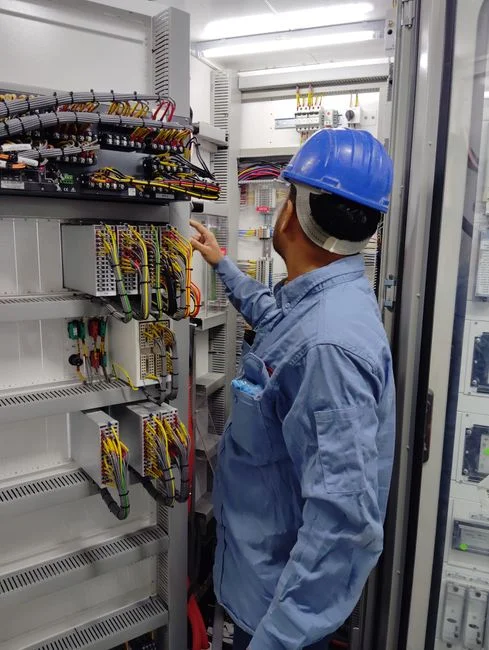
A reliable food-plant treatment train assigns each stage a specific pollutant or operating objective. Segregate incompatible streams, screen material that could damage pumps, equalize flow and strength, control pH, remove suspended solids and FOG, biologically reduce dissolved organics, polish when required, and sample at the permitted discharge point. Proper configuration follows the waste profile and permit rather than a fixed equipment list.
| Process step | Objective | Design and operating focus |
|---|---|---|
| Stream segregation and screening | Protect pumps and downstream equipment | Remove product pieces, food solids, and debris; define screen maintenance and solids disposal. |
| Flow and strength equalization | Buffer production surges and CIP shocks | Provide usable equalization inventory and a controlled release rate into downstream treatment. |
| pH control | Keep wastewater within permit and process conditions | Blend compatible flows when reliable; use active adjustment when acidic and caustic batches cannot be safely blended. |
| DAF or clarification | Remove suspended solids and FOG | Match flotation or settling performance to the dominant pollutants and manage accumulated sludge. |
| Biological treatment | Reduce dissolved BOD and COD | Provide aeration, solids management, and process control suited to variable organic loading. |
| Polishing or reuse treatment | Meet tighter solids or reuse requirements | Use MBR or other advanced treatment only when the permit or reuse objective requires it. |
| Off-site removal | Manage high-strength or chemically difficult batches | Document the waste stream, destination, manifest, and treatment record. |
Screening, settling tanks, and clarifiers protect downstream biological stages, but their performance declines as solids accumulate, according to Crystal Clean. Equalization is also essential, as Crystal Clean identifies flow equalization and active neutralization as controls for pH swings caused by fruit-processing acids and CIP caustics.
DAF is often the strongest primary-treatment candidate when suspended solids and FOG dominate. Hixson reports 74% suspended-solids removal and 99% oil-and-grease removal in a poultry-slaughterhouse study under optimized conditions. Those results are study-specific and depend on operating conditions, feed characteristics, chemical conditioning, and sludge handling; they are not a guarantee for a Sherman plant. An industrial DAF system for food-processing wastewater should therefore be selected against measured load and treatment objectives.
Biological treatment removes dissolved organics that physical separation leaves behind. Activated sludge and SBR are established options; an SBR design for high-strength confectionery wastewater illustrates how batch operation and biological loading must be addressed together. An MBR combines activated sludge with membrane filtration, producing lower effluent solids in a smaller footprint, but its capital and energy demands may not be justified without tighter polishing or reuse requirements. The brewery wastewater pretreatment before MBR shows why upstream solids and load control still matter when membrane polishing is planned.
Off-site removal is a legitimate contingency for a high-strength or chemically difficult batch that cannot be safely neutralized or accepted on site. It also creates records that should be retained with the plant’s treatment and discharge documentation.
Select Equipment Using the Permit and Waste Profile
Equipment selection should begin with the permit’s pollutant limits and the plant’s measured hydraulic and constituent loads, then proceed to supplier-specific design inputs. Product capacity alone is not a design basis. For example, the supplied product catalog lists an industrial DAF range of 4–300 m³/h across 13 standard models, but the correct model must be selected from average flow, peak flow, batch discharges, and the required removal objectives.
| Plant condition | Equipment decision | Information required from the supplier |
|---|---|---|
| Suspended solids, FOG, or colloidal material dominates | Evaluate DAF; compare with clarification using actual waste characteristics. | Design flow and load basis, treatment objectives, chemical conditioning, skimming, sludge handling, controls, and utility requirements. |
| Acidic or caustic streams require controlled injection | Evaluate an automatic chemical dosing system for pH and coagulation control. | PLC-controlled sequence, required measurements, chemical ranges, alarms, calibration, training, and O&M scope. |
| Permit requires substantial dissolved-organic reduction | Evaluate activated sludge or SBR, with MBR only if its solids or reuse performance is needed. | BOD and COD design loads, biological operating assumptions, aeration, sludge handling, polishing, footprint, and controls. |
Do not use catalog performance as a permit-compliance guarantee. Require each bidder to state the design basis, expected treatment objectives, electrical and utility requirements, footprint, control philosophy, operator training, maintenance requirements, startup support, and O&M responsibilities. For a broader equipment-selection framework, this DAF-versus-clarifier comparison guide provides a useful structure for technical evaluation.
Compare the complete operating lifecycle, not only purchase price. Equalization, pH control, DAF or clarification, biological treatment, polishing, sludge removal, controls, laboratory monitoring, and off-site disposal each affect both capital cost and compliance reliability. A lower-cost skid that lacks chemical controls, sludge handling, or documented operating logic may not reduce overall risk.
Prove Compliance Through Monitoring and Operating Controls

Compliance begins with the sampling and reporting requirements in Sherman’s issued permit. The City’s Industrial Pretreatment Program states that it can issue permits, inspect facilities, sample discharges, and enforce regulations. The plant must use the specified monitoring point, method, frequency, parameters, and reporting process rather than selecting its own compliance point.
Trend flow, pH, BOD, COD, TSS, FOG, and relevant process indicators across production, washdown, and CIP periods. Use the same characterization logic applied during design: the highest-flow period, strongest production period, and most difficult cleaning event may expose different problems. Operators should know which upstream condition caused each change and whether equalization inventory, chemical dosing, biological operation, or polishing was adequate.
Abnormal readings require a defined response. Check equalization inventory and release controls; inspect DAF skimming and sludge removal; verify chemical-dosing status and calibration; evaluate biological upset indicators; and identify downstream restrictions. This shifts the response from reacting to a discharge exceedance to correcting the process condition that caused it.
Retain treatment operating records, calibration records, laboratory results, chemical-use logs, sludge-disposal records, and off-site treatment documentation. Crystal Clean reports that repeated violations can lead to increased monitoring, mandatory pretreatment installation, or permit revocation. For a local operating reference, this industrial wastewater treatment compliance guide explains the broader value of documented operating controls.
The practical goal is a treatment train that remains stable through normal production, sanitation, and shutdown conditions, with evidence that each load has been managed within the plant’s permit.
Frequently Asked Questions
What DAF capacity does a Sherman food plant need?
The supplied DAF range of 4–300 m³/h cannot be converted into a required capacity from production volume alone. A buyer should request a design based on measured average flow, peak continuous flow, discrete batch discharges, and the strongest wastewater period. The supplier should also state whether the selected capacity is hydraulic treatment capacity, how batch flows are controlled, and how the design handles FOG, TSS, chemical conditioning, and sludge removal.
How should a food plant choose a pretreatment equipment supplier?
Require a site-specific proposal rather than a catalog quotation. The supplier should identify the design basis, expected treatment objectives, control philosophy, O&M scope, operator training, startup support, sludge-
Frequently Asked Questions
What DAF capacity does a food and beverage plant near Sherman need for pretreatment?
Dissolved Air Flotation (DAF) capacity is determined by the plant's peak hydraulic flow rate and the organic loading (BOD/TSS) of the effluent. For most food and beverage facilities in the Sherman region, systems are typically sized to handle between 50 and 500 gallons per minute (GPM), depending on the production cycle.
Engineers must calculate the surface overflow rate (SOR), which generally ranges from 1.5 to 3.0 gallons per minute per square foot (GPM/ft²) for typical food processing applications, ensuring adequate retention time for effective solids separation.
How do I choose a wastewater treatment equipment supplier for a Sherman food-processing plant?
When selecting a supplier, prioritize vendors who demonstrate familiarity with the City of Sherman’s specific wastewater ordinances and local discharge permit requirements. Evaluate their ability to provide pilot testing services to confirm that their equipment can achieve the necessary reduction in Fats, Oils, and Grease (FOG) and Total Suspended Solids (TSS) specific to your product line.
Reliable suppliers should offer comprehensive local technical support, including rapid spare parts availability and emergency maintenance services. Ensure they provide detailed performance guarantees, specifically regarding the concentration levels of effluent post-treatment.
Can a food plant near Sherman discharge wastewater to the sewer without pretreatment?
No. Industrial users in Sherman are prohibited from discharging wastewater that exceeds local limits for pollutants such as BOD, TSS, pH, and FOG. Discharging untreated process water often results in concentrations that exceed the capacity of the municipal wastewater treatment plant, leading to regulatory violations.
Local ordinances require industrial facilities to implement pretreatment measures to ensure that discharge does not interfere with the operation of the Publicly Owned Treatment Works (POTW) or pass through into the receiving waters in violation of state and federal water quality standards.
What does a food-processing wastewater pretreatment system cost?
Capital costs for a pretreatment system vary significantly based on the volume of flow and the complexity of the contaminants, typically ranging from $150,000 for smaller, modular DAF units to over $1,000,000 for advanced multi-stage systems including biological treatment or membrane filtration.
In addition to capital expenditure, operators must budget for ongoing operational costs, including chemical dosing (coagulants and flocculants), energy consumption for air compressors and pumps, and the disposal fees for the resulting sludge, which can add $5,000 to $20,000 annually depending on volume and waste classification.
What happens if a Sherman industrial user exceeds its sewer discharge limits?
Exceeding sewer discharge limits triggers a series of enforcement actions, starting with a Notice of Violation (NOV) and potentially leading to mandatory administrative orders. The city may impose significant financial penalties, which are calculated based on the severity of the exceedance and the cost of damage to municipal infrastructure.
Continued non-compliance can result in the revocation of the industrial wastewater discharge permit, forcing a plant to cease operations, or the imposition of higher surcharge fees for excessive pollutant loading, which can substantially increase monthly utility costs.