Why the DAF vs Clarifier Question Matters for Mc Cook Chemical Plants
Mc Cook chemical plants in 2026 face a pretreatment regime that stacks the Metropolitan Water Reclamation District of Greater Chicago (MWRDGC) sewer-use limits on top of the US EPA categorical standards under 40 CFR Part 437, so oil and grease, TSS, COD and pH limits are the forcing function behind any primary-separator choice. Process wastewater from this corridor typically mixes emulsified oils, solvents, caustic wash water and inorganic precipitates in the same collection sump, which is why a single technology rarely handles every fraction in one pass. Two primary-separation technologies dominate the conversation: dissolved air flotation (DAF) and gravity or lamella clarifiers. The right pick is driven by the influent, not by habit or by what the next town over specified.
For plants whose waste streams swing between oil-bearing batch dumps and steady inorganic TSS, the decision usually comes down to which contaminant class is dominant and which discharge limit is the binding constraint. That framing guides a Mc Cook chemical plant engineer when choosing DAF, gravity, or a hybrid of the two for the RFP package going to MWRDGC.
How a DAF System Separates Solids in Chemical Wastewater
A DAF system saturates a pressurized side stream of clarified water with air; when that stream is released into the main flotation tank, the dissolved air comes out of solution as 30-50 micron micro-bubbles that attach to conditioned particles and lift them to the surface (Clearwater Industries, 2026-04-27). A paddle skimmer then sweeps the floating sludge into a collection trough, while heavier particles that do not attach to bubbles settle in a bottom collection zone and are removed with an auger, which is why a DAF is not a purely flotation-only device (Clearwater Industries, 2026-04-27). The micro-bubble attachment mechanism only works when the particles are properly conditioned upstream, typically with a coagulant, pH adjustment and polymer flocculant dosed into a 15-45 second flash-mix serpentine tube or into impeller-agitated mix tanks (Clearwater Industries, 2026-04-27).
Startup is a clean-water operation: the tank must be filled with clean water first so the recirculation pump and air saturation system do not see raw wastewater, and so the unit does not discharge dirty, non-clarified water for an extended period after start (Clearwater Industries, 2026-04-27). The effluent is recovered below the floating sludge blanket and above any settled sludge, and a portion of the clarified water is recycled back to the pressurization circuit to keep the air-saturation loop running.
For chemical plants, the practical consequence is that DAF turns a hard-to-settle stream (emulsified oils, free FOG, low-specific-gravity solvents) into a buoyant floc that the micro-bubbles can grab in minutes, provided the upstream chemistry is correct. Jar testing on the actual plant wastewater is the only reliable way to lock in coagulant dose, pH setpoint and flocculation contact time, and a chemical plant RFP should always require that step.
How a Gravity or Lamella Clarifier Separates Solids in Chemical Wastewater
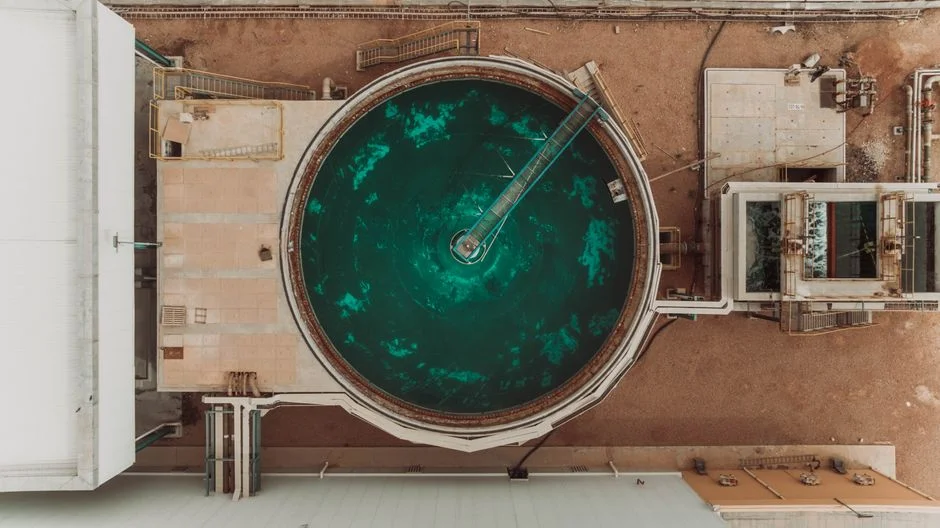
A gravity clarifier relies on Stokes-law settling where particles denser than water drop through a quiescent zone to a sludge blanket at the bottom of the tank, and clarified water overflows a peripheral launder. The footprint of a conventional clarifier is large because the settling path must be long enough for fine inorganic particles to reach the sludge bed under realistic overflow rates.
A lamella clarifier shortens that settling path with a stack of parallel inclined plates, so the effective settling area is multiplied without increasing the tank footprint. The result is a higher allowable surface loading rate and a much smaller civil footprint than a conventional clarifier, which is why lamella designs dominate greenfield chemical plant installations where space is at a premium.
Gravity and lamella clarification work best for heavy, settleable inorganic TSS, steady hydraulic flows and mild chemistry. They struggle with emulsified oil, low-specific-gravity solvents and buoyant polymer flocs, which is the failure mode a chemical plant with reactor wash water, solvent spills and pH-driven metal hydroxide precipitates must plan around. The same influent that is easy to settle in a lamella can also coat the plates and blind them when the oil fraction rises, so chemistry control is still required upstream.
DAF vs Clarifier: Side-by-Side Comparison for Chemical Plants
The table below pairs the two technologies against the variables a Mc Cook chemical plant engineer has to defend in an RFP. Trade-offs that depend on the actual stream, such as footprint and energy intensity, are described qualitatively; the supplier must size the unit against the plant's flow and load data.
| Decision Variable | DAF | Gravity / Lamella Clarifier |
|---|---|---|
| Dominant removal mechanism | Micro-bubble flotation of conditioned flocs, with a settled-solids bottom zone (Clearwater Industries, 2026-04-27) | Gravity settling of denser particles; lamella plates shorten the settling path |
| Target contaminant | Emulsified oil, free FOG, low-specific-gravity solvents, pH-driven precipitates once flocculated | Heavy, settleable inorganic TSS, metal hydroxide precipitates at steady chemistry |
| Upstream chemistry required | Coagulant + pH adjust + polymer flocculant in flash-mix tube or impeller tanks (Clearwater Industries, 2026-04-27) | Coagulant and flocculant aid helpful for fine TSS, but less chemistry-dependent than DAF |
| Sensitivity to flow and load swings | Tolerates short hydraulic swings; residence time is short | Sensitive to hydraulic surges; sludge blanket can be upset by peak flows |
| Standard construction | 304SS standard, with 316SS and polypropylene available for corrosive chemical service (Clearwater Industries, 2026-04-27) | Typically 304SS or coated carbon steel; polypropylene plates common in lamella packs |
| Footprint / energy intensity | Smaller footprint for a given FOG load; pressurized recirculation pump adds energy use | Larger footprint unless lamella plates are used; lower energy intensity |
| Best-fit chemical plant stream | Oil-bearing batch dumps, solvent cleanup, surfactant-bearing wash water | Heavy inorganic TSS polishing, steady-state cooling-tower blowdown, clarifier underflow |
Both technologies need upstream chemical conditioning for best performance, but DAF depends on it more strongly because micro-bubble attachment only works on conditioned flocs (Clearwater Industries, 2026-04-27). A DAF system configured with the FPAC, FPBC, FPHF or COMPACT model family also gives the plant a clear path from jar-tested bench data to a specified unit, which is what an MWRDGC reviewer will look for in the engineering report.
Which One a Mc Cook Chemical Plant Should Choose in 2026
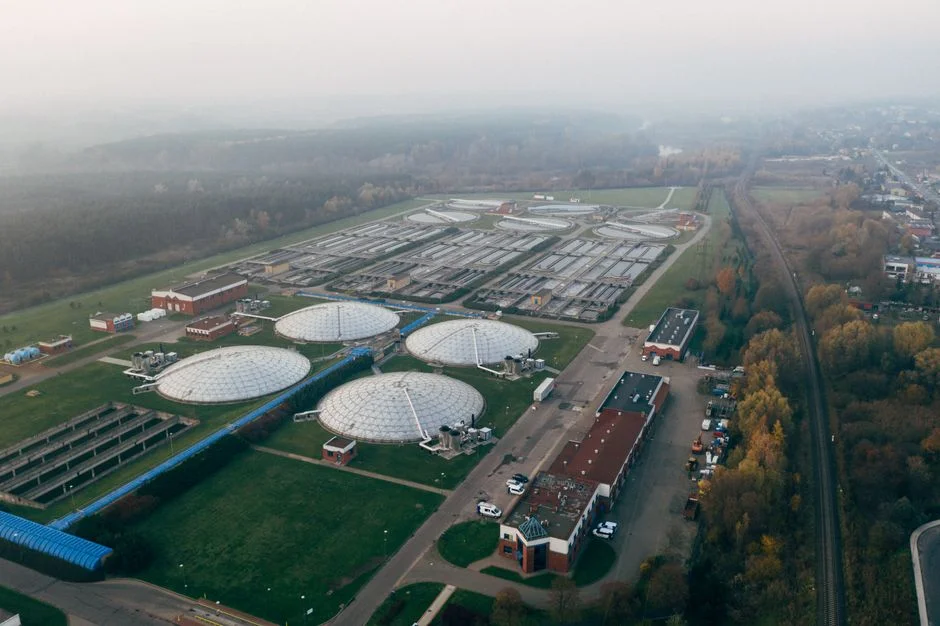
Default to DAF when the stream contains emulsified oils, free FOG, solvents, or low-specific-gravity reaction by-products, because those are the streams where 30-50 micron micro-bubbles outperform settling (Clearwater Industries, 2026-04-27). A DAF also provides shorter hydraulic residence, which is helpful when the plant has batch discharges from reactor dumps or floor wash that arrive as slugs rather than at a steady flow. The COMPACT DAF skid integrates the chemical conditioning, the clarifier, sensors and a PLC panel in a single package, with a single-skid layout at or below 66 GPM and a two-skid modular layout above 66 GPM (Clearwater Industries, 2026-04-27), which simplifies the controls narrative in an MWRDGC submittal.
Default to a gravity or lamella clarifier when the stream is dominated by heavy inorganic TSS at steady chemistry, when the plant wants to minimize chemical and energy use, or when the goal is polishing a DAF effluent to a tighter TSS number. Many chemical plants run a hybrid: a DAF as the primary oil and floatable removal step, followed by a lamella clarifier for polishing and for the heavy settled fraction. The DAF's bottom collection zone already captures a portion of settled solids (Clearwater Industries, 2026-04-27), so the downstream lamella only has to handle the residual TSS that survived the air-flotation step. The DAF vs clarifier guide for mining and metals wastewater applies the same hybrid logic to a different influent profile and is a useful sanity check on the underlying separation physics.
If a Mc Cook plant produces both solvent-bearing batch wastewater and a steady inorganic TSS bleed, the hybrid layout is the defensible answer for the MWRDGC submittal because it isolates the failure modes of each technology rather than relying on either one to do both jobs.
Pretreatment and Sizing Inputs You Must Hand to a DAF or Clarifier Supplier
An RFP that omits any of the following inputs will produce a unit sized to nominal removal percentages rather than local discharge limits, which is the most common reason MWRDGC reviewers reject a submittal. The buyer should compile these numbers before contacting a supplier.
| Input Category | What to Send the Supplier |
|---|---|
| Hydraulics | Average and peak design flow in GPM or m³/h, including batch discharge profiles |
| Influent chemistry | TSS, FOG, COD/BOD, pH range, temperature, oil emulsification state, specific gravity of organics, surfactant content |
| Regulatory envelope | MWRDGC sewer-pretreatment limits and the applicable 40 CFR Part 437 subcategory limits for the chemical operation |
| Materials of construction | Specify 316SS or polypropylene for corrosive chemical service; standard DAF build is 304SS (Clearwater Industries, 2026-04-27) |
| Chemical conditioning scope | Coagulant, pH adjusters, flocculation tubes or mix tanks, and PLC panel; the COMPACT DAF integrates these in one skid (Clearwater Industries, 2026-04-27) |
| Bench confirmation | Require jar testing in the proposal to confirm coagulant dose and flocculation contact time for the actual plant wastewater (Clearwater Industries, 2026-04-27) |
The supplier should be asked to size the unit against the MWRDGC and 40 CFR Part 437 limits, not against a generic removal percentage, and to document the jar-testing results that anchor the chemical dose. An automatic chemical dosing system sized to the same flow envelope as the DAF or clarifier should be specified together, because dosing accuracy is what makes either technology meet the limit on a Monday morning after a weekend slug. A useful cross-reference for the compliance narrative is the chemical plant pretreatment compliance guide, which covers the same kind of categorical-standard submittal for a different jurisdiction. If the plant is also planning downstream COD polishing, the Fenton oxidation for COD removal guide explains what the post-DAF stream has to look like to feed that step.
Frequently Asked Questions
How much does a DAF or lamella clarifier cost for a chemical plant in Mc Cook in 2026?
Budget pricing depends on flow rate, materials of construction (304SS standard, 316SS or polypropylene for corrosive service per Clearwater Industries, 2026-04-27), and the chemical conditioning scope, so a fixed dollar range is not defensible without a flow and load sheet. Request a budgetary quote in writing that breaks out the tank, the pressurization skid, the chemical conditioning package, the PLC panel and the jar-testing program as separate line items, then compare like for like across suppliers.
How do I pick a DAF or clarifier supplier for a chemical plant in the southwest Chicago corridor?
Ask each bidder for a documented jar-
Frequently Asked Questions
Should a chemical plant in Mc Cook choose a DAF or a clarifier in 2026?
The choice depends primarily on the density and particle size of the suspended solids in your wastewater stream. In 2026, many McCook chemical facilities are opting for Dissolved Air Flotation (DAF) when dealing with light, non-settleable particles or oils that have a specific gravity near or less than 1.0, as these often fail to settle in traditional gravity clarifiers.
Conversely, gravity clarifiers remain the preferred choice for inorganic heavy solids or high-volume sludge streams that require densification. If your plant process involves high concentrations of settleable metal hydroxides or crystalline precipitates, a clarifier provides a more robust, lower-maintenance footprint for high-solids loading applications.
What flow rate of chemical wastewater can a DAF system handle?
DAF systems are highly scalable and typically designed to handle flow rates ranging from 5 gallons per minute (GPM) for small pilot operations to over 2,000 GPM for large-scale industrial chemical processing plants. The hydraulic loading rate for a standard industrial DAF is generally designed between 1.5 and 4.0 GPM per square foot of surface area.
For high-throughput applications in the McCook industrial corridor, systems are often modularized. By installing multiple DAF units in parallel, plants can manage peak flow surges exceeding 5,000 GPM while maintaining the precise surface overflow rates required for effective solids separation.
How much does a DAF system cost for a chemical plant?
The capital expenditure for a DAF system in 2026 generally ranges from $80,000 to over $500,000, depending on the material of construction, capacity, and the complexity of the integrated control systems. Stainless steel (304 or 316) construction is standard for chemical environments to prevent corrosion, which adds a premium compared to epoxy-coated carbon steel.
Beyond initial purchase, operational costs should account for chemical dosing (coagulants and flocculants), electricity for the recycle pump and compressor, and sludge disposal. For a mid-sized McCook facility, annual operating costs typically range between $15,000 and $45,000 depending on the specific influent chemical oxygen demand (COD) and suspended solids loading.
What information do I need to give a DAF or clarifier supplier for a chemical plant?
To receive an accurate proposal, you must provide a comprehensive water quality analysis including the average and peak flow rates (GPM), total suspended solids (TSS) concentration in mg/L, and the chemical oxygen demand (COD) or biological oxygen demand (BOD) levels. Additionally, identify the specific gravity of the contaminants and the pH range of the influent stream.
It is also critical to specify the discharge requirements set by the Metropolitan Water Reclamation District of Greater Chicago (MWRD). Providing data on the presence of emulsified oils, surfactants, or heavy metals ensures the supplier can correctly size the chemical conditioning tank and select the appropriate coagulant injection points.
Is a DAF system or a gravity clarifier better for emulsified oil wastewater?
A DAF system is significantly more effective than a gravity clarifier for treating emulsified oil wastewater. Because emulsified oils often have a specific gravity close to water, they do not settle via gravity; the DAF process utilizes micro-bubbles (typically 10 to 100 microns) to attach to oil droplets, reducing their effective density and forcing them to the surface for mechanical skimming.
Gravity clarifiers are generally ineffective for emulsified oils without the addition of large volumes of emulsion-breaking chemicals and extensive detention times. In most chemical applications, DAF achieves removal efficiencies of 85% to 95% for free and emulsified oils, whereas a clarifier may struggle to achieve even 30% removal without significant upstream chemical pre-treatment.