Which Federal Rules Apply to an Orlando Pulp & Paper Plant Discharging to a Sewer
An Orlando pulp and paper mill that sends its wastewater to a municipal sewer is regulated as an indirect discharger under the EPA Pulp, Paper and Paperboard Effluent Guidelines at 40 CFR Part 430, originally promulgated in 1974 and 1977, amended in 1982 and 1986, and substantially amended to cover toxic pollutants in 1998 (the Cluster Rule amendment) according to the EPA categorical page on the regulation. EPA defines a direct discharger as a point source that releases pollutants to waters of the United States, and an indirect discharger as a facility that sends wastewater to a publicly owned treatment works (POTW), i.e., a municipal sewage treatment plant. The 40 CFR Part 430 effluent limits are written into NPDES permits for direct dischargers and into the POTW's permit or industrial pretreatment program for indirect dischargers, which is the pathway that controls an Orlando mill tying into a city sewer.
The first engineering step is therefore not to memorize the federal numbers; it is to identify which subcategory under 40 CFR Part 430 applies to your operation. EPA's framework breaks the category into subparts covering bleached papergrade kraft and soda, unbleached kraft, sulfite (papergrade, dissolving, and specialty), semi-chemical, groundwood and chemi-mechanical, non-wood chemical, deink, secondary fiber, and several purchased-pulp subcategories (K, L, and others). A tissue mill using wastepaper without deinking and a bleached market-kraft mill are governed by different subparts and therefore face different categorical standards, even though both are indirect dischargers in central Florida. Until the subcategory is confirmed, the rest of the compliance design is built on an assumption rather than a regulatory anchor.
How EPA Categorical Limits Become Orlando Sewer Discharge Numbers
The 1998 Cluster Rule amendment, which addresses air and water toxics from P&P facilities, is the current federal anchor for toxic-pollutant control in pulp and paper wastewater per EPA's effluent guidelines page. Categorical Pretreatment Standards under 40 CFR Part 430 establish a national floor. The local POTW is allowed — and in many cases required — to set stricter site-specific local limits where the federal floor does not adequately protect the municipal plant, its biosolids, the receiving stream, or downstream NPDES outfalls. The Orlando Utilities Commission (OUC) and neighboring Florida POTWs run an industrial pretreatment program that translates the EPA categorical standards into permit-by-permit local limits, and those local numbers are what the compliance team is actually measured against day to day.
This translation step is where most compliance gaps originate. The categorical standard may be expressed as a 30-day average or as a maximum daily value, while the local sewer use ordinance may add a daily maximum cap, a loading-based limit (lb/day), a surcharge trigger, and a separate prohibition on pass-through of toxicity. Florida-specific compliance also requires the POTW to coordinate with FDEP, because the POTW's own NPDES permit imposes pass-through limits that protect the downstream surface waters, and FDEP retains enforcement authority over the receiving stream. A practical starting point is therefore to obtain the current sewer use ordinance and discharge permit from your specific receiving POTW and read the numeric local limits directly out of it, rather than assuming a national 40 CFR Part 430 number applies at the sewer manhole.
What Pollutants an Orlando Mill Must Typically Track Before Discharge
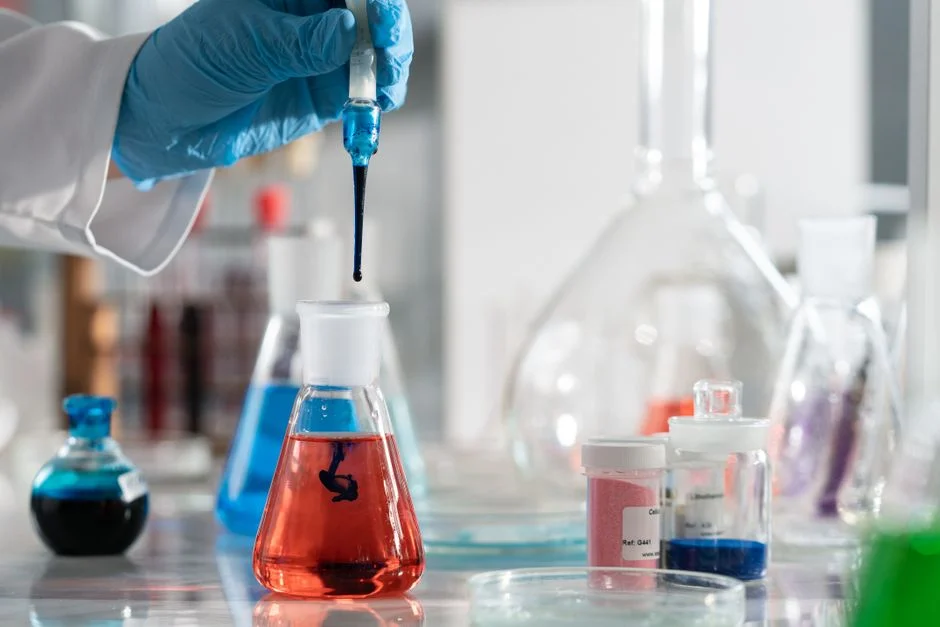
For pulp and paper effluents, the routine monitoring list is anchored on BOD, COD, TSS, pH, color, toxicity, and, where bleaching is in scope, AOX (adsorbable organic halides). The BOD-to-COD ratio is a useful operational indicator because it represents the fraction of the organic load that is readily biodegradable, per the McCubbin and Folke (1993) reference cited in the academic review of P&P wastewater treatment practices. AOX content is generally proportional to chlorine consumption in bleaching, and industry-wide AOX emissions have been reduced by over 80% since 1990, according to Savant et al. (2006) and Friere et al. (2003) as cited in the same review. Chemical pulping processes are reported to generate more than 40% of poorly biodegradable organics within the total organic load of the effluent per Dahlman et al. (1995), which is why secondary biological treatment alone often fails to deliver the residual COD and color numbers that a tight local sewer-use ordinance demands. Total suspended solids (TSS) is the headline solids metric; it is the regulated parameter in Canada's Pulp and Paper Effluent Regulations, which the academic review cites as a comparable framework.
Beyond organics and solids, the typical compliance log for a bleached or unbleached Florida indirect discharger includes pH, color, oil and grease, sulfides/sulfate, whole-effluent toxicity (typically a 96-hour static-renewal test on Ceriodaphnia or Pimephales), and a metals panel (zinc, copper, lead, chromium, mercury, nickel) sized to the categorical subcategory per EPA's subcategory framework. The parameter table below is the working list an Orlando pretreatment compliance engineer should expect to defend during an OUC pretreatment audit; the specific numeric limits are not reproduced here because the research does not contain Orlando-area sewer ordinance values and they must be pulled from the local permit rather than assumed.
| Parameter | Why it matters in pulp & paper effluent | Source of typical data |
|---|---|---|
| BOD (5-day) | Headline biodegradable organic load; drives sewer surcharges at most Florida POTWs | 40 CFR Part 430 categorical subcategory; local POTW sewer use ordinance |
| COD / BOD ratio | Indicates readily biodegradable fraction; guides biological train sizing | McCubbin & Folke 1993, cited in academic P&P wastewater review |
| TSS | Solids carryover metric; protects municipal biosolids handling and receiving water | 40 CFR Part 430; Canadian PPER framework cited in academic review |
| AOX | Chlorinated organic surrogate; proportional to chlorine consumption in bleaching | Savant et al. 2006, cited in academic P&P wastewater review; Friere et al. 2003 documents >80% reduction since 1990 |
| Color | Indicator of residual lignin and bleaching residues; often capped at the sewer | Local POTW sewer use ordinance |
| pH | Continuous compliance; protects POTW生物treatment and collection system | 40 CFR Part 430 subcategory; local ordinance |
| Whole-effluent toxicity | Pass-through and acute lethality screen | Local POTW permit; Canadian PPER acute lethality prohibition (Environment and Climate Change Canada 2016) |
| Metals panel (Zn, Cu, Pb, Cr, Hg, Ni) | Categorical subcategory and process-specific (wire, dyes, biocides) | 40 CFR Part 430 subcategory definitions, EPA |
| Oil & grease / sulfides | Collection-system corrosion, fire, and odor control at the POTW | Local POTW sewer use ordinance |
Pretreatment Train Used by P&P Plants to Meet Sewer Limits
The conventional pulp and paper wastewater train is primary clarification followed by activated sludge, and this combination remains the workhorse of the industry according to the academic review of P&P wastewater treatment. The review is explicit that dissolved air flotation (DAF) is used both as an upstream process-water cleanup step and as an end-of-pipe solids-removal step, alongside filtration save-alls and kidney-like process loops. When the local sewer limits are tighter than what primary clarification plus activated sludge can deliver — which is the typical case for an Orlando mill facing low BOD/TSS caps and an AOX or color floor — the train is extended with supplementary stages: anaerobic biological reactors (often ahead of the aerobic basin for high-strength streams), advanced oxidation processes (AOPs) such as ozone, Fenton, or ozone/H2O2, bioreactors, and membrane filtration. Coagulants, flocculants, and filter aids are added at primary and tertiary points to stabilize the separation step, and optimized microbial cultures are used where the biodegradable fraction is meaningful. A practical equipment-side link in the train is the dissolved air flotation (DAF) system for suspended-solids reduction ahead of the biological stage, paired with an MBR membrane bioreactor polishing system as the final barrier for residual organics and TSS.
Before sizing any new unit operation, the engineer should also map where upstream process-water recovery is being lost. The same review highlights that P&P mills can implement upstream process changes — DAF save-alls, filtration save-alls, and kidney-like operations — to purify process water and reduce both the pollutant load and the effluent volume sent to end-of-pipe treatment. For a Florida mill paying both a sewer surcharge and a high-strength surcharge, an upstream kidney loop that recovers 20-30% of the process water can shrink the end-of-pipe train faster and cheaper than adding another polishing reactor. The general arrangement that follows is therefore: bar screening and grit removal → flow and load equalization → primary clarification or DAF for fiber and suspended solids → biological treatment (activated sludge, often with an anaerobic front-end) → tertiary polishing (AOP and/or MBR) → flow metering and sampling at the permitted sampling point.
Why an MBR Polishing Stage Is Often the Compliance Bottleneck
An MBR polishing stage combines activated sludge with a submerged ultrafiltration membrane and produces a clarified, low-SDISS effluent suitable for tight sewer limits or even for in-plant reuse, with the membrane providing the sub-micron solids cutoff that conventional secondary clarifiers cannot. In a pulp and paper context, the MBR sits between the biological reactor and the discharge sampling point and absorbs the residual TSS, the slowly biodegradable fraction, and a meaningful share of the color and COD that secondary clarification leaks. The driver is not the membrane itself but the upstream biology: chemical pulping generates more than 40% of poorly biodegradable organics in the total organic load per Dahlman et al. (1995) as cited in the academic P&P review, and a conventional activated-sludge clarifier does not retain those fractions. A polishing MBR retains the biomass at high mixed-liquor concentrations and tightens the effluent solids to a level that buffers the mill against daily variability in the upstream biological stage. A complete MBR membrane bioreactor polishing system is therefore the practical answer to the "compliance bottleneck" question — it is the unit operation that buys headroom against both the BOD/TSS caps and the AOX/color floor at the sewer.
The sizing step is where the engineering work actually lives. The research does not provide a single universal MBR removal efficiency for P&P wastewater, and any vendor quote that quotes "90% AOX removal" without site-specific data should be treated as a marketing number. Before issuing a purchase order, the engineer should require a jar-test and bench-scale treatability program on the actual mill effluent, with measured COD, BOD, AOX, color, and TSS across the proposed MBR's flux and MLSS operating window. A useful parallel read is the engineering guide on MBR sizing for deinking reject water, which walks through the flux, MLSS, and pre-treatment decisions that drive both capex and opex for this exact class of feed.
Reducing Effluent Volume Before It Reaches the Sewer
Water reuse is a compliance lever, not just a sustainability story, because every cubic meter kept out of the sewer avoids a surcharge and shrinks the downstream treatment train. The P&P industry has been a notable case study in process-water recirculation: per the academic review, large volumes of wastewater are generated per metric ton of paper produced, and the industry has reduced water consumption per tonne by about half over the past 20 years and by 95% over the past 30 years (Blanco et al. 2004, cited in the review). About 70% of the water intake is used as process water, which means the highest-leverage closure opportunities sit in the process loop, not in the housekeeping stream. The cited mechanisms for enabling this recirculation are dissolved-air-flotation save-alls, filtration save-alls, and kidney-like process loops, which together clean a slipstream of process water enough to return it to the paper machine without dragging in dissolved and colloidal buildup.
Closure of the water circuit is not free, and the same review makes the engineering trade-off explicit: total closure is limited by the accumulation of contaminants that cause corrosion, deposits, odors, and runnability problems on the paper machine. Aggressive reuse therefore pushes more load into a smaller discharge stream, which raises the concentration of poorly biodegradable organics and AOX at the sewer manhole and is exactly the scenario where a tighter local limit and a polishing MBR become binding. A practical first move for a Florida mill is to install or upgrade a DAF save-all on the machine white-water loop to clarify the recycle stream, then measure the impact on sewer flow and surcharge before specifying the polishing stage. The same train should be tied into the automatic coagulant and flocculant dosing system so that DAF chemistry stays in range during shift changes and feed swings, which is where most operational excursions actually start.
2026 Compliance Checklist for an Orlando P&P Indirect Discharger
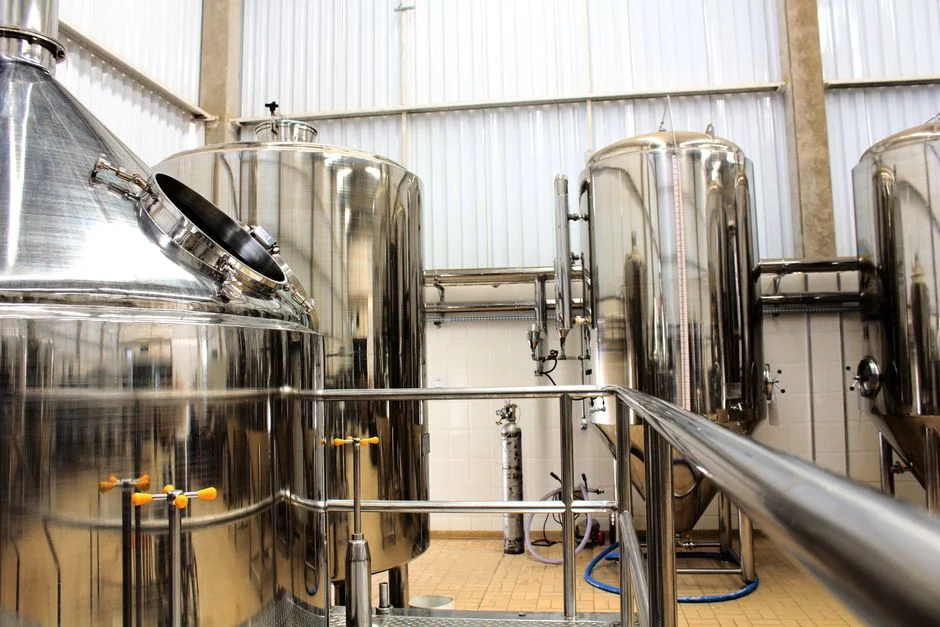
Before the next pretreatment audit, walk this list. First, confirm your 40 CFR Part 430 subcategory and the federal categorical standards that apply to your specific pulping process per the EPA effluent guidelines page, because the wrong subcategory invalidates the rest of the compliance work. Second, obtain your current POTW sewer use ordinance and discharge permit and extract the site-specific numeric limits for BOD, TSS, pH, AOX where applicable, oil and grease, and the metals panel called out in your subcategory. Third, verify that your monitoring schedule reflects the 1998 Cluster Rule toxic-pollutant obligations and that your chain-of-custody and 24-hour composite versus grab protocols satisfy the POTW's SARA and 40 CFR reporting requirements. Fourth, audit the treatment train for the unit operations the academic P&P review identifies as industry standard: primary clarification or DAF, biological treatment (activated sludge with or without an anaerobic front), and polishing (AOP or membrane) sized to the tightest parameter in your local permit. Fifth, review the chemical program — coagulant, flocculant, pH adjusters — to confirm dosing is optimized and documented against the operating window, and tie it into the plant SCADA for industrial wastewater treatment so the daily compliance log is auditable rather than reconstructed. Sixth, schedule a 96-hour whole-effluent toxicity test and a metals scan at the same sampling point the POTW will use, and keep the lab reports for the full retention period required by the local permit.
Frequently Asked Questions
What does "indirect discharger" actually mean for a Florida pulp and paper mill?
EPA defines an indirect discharger as a facility that sends wastewater to a publicly owned treatment works, i.e., a municipal sewage treatment plant, rather than discharging directly to U.S. waters. For a Florida mill tied into a city sewer, the practical consequence is that the binding day-to-day numbers come from the local POTW's industrial pretreatment program and discharge permit, not from a direct NPDES permit on the receiving stream.
What is the federal rule that controls pulp and paper wastewater in the United States?
The controlling federal regulation is 40 CFR Part 430, the Pulp, Paper and Paperboard Effluent Guidelines, which were originally promulgated in 1974 and 1977, amended in 1982 and 1986, and received a major toxic-pollutant amendment in 1998 (the Cluster Rule) per EPA's categorical page. Local POTW limits and the Florida sewer use ordinance sit on top of this federal floor, so the actual numbers you must meet at the sewer manhole come from your receiving utility.
What does a typical pretreatment upgrade for pulp and paper wastewater look like, and which parameters must it hit?
The conventional train is primary clarification or DAF for suspended solids, followed by biological treatment (activated sludge, often with an anaerobic front-end for high-COD streams) and a polishing step such as an MBR or AOP for residual organics, AOX, and color per the academic P&P wastewater review. The upgrade must hit the local BOD, TSS, pH, color, AOX where applicable, oil and grease, and metals limits in the receiving POTW's sewer use ordinance, plus a whole-effluent toxicity pass.
How do I size a polishing MBR and evaluate a supplier before issuing a PO?
Sizing should be driven by site-specific treatability data — bench or pilot MBR flux and MLSS tests on your actual effluent measuring COD, BOD, AOX, color, and TSS — because the research does not provide a single universal MBR removal efficiency for P&P wastewater and any "typical" percentage should be treated as a starting point, not a design number. On the supplier side, ask for a reference list of operating P&P MBRs, a written performance guarantee tied to your permit limits, the membrane module replacement interval and cost, the expected cleaning-chemical consumption, and a control narrative that integrates with the existing SCADA; cross-check that list against parallel guides such as the MBR sizing for deinking reject water engineering guide. For a budget check, request a line-itemized capex and 5-year opex on a like-for-like basis, including chemicals, membranes, and energy per cubic meter treated, and reserve the PO until those numbers are reconciled against your actual sewer flow and surcharge.