Where a Decanter Centrifuge Fits in Yeast Wastewater Treatment
A decanter centrifuge is a continuous solid-liquid separation device that can clarify a yeast-bearing liquid stream while discharging compacted solids. Its application boundary depends on the required separation outcome: yeast-cell recovery, cell-debris removal, suspended-solids reduction before biological treatment, or production of a dewatered yeast cake. The retained solids still need the facility’s selected biological, polishing, or disposal route, while the clarified liquid may proceed to further treatment. A scroll decanter has been investigated for affinity-flocculated yeast cell debris in a PubMed-indexed pilot-plant study, but the supplied excerpt contains no performance values.
For a recoverable biomass application, the process sequence is feed conditioning, decanter separation, clarified-liquid transfer, and collection of the dewatered yeast fraction. Feed conditioning may include controlled chemical dosing or flow equalization, although the appropriate approach must be established from representative wastewater. A decanter should not be selected merely because the material contains yeast; the matrix, solids distribution, loading variability, and required product condition determine whether the application is technically sound.
The decanter can sit ahead of biological treatment, where it removes suspended biomass or debris and reduces the solids load presented downstream. It can also precede polishing, provided the clarified liquid remains within the polishing system’s treatment envelope. If the objective is dewatering a cake for handling or recovery, downstream sludge treatment must be defined rather than assumed. A plate-and-frame filter press for dewatered yeast sludge may be relevant when the solids have already been collected and batch dewatering is the required output.
Because downstream biological treatment does not remove dissolved organic load, nutrient imbalance, or pathogens, decanter selection should remain part of the complete treatment train. The buyer must define what the centrifuge will remove, what the clarified liquid must contain, and what route the concentrated solids will follow before comparing equipment configurations.
How Decanter Separation Works for Yeast Wastewater
Alfa Laval reports that centrifugal force in its decanters can be up to 4,000 times greater than gravitational force; this is a vendor-specific description of the operating principle, not a universal performance constant. During solid-liquid separation, denser particles migrate toward the rotating bowl wall, while the less-dense liquid forms an inner layer.
The differential-speed screw conveyor transports separated solids out of the liquid “pond” and along the conical beach, also called the conical section. The solids are compacted and expelled from surplus liquid to produce a dewatered cake, according to Alfa Laval’s decanter description. Clarified liquid overflows the adjustable outlet arrangement. Pond-depth control changes the operating separation condition and is identified by Alfa Laval as supporting separation performance, cleanability, and start-up.
For yeast wastewater, the feed zone, bowl, scroll, and solids-discharge area are relevant wear locations because they handle the concentrated solids stream. Alfa Laval identifies these as wear-prone areas and describes abrasion-resistant materials tailored to the industrial process. That distinction matters: a clean liquid inlet does not mean that every part exposed to separated solids has the same wear risk.
| Process element | Function in the separation | Application question for yeast wastewater |
|---|---|---|
| Feed and conditioning | Presents the wastewater and any required flocculation or flow control to the decanter. | Are the feed, solids distribution, and conditioning requirements stable enough for continuous operation? |
| Rotating bowl | Moves denser yeast particles or cell debris toward the wall while forming an inner liquid layer. | Which particle population must be separated, and what evidence describes its behavior? |
| Differential-speed screw conveyor | Transports solids from the pond along the beach. | How will differential speed respond to changes in solids loading? |
| Adjustable liquid outlets | Set the liquid discharge and associated pond depth. | What liquid quality and discharge control are required? |
| Solids-discharge zone | Discharges the compacted, dewatered yeast-bearing cake. | What moisture content, handling condition, and wear exposure are acceptable? |
Define the Separation Objective Before Sizing Equipment
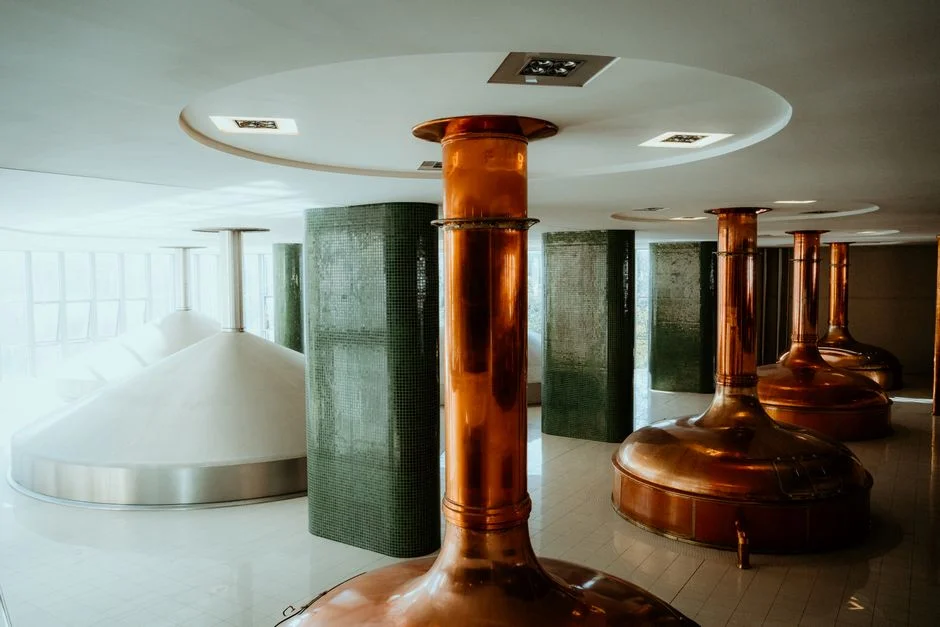
Yeast removal is not a single sizing target: yeast-cell recovery, cell-debris separation, suspended-solids reduction, and reusable by-product production impose different acceptance criteria. The first document should state which objective governs the purchase and what the other objectives are allowed to deliver.
For yeast-cell recovery, define whether viable cells must be preserved, whether recovered material will be reused, and what contamination or residual liquid is acceptable. For cell-debris removal, particle size and debris characteristics become central, especially where affinity flocculation is used to improve separability. For suspended-solids reduction before biological treatment, the principal requirement is the clarified-liquid solids concentration and the resulting effect on the downstream process. The supplied PubMed-indexed study confirms investigation of a pilot-plant scroll decanter for affinity-flocculated yeast cell debris, but its supplied excerpt does not report removal efficiency, throughput, cake moisture, or power consumption.
Obtain representative wastewater samples and characterize suspended solids, solids distribution, pH, and temperature. Identify other constituents that may affect conditioning, corrosion, equipment compatibility, or downstream biological treatment. Use an automatic chemical dosing system only if the chosen conditioning chemistry has been established by sample testing and mixing trials; the mere presence of yeast does not justify flocculation.
- State the separation objective and downstream destination of each stream.
- Characterize representative normal, peak, dilute, and variable-feed conditions.
- Define feed rate, operating schedule, and expected solids variability.
- Set measurable acceptance criteria before requesting a configuration.
- Validate the proposed operating window in a representative-feed trial.
| Design input | Information the buyer must provide | Acceptance evidence to request |
|---|---|---|
| Separation objective | Cell recovery, cell-debris removal, suspended-solids reduction, or cake production. | Results tied to the defined objective rather than a generic solids-removal claim. |
| Representative feed | Suspended solids, solids distribution, pH, temperature, and relevant constituents. | Data from plant samples or a controlled trial matrix. |
| Hydraulic demand | Required feed rate, operating schedule, and expected loading variability. | Demonstrated throughput and stable operation under the specified conditions. |
| Clarified liquid | Required solids concentration and compatibility with the next treatment step. | Representative feed and permeate data, where applicable. |
| Recovered solids | Required moisture, recovery, reuse, or disposal condition. | Mass balance and measured cake condition. |
For bulk yeast or highly variable biomass loads, assess whether upstream process control or flow equalization is required. The supplied research contains no yeast-specific removal efficiencies, throughput ranges, cake-moisture values, or power consumption, so none should be assumed without test data.
Choose Between a Decanter, DAF, and Filter Press
A decanter is most relevant when continuous separation and a compacted solids discharge are required from a process stream; a dissolved-air flotation system is most relevant when floating or skimmable material must be removed; a plate-and-frame filter press is most relevant when an already-collected sludge must be dewatered in batches. These functions can also be combined.
Alfa Laval describes decanters as continuous solid-liquid separators in which the clarified liquid overflows and the screw conveyor discharges compacted solids. A DAF system for yeast wastewater pretreatment uses microbubbles to attach selected material to the bubbles and separate it through skimming. DAF is described for suspended solids, FOG, oil and grease, and colloidal matter. It may therefore be evaluated as an alternative or upstream solids-removal step, particularly where flotation behavior and recoverable float are important.
A plate-and-frame filter press performs batch dewatering of sludge. The supplied product information states that the press range supports filtration areas from 1 m² to 500 m², but the applicable configuration must still be selected from the sludge characteristics and duty. A plate-and-frame filter press for dewatered yeast sludge is more directly aligned with a requirement to dewater collected sludge than with continuous clarification of a dilute process stream.
HydropureWater’s DAF range covers 4–300 m³/h across 13 standard models. These figures describe DAF capacity, not decanter performance, and they do not establish which technology will meet a yeast-specific separation target. A decanter also does not replace COD removal, nutrient management, or disinfection; it can be evaluated alongside biological treatment through an MBR-integrated wastewater treatment train.
| Decision criterion | Decanter centrifuge | DAF system | Plate-and-frame filter press |
|---|---|---|---|
| Primary operating mode | Continuous centrifugal solid-liquid separation. | Microbubble-assisted flotation and skimming. | Batch filtration and cake formation. |
| Typical output relevant to this comparison | Clarified liquid and continuously discharged compacted solids. | Clarified liquid and floated material. | Filtrate and dewatered cake from collected sludge. |
| Best alignment with the stated objective | Continuous clarification combined with cake discharge. | Removal of floatable or flocculated material. | Batch dewatering after solids collection. |
| Key selection evidence | Representative-feed separation and torque behavior. | Flotation performance with the actual wastewater. | Filtration performance with the collected sludge. |
Do not select by assumed cost or performance ranking. Compare each candidate against the same feed characterization, liquid target, solids outlet condition, operating schedule, and downstream constraints.
Build the Operating and Maintenance Case
Materials, controls, and service access should be specified as part of the equipment, not left to post-order clarification. Alfa Laval states that it uses high-grade stainless steel for parts in contact with the solid-liquid separation process and identifies the feed zone, solids-discharge area, bowl, and scroll as wear-prone locations.
For a yeast application, the buyer should define the required wetted-material construction and the abrasion protection appropriate to the expected solids. Food, pharmaceutical, or reuse applications may require additional hygienic and documentation provisions, but the supplied research does not establish a universal material grade or cleaning standard. The specification should therefore identify the actual corrosion and wear mechanisms in the plant matrix and require supporting documentation.
Variable solids loading makes control of the differential-speed screw conveyor a central design issue. Alfa Laval describes automatic adjustment of screw speed using a variable-frequency drive combined with torque control. Under increasing load, the control adjusts differential speed to avoid torque overload; under lighter load, it reduces speed to limit wear and energy use. This is a useful feature to evaluate, but torque limits, control response, and demonstrated performance must come from application-specific testing.
Adjustable outlets and pond-depth control should be specified against the required liquid outlet, separation condition, cleanability, and start-up sequence. The procurement scope should also include inspection access, cleaning procedures, wear-part identification, replacement coverage, critical spares, and service responsibilities. A maintenance interval should not be assumed from generic decanter literature; the supplier should support it with information for the specified duty.
Include water-treatment valves, filter media, and related service parts only where they interface with the decanter system, feed conditioning, or discharge train. During pilot testing, measure energy consumption under defined throughput and feed conditions. The 4,000-times-gravity statement describes a centrifugal-force characteristic reported by Alfa Laval; it does not establish energy consumption for yeast-wastewater treatment.
Pilot-Test and Specify the Decanter System
A pilot test should challenge the proposed operating window with plant-relevant wastewater, not a clean synthetic liquid and not only a short steady-state sample. The test matrix should cover normal, peak, dilute, and variable yeast-solids conditions that can occur during the selected operating schedule.
Measure clarified-liquid solids, recovered-solids moisture, biological recovery or mass balance where applicable, throughput stability, torque behavior, cleaning requirements, and power consumption. The acceptance method, sampling points, test duration, and calculation basis should be agreed before the trial. This prevents a supplier from demonstrating a favorable result under a feed condition that does not represent plant operation.
| Test stage | Required evidence | Procurement consequence |
|---|---|---|
| Feed characterization | Representative samples covering the agreed operating matrix. | Defines which operating claims and guarantees are meaningful. |
| Trial operation | Clarified-liquid solids, recovered-solids moisture, throughput, torque, cleaning, and power measurements. | Supports equipment configuration and scale-up calculations. |
| Challenge testing | Operation at normal, peak, dilute, and variable loading conditions. | Reveals control and operating-window limits. |
| Technical proposal | Drawings, materials, instrumentation, controls, inlet-outlet data, utilities, and service scope. | Creates a comparable commercial offer rather than an equipment-only quotation. |
| Final selection | Written acceptance criteria and demonstrated representative-feed performance. | Links final award to objective, measurable evidence, and documented responsibilities. |
The specification should identify materials, instrumentation, control philosophy, inlet and outlet connections, utility requirements, standby provisions, installation constraints, and service access. Request references or case evidence for comparable yeast or biomass separation, then verify whether the proposed operating window matches the tested range; a relevant case is not a substitute for plant-specific validation.
Make final selection conditional on written acceptance criteria. A commercial agreement should define the tested feed conditions, sampling and calculation methods, required liquid and solids outcomes, treatment of deviations, and how unresolved performance gaps will be resolved. Where the supplier cannot demonstrate an application-specific result, the buyer should decide whether that gap is acceptable or whether further trial work is required before purchase.
Frequently Asked Questions
What is the best decanter centrifuge configuration for yeast wastewater?
Choose the configuration by the required output: continuous clarification with cake discharge for process-stream separation, or solids recovery for a defined by-product. Use the pilot test to establish the bowl, feed, solids-discharge, and control configuration. The supplied PubMed-indexed research supports the existence of pilot-plant scroll-decanter work on affinity-flocculated yeast cell debris, but the excerpt provides no performance figures from which to select a configuration.
How much does a decanter centrifuge for yeast wastewater cost?
No supported price is available, so a responsible quotation cannot be estimated from the supplied research. Request a cost breakdown covering the machine, feed conditioning, controls, installation, utilities, foundations or supports, wear parts, maintenance, and pilot testing. Also ask the supplier to state which quoted items are optional and which performance assumptions affect the price.
Can a decanter replace DAF or a filter press?
Not automatically. A decanter can replace a solids-separation step only if the trial demonstrates the required liquid quality, solids condition, and continuous-duty performance. A DAF system may remain preferable for floatable material, while a filter press may remain appropriate for batch dewatering of collected sludge. Treat biological treatment, COD removal, nutrient management, and disinfection as separate process duties.
How should a decanter centrifuge be sized for variable yeast loading?
Size against the required feed rate and a measured range of solids conditions, not peak loading alone. Include normal, peak, dilute, and variable-load cases in the trial, and assess torque response, clarified-liquid results, recovered-solids moisture, and throughput stability. Determine whether upstream flow or load equalization is necessary from those results.
What should be included in a supplier performance guarantee?
Include the separation objective, representative feed conditions, throughput range, sampling method, clarified-liquid solids criterion, recovered-solids moisture or recovery criterion, and continuous operating obligation. State how deviations are assessed and which party owns corrective action. Do not accept a guarantee based only on yeast identification, a generic separation curve, or a vendor claim about centrifugal force; require evidence from the specified wastewater.