What the Textile RO System Must Remove
An RO membrane system for the textile industry is a treatment train, not a stand-alone membrane, and its suitability depends on the wastewater composition and the intended reuse water quality. RO can remove dissolved salts, residual dyes, hardness, color, organics, and many microorganisms, but it requires effective upstream removal of solids, colloids, and foulable organics. A 2024 study found investigated textile wastewater with COD above 320 mg/L and TOC above 170 mg/L; cotton dyeing wastewater also contained more than five times the TDS of wool dyeing wastewater. At 60% recovery, a 2026 study observed more than 15% permeability decline after 625 L/m² permeate production, making fouling control part of the design basis rather than an operating afterthought.
The treatment objective must be tied to a specific reuse: process-water substitution, rinsing, cooling, boiler feed, or a more demanding application. The supplied research does not establish one universal permeate specification, so the required conductivity, TDS, residual color, organics, hardness, silica, microbiology, and application-specific contaminants must be agreed with the reuse owner. An industrial reverse osmosis system is technically suitable only when its pretreatment, membrane, controls, and concentrate-management boundaries match those requirements.
Request characterization by production route and batch, not only a composite mill average. The minimum analytical package should cover COD, TOC, TDS or conductivity, pH, color, turbidity, suspended solids, SDI, hardness, sulfate, chloride, silica, temperature, and the specific dyes, salts, surfactants, sizing agents, and other process chemicals in use. This dataset is required to determine pretreatment, recovery, membrane compatibility, monitoring, and concentrate treatment.
Build a Protection-First Treatment Train
Reverse osmosis pretreatment should remove the foulant sources and preserve membrane performance; the correct sequence depends on the wastewater, but a defensible train typically includes equalization and screening, solids or colloid removal, biological treatment where biodegradable organics are present, filtration, final cartridge filtration, RO, optional polishing, and controlled reuse or discharge.
- Equalize and screen the mixed effluent to limit short-term load and solids shocks.
- Remove suspended material with coagulation, dissolved air flotation, or an equivalent process where required by the batch profile.
- Reduce biodegradable organics biologically; an MBR versus conventional activated sludge comparison helps frame the biological decision, although the textile design must use textile wastewater data.
- Apply multimedia or other fine filtration, then final cartridge filtration immediately before RO.
- Operate RO, apply optional polishing for the selected reuse, and manage the saline concentrate through a defined route.
The pilot RO/NF study used sequential 5 μm and 1 μm microfilters to remove suspended solids and lower turbidity and SDI before the membrane chamber. Unless equivalent protection is demonstrated, cartridge filtration should therefore remain in the design scope. The same study measured permeate and concentrate flow, pressure, temperature, conductivity, and TDS, providing a useful minimum instrumentation concept for an operating skid.
DAF is relevant where fibers, dyes, or other floating and suspended material are present. A dissolved air flotation machine should be selected from measured hydraulic and contaminant loads rather than nominal flow alone. Where the process includes pre-RO media filtration, a multi-media filtration system can remove residual suspended material before final polishing.
UF can provide a strong barrier against colloids, bacteria, and suspended solids. The relevant UF pretreatment for textile wastewater RO must be checked against the selected membrane chemistry, feed temperature, backwash arrangement, and site control requirements. The supplied research does not establish a textile-industry-wide SDI or turbidity acceptance limit, so pretreatment sizing must remain site-specific.
| Train stage | Design function | Evidence or decision requirement |
|---|---|---|
| Equalization and screening | Blend variable batches and remove coarse material | Characterize each production route and batch |
| DAF or coagulation | Remove floating and suspended solids | Use measured solids and fiber loading |
| Biological treatment or MBR | Reduce biodegradable organics and biological solids | The 2026 Membranes study evaluated RO after MBR treatment |
| Media filtration | Reduce remaining particulates | Size from pilot or site data |
| Cartridge filtration | Final particulate barrier | Pilot study used 5 μm and 1 μm stages |
| RO | Remove dissolved salts and residual contaminants | Confirm fouling, recovery, and concentrate management |
Select RO, Nanofiltration, or a Hybrid
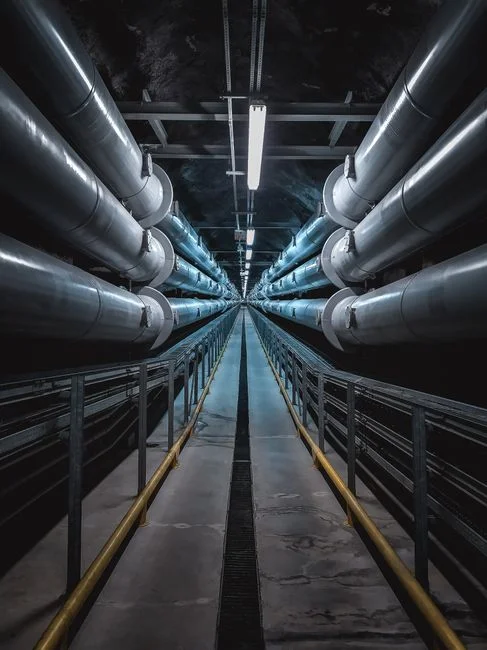
RO and NF should be selected by required separation, not by nominal membrane name. The supplied pilot study characterizes RO as a tight membrane process generally operated at 7–100 bar and NF as operating at 5–40 bar while separating multivalent salts and organic molecules more selectively. These are process descriptions, not project guarantees; the final operating pressure depends on feed salinity, temperature, recovery, membrane area, and fouling.
An older pilot study reported that an NF90 membrane treating secondary textile effluent achieved 99% COD reduction and 75–95% salt rejection. COD and salt rejection were not significantly affected by fouling, and a high flux percentage was recoverable after cleaning. This makes NF relevant where the principal objectives are partial decolorization and salt reduction at lower pressure. It does not establish that NF can meet a boiler-feed or other stringent dissolved-solids specification for every mill.
RO becomes the stronger primary process when the reuse target requires more complete dissolved-solids and organic separation. A hybrid NF/RO train can reduce downstream RO scaling because NF removes relevant multivalent ions and sulfate, but it adds capital, controls, operating labor, and failure points. Include that added complexity only after comparing the same feed dataset against a single-stage RO alternative.
| Decision | NF option | RO option | Hybrid NF/RO option |
|---|---|---|---|
| Primary objective | Partial decolorization and salt reduction | More demanding dissolved-solids and organic separation | Reduce relevant multivalent ions before RO |
| Pressure context | Generally 5–40 bar | Generally 7–100 bar | Two pressure-driven stages |
| Evidence reference | Older pilot study: 99% COD reduction; 75–95% salt rejection with NF90 | RO removes dissolved organics, inorganic salts, hardness, color, and many microorganisms | Study notes lower scaling risk than single RO because NF removes relevant multivalent ions and sulfate |
| Main trade-off | Permeate may not meet stricter reuse criteria | Higher pressure, energy, fouling control, and concentrate burden | Improved feed protection but greater capital and operating complexity |
Compare alternatives using identical feed-water data, permeate-quality limits, recovery target, energy demand, membrane replacement assumptions, cleaning frequency, and value of recovered water. No pilot result from a different feed or reuse target should be accepted as a plant guarantee.
Size the Membrane Area from Real Operating Data
Membrane area should be calculated from required permeate flow and an expected specific permeate flux that reflects the actual textile feed and operating conditions. First calculate the required permeate flow, Qp, from reuse or discharge demand. Then calculate feed flow from the selected recovery ratio. Because the supplied research does not establish a universal recovery for all textile streams, recovery must be justified by feed salinity, scaling tendency, pretreatment performance, and concentrate-management constraints.
Use the general relation A = Qp/J, where A is membrane area, Qp is permeate flow, and J is expected specific permeate flux. The pilot RO/NF study defined permeate flux as permeate flow rate divided by active membrane area. For project design, the final area should not use initial clean-water flux. Use pilot data or manufacturer-normalized data for the specified feed, recovery, temperature, and pretreatment condition, then apply a documented design allowance selected by the engineer.
The 2026 Membranes study demonstrates why clean-water sizing is insufficient: average RO flux in Batch 6 was 23.17% lower than Batch 1 in one filtration sequence and 19.06% lower in a second 13-batch sequence. At 60% recovery, permeability declined by more than 15% after cumulative permeate production of 625 L/m². These results are experimental references, not a universal sizing factor for every textile stream.
Specify the high-pressure pump, membrane vessels, feed and permeate pumping, pre-treatment, cartridge filters, control valves, conductivity and pressure instruments, PLC controls, permeate and concentrate tanks, and cleaning connections as one integrated skid. The membrane area and operating assumptions should be traceable through the proposal. A supplier should identify the selected membrane and element quantity, design feed and permeate flow, recovery, expected normalized flux, operating pressure, temperature-correction basis, and all feed assumptions. The [RO membranes and filter elements]( /product/24-ro-uf-membranes-filter-elements.html) and [RO parts, valves, and filter media]( /product/25-water-treatment-parts-valves-filter-media.html) scope should be checked against those deliverables.
| Design input | Buyer action | Supplier evidence required |
|---|---|---|
| Permeate demand | Define reuse point, operating hours, and required flow | Design permeate flow and tank strategy |
| Feed quality | Use production-route and batch characterization | Document every design assumption |
| Recovery | Justify against salinity, scaling, and pretreatment | State recovery at the design condition |
| Flux | Use textile-specific pilot or normalized data | Provide membrane area, model, and expected normalized flux |
| Monitoring | Require flow, pressure, conductivity/TDS, temperature, pH, and recovery | Show instrument ranges, calibration points, and control logic |
Control Fouling Through Monitoring and CIP
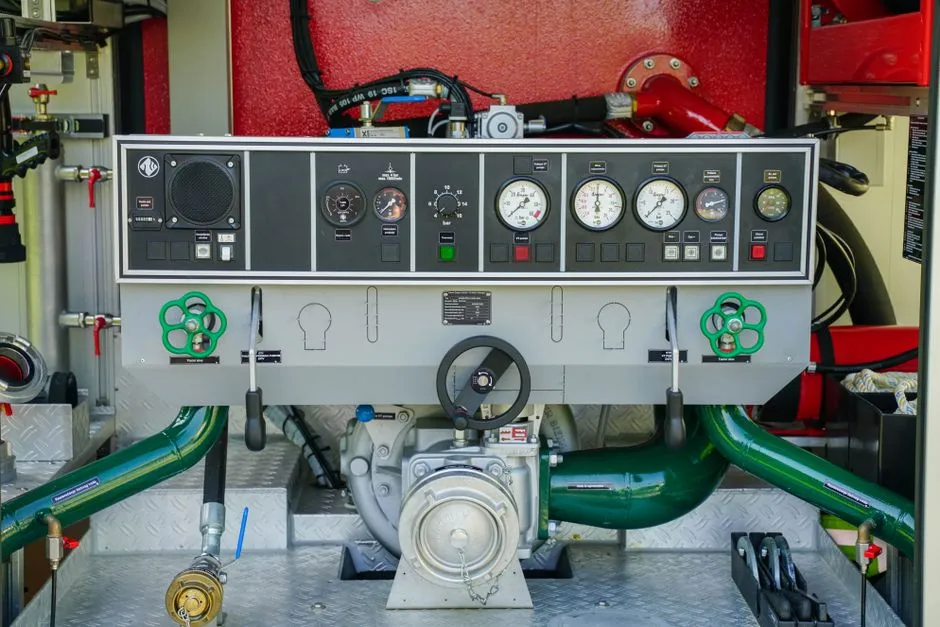
Fouling control should diagnose the cause of deterioration before selecting a cleaning chemical. The 2026 Membranes study identified protein-like substances and soluble microbial products as the primary organic foulants in MBR-pretreated textile dyeing wastewater. Low suspended solids therefore does not prove low fouling risk; biological carryover and soluble organics must remain in the monitoring and pretreatment program.
At 60% recovery, permeability declined by more than 15% after 625 L/m² permeate production in both 10-batch and 13-batch tests. Treat that value as a study-derived reference, not an automatic plant timer. Establish the operating trigger from normalized permeate flux, differential pressure, salt passage or rejection, recovery, and the behavior of the actual feed.
The cleaning results are more operationally useful than a generic “acid or alkali” recommendation. Single forward flushing with pure water, acid, alkaline solution, or low-active-chlorine sodium hypochlorite produced very limited permeability recovery. Combined acid followed by alkaline forward flushing restored permeability by up to 87%. Pure-water backwashing at TMP 0.5 MPa after the chemical flush restored permeability by up to 97%, but rejection deteriorated. The optimized condition of TMP 0.125 MPa and CFV 0.5 m/s restored up to 96% without negatively affecting rejection, according to the 2026 Membranes study.
Oxidant selection requires membrane-specific compatibility. In that study, sodium hypochlorite at 1.5–2 mg/L active chlorine damaged membrane structure and worsened effluent quality. Confirm chlorine limits with the membrane manufacturer before including hypochlorite in a CIP recipe. Alkaline flushing followed by pure-water backwashing was the dominant contributor to permeability recovery, and the study identified opportunities to reduce acid use and evaluate alkaline backwashing.
Monitor normalized permeate flux, differential pressure, conductivity or TDS, permeate pH, recovery, and rejection. Rising differential pressure with falling normalized flux points toward hydraulic or particulate restriction; salt passage or rejection deterioration calls for a different diagnosis and should not be masked by indiscriminate cleaning. The same 2026 study reported a preliminary chemical-cleaning cost of 0.763 CNY/m³, with STPP, EDTA, and citric acid representing 42.6%, 41.9%, and 12.2% of that cost. These figures are preliminary study values, not a quotation for a plant-wide cleaning program.
| Observed condition | Evidence from the 2026 Membranes study | Engineering response |
|---|---|---|
| More than 15% permeability decline at 60% recovery | Occurred after 625 L/m² permeate production in 10-batch and 13-batch tests | Use as a reference; set the plant trigger from normalized performance |
| Single forward flush | Very limited recovery with pure water, acid, alkaline, or low-active-chlorine hypochlorite | Do not rely on a single forward flush for a confirmed mixed foulant load |
| Acid then alkaline forward flush | Permeability recovery up to 87% | Retain as a tested sequence subject to membrane compatibility |
| Pure-water backwash at TMP 0.5 MPa after chemical flush | Permeability recovery up to 97%, with rejection deterioration | Evaluate rejection consequences, not permeability alone |
| Optimized backwash | TMP 0.125 MPa and CFV 0.5 m/s; permeability recovery up to 96% without rejection deterioration | Use as a pilot-supported starting point, then confirm at plant scale |
| Hypochlorite exposure | 1.5–2 mg/L active chlorine damaged membrane structure and worsened effluent quality | Obtain the membrane’s chemical-compatibility limit before specifying oxidant |
Specify the Skid and Supplier Proposal
A credible proposal must describe an integrated, testable treatment system rather than a list of components. Require the membrane make and model, element quantity, pressure-vessel arrangement, design feed flow, permeate flow, recovery, expected normalized flux, operating pressure, temperature correction, cleaning method, and all performance assumptions. The guarantee should be tied to the client’s feed profile and reuse specification, with the conditions required to reproduce it stated explicitly.
Confirm the mechanical and electrical scope: feed and permeate pumps, pre-treatment, cartridge filters, membrane vessels, control valves, conductivity and pressure instrumentation, PLC controls, electrical panels, cleaning skid or connections, permeate and concentrate piping, and commissioning documentation. Confirm whether water-treatment parts, valves, and filter media are included, and require a complete bill of materials with model numbers rather than generic descriptions.
An industrial reverse osmosis system can be evaluated as a fully automated, PLC-controlled skid, but catalog capabilities are not project performance evidence. Verify the proposed recovery, controls, membrane area, and operating envelope against the textile feed data, pretreatment performance, reuse target, and site utilities. The supplied research provides no universal membrane area or recovery for a textile mill; both must remain project-specific.
| Procurement package | Required deliverable | Acceptance evidence |
|---|---|---|
| Process design | Flow diagram, feed basis, recovery, mass balance, and concentrate route | Design report tied to the client’s batch dataset |
| Equipment | Pumps, vessels, pretreatment, filters, membranes, valves, tanks, piping, and cleaning connections | Itemized schedule with models and duties |
| Controls | Conductivity, pressure, flow, temperature, pH, recovery, and CIP sequence | Functional description and alarm/interlock list |
| Performance | Permeate quality, normalized flux, recovery, and assumptions | Site acceptance test tied to agreed feed conditions |
| Operations | Manuals, training, preventive maintenance, CIP procedures, and spares | Document handover and named support responsibilities |
| Lifecycle | Energy, chemicals, membrane replacement, downtime, lost production, and concentrate disposal | Supplier assumptions and buyer sensitivity cases |
Require membrane and filter consumables, critical spares, installation boundaries, utility demands, operator training, warranties, and a recommended preventive-maintenance and CIP schedule. Compare bids using whole-life inputs, not equipment price alone. The research contains a preliminary chemical-cleaning reference of 0.763 CNY/m³, but it does not provide a universal capital cost or complete operating-cost estimate for a textile RO plant.
Frequently Asked Questions
How much does an RO membrane system for textile industry wastewater cost?
There is no universal price in the supplied research. Request a site-specific quotation based on required permeate flow, feed characterization, pretreatment, membrane area and model, operating pressure, controls, CIP scope, utilities, reuse quality, and concentrate disposal. As an operating reference, the 2026 Membranes study estimated preliminary chemical-cleaning cost at 0.763 CNY/m³; ask the supplier to show which cleaning chemicals, production volume, and replacement assumptions underpin that figure.
What pretreatment is required before RO for textile wastewater?
Biological treatment, solids or colloid removal, and final filtration should be evaluated as a combined pretreatment requirement. The 2026 Membranes study used MBR-pretreated effluent, while the older RO/NF pilot study used sequential 5 μm and 1 μm microfilters to reduce suspended solids, turbidity, and SDI. Require the pretreatment supplier to demonstrate the combined effect on the actual production-route feed, rather than accepting a universal SDI or turbidity limit unsupported by the research.
Should a textile mill choose RO or nanofiltration?
Choose NF for partial decolorization and salt reduction where its permeate quality meets the reuse target; the older pilot study reported 99% COD reduction and 75–95% salt rejection for NF90 on secondary textile effluent. Choose RO for more demanding dissolved-solids and organic-separation requirements. A hybrid NF/RO train is justified only if a project-specific comparison shows that multivalent-ion removal materially reduces RO scaling enough to offset added capital, controls, and operation.
How often should the RO membrane be cleaned?
Do not schedule cleaning by calendar alone. The 2026 Membranes study observed a permeability decline greater than 15% after 625 L/m² permeate production at 60% recovery, but the plant interval should be set from normalized flux, differential pressure, rejection, recovery, and feed trends. Confirm the selected sequence and compatible chemistry through pilot work or manufacturer-backed procedures, then use operating data to refine the trigger.
Which supplier qualifications matter for a textile wastewater RO skid?
Ask for documented industrial or textile reuse references, a complete skid scope, membrane-performance guarantees tied to the client’s feed profile, reference flux and recovery assumptions, and membrane-specific CIP procedures. Check local service capability and consumable availability as separate deliverables. A supplier should also identify the pilot or test basis behind its design and provide measurable commissioning and acceptance criteria rather than relying only on nominal recovery or membrane description.