Why Rwanda Requires a Decentralized Treatment Strategy
Rwanda’s wastewater infrastructure does not support assuming that improved sanitation automatically provides safe wastewater treatment. The 2018 Sustainability study, Assessing the Sustainability of Decentralized Wastewater Treatment Systems in Rwanda, states that Kigali has no centralized public sewerage system and that some semicentralized wastewater treatment plants and semicentralized sewerage systems do not function as designed. It also cites a March 2016 utilities and amenities thematic report, approved under EICV4, attributing 81.6% of improved sanitation in Rwanda to pit latrines with solid slabs because a sewage system or network was absent. Hotels, hospitals and large commercial buildings were required to install private semicentralized collection and treatment systems before discharge.
That creates three distinct infrastructure questions for a project team. First, is there a verified public sewer connection with spare treatment capacity? Second, does a semicentralized network have reliable collection, treatment and operating arrangements? Third, must the developer or operator provide a standalone onsite system?
Improved sanitation describes the sanitation facility used by a household or institution; it does not establish that wastewater is connected, collected, treated or discharged safely. The 2018 study found unsafe and unreliable decentralized practices and reported that treated wastewater from some private systems did not meet national standards because monitoring was inadequate. For procurement, that means the scope must extend beyond a toilet and include the downstream treatment and discharge chain.
A structured selection method is particularly important in Rwanda. The related domestic sewage treatment buyer’s guide provides a useful cross-market framework, but the project decision must still be based on local wastewater flows, site conditions, receiving-environment requirements and operating responsibility. Centralized infrastructure should be treated as a verified utility option, not a default assumption.
Define the Wastewater Before Choosing Equipment
Wastewater characterization must precede sewage treatment plant sizing because flow, organic load and non-domestic inputs determine the hydraulic capacity, biological loading and pretreatment needed. Begin with a verified flow profile, not an occupancy estimate alone. The profile should separate average daily flow from peak flow and identify contributions from kitchens, laundry, laboratories or other non-domestic processes.
The 2018 Rwanda study measured influent and effluent characteristics at treatment units. A separate 2026 BMC Microbiology study of phytoremediation in Rwanda measured pH, temperature, TSS, TDS, BOD, COD, TN, TP, heterotrophic bacteria, fecal coliform, total coliform, E. coli and helminth eggs. These parameters provide a useful monitoring framework because visual clarity cannot establish microbiological safety or regulatory compliance.
Domestic sewage must also be distinguished from industrial trade waste. A hotel kitchen, hospital laboratory or commercial laundry can change grease, solids, toxicity and hydraulic characteristics. Such flows may require dedicated pretreatment and a project-specific process review rather than being folded automatically into domestic loading.
Before selecting equipment, identify the receiving environment, intended reuse, applicable discharge authorization and required sampling points. The seven-step wastewater treatment process is useful for checking that the proposed train covers the functional stages, but the permit or client specification must determine the actual acceptance criteria.
| Design input | Information the buyer must obtain | Why it changes the decision |
|---|---|---|
| Hydraulic flow | Average daily flow, peak flow and peak factor | Determines the required treatment capacity and buffer against peak loading |
| Wastewater quality | BOD, COD, TSS and other applicable characteristics | Determines biological and solids-separation requirements |
| Non-domestic inputs | Kitchen, laundry, laboratory or industrial contributions | May require separate pretreatment and separate loading calculations |
| Microbiological quality | Indicators specified by the permit, reuse plan or client | Establishes the required disinfection and verification method |
| Discharge and reuse | Receiving environment, reuse objective and sampling points | Defines the required treatment objectives and compliance evidence |
Compare Decentralized, Semicentralized and Centralized Options
The appropriate treatment architecture follows from the infrastructure that can be verified, not from the lowest initial equipment quotation. The 2018 Sustainability study found 19 recognized collective sewage treatment plants across four sampled Kigali areas—Kacyiru, Gacuriro, Kabuga and Gikondo—showing that collective and decentralized arrangements already form a substantial part of the urban context.
For a standalone decentralized project, a packaged plant can reduce the number of separate process units and civil interfaces. A small onsite system assembled from individual units may offer greater process flexibility, but it creates more installation, control and maintenance interfaces. Compare land demand, installation disruption, access for routine inspection, controls, biological-process maintenance and local technical support.
A semicentralized arrangement changes the procurement boundary. The developer or operator must establish who owns and operates the collection network, what hydraulic conditions exist at the inlet and outlet, how sludge is removed and treated, who performs monitoring, and how the system interacts with users. A treatment-unit price does not include those collection and governance obligations.
A centralized sewer connection remains the preferred route only where the responsible authority confirms availability, connection requirements and treatment capacity. Improved sanitation coverage cannot be treated as evidence of an adequate sewer connection or downstream capacity.
| Decision factor | Standalone decentralized | Semicentralized | Centralized connection |
|---|---|---|---|
| Infrastructure dependence | Low, subject to site utilities and discharge route | Collection and treatment interfaces must be verified | Depends entirely on authority capacity and connection approval |
| Buyer’s responsibilities | Plant, civil works, power, maintenance, sludge and discharge compliance | Additional network governance, inlet and outlet interfaces and coordinated operations | Connection works and any developer-side obligations |
| Land and access | Site footprint, access and landscape protection | Treatment site plus network corridors and access rights | Connection and connection works |
| Monitoring responsibility | Define who samples, tests and acts on failures | Define responsibilities across network operator, plant operator and users | Confirm authority monitoring and compliance arrangements |
| Key risk | Unverified loading or inadequate local O&M | Network underperformance and unclear governance | Assuming connection capacity exists |
Match the Treatment Process to the Application
A conventional domestic sewage treatment train must address influent handling, biological treatment, solids separation, disinfection and controlled discharge. The integrated underground sewage treatment plant in the HydropureWater WSZ Series combines anoxic/aerobic biological contact oxidation, sedimentation and disinfection in one buried package unit. Its verified catalog specification covers 1–80 m³/h and identifies residential communities, hotels, hospitals, factories and rural areas as intended applications.
The WSZ product description states that the unit is fully automated, requires no operator, can be buried below grade with landscaping above, and can be mounted on a trailer for mobile deployment. These are product attributes, not proof that every project requires no attendance. A buried installation still needs scheduled inspection, maintenance access, power reliability, sludge withdrawal, sampling and a defined response to non-compliant effluent.
Nature-based systems can provide a different process architecture. The 2026 BMC Microbiology study found that the assessed Rwandan phytoremediation system removed organic pollutants and pathogenic microorganisms, while also finding that microbial-count reduction was limited and identifying scope for process improvement. That finding supports the use of final polishing and independent monitoring rather than reliance on a single process stage.
Vermifiltration is another decentralized option. The IntechOpen chapter Application of Vermifiltration for Domestic Sewage Treatment describes it as efficient, viable, less expertise-intensive and suitable for decentralization. Performance still has to be characterized against applicable standards rather than inferred from the process description.
| Process option | Principal functions | Application fit | Buyer verification |
|---|---|---|---|
| WSZ packaged biological treatment | Anoxic/aerobic contact oxidation, sedimentation and disinfection | Standalone decentralized projects within the stated 1–80 m³/h catalog range | Project flow, load, site arrangement, controls and commissioning results |
| Phytoremediation | Nature-based pollutant and pathogen reduction across treatment stages | Sites where land and hydraulic residence conditions support the process | Final-stage polishing, microbial results and receiving-environment requirements |
| Vermifiltration | Earthworm-assisted filtration | Decentralized domestic sewage applications | Site-specific performance against applicable discharge standards |
| Assembled onsite process units | Selected biological, separation and disinfection stages | Projects requiring a more configurable treatment train | Process integration, controls, access and maintenance responsibility |
Size the Plant from Peak Demand and Treatment Objectives
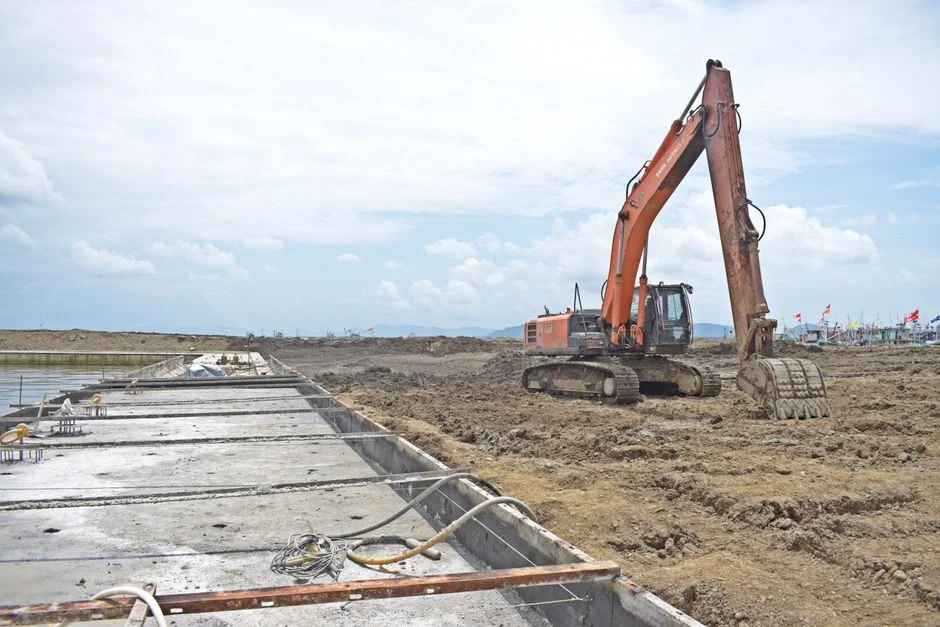
Correct sizing begins with verified project flows and loads, not with the equipment catalog range. The primary inputs are daily flow, peak factor, wastewater characteristics, treatment objectives, discharge point, soil conditions, available footprint and project-required redundancy. The WSZ Series is available in a stated range of 1–80 m³/h, but that range is not a sizing recommendation. The selected model must be justified by the project’s flow and load calculation.
Civil and mechanical design should confirm inlet and outlet elevations, maintenance access, power requirements, odor control, sludge withdrawal and separation of stormwater from sewage. Those items affect both reliability and whether a packaged unit can actually be installed and serviced as proposed.
Hydraulic verification is essential because the 2018 Sustainability study reports that most Kigali sewerage networks carried both sewage and stormwater even though they were initially designed for sewage only. Stormwater ingress can increase peak hydraulic loading and dilute or destabilize biological treatment. It should be investigated rather than treated as an assumed design condition.
The buyer should also require confirmation of how the supplier handles deviations between catalog flow and project flow. That confirmation should cover unit selection, process redundancy, freeboard or buffer, installation arrangement and the consequences of peak periods or seasonal occupancy changes.
| Sizing check | Question to resolve before order | Evidence required |
|---|---|---|
| Hydraulic basis | Which verified flow and peak condition governs selection? | Measured flow profile and documented peak-factor basis |
| Organic loading | Is domestic flow the dominant load, and are non-domestic inputs excluded or treated? | Wastewater characterization and load calculation |
| Site constraints | Can the selected arrangement handle levels, access, soil and power conditions? | Survey, civil layout and utility information |
| Stormwater | Can stormwater enter the treatment or collection system? | Network inspection and hydraulic assessment |
| Future demand | Does the project specification require redundancy or expansion capacity? | Stated design criteria and supplier confirmation |
Verify Performance and Protect the Discharge Point
Acceptance testing must compare influent with final effluent under defined sampling conditions. The 2018 Rwanda study reported an average reduction of approximately 45% between raw wastewater and final effluent, but that result is research context, not a guaranteed specification for a proposed plant. Individual systems can perform differently according to loading, operation, maintenance and network conditions.
Define commissioning samples at the influent and final effluent, then select parameters from the discharge authorization, reuse objective and client specification. The 2026 BMC Microbiology study used physicochemical and microbiological measurements rather than relying on visual clarity. Its mean microbial indicators were within Rwanda’s established water-quality compliance limits, yet the researchers also found limited reduction in microbial counts and room for process improvement. These findings support a final polishing and verification step.
The acceptance plan should specify who collects samples, where sampling points are located, the laboratory method, sampling timing, required frequency, corrective-action thresholds and record retention. It should also define what happens if an initial sample fails: isolate the issue, inspect the process, verify instrumentation, repeat testing and notify the responsible operator or authority.
For projects requiring a high-grade biological separation route, an MBR wastewater treatment system can be evaluated as a supplier-specified alternative. Selection still depends on the project’s effluent objectives, loading, footprint, controls and maintenance arrangements; the technology name alone does not establish compliance.
Plan for Operations, Maintenance and Lifecycle Risk
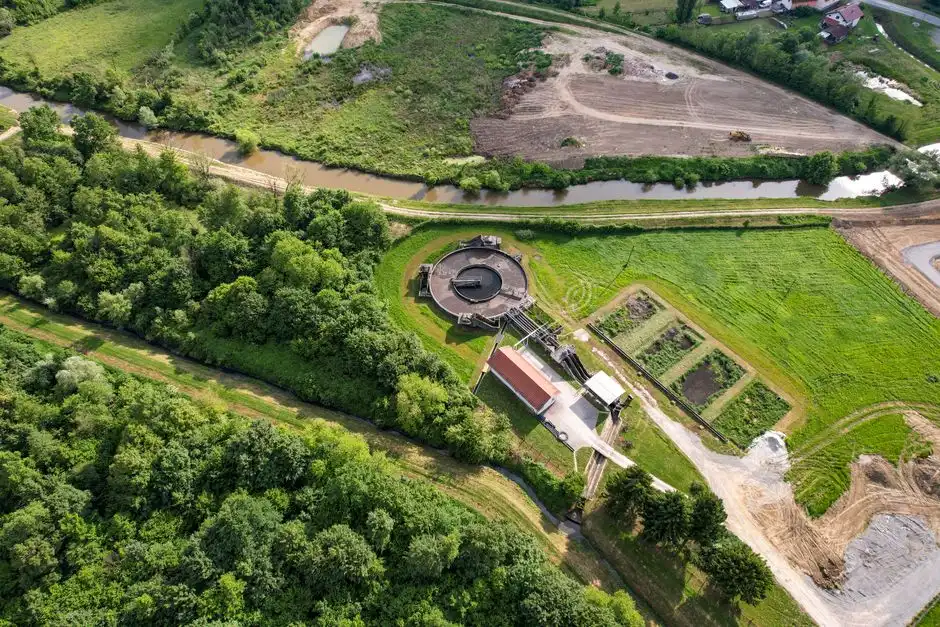
Reliable treatment depends on an operating plan, not only a treatment unit. The 2018 Rwanda study assessed infrastructure capacity, design competence, technology, expansion potential, effluent performance, energy use, operator practices and stakeholder involvement. A tender should address the same lifecycle issues at project level.
Compare the full operating burden: scheduled inspections, biological-process control, sludge removal and disposal, aeration or blower service, power requirements, instrumentation, spare parts, laboratory support and emergency response. Clarify whether “no operator required” in the WSZ product description means no routine manual attendance, or whether the project still requires scheduled inspection, maintenance, sampling and local support.
Training should cover the operating philosophy, normal indicators, routine tasks, safe access, sludge handling, instrumentation checks and escalation procedures. Remote support is useful, but it does not replace a named local service pathway for faults that require physical attendance.
Sludge is part of the treatment system, not a residual disposal problem. The procurement documents should identify withdrawal frequency, storage, transport, treatment or disposal arrangements, and responsibility for the returned sludge. Comparisons that reduce lifecycle assessment to capital cost can conceal energy, consumables, laboratory, service and sludge-management costs.
The engineering review of wastewater treatment failure causes and fixes is useful when defining preventive maintenance, but every corrective action should be tied to the selected process and documented operating responsibility.
Use a Rwanda-Ready Supplier Checklist
A compliant tender should expose missing site information and unsupported performance claims before equipment is selected. Ask the supplier to state the treatment process, catalog capacity range, project design-flow basis, hydraulic-loading approach, biological media, solids-separation method, disinfection stage, controls, power requirements and installation method.
Request project-specific drawings, O&M manuals, commissioning protocols, test certificates, spare-parts lists, warranty boundaries and local service or training arrangements. Each document should be matched to the proposed unit rather than supplied as a generic brochure.
Ask how the supplier will support Rwanda-specific discharge verification, including sampling points, instrumentation, documentation, laboratory coordination and corrective-action advice. Do not accept an unsupported statement that one unit satisfies every requirement. The supplier should identify where project data, client inputs or authority approval are still required.
The tender should also allocate responsibility for civil works, power, access roads, stormwater separation, sludge handling, laboratory testing, operator training, final discharge compliance and defects after handover. The wastewater requirements checklist provides a useful structure for making those assumptions explicit in project documents.
| Procurement document | Minimum content to request | Purpose |
|---|---|---|
| Technical proposal | Process, sizing basis, drawings, controls, utilities and installation method | Allows technical review against verified project requirements |
| Performance evidence | Commissioning protocol, test certificates and sampling plan | Defines how performance will be demonstrated |
| Operations package | O&M manual, training plan, service coverage and spare-parts list | Establishes the operating burden and support pathway |
| Commercial allocation | Scope boundaries, warranty, exclusions and responsibilities | Prevents gaps between supplier, developer, operator and civil contractor |
| Site-data register | Outstanding inputs, assumptions and confirmation method | Keeps unverified project conditions from becoming hidden design assumptions |
Frequently Asked Questions
How should a sewage treatment plant be sized for a hotel, hospital or residential development in Rwanda?
Size it from a verified wastewater flow profile and load calculation, not from a catalogue range. Obtain average daily flow, peak flow, wastewater characteristics and the contribution of kitchens, laundry, laboratories or other non-domestic processes. Confirm the discharge point, treatment objectives, footprint and project redundancy requirements. The WSZ Series covers 1–80 m³/h according to the HydropureWater product catalog, but the selected configuration must be justified by the project data. A licensed process engineer should also examine stormwater ingress, inlet and outlet levels, access, power, sludge withdrawal and odor control before approving the installation.
How can a buyer compare decentralized and semicentralized suppliers?
Compare the complete delivery model rather than the treatment-unit price. For a decentralized package, request the design-flow basis, process description, project drawings, controls, commissioning protocol and maintenance scope. For a semicentralized proposal, also require collection-network interfaces, inlet and outlet hydraulics, sludge management, monitoring responsibilities and the governance model. Verify Rwanda-specific service coverage, spare-parts access, training and the named party responsible for final discharge compliance. A supplier should state which site information remains outstanding and how each design assumption will be confirmed.
What inputs are needed to estimate the cost of domestic sewage treatment in Rwanda?
Request a project-specific quotation after defining wastewater flow and quality, treatment objectives, discharge conditions, site constraints, civil works, power, installation, commissioning, training, laboratory testing, O&M, energy, consumables, sludge handling and local service support. The supplied research does not provide a defensible price range, so any budget made before those inputs are defined will remain provisional. Ask bidders to separate equipment, civil works, utilities, verification, warranty and recurring services, and to state price assumptions and exclusions in writing.
What should be tested before a wastewater treatment system is accepted in Rwanda?
Test influent and final effluent at sampling points defined in the commissioning plan, using parameters selected from the applicable discharge authorization, reuse objective and client specification. Include the relevant physicochemical and microbiological indicators; visual clarity is not sufficient evidence of safe treatment. The 2018 Rwanda study used influent and effluent laboratory testing, while the 2026 BMC Microbiology phytoremediation study measured both physicochemical parameters and microbial indicators. The acceptance protocol should define the laboratory method, timing, responsibility, pass criteria, corrective-action process and treatment of a failed result.