Which Treatment Is Better for a Myrtle Beach Semiconductor Plant?
For semiconductor wastewater in Myrtle Beach, MBR is usually the stronger choice when the plant must protect downstream RO, increase reuse, minimize footprint, or reduce volatile-organic stripping, while conventional activated sludge can be economical when wastewater is mainly biodegradable organics, no high-reuse target applies, and adequate clarification and polishing already exist. Neither biological process removes all contaminants by itself: the supplied process design calls for equalization, fluoride and copper precipitation, pH adjustment, biological treatment, multimedia filtration, and industrial RO. MBR combines activated-sludge biology with membrane separation, producing low solids and turbidity, but fouling, membrane cleaning, replacement, and energy demand must be included in the comparison.
For a Myrtle Beach buyer, the first question is not “MBR or CAS?” It is whether the discharge or reuse objective requires a low-solids biological effluent and whether the site can support membrane maintenance. The biological unit is only one barrier in a treatment train that must also control fluoride, copper, TMAH-derived ammonia, volatile solvents, dissolved solids, and the final quality needed for ultrapure-water or cooling reuse.
| Selection driver | Prefer MBR when | Consider CAS when | Local information still required |
|---|---|---|---|
| Reuse and RO protection | Low suspended solids and turbidity justify membrane separation. | Existing clarification and polishing can meet the downstream requirement. | Reuse specification and existing RO feed quality. |
| Footprint | Civil space is constrained or a separate clarifier is undesirable. | Land and civil construction are less limiting. | Plot area, building envelope, and hydraulic profile. |
| Air-permit exposure | Enclosed treatment is needed to limit volatile-organic stripping. | Discharge-only duty and VOC air controls are already acceptable. | Applicable air permit and monitoring conditions. |
| Capital priority | Reuse value or risk reduction justifies the membrane system. | Lower initial capital cost dominates and no aggressive reuse target applies. | Quoted scope, installation basis, and lifecycle assumptions. |
The review should establish the governing discharge or reuse specification, the receiving utility requirements, air-permit conditions, and site-specific wastewater characterization. The MBR wastewater cost per m3 guide provides a useful framework for comparing the technologies, but it cannot replace a Myrtle Beach basis of design or permit review.
Why Semiconductor Wastewater Changes the Biological Design
Semiconductor fab wastewater combines chemical streams that would be separate in a municipal wastewater system, including HF-bearing scrubber blowdown, IPA and acetone rinses, TMAH developer, copper and nickel-electroplating rinses, ammonia from CVD scrubbers, and SCRO or cooling-tower blowdown, according to the HydropureWater commercial analysis (2026). Equalization therefore serves two purposes: it buffers flow and concentration changes, and it gives the operator time to assess pH, salinity, toxicity, ammonia loading, and organic composition before biological treatment.
The same commercial analysis identifies an equalization design input of 8–24 hours HRT, fluoride and copper precipitation at pH 8–9, biological-stage MLSS of 8,000–12,000 mg/L, and a multimedia filter before industrial RO. These are commercial design inputs, not universal Myrtle Beach limits, verified site values, or equipment guarantees. They should be tested against actual stream data and the final treatment objectives.
Equalization is particularly important where TMAH, fluoride, copper, and volatile organics arrive on different production schedules. TMAH contributes an ammonia load that must be nitrified, while fluoride and copper require removal before they compromise biological stability. Volatile organics such as IPA and acetone can also create air-emission and odor issues during open-tank aeration.
The practical sequence is therefore:
- Characterize each source stream and composite the streams entering equalization.
- Equalize flow, pH, salinity, toxicity, ammonia, and organic loading.
- Precipitate fluoride and copper, then return the water to the biological pH range.
- Provide biological treatment with sufficient SRT for the measured ammonia load and operating temperature.
- Filter the biological effluent and assess its suitability for RO and the intended reuse.
Automatic chemical dosing must therefore be designed around changing chemistry and precipitation demand rather than a fixed daily consumption rate. An automatic chemical dosing system is relevant to pH correction, fluoride and copper precipitation, and subsequent pH adjustment, but its control logic and tankage should follow site data and chemical-handling requirements.
How MBR and Conventional Activated Sludge Work Differently
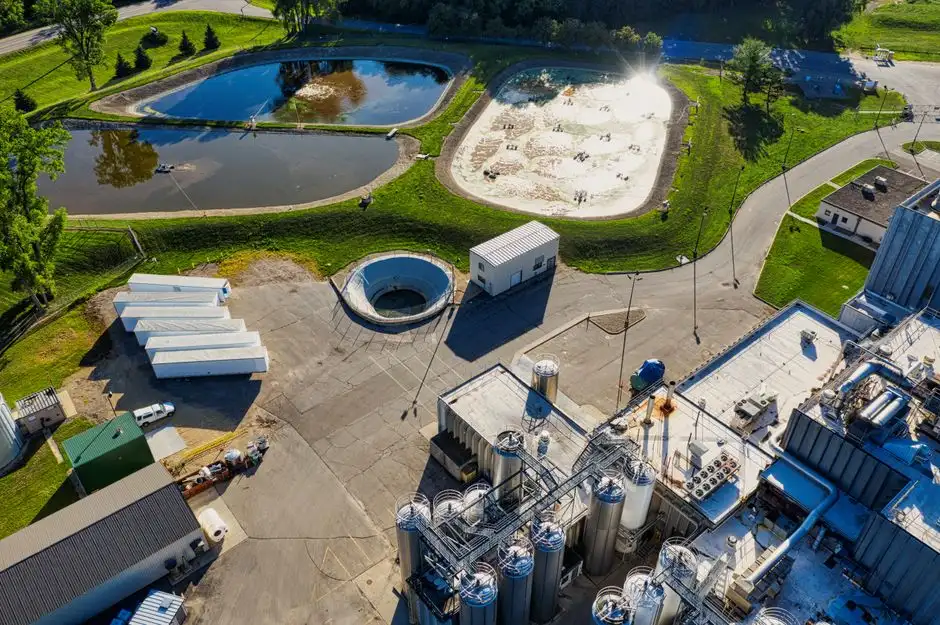
Conventional activated sludge separates biomass by settling, so clarifier performance, floc stability, and sludge blanket control determine the solids carried into downstream treatment. MBR retains biomass inside a reactor and separates solids with membrane filtration, eliminating the need for a separate clarifier in the biological process but introducing membrane fouling, cleaning, and replacement obligations.
The Elsevier review, Membrane bioreactor for wastewater treatment: A review, published in 2021, describes membrane fouling as a main obstacle to wider MBR adoption. The supplied HydropureWater commercial analysis assigns SRT ranges of 20–60 days to MBR and 3–10 days to CAS. The higher MBR SRT can retain slow-growing nitrifiers, which is material when TMAH-derived ammonia or CVD-scrubber ammonia varies across a production shift. The ranges are comparative design inputs from the commercial source, not a universal biological requirement for every fab.
| Design issue | Conventional activated sludge | MBR |
|---|---|---|
| Biological separation | Suspended-growth biology followed by gravity clarification. | Activated-sludge biology coupled to membrane filtration. |
| Supplied SRT comparison | 3–10 days. | 20–60 days. |
| Primary mechanical risk | Floc disruption, carryover, sludge blanket management, and clarifier performance. | Flux decline, membrane fouling, chemical cleaning, and module replacement. |
| Main utilities and consumables | Process aeration, sludge handling, polymer, and downstream polishing. | Scouring aeration, process aeration, CIP chemicals, spare modules, and specialized maintenance. |
| Civil implications | Separate reactor and clarifier, with associated piping and sludge systems. | No separate clarifier within the integrated biological unit, but membrane and CIP equipment require space. |
The DF Series described in the HydropureWater product catalog uses 0.1 μm PVDF flat-sheet modules and an integrated aeration box for continuous membrane scouring. That is a verified catalog configuration, not evidence that it is optimal for every semiconductor wastewater profile. The DF Series PVDF flat-sheet MBR modules should be evaluated against measured solids, expected flux, chemical compatibility, module replacement strategy, and available maintenance skills.
Performance Against Semiconductor Reuse Requirements
The supplied HydropureWater commercial source reports more than 95% COD removal, more than 99% TSS removal, turbidity below 0.1 NTU, ammonium nitrogen below 1 mg/L, and 5–6 log coliphage removal for MBR on fab duty. These are source-specific field claims, not guaranteed outlet values for a Myrtle Beach project. They require vendor validation against the proposed wastewater composition, loading, SRT, membrane configuration, and operating envelope.
The same source cites a fab MBR characterization result of 5.4 mg/L average effluent nitrate and describes ammonium-nitrogen performance typically below 1 mg/L. Those results support the role of sustained nitrification when ammonia must be controlled before RO or reuse. They do not establish that a shorter-SRT CAS cannot meet the same objective; that comparison depends on temperature, alkalinity, ammonia loading, toxicity, and the required residual.
| Reuse or discharge criterion | MBR implication | CAS implication | Evidence status |
|---|---|---|---|
| Suspended solids and turbidity | Membrane separation can provide low solids and turbidity before polishing. | Clarifier performance and polishing must carry the downstream solids load. | MBR values are commercial field claims from HydropureWater (2026). |
| Ammonia and nitrate | Higher supplied SRT range supports nitrifier retention. | Short supplied SRT range requires confirmation of nitrification margin. | 5.4 mg/L average nitrate is a cited fab characterization result in the commercial source. |
| RO protection | Lower solids can reduce the burden on downstream membranes. | Existing clarifier and filter performance determine RO-fouling risk. | RO CIP benefit is an estimate, not a guarantee. |
| Coliphage barrier | Reported 5–6 log removal supports reuse-risk evaluation. | Conventional disinfection and reuse controls require separate assessment. | Commercial field claim requiring site validation. |
Low suspended solids and turbidity help protect RO membranes, but biological treatment does not remove dissolved salts, residual fluoride, copper, silica, or other RO foulants by itself. A multimedia guard filter, an industrial RO system for semiconductor reuse, and any required final polishing remain part of the design. A multimedia filter for ultrapure-water pretreatment should be specified from the water chemistry entering that stage, not from biological turbidity alone.
The commercial source estimates that MBR pretreatment can reduce RO CIP frequency by a factor of 2–3 relative to a CAS, clarifier, and sand-filter train feeding the same RO. Treat that as an estimated comparison, not a lifecycle guarantee. It must be supported through pilot data, projected flux, feed-water chemistry, and the RO supplier’s fouling model.
For market context, the commercial source reports 40–80% reclaim rates for modern Taiwan and Korea fabs. That range is neither a Myrtle Beach target nor an automatic outcome. Recovery, water chemistry, production demand, treatment reliability, and end-use quality determine the practical reclaim rate. CAS remains a credible option for discharge-only service where solids, ammonia, and reuse requirements are less stringent.
Capital Cost, Operating Cost, and Local Project Risk
Neither MBR nor CAS can be priced responsibly from a daily flow alone. The comparable cost model must include the same pretreatment boundary, equalization, biological treatment, solids handling, filtration, RO, controls, utilities, construction, and disposal assumptions. The HydropureWater commercial analysis states that MBR energy use is typically 0.3–0.6 kWh/m³ higher and direct greenhouse-gas emissions are about 7% higher than CAS, while CAS usually wins simple payback within a 10–15-year asset horizon. Those are source-specific comparative claims, not a Myrtle Beach quotation.
| Cost or risk line | Conventional activated sludge | MBR | Evidence or procurement treatment |
|---|---|---|---|
| Initial installation | Reactor, clarifier, aeration, piping, sludge handling, and civil work. | Membrane modules, frames, scouring, controls, CIP equipment, and integrated reactor package. | Require a common scope and installation basis. |
| Civil footprint | Separate clarifier and generally greater plant footprint. | Integrated system can be compact; the verified catalog claims 60% smaller footprint. | Manufacturer claim, not a universal MBR guarantee. |
| Energy and emissions | Process aeration and solids handling. | Additional scouring aeration; source reports 0.3–0.6 kWh/m³ higher use and about 7% higher direct GHG emissions. | HydropureWater commercial analysis, 2026; verify through a site-specific model. |
| Lifecycle consumables | Polymer, sludge treatment, clarifier maintenance, and downstream polishing. | CIP chemicals, membrane replacement, specialized labor, and spare-module strategy. | Price all consumables over the selected evaluation period. |
| Benefit lines | Potentially lower initial capital cost. | Potentially lower RO cleaning frequency, reduced potable-water purchases, and lower reuse risk. | Quantify from site water, chemical, labor, and reuse data. |
The verified product catalog’s 60% footprint claim compares the integrated system with conventional systems; it should be checked against a defined CAS-plus-clarifier arrangement and the actual Myrtle Beach plot. Avoided potable-water purchases, retained plant value, air-permit risk, and reuse reliability belong in the lifecycle model rather than being treated as unsupported sales benefits.
Each proposal should state design flow, equalization basis, contaminant loading, membrane flux and area, backup strategy, CIP assumptions, replacement cost, connected and calculated power demand, sludge destination, and performance guarantees. The MBR wastewater cost per m3 guide can support bid normalization, but a compliant quote should show the arithmetic and exclusions.
Choose MBR, CAS, or a Hybrid Treatment Train
The defensible choice follows the governing reuse or discharge requirement and the available operating resources. Choose MBR when high reuse, RO protection, footprint, or enclosed biological treatment drives the design and the site can maintain membrane systems. Choose CAS when the wastewater is mainly biodegradable organics, no aggressive reuse target applies, adequate clarification and polishing exist, and lower initial capital cost is the primary objective.
Choose a hybrid CAS-roughing-plus-MBR-polish arrangement when the owner wants staged capital deployment, the wastewater has variable fluoride, copper, or ammonia loading, and the added equipment and operating complexity can be justified. The hybrid does not eliminate pretreatment or solids management; it changes where biological capacity and membrane separation are applied.
| If the governing condition is | Then evaluate | Required confirmation |
|---|---|---|
| High reuse or protected RO feed | MBR followed by guard filtration, RO, and required final polishing. | Reuse specification, RO feed analysis, recovery target, and pilot flux. |
| Lower capital cost and limited reuse | CAS with clarification and polishing sized to the discharge requirement. | Discharge limits, solids carryover, nitrification margin, and sludge handling. |
| Variable loading with staged investment | CAS roughing with MBR polish, subject to a documented hydraulic and contaminant balance. | Raw and equalized variability, transfer flow, redundancy, and chemical demand. |
| Uncertain wastewater or reuse basis | Verification before final equipment selection. | Composite sampling, worst-case shift data, pilot results, and permit criteria. |
Use a staged verification plan: characterize raw and equalized wastewater; identify the governing discharge or reuse specification; pilot the selected biological process under worst-case seasonal and shift conditions; then confirm membrane flux, chemical demand, and sludge handling. An integrated MBR membrane bioreactor system should enter this process only after the same verification steps applied to CAS or a hybrid.
Sizing and Procurement Checklist for a Myrtle Beach Project
Sizing must begin with flow and quality variability, not the nominal capacity printed in an equipment catalog. Request flow data by stream, production shift, campaign, and seasonal condition, including equalization inflow and overflow contingencies. The daily average alone will not establish reactor volume, membrane area, chemical demand, or equalization residence time.
Request a characterization program covering pH, fluoride, copper, TMAH, ammonia, COD, toxicity, suspended solids, salinity, temperature, and volatile organics. Composite and time-resolved samples should distinguish routine production from cleaning, campaign, upset, and shutdown conditions. Volatile-organic sampling requires a method that does not confuse original wastewater concentration with air stripping during handling.
The basis of design should state:
- Verified design flow and hydraulic profile, including equalization and redundancy.
- Fluoride and copper precipitation chemistry, pH targets, solids separation, and sludge generation.
- Biological SRT, solids inventory, temperature assumptions, and nitrification basis.
- Membrane area or module count, design flux, operating flux, scouring, and CIP assumptions.
- Multimedia-filter duty, RO recovery, concentrate destination, and final reuse quality.
- Backup strategy, power demand, controls, chemicals, training, and maintenance responsibilities.
The HydropureWater verified product catalog lists an equipment range of 10–2,000 m³/day. Use that only as an initial screening range; final sizing requires the verified design flow and hydraulic profile. Membrane and filter-element selections also depend on chemistry, temperature, flux, and cleaning compatibility, so the RO and UF membranes and filter elements should be selected only after the process basis is fixed.
Ask bidders to separate base equipment, pretreatment, installation, controls, membranes, CIP equipment, chemicals, sludge handling, commissioning, training, warranties, and lifecycle consumables. Reject proposals that provide only treatment capacity, nominal flow, or a generic removal guarantee.
Frequently Asked Questions
How much will MBR cost compared with conventional activated sludge for a Myrtle Beach fab?
Do not compare a total price until both proposals use the same flow, pretreatment, RO, solids-handling, installation, and lifecycle boundaries. The commercial analysis states that MBR can use 0.3–0.6 kWh/m³ more energy and produce about 7% more direct GHG emissions, while the verified catalog claims 60% smaller footprint. Request itemized capital cost, connected power, aeration demand, CIP chemicals, membrane replacement, sludge handling, potable-water savings, and expected RO-cleaning costs. No reliable project price can be issued without those inputs.
How should bidders be selected for a semiconductor wastewater MBR?
Evaluate bidders on wastewater-specific evidence, not generic MBR references. Require semiconductor or industrial reuse experience, membrane flux and area calculations tied to the proposed water chemistry, evidence of nitrification under the expected ammonia load, CIP and spare-module strategy, performance guarantees, and clarification of reference conditions. The MBR wastewater cost per m3 guide is useful for comparing submitted assumptions, but a supplier should disclose which values are measured, modeled, guaranteed, or excluded.
What flow and wastewater data are needed to size the biological process?
Request each stream’s flow and quality under routine, campaign, upset, shutdown, and seasonal conditions, then assess the composite entering equalization. Include pH, fluoride, copper, TMAH, ammonia, COD, toxicity, suspended solids, salinity, temperature, and volatile organics. The catalog range of 10–2,000 m³/day is only an equipment-screening envelope; it cannot establish reactor volume or membrane area without a verified design flow, hydraulic profile, and operating envelope.
How will the chosen process comply with Myrtle Beach discharge and air requirements?
Final compliance cannot be concluded from the supplied research because it does not establish a local discharge limit for this project. Obtain written requirements from the receiving utility and pretreatment authority, including permitted flow, constituent limits, monitoring, sampling, and discharge controls. Separately confirm air-permit requirements for volatile-organics handling, especially if open CAS basins are proposed. The appropriate design basis is the most stringent confirmed requirement, not a generic assumption that MBR or CAS is compliant by default.