Why Angola Needs a Customised ETP in 2026
The industrial sector consumes nearly 20% of the world's available fresh water, a pressure amplified in Angola by expanding refinery throughput and agro-processing capacity (OpenAlex, SDG 6 study on oil refinery effluent). An ETP is the unit operation that determines whether a refinery or food plant can lawfully discharge, recycle cooling water, or face shutdown. ETPs are designed to remove inorganic matter, heavy metals, oil and grease, and suspended particles typical of refinery, chemical, food, and textile effluent, according to Organicabiotech's overview of industrial wastewater treatment plants.
Off-the-shelf packaged units fail in Angola because industrial effluent characteristics vary daily, making a customised treatment train essential (Organicabiotech). A 2026 design must also absorb tropical-climate loads: higher influent temperatures, seasonal dilution events, and intermittent grid power all shift the operating envelope. Before sizing any train, the buyer must obtain the current Angolan regulator's discharge parameter values and any oil-refinery-specific limits; this is a required input to request in writing. Practical scope-setting and a Chile-region reference case are laid out in this 2026 engineering guide to industrial ETP and DAF systems.
Process Train: From Influent to Reuse-Ready Effluent
Every Angola ETP moves influent through four functional blocks: preliminary, primary, secondary, and tertiary, with a dedicated sludge line running in parallel (Organicabiotech).
The preliminary stage strips physical solids with bar screens, equivalent to the headworks of a sewage works and a logical place to install a rotary mechanical bar screen for ETP headworks. The primary stage settles suspended solids and doses coagulant, flocculant, and pH-correction chemicals to break the sludge; an automatic chemical dosing system handles that recipe in a controlled, repeatable way.
The secondary block is where biodegradable matter is removed. Organicabiotech describes the standard activated-sludge route, and modern plants increasingly use a submerged MBR that filters mixed liquor through membranes with a pore size below 1 µm, producing near-reuse-quality effluent and shrinking the clarifier footprint. An integrated MBR membrane bioreactor for Angola ETP is the common equipment choice for this stage. Tertiary polishing then runs multi-media filtration, disinfection, and, where land allows, constructed wetlands for micropollutant removal (University of Twente Schrader PhD, 2022; Wageningen Lei PhD, 2022, ISBN 9789464473681).
The sludge line manages waste solids. A plate and frame filter press for ETP sludge dewatering reduces the sludge volume leaving the plant, which controls off-site disposal cost and landfill load. The table below maps each block to its function, typical equipment, and the design decision a buyer must own.
| Stage | Function | Typical Equipment | Buyer Decision |
|---|---|---|---|
| Preliminary | Remove coarse solids, rags, grit | Rotary mechanical bar screen | Bar spacing vs. downstream pump clearance |
| Primary | Settle suspended solids; condition sludge | Clarifier + automatic chemical dosing | Coagulant/flocculant recipe; sludge withdrawal cycle |
| Secondary | Remove biodegradable organics | Activated sludge or submerged MBR | Footprint vs. reuse quality; membrane material (PVDF) |
| Tertiary | Polish residuals; disinfect | Multi-media filter + UV or chlorine dioxide | Discharge vs. reuse target; micropollutant load |
| Sludge | Reduce sludge volume for disposal | Plate and frame filter press | Cake dryness target; disposal route |
DAF vs MBR vs Conventional Clarifier: Choosing the Right Secondary Step for Angola
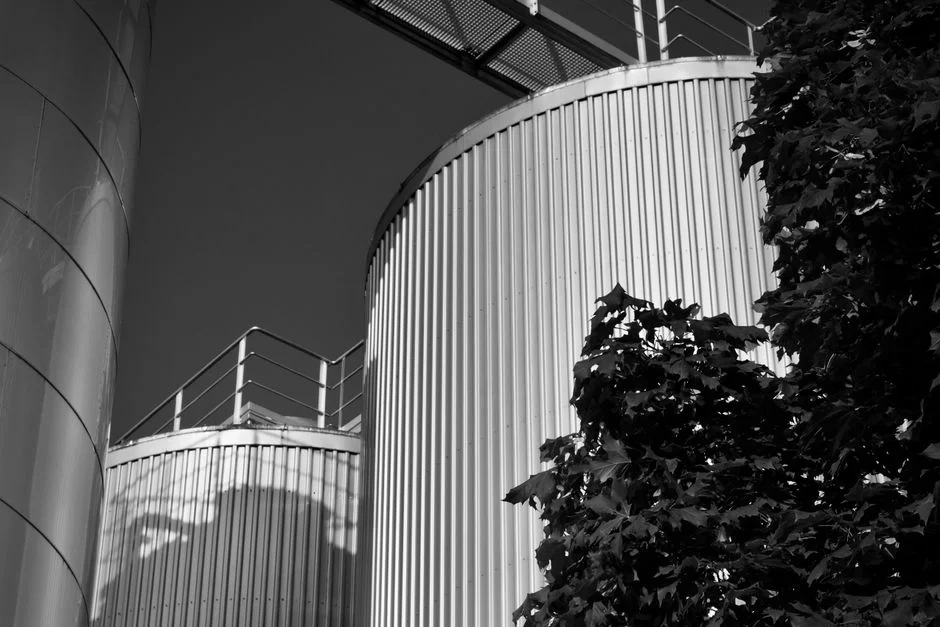
The technology choice at the secondary block drives both capex and compliance risk. A DAF unit, or dissolved air flotation, is the documented workhorse for oil and grease, fats/oils/greases, and high suspended solids in industrial pre-treatment (Organicabiotech), and is commonly used as a pre-concentrator upstream of a biological step. A conventional activated-sludge train with a secondary clarifier is the lower-cost option for low-to-medium-strength effluent where the site can absorb a larger clarifier footprint. An MBR, by contrast, marries activated sludge with submerged PVDF membranes; the membrane barrier delivers near-reuse-quality effluent and a smaller tank farm, which is a strong fit for space-constrained sites (HydropureWater MBR, 10–2,000 m³/day).
DAF is rarely the whole secondary answer for refinery-strength loads; it performs best as oil-and-grease pre-treatment ahead of either a clarifier or an MBR. Constructed wetlands can polish micropollutants at the tertiary stage but are passive and land-intensive, so they appear as a hybrid MBR-plus-wetland configuration (Wageningen Lei PhD, 2022, ISBN 9789464473681). For further reading on fouling control once an MBR is selected, see this reference on membrane fouling prevention in MBR systems, and a DAF-versus-clarifier comparison for a comparable mining context in this 2026 DAF vs clarifier engineering reference.
| Option | Best Fit | Footprint | Effluent Quality | Key Trade-Off |
|---|---|---|---|---|
| DAF pre-treatment | Oil, grease, FOG, high TSS | Compact | Removes floatables; not a full secondary | Needs downstream biological step for organics |
| Activated sludge + clarifier | Low–medium strength effluent | Large | Standard secondary effluent | Lower capex; larger clarifier footprint |
| Submerged MBR | Site-area-constrained, reuse-quality target | Compact | Near-reuse, low TSS | Higher capex; membrane maintenance |
| Constructed wetlands (tertiary) | Micropollutant polishing | Land-intensive | Polished for micropollutants | Passive; needs hybrid design |
Tertiary Polishing and Disinfection for Reuse or Discharge
Tertiary treatment determines whether the Angola ETP earns a reuse permit or meets discharge compliance. Multi-media filtration strips residual turbidity, and nanofiltration or RO polishing can lift the effluent to agricultural or process-reuse standards when membrane technology is applied to WWTP effluent (University of Twente Schrader PhD). For a refinery or food plant aiming to recycle cooling or boiler feed water, this polishing block is non-negotiable. Constructed wetlands offer a passive, lower-energy path to remove micropollutants (Wageningen Lei PhD, 2022, ISBN 9789464473681), and a constructed wetland maintenance guide for 2026 is available for operations planning.
Disinfection closes the loop. UV-C is the standard for chlorine-resistant pathogens, chlorine dioxide generation handles longer pipe runs and residual carry, and ozone generators oxidise odour, colour, and trace organics that survive biological treatment. A UV sterilizer for tertiary disinfection is the usual pick where the buyer wants a chemical-free residual. A chlorine dioxide generator covers sites that need a measurable residual in the distribution or reuse loop. Sludge leaving the plant is dewatered with a plate and frame filter press sized from 1 to 500 m², reducing disposal tonnage and landfill levies.
2026 Procurement Checklist for an Angola ETP
Procurement leads should treat the ETP as a multi-stage programme rather than a single line item. Confirm the current Angolan regulator's discharge parameter list and any oil-refinery-specific limits in writing; request these as part of the tender. Second, demand daily monitoring capability: each industrial batch varies, so the ETP must carry online TSS, COD/BOD, pH, and oil-in-water instrumentation (Organicabiotech). Third, match the flow envelope to the equipment range; a DAF at 4–300 m³/h and an MBR at 10–2,000 m³/day are sizing envelopes, not guaranteed fits without an influent characterisation campaign.
Fourth, insist on a factory acceptance test (FAT), documented PLC controls, and a spare-parts pathway supported by a consumables range that covers water treatment parts, valves, and media as well as RO and UF membrane filter elements. Fifth, plan for tropical operation: specify HDPE or FRP tanks, UV-resistant housings, and standby power to accommodate Angola's variable grid stability. A second reference case for a comparable industrial ETP and DAF configuration in North America is documented in this 2026 industrial ETP and DAF engineering reference.
Frequently Asked Questions
What is an effluent treatment plant in the Angola industrial context?
An effluent treatment plant (ETP) is a multi-stage industrial wastewater system designed to treat effluent from refineries, food plants, textiles, and chemical facilities before discharge or reuse, removing inorganic matter, heavy metals, oil and grease, and suspended particles (Organicabiotech). For Angola, this typically means a preliminary–primary–secondary–tertiary train with a parallel sludge-dewatering line, sized to daily-varying influent and to the current regulator's discharge limits, which the buyer must verify in writing before procurement.
Which Angolan industries most need an ETP in 2026?
Oil refineries, food and beverage processors, textile mills, and chemical plants generate the highest-strength effluent and the highest compliance exposure, with refinery and agro-industrial growth amplifying local water demand (OpenAlex, SDG 6 study). Any facility discharging oily, high-COD, or high-TSS wastewater into a municipal sewer or water body in Angola should treat it through a dedicated ETP rather than rely on a packaged domestic unit.
What sizing envelope should a buyer request from a supplier?
Use the equipment range as an envelope, not a quote. A DAF pre-treatment unit typically covers 4–300 m³/h, an MBR secondary block covers 10–2,000 m³/day, and a plate and frame filter press covers 1–500 m² of filtration area. The supplier should confirm the envelope against the site's influent characterisation and the target reuse or discharge quality.
What cost drivers and lead-time inputs should a buyer ask a supplier for?
Request a written breakdown of the major cost drivers (membrane area, tank material, dosing skid capacity, disinfection skid, and filter press area) and the lead-time inputs that affect delivery (engineering hours, FAT scheduling, shipping route to Angola, and commissioning mobilisation). Ask the supplier for a site-specific quote tied to your flow envelope, influent characterisation, and discharge target rather than a per-cubic-metre rule of thumb.