Where DAF Fits Inside a Vancouver Factory ETP
An industrial effluent treatment plant (ETP) is built in three layers: primary treatment for physical-chemical separation (settling of suspended solids, pH control, flocculation), secondary treatment for biological reduction of dissolved organics under aerobic or anaerobic conditions, and tertiary treatment for polishing of residual inorganics and microorganisms using chlorine or alum, per a Quora chemical-engineering summary (2024). Dissolved air flotation (DAF) belongs in that primary or secondary slot, not as a stand-alone treatment train.
In a refinery ETP, DAF sits between the API oil-water separator and the biological reactors because emulsified oil reaching the biology stage coats bacteria in a film, suffocating the colony, per the Quora refinery-DAF explanation (Jul 2024). For a Vancouver factory, DAF is the standard primary clarifier whenever the influent carries fats, oils, and grease (FOG), emulsified oil, or fine suspended solids; biological treatment is added downstream only if the discharge permit's BOD/COD limits under Metro Vancouver Sewer Use Bylaw No. 299 require it. A standalone Dissolved Air Flotation (DAF) system with chemical feed can be sufficient on its own when the sewer permit target is TSS and FOG compliance, with no biological reduction required. That three-stage architecture is the frame a Vancouver buyer should hold when reading vendor proposals: DAF is one stage, not the whole plant.
Sizing a DAF for Vancouver: Flow, FOG, and TSS Inputs
Before any vendor can quote a DAF model, the buyer must produce a fixed data package. The required inputs are average and peak hourly flow in m3/hr, influent TSS in mg/L, FOG in mg/L, pH, wastewater temperature, and a peak-shift factor that captures the worst hour relative to the daily average. Vancouver's cool ambient and cool influent — commonly 8-15 °C through winter months — slows flocculation kinetics and reduces bubble rise velocity, so the temperature band must be flagged on the data sheet rather than assumed. Performance targets to write into the spec are 90-95% removal of TSS, 90-95% removal of FOG, and 90-95% removal of insoluble BOD, per the H2Flow DAF brochure (S1); these are DAF-only figures, not full-ETP performance. Hydraulic loading must be set against the peak flow, not the average, which is why an equalization tank upstream is treated as standard equipment. Surface area and bubble contact time scale directly with flow: the recycle pump pressurizes 20-40% of clarified effluent, saturates it with air, and releases 30-50 micron micro-bubbles at the DAF inlet (H2Flow brochure, S1). Without this data package, any model selection is a guess.
Matching Vancouver Industries to a DAF Model Class
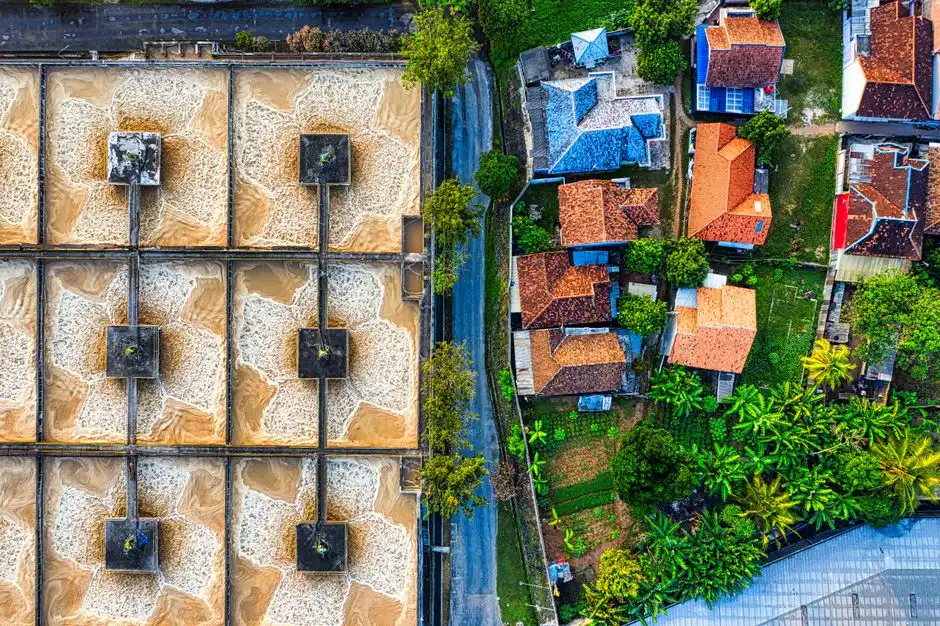
H2Flow's published model ranges let a Vancouver buyer map the local industry mix to a specific DAF class rather than asking for a generic skid. The crosswalk below uses the H2Flow brochure (S1) flow ranges directly.
| Industry / Vancouver use case | Typical flow band | Recommended H2Flow model class | Notes |
|---|---|---|---|
| Food processing (bakery, seafood, beverage, dairy) | 5-180 m3/hr | Alpha (5-180 m3/hr) or Delta (5-150 m3/hr) | High FOG, moderate TSS; plate-pack Delta fits tight Vancouver footprints. |
| Larger seafood / Fraser River processors | 200-260 m3/hr | PWL (200-260 m3/hr) | Open style, high flow and high solids loading. |
| Pulp & paper / Kraft mill | 225-550 m3/hr (Gamma) up to 2,500 m3/hr (SPC) | Gamma or SPC, post-biology | The Aalto/UBC Kraft mill case in Chile placed DAF after biological and chemical coagulation, removing ~40% of remaining COD and ~60% of colour (Aalto University, 2021). |
| Metalworking and machining | 5-150 m3/hr | Delta plate-pack | Emulsified oils and fine particulates; chemical emulsion break is mandatory upstream. |
| Marine, aerospace, and transit maintenance | 5-180 m3/hr typical, intermittent slugs | Alpha with equalization | Equalization is required to absorb batch discharges; SPC covers very high flow light-to-medium solids sites (16-2,500 m3/hr). |
| Semiconductor and clean-tech support | 5-150 m3/hr | Delta plate-pack, polishing duty | Low solids, tight footprint; ultrafiltration polishing sits downstream. |
For pulp & paper specifically, the Aalto/UBC publication (2021) describes a Kraft mill ETP where the existing sequence was clarification, pH neutralization, biological treatment, then chemical coagulation and flocculation followed by DAF, which separated about 40% of remaining COD and 60% of colour before disc filtration and cooling. That order — biology first, DAF polishing second — is the configuration to follow when colour and residual COD, not raw FOG, drive the design.
Performance Specifications a Vancouver ETP Must Hit
The parameter table below is what a buyer should paste into an RFQ so every vendor quotes against the same numbers. Every value is supported by the H2Flow DAF brochure (S1) or, for the bubble-size range, the Quora refinery-DAF answer (Jul 2024).
| Parameter | Specification | Source |
|---|---|---|
| TSS removal (DAF only) | 90-95% | H2Flow brochure (S1) |
| FOG removal (DAF only) | 90-95% | H2Flow brochure (S1) |
| Insoluble BOD removal (DAF only) | 90-95% | H2Flow brochure (S1) |
| Micro-bubble size, recycle loop | 30-50 microns | H2Flow brochure (S1) |
| Micro-bubble size, refinery service | 10-100 microns | Quora refinery-DAF answer (Jul 2024) |
| Recycle flow as % of clarified effluent | 20-40% | H2Flow brochure (S1) |
| Skimmed sludge dry solids | 4-12% DS, adjustable via skimmer speed and weir | H2Flow brochure (S1) |
| Air supply | Dedicated compressed air, saturation tank, aeration valves | H2Flow brochure (S1) |
| Control | Central PLC panel plus pneumatic control panel | H2Flow brochure (S1) |
Two practical notes: skimmer speed and adjustable weir level are the operator's main levers for hitting a target sludge dryness inside that 4-12% band, and the recycle pump and air saturation tank must be sized together — under-sizing either collapses bubble production and removal efficiency.
What a Complete DAF System Includes on a Vancouver Site
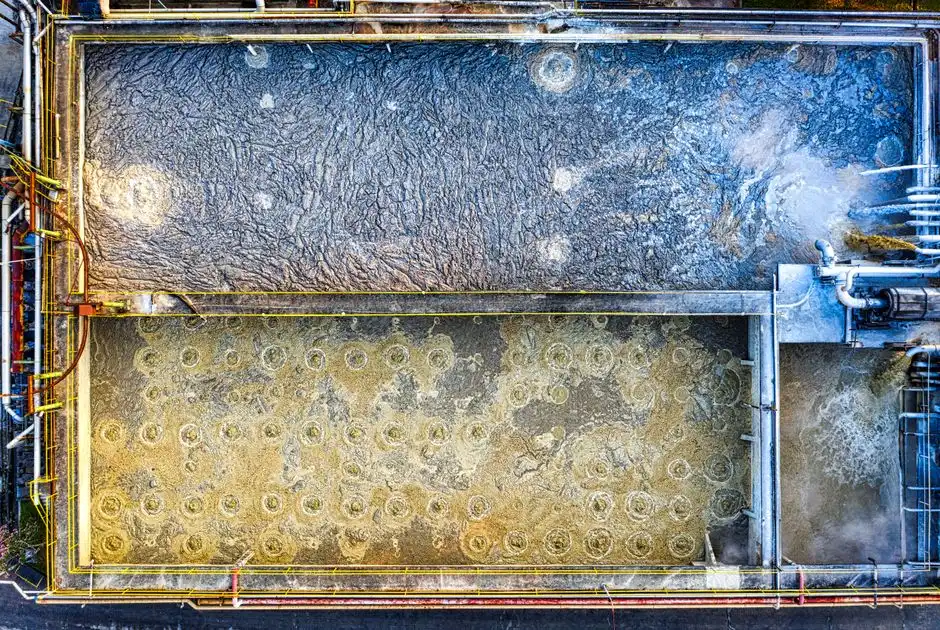
A bare DAF tank is not a system. The H2Flow brochure (S1) lists eleven components of a complete DAF system, and a Vancouver buyer should refuse any quote that omits more than one of them: influent flow equalization tank with mixing; screening to protect pumps; feed pumps; chemical feed for pH adjustment, coagulant, and flocculant; polymer make-down system; mix tanks or in-line pipe flocculation; sludge pumping; sludge storage; pneumatic control panel; central PLC control panel; and compressed air supply, with optional sludge dewatering or biological polishing. Equalization is non-negotiable for Vancouver food and marine plants that discharge in batches — without it, peak flows overrun the DAF hydraulic capacity. Polymer make-down and chemical dosing are what convert a clarifier into a physical-chemical process, per H2Flow (S1). On the upstream side, an automatic chemical dosing system and a rotary mechanical bar screen are the standard line items. On the downstream side, a plate and frame filter press takes the 4-12% DS skimmed sludge to a handleable cake; without dewatering, the sludge handling cost is the line item that breaks the operating budget. For a packaged biological add-on, see the packaged sewage treatment plant for Canadian industrial sites reference design.
BC and Metro Vancouver Compliance Pathway in 2026
Discharges to a sanitary sewer in Metro Vancouver are governed by Sewer Use Bylaw No. 299, which sets trade-waste limits on TSS, FOG, BOD, pH, metals, and temperature; the BC Municipal Sewage Regulation sits above it as the provincial framework for sewage discharge and reuse. For a DAF whose effluent already meets the bylaw's TSS and FOG limits, sewer discharge is the lowest-cost route; discharging treated effluent directly to a watercourse instead triggers the BC Environmental Management Act and an additional permit. The practical sequence for a Vancouver buyer is: confirm the bylaw parameters the DAF must hit, request Metro Vancouver acceptance of the proposed effluent quality before equipment purchase (not after commissioning), and design pH adjustment, flow equalization, and discharge monitoring into the system at the spec stage. A standalone DAF skid rarely satisfies every bylaw parameter on its own — pH trim, equalization, and continuous monitoring are typically added at design, which is why a complete-system quote (not a tank-only quote) is the only defensible procurement route. A DAF machine manufacturer selection guide walks through how to verify that the vendor's quoted envelope actually maps to the bylaw envelope before a purchase order is signed.
Frequently Asked Questions
What size DAF does a small Vancouver food plant typically need, and what should the budget line item cover?
For a small bakery, dairy, or beverage plant in the 5-150 m3/hr peak band, the Alpha (5-180 m3/hr) or Delta plate-pack (5-150 m3/hr) covers the flow and footprint, per the H2Flow brochure (S1). Pricing is not published in the research, so the buyer must request a written quote that itemizes the tank, the recycle pump and air system, chemical dosing, polymer make-down, the PLC panel, and sludge dewatering — and must confirm equalization is included, because omitting it is the most common budget surprise on small Vancouver food jobs. Use the industrial DAF cost and pricing guide for 2026 to structure that request before going to vendors.
Which Metro Vancouver bylaw controls discharge, and what limits apply to TSS and FOG?
Metro Vancouver Sewer Use Bylaw No. 299 governs sanitary-sewer discharge in Metro Vancouver, with trade-waste limits covering TSS, FOG, BOD, pH, metals, and temperature. The BC Municipal Sewage Regulation sits above it as the provincial framework. A DAF that meets the bylaw's TSS and FOG numbers can usually discharge to sewer with a permit; direct watercourse discharge additionally triggers the BC Environmental Management Act and a separate approval. The buyer should request written Metro Vancouver acceptance of the proposed effluent quality before signing the equipment purchase order, not after commissioning.
What should a Vancouver buyer check when selecting a DAF system supplier for BC?
Confirm the supplier can deliver a complete eleven-component system (equalization, screening, feed pumps, chemical feed, polymer make-down, flocculation, sludge pumping, sludge storage, pneumatic and PLC controls, compressed air) from a single source, per the H2Flow brochure (S1). Verify they will support a pilot or on-site trial against the actual Vancouver wastewater at actual temperature, and confirm the PLC platform can integrate with the site's existing SCADA. Local service coverage in BC and documented commissioning on a Canadian industrial site are non-negotiable for a 2026 retrofit; reference the DAF machine manufacturer selection guide for a structured comparison checklist.
How is the 4-12% dry-solids skimmed sludge from a DAF handled on a Vancouver site?
The skimmer discharges a float sludge at 4-12% dry solids, adjustable via skimmer speed and adjustable weir level, per the H2Flow brochure (S1). On a Vancouver site, that sludge is normally pumped to a plate and frame filter press for dewatering to a handleable cake before disposal or haul-off. Equalization upstream of the DAF and a sludge storage tank between the DAF and the press are the two line items that stabilize press feed and keep the dewatering stage running through a Vancouver plant's batch discharge pattern.