Why chemicals wastewater in Aurora breaks the usual DAF vs clarifier rules
Chemicals plant effluent in Aurora is dominated by light suspended solids, emulsified oils, pH swings, and dissolved salts rather than the heavy grit typical of mining or metals streams, a difference that pushes the equipment decision toward flotation rather than settling. Because Aurora-area plants discharge toward the Metro Water Recovery system in the South Platte basin, the practical question is not which separator is universally "best" but which one protects the downstream biological and reuse capacity from colloidal overload. The research supplied does not contain specific numeric pretreatment limits, so each site must request its current local discharge limits before locking in a design.
Generic food-industry DAF-vs-clarifier comparisons break down here because the particle population is different. Dissolved air flotation (DAF) is engineered around the low-density fraction: flocculated colloids, free and emulsified oil, and biomass that has been conditioned with coagulant and flocculant. A lamella clarifier is engineered around the dense fraction: particles that overcome hindered settling inside the inclined-plate pack. When the influent skews colloidal, a clarifier underperforms on the load that hurts downstream biology the most, and the operator is forced to oversize the clarifier or accept carryover. The equipment choice is a question of which separation physics matches the dominant particle class, and both routes require the same upstream coagulant and flocculant conditioning train before the separator.
How a DAF system and a gravity clarifier actually work in chemical service
A DAF system saturates a side stream with air under pressure, then releases that air at atmospheric pressure inside a flotation tank, producing micro-bubbles of approximately 30–50 microns that attach to conditioned floc and lift it to the surface for skimming, per the SigmaDAF USA (Clearwater) product description (2026-04). The floated sludge is scraped by a paddle skimmer, while heavier inorganic particles settle in the bottom collection zone and are removed with an auger, so a DAF is not a pure float-only device. Coagulant and flocculant dosing upstream is what makes the difference: without conditioning, micro-bubbles cannot attach to sub-100-micron colloidal particles efficiently, and the surface load on the tank rises.
Gravity clarifiers—including inclined-plate (lamella) designs—rely on hindered settling where particles fall against an upward bulk flow, and the surface overflow rate sets the maximum treatable hydraulic load. The HydropureWater lamella clarifier is rated at 20–40 m/h surface loading with integrated sludge recirculation and a built-in flocculation zone, which the catalog states can reduce chemical consumption by up to 30% versus a conventional clarifier. pH control and coagulant/flocculant dosing are the shared pre-treatment train for both separators, as Kemco Systems notes in its process description. The chemical conditioning intensity, not the separator itself, usually decides whether the downstream biological stage sees an acceptable load. For DAF service specifically, the HydropureWater DAF system is the typical reference unit; for gravity service, the lamella clarifier is the equivalent reference.
DAF vs clarifier for chemicals wastewater: parameter-by-parameter comparison
The table below aligns the two technologies on the parameters a chemicals engineer needs to compare, drawn from the published SigmaDAF USA, JBT Marel, Kemco, and HydropureWater material in the research. Where the research does not contain a numeric value, the cell states the qualitative input a buyer must request.
| Parameter | Dissolved Air Flotation (DAF) | Lamella / Gravity Clarifier |
|---|---|---|
| Target pollutant class | Light suspended solids, FOG, colloids, metals when paired with coagulation/flocculation (Kemco; SigmaDAF USA, 2026-04) | Dense, settleable inorganic suspended solids; floc conditioned for fast settling |
| Defining micro-bubble or surface-loading spec | 30–50 micron micro-bubbles attach to floc and lift it (SigmaDAF USA, 2026-04) | 20–40 m/h surface loading with sludge recirculation (HydropureWater catalog) |
| Footprint reference | Smallest JBT Marel unit: L 2900 mm × W 1400 mm × H 1350 mm; modular scaling upward (JBT Marel) | Lamella pack reduces footprint vs conventional clarifier; request plan area per m³/h from supplier |
| Standard materials of construction | 304SS standard; 316SS or polypropylene upgrades for corrosive chemical service; concrete option where chemistry allows (SigmaDAF USA, 2026-04; JBT Marel) | Typically 304SS or rubber/FRP-lined carbon steel; confirm chloride and solvent exposure with supplier |
| Sensitivity to flow swings | Short residence time; tolerates hydraulic surges better (SigmaDAF USA process description, 2026-04) | More sensitive to hydraulic surges; requires steady surface overflow rate |
| Sludge character | Floated scum plus heavier grit removed by auger; downstream dewatering on a filter press | Bottom underflow sludge, typically 2–5% DS; dewatered on the same filter press line |
| Chemical conditioning intensity | Coagulant + flocculant required; can cut pollution load reaching downstream biology by up to 90% (JBT Marel) | Coagulant + flocculant required; up to 30% chemical reduction vs conventional clarifier (HydropureWater catalog) |
| Standard pre-treatment train | Bar screen, pH adjustment, and a chemical dosing skid ahead of the flotation cell (Kemco) | Bar screen, pH adjustment, and the same dosing skid ahead of the lamella pack (Kemco) |
The 90% pollution-load reduction figure from JBT Marel is the headline pre-treatment number for DAF; the 30% chemical-consumption figure from the HydropureWater catalog is the headline operating number for the lamella. Both should be requested as named performance guarantees rather than treated as universal guarantees, because influent variability drives the actual outcome more than the equipment spec sheet does.
Decision framework: pick DAF or a clarifier in four steps
The framework below turns the comparison table into an action a process or procurement engineer can run against any Aurora-area chemicals stream.
Step 1 — Characterize the stream. Pull TSS, FOG, and a settleability jar test on the actual plant effluent. If the bulk of the solids are light, oil-bearing, or colloidal—meaning they do not settle a 1-L Imhoff cone in 30 minutes—DAF is the better fit. If a clean sludge blanket forms in the cone within minutes, the lamella clarifier is competitive. The research does not contain numeric jar-test thresholds, so request the supplier's own acceptance band rather than rely on a generic value.
Step 2 — Check flow variability. DAF's short residence time absorbs hydraulic surges better than a lamella pack, which depends on a steady surface overflow rate. Plants with batch discharges or large diurnal swings should weight the decision toward DAF, while plants with a 24/7 steady effluent are more lamella-tolerant. A HydropureWater DAF system is the default reference for the surge-tolerant case.
Step 3 — Match materials of construction. Map chloride, solvent, and pH exposure against the materials list. SigmaDAF USA (2026-04) and JBT Marel both offer 316SS and polypropylene for corrosive chemical service, and concrete remains an option where the chemistry allows. For the chemical dosing line, specify a HydropureWater chemical dosing skid with materials rated for the same chemistry.
Step 4 — Validate with a pilot. SigmaDAF USA and Kemco Systems both emphasize on-site jar tests and pilot work as the basis for final sizing. The research does not specify a pilot duration, so request a written pilot protocol from the supplier that includes air-to-solids ratio, polymer make-down capacity, and sludge yield in kg DS per m³ treated, then commit to a 2026 RFQ only after the pilot data is in hand.
Sizing an Aurora chemicals plant: flow, model selection, and integration
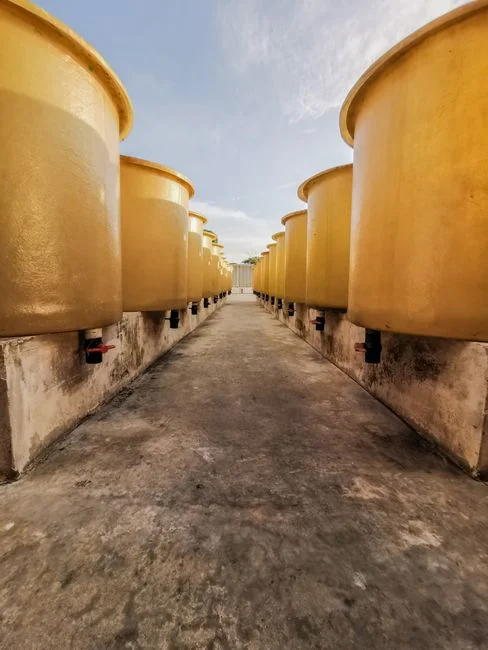
The standard product envelope covers most Aurora-corridor chemicals plants without custom engineering. The HydropureWater DAF line spans 4–300 m³/h across 13 standard models per the catalog, and the lamella clarifier is rated at 20–40 m/h surface loading, so the matched envelope for sizing is well-defined. For higher flows or space-constrained sites, modular two-skid DAF layouts such as the SigmaDAF USA COMPACT DAF (single skid at ≤66 GPM, modular two-skid above 66 GPM) and lamella plate designs offer factory-built, pre-tested alternatives that compress installation time on a 2026 capex schedule.
Pre-treatment must be specified as an integrated train, not as loose equipment. The standard sequence is coarse screening on a rotary mechanical bar screen, pH adjustment with acid or caustic dosing, coagulant and flocculant injection through a chemical dosing skid, then the separator, with downstream sludge dewatering on a HydropureWater filter press. Kemco's process description treats coarse filtration, pH control, and sludge dewatering as inseparable from the DAF, and the same logic applies to a lamella flow sheet.
The sizing checklist below lists the items that a 2026 RFQ must request from any supplier; each line is an input rather than a value.
| RFQ line item | What the supplier must provide | Why it matters for Aurora chemicals |
|---|---|---|
| Hydraulic residence time | Minutes at design flow and at peak flow | Confirms surge tolerance for batch discharges |
| Air-to-solids ratio | kg air per kg TSS at design loading | Sets compressor and saturator sizing for DAF |
| Polymer make-down capacity | Active polymer kg per day at design dose | Drives dosing skid and maturation tank sizing |
| Sludge yield | kg dry solids per m³ treated | Sets filter press sizing and disposal cost |
| Materials of construction | 304SS / 316SS / PP / concrete option, with wetted-part list | Maps against chloride, solvent, and pH exposure |
| Local pretreatment limits | Confirmation from Metro Water Recovery or local POTW | Buyer must obtain these numeric limits |
For related decision frameworks on other waste streams, see the DAF vs clarifier for mining and metals wastewater guide, the DAF vs clarifier for petroleum wastewater guide, and the lamella vs conventional clarifier cost comparison benchmark article.
Frequently Asked Questions
Is DAF or a lamella clarifier the better choice for chemicals plant wastewater in 2026?
For most chemicals effluents, DAF is the stronger default because the dominant particle class is light, oil-bearing, or colloidal, and micro-bubble flotation is the matching separation physics (SigmaDAF USA, 2026-04; Kemco Systems). A lamella clarifier becomes the better fit when the chemistry already forms a dense, fast-settling sludge and the footprint has to stay small (HydropureWater catalog).
What microbubble size and materials of construction should the RFQ specify for chemical service?
Specify 30–50 micron micro-bubbles, 304SS as
Frequently Asked Questions
Is DAF or a clarifier better for chemicals wastewater in Aurora?
The choice between Dissolved Air Flotation (DAF) and a clarifier depends on the specific gravity and settling characteristics of your chemical waste stream. DAF is generally superior for chemical wastewater containing emulsified oils, fats, or low-density suspended solids that rise to the surface, typically achieving 80-95% removal of suspended solids. Clarifiers are more effective for dense, inorganic precipitates or metal hydroxides that exhibit high settling velocities, often requiring less energy but larger footprints than DAF units.
In the Aurora region, local pretreatment standards for industrial discharge often mandate stringent limits on Fats, Oils, and Grease (FOG). Because DAF systems are highly efficient at separating these lighter fractions through micro-bubble attachment, they are frequently the preferred technology for chemical plants facing strict municipal discharge compliance.
What flow rate range do industrial DAF systems cover for chemical plants?
Industrial DAF systems are highly scalable and typically cover flow rates ranging from 5 gallons per minute (GPM) for pilot or small-batch processing to over 2,000 GPM for large-scale chemical manufacturing facilities. The specific capacity is determined by the hydraulic loading rate, which for DAF systems is generally designed between 1.5 and 4.0 gallons per minute per square foot (GPM/ft²) of surface area.
How do I size a DAF or lamella clarifier for a chemical process line?
Sizing is dictated by the peak hydraulic flow rate and the surface overflow rate (SOR) required for your specific contaminants. For a lamella clarifier, you must calculate the projected settling area, typically designing for an SOR of 0.2 to 0.5 GPM/ft² of projected plate area to ensure laminar flow conditions. DAF sizing requires calculating the air-to-solids ratio, which should be maintained between 0.01 and 0.05 mg of air per mg of solids to ensure effective bubble attachment.
What materials of construction should I specify for a chemical-service DAF?
For chemical wastewater applications, 304 or 316L stainless steel is the industry standard to prevent corrosion from aggressive process chemicals. If the wastewater contains high concentrations of chlorides or low-pH acids, 316L stainless steel or specialized thermoplastic coatings (such as epoxy or PTFE) are required to maintain structural integrity and prevent leaching. Always cross-reference your site’s chemical compatibility matrix with the wetted parts of the scrapers, pumps, and saturation tanks.
Do Aurora chemical plants need pilot testing before buying a DAF or clarifier?
Yes, pilot testing is strongly recommended to account for the variability inherent in chemical manufacturing waste. A pilot study allows for the optimization of chemical coagulants and flocculants—which are critical for both DAF and clarifier performance—and provides empirical data on the actual solids capture rate for your specific effluent. Testing typically lasts 2 to 4 weeks to capture fluctuations in production cycles and ensures the system meets local Aurora water authority pretreatment discharge limits before significant capital expenditure.