Why Petroleum Bulk Wastewater Forces a Choice Between DAF and a Clarifier
Petroleum bulk operations in Bloomington — terminals, tank farms, and refinery-adjacent transfer stations — generate a contaminant mix that does not behave like generic industrial wastewater. Free oil, emulsified oil, fats/oil/grease (FOG), and total suspended solids (TSS) arrive in ratios that change with every tank drain, product transfer, and storm event. The mix dictates the correct primary separation mechanism, because oil rises and heavy grit sinks — they cannot be removed by the same unit in a single pass.
A dissolved air flotation (DAF) clarifier injects 30–50 micron micro-bubbles that attach to oil droplets and low-specific-gravity floc, lifting them to the surface where a skimmer removes them (S2, S5). A conventional gravity clarifier does the opposite: it relies on quiescent conditions and density-driven settling to drop heavier solids to a bottom sludge bed. On a free-oil stream, a clarifier alone underperforms because oil re-coalesces slowly and is re-entrained by surface turbulence, and stable emulsions never settle at all.
The choice between these technologies depends on matching the dominant contaminant class to the correct physical mechanism for the specific Bloomington stream. Peer-reviewed work on synthetic oily wastewater explicitly combines DAF with a downstream moving-bed biofilm reactor, confirming that DAF is the standard primary step before biological polishing on oil-bearing streams (S3). For petroleum bulk operations where free or emulsified oil is present, a DAF primary is the technically defensible default — a dissolved air flotation unit sized to the actual oil and FOG load, followed by biological or membrane polish as needed.
How a DAF Clarifier Works on a Petroleum Stream
The DAF process relies on internal mechanics to handle petroleum bulk streams without chronic underperformance. Clean water is pressurized and saturated with air in a side-stream saturator; when that stream is depressurized into the flotation cell, the dissolved air comes out of solution as 30–50 micron micro-bubbles (S2, S5). The micro-bubbles contact the incoming wastewater, attach to oil droplets and flocculated solids, and carry them to the surface as a floating blanket that a paddle skimmer scrapes into a collection trough. Heavier settleable solids that drop out are removed from a bottom collection zone by auger (S2, S5).
Chemical conditioning is not optional on a petroleum stream. Coagulant and polymer flocculant must be dosed upstream of the DAF cell so that fine oil droplets and colloids are enlarged into a floc the micro-bubbles can actually lift (S2, S5). Mixing is typically done in serpentine flocculation tubes (15–45 second flash mix) or in a staged mix tank with impeller agitators, depending on the chemistry (S5). pH adjustment is usually required, and jar testing is the standard method for setting dose rates before commissioning.
Two commissioning details are relevant when discussing requirements with vendors during a 2026 RFQ. First, a DAF unit must be filled with clean water at start-up; using dirty water on start-up is a documented failure mode that can damage the recirculation pump and air saturation system and will discharge dirty water for an extended period (S5). Second, material selection matters in petroleum service: standard tanks are 304 stainless steel, with 316SS and polypropylene available for more corrosive streams (S2). Bloomington buyers should request both the material certificate and an upgrade path for higher oil loads before signing a purchase order, ideally on a DAF skid with an integrated chemical conditioning package.
How a Conventional Gravity Clarifier Performs on the Same Stream
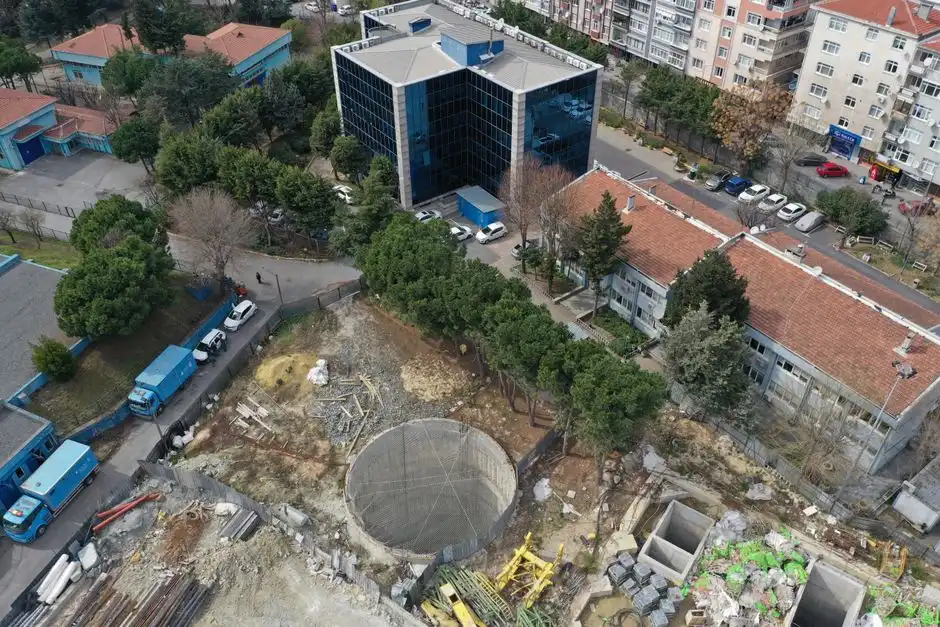
A conventional gravity clarifier depends on quiescent hydraulic conditions and a stable density differential between the suspended particle and the surrounding water. On a petroleum bulk stream, that means a clarifier captures settleable TSS reliably but only captures oil that re-coalesces into large enough droplets to overcome surface turbulence and rise. Stable emulsions — the rule rather than the exception in tank-bottom and interface draws — do not settle at all, so a clarifier alone will not meet oil & grease discharge limits on most petroleum bulk streams without pre-treatment and a downstream corrugated-plate or skim device.
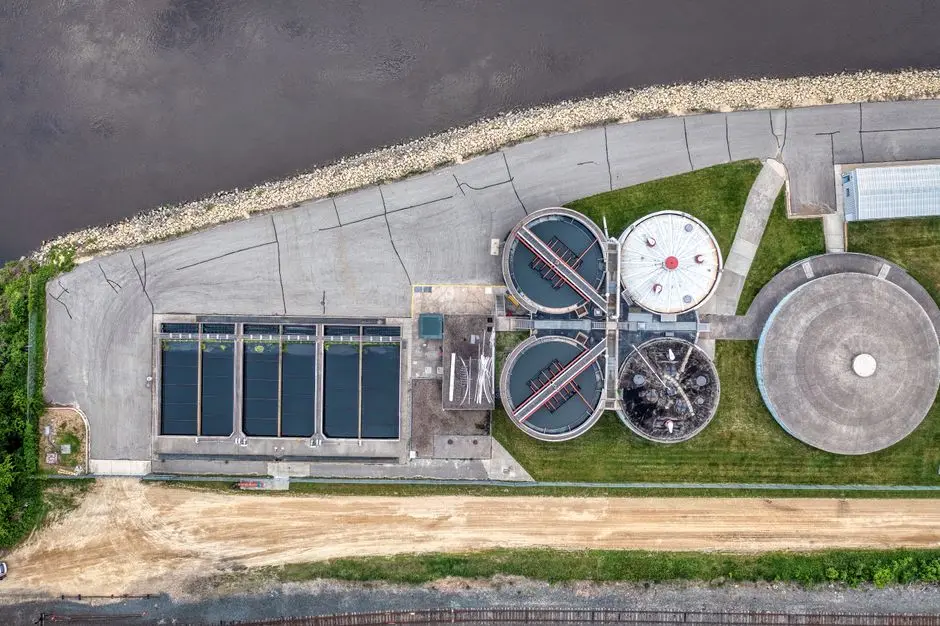
Inclined-plate (lamella) clarifier designs raise the effective surface loading rate and reduce footprint compared with traditional rectangular basins, and the lamella clarifier family uses parallel plates to shorten the effective settling distance. This geometry helps on heavy settleable solids, but it still cannot float oil; lamella plates are a footprint and loading-rate improvement, not a mechanism change.
A clarifier is the correct primary unit for a Bloomington petroleum operation when the dominant load is heavy suspended solids with only trace oil. This condition is uncommon in petroleum bulk handling, but a clarifier will be more cost-effective to operate than a DAF on a stream that does not need flotation chemistry.
Side-by-Side Comparison: DAF vs Gravity Clarifier for Petroleum Bulk Wastewater
Procurement teams require a clear summary of operating differences before selecting a primary separator. The table below distills the differences that matter most on a petroleum bulk stream, with values attributed to the underlying source rather than industry assumptions.
| Parameter | DAF Clarifier | Gravity Clarifier (incl. Lamella) |
|---|---|---|
| Separation mechanism | 30–50 micron micro-bubbles float oil and floc to the surface (S2, S5) | Density-driven settling of heavier solids in quiescent conditions |
| Best influent | Free oil, emulsified oil, FOG, light TSS | Heavy settleable TSS with little or no oil |
| Footprint | Compact and often packaged; ≤66 GPM single skid, >66 GPM modular (S2, S5) | Larger floor area unless lamella plates are used; lamella reduces but does not change footprint class |
| Chemical dependency | Requires coagulant + flocculant (often pH adjustment) for rated performance (S2, S5) | Can run without chemistry on simple TSS streams |
| Start-up water | Clean water required; dirty-water start-up is a documented failure mode (S5) | No clean-water start-up requirement |
| Skimmer / sludge equipment | Paddle skimmer, saturator pump, polymer system (S2) | Sludge pump and periodic desludging only |
| Standard material | 304SS standard; 316SS and polypropylene available (S2) | Typically carbon steel or 304SS; 316SS optional |
| Standard downstream role | Primary before biological or membrane polish on oil-bearing streams (S3) | Primary on TSS-dominant streams; sometimes polish after DAF |
This table serves as a structured set of questions to put to vendors, rather than a fixed specification. The DAF row reflects documented behavior in the supplied research (S2, S3, S5), while the clarifier row reflects general sedimentation-tank practice.
Bloomington 2026 Selection Matrix: Picking the Right Primary Unit
The matrix below translates the comparison into a site-specific rule. It assumes the engineer has already collected 24-hour composite data for oil & grease, TSS, COD/BOD, pH, temperature, and both peak and average flow.
| Dominant Stream Characteristic | Recommended Primary Unit | Why |
|---|---|---|
| Free oil present, O&G ≥ ~50 mg/L, or stable emulsion observed | DAF as primary, then biological or membrane polish (S3) | Micro-bubble flotation is the only mechanism that lifts emulsified and free oil reliably (S2, S5) |
| High TSS, low or no oil (e.g., stormwater- or wash-down-dominant) | Lamella clarifier | Density-driven settling is sufficient; no chemistry, lower OPEX |
| Intermittent or highly variable oil content (slug loads from tank draining, product transfer) | DAF with oversized flocculation train; confirm skimmer torque and saturator capacity with vendor | Variable loading requires headroom in skimmer and saturator sizing, and a chemical package that can be turned up and down on demand |
| Petroleum bulk stream with tight local discharge limits | DAF as primary; confirm local limits with City of Bloomington Utilities before sizing | Local limits typically drive both the technology choice and the polish train |
The "≥ ~50 mg/L" threshold for O&G is a planning rule of thumb used in the petroleum literature; the actual number that drives a permit selection is the local discharge limit, which should be confirmed in writing from the NPDES and pretreatment permits checklist for the specific site. Chemical conditioning is a hard requirement on a DAF for petroleum service, so the primary package should be quoted with a matched automatic chemical dosing system rather than as a stand-alone tank.
Implementation Checklist for a 2026 Bloomington DAF or Clarifier Project
Procurement committees in 2026 require a defensible paper trail. The checklist below covers the minimum requirements to provide to a vendor before issuing a purchase order for a primary separator at a petroleum bulk site.
- Validate oil & grease and TSS with a third-party lab over at least two weeks covering routine operations. Slug events from tank draining and product transfer are the data points most often missed.
- Request vendor confirmation of skimmer speed, saturator pump duty, and polymer make-up rate. These are the most common sources of under-sizing on petroleum DAF units (S2, S5).
- For 2026 projects, ask the vendor for documented material certificates (304SS vs 316SS) and any upgrade path for higher oil loads (S2). Petroleum service is more corrosive than municipal service.
- Plan sludge handling. DAF float and clarifier underflow both need a downstream dewatering step — typically a plate and frame filter press sized to the expected dry-solids loading.
- Confirm control integration. The chemical dosing skid should be PLC-controlled and matched to the DAF control panel so that start-up, normal operation, and shock-load response stay inside the operator's competence.
- Confirm the local Bloomington/Indiana sewer discharge limits in writing from City of Bloomington Utilities before sizing.
CAPEX and OPEX on a DAF versus a clarifier depend on flow, oil load, and material. Request itemized vendor quotes for the chemical conditioning package, the material upgrade, and the sludge dewatering step to make quotes comparable across vendors.
Frequently Asked Questions
Is a DAF or a gravity clarifier the right primary unit for a petroleum bulk stream in Bloomington?
For most petroleum bulk operations, the technically defensible primary unit is a DAF, because free oil, emulsified oil, and FOG are removed by micro-bubble flotation rather than by settling (S2, S3, S5). A conventional gravity clarifier is the right primary only when the dominant load is heavy settleable solids with little or no oil.
What should I check when shortlisting DAF or clarifier suppliers for a 2026 project?
Ask each vendor for documented petroleum or oil & grease references, written confirmation of 304SS versus 316SS material options with mill certificates, and a chemical conditioning package sized to your specific O&G and TSS data (S2). A vendor that quotes only on flow rate without asking for influent oil and TSS data is not qualified to size a primary separator for a petroleum stream.
How should I size the 2026 capital budget for a DAF or clarifier at a Bloomington petroleum site?
Treat any per-gallon benchmark as a sanity check, not a budget. Request itemized vendor quotes for the tank, the chemical dosing package, the skimmer, the saturator, the sludge dewatering step, and installation. The single most reliable cost-control action is to ask every vendor to quote on the same line items and the same influent data set.
Where can I get the pretreatment and permitting context for a 2026 Bloomington discharge?
Start with the local sewer authority — City of Bloomington Utilities — for site-specific discharge limits, and use the NPD