Why Huntington-Area Mines Cannot Rely on Federal Limits Alone
40 CFR Part 436 is the federal floor for any mining or quarrying operation that discharges wastewater in the United States. EPA promulgated the Mineral Mining and Processing Effluent Guidelines and Standards (40 CFR Part 436) in 1975 and amended the regulation in 1976, 1977, 1978, and 1979; it covers wastewater discharges from mine drainage, mineral processing operations, and stormwater runoff, and the requirements are incorporated into NPDES permits (EPA, 2026-02).
A mining operator in the Huntington, WV sanitary service area discharging to a POTW is an indirect discharger, and that receiving POTW runs a pretreatment program authorized under Section 402(b) of the Clean Water Act and the implementing regulations at 40 CFR 122, 123, 124, and 403 (EPA Local Limits Guidance). The federal floor sets baseline numeric effluent limits for the subparts EPA has chosen to regulate, but the local POTW layers site-specific local limits on top to prevent pass-through, interference, sludge contamination, and collection-system corrosion. Operators who only check the federal table and skip the local ordinance typically discover noncompliance during a POTW inspection or via a self-monitoring report review.
40 CFR Part 436 Subparts That Matter for Tri-State Operations
The first check a Huntington-area buyer should run is whether their mineral carries federal numeric effluent limits at all. EPA's list of reserved subparts under 40 CFR Part 436 includes Dimension Stone (Subpart A), Lightweight Aggregates (Subpart H), Mica and Sericite (Subpart I), Trona (Subpart P), Rock Salt (Subpart Q), Mineral Pigments (Subpart T), Lithium (Subpart U), Fire Clay (Subpart AA), Attapulgite and Montmorillonite (Subpart AB), Kyanite (Subpart AC), Shale and Common Clay (Subpart AD), Aplite (Subpart AE), Kaolin (Subpart AG), Ball Clay (Subpart AH), Feldspar (Subpart AI), Talc/Steatite/Soapstone/Pyrophyllite (Subpart AJ), and Garnet (Subpart AK) (EPA, 2026-02). A reserved subpart means EPA has not promulgated numeric effluent limits for that mineral, so the federal floor is silent and the local POTW local limits become the binding constraint on metals, pH, TSS, and oil and grease. Active subparts carry numeric limits for parameters such as TSS, settleable solids, pH, and specific metals; the operator should pull the relevant subpart language from 40 CFR Part 436 before sizing the train. Lithium (Subpart U) is reserved, and the Tri-State aggregate and sand-and-gravel sector falls under the reserved Dimension Stone and Lightweight Aggregates subparts, so the local layer is the primary constraint for the typical Huntington-area quarry. Understanding these federal gaps clarifies why the local POTW ordinance serves as the primary regulatory framework.
| Subpart | Mineral | Federal status | Implication for Huntington-area operator |
|---|---|---|---|
| A | Dimension Stone | Reserved | Local limits are the only numeric ceiling |
| H | Lightweight Aggregates | Reserved | Local limits are the only numeric ceiling |
| U | Lithium | Reserved | Local limits are the only numeric ceiling |
| AH | Ball Clay | Reserved | Local limits are the only numeric ceiling |
| AI | Feldspar | Reserved | Local limits are the only numeric ceiling |
| AJ | Talc/Steatite/Soapstone/Pyrophyllite | Reserved | Local limits are the only numeric ceiling |
| AK | Garnet | Reserved | Local limits are the only numeric ceiling |
What the Huntington POTW Layer Adds on Top
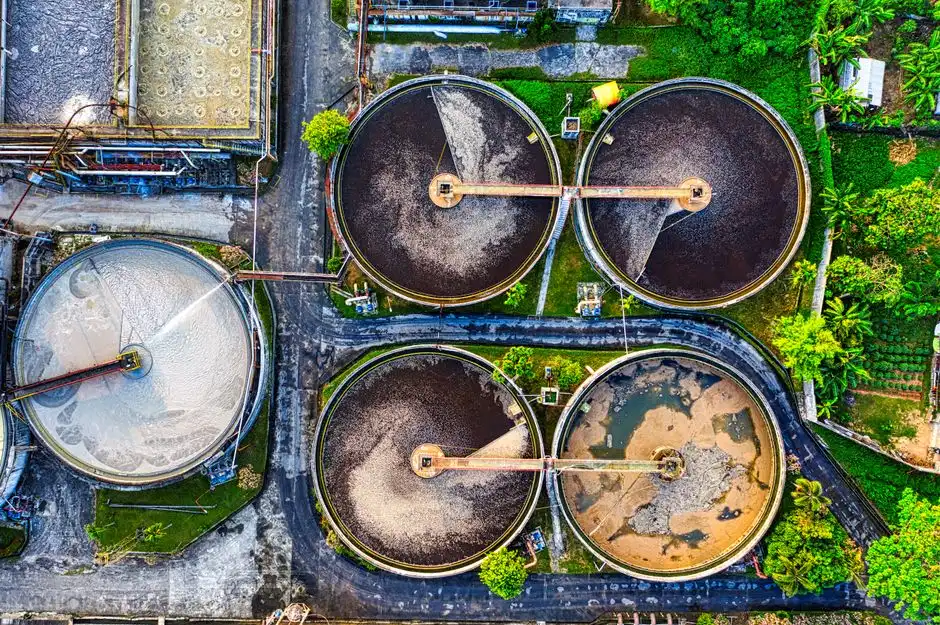
EPA's Local Limits Development Guidance directs POTWs to use a five-step MAHL approach: determine pollutants of concern, collect and analyze data, calculate Maximum Allowable Headworks Loadings, designate and implement local limits, and address collection-system concerns (EPA Local Limits Guidance). POTWs identify pollutants of concern from a defined list of national POCs plus NPDES permit conditions, water quality criteria, sludge quality standards, air quality standards, scans of influent/effluent/sludge, and hauled-waste profiles (EPA Local Limits Guidance). A typical local-limit set for a receiving POTW that accepts mining flow includes daily maximum and monthly average limits for total metals (lead, copper, zinc, cadmium, nickel, chromium, arsenic, mercury), pH range, TSS, oil and grease, and sometimes ammonia; the operator should request the specific schedule from the POTW before sizing the train. POTWs are required to designate local limits when actual loadings approach the MAHL, when there is noncompliance due to pass-through or interference, and when conventional pollutants or worker-safety concerns require control (EPA Local Limits Guidance). The Huntington Sanitary Board and the City of Huntington's pretreatment ordinance operate on this same EPA framework, and any sewer-discharge permit issued to a Tri-State aggregate or coal-prep site will name local-limit numbers rather than just cross-reference 40 CFR Part 436.
Characterizing the Influent Before Talking to a Supplier
AMD appears wherever sulfide minerals such as pyrite and pyrrhotite are disturbed; oxidation produces sulfuric acid that leaches iron, manganese, copper, zinc, arsenic, and cadmium at concentrations above regulatory limits (AMPAC USA, 2025-09). Process water from flotation, heap leaching, cyanide gold extraction, and chlorination circuits contains process chemicals, reagents, and dissolved ore constituents — typically high TDS, often with cyanide, ammonia, or chloramines (AMPAC USA, 2025-09). Tailings pond effluent carries fine solids, processing chemicals, and leached metals; dewatering discharge composition varies sharply with geology and may be relatively clean or heavily metal-loaded (AMPAC USA, 2025-09). A copper operation, a coal-prep site, and a dimension-stone quarry require different treatment trains; the basis of design is stream-specific and must be developed before the supplier is asked to quote. Establishing these characteristics prevents the common error of receiving an incorrect scope in a 2026 RFQ.
A Defensible 2026 Treatment Train for Huntington-Area Mines
A defensible unit-operation sequence for a Huntington-area mineral mining or aggregate operation in 2026 has six steps, each mapping to a specific unit operation. The literature and the commercial flow sheets point to the same order: pH correction first, then coagulation, then solids separation, then multimedia filtration, then a membrane polish when salts or trace metals persist, with monitoring and reporting on the back end (Genesis Water Technologies; PMC review, 2024-02). Step 1 raises pH with lime above 10 so dissolved metals precipitate as hydroxides and gypsum drops out, before thickening (PMC review, 2024-02). Step 2 uses coagulation and flocculation to aggregate suspended solids and fine metal particles into settleable or floatable flocs, with the coagulant and flocculant pair matched to the floc density that drives the next step. Step 3 selects solids separation equipment: a DAF unit for buoyant floc and oil/fines removal in mining wastewater when the floc floats or the stream carries oil, and a lamella clarifier for metal hydroxide sludge with footprint constraints when sludge volume and footprint are the constraint (Genesis Water Technologies, 2025-11). Step 4 uses a multi-media filter sized to target SDI downstream of clarification to drop turbidity and colloids ahead of the membranes. Step 5 puts a UF system as RO feed conditioning ahead of the membrane polish and an industrial RO system for >99% rejection of dissolved metals and salts, with RO at 50–70% recovery on AMD feed and 70–85% as the RO stage of a ZLD train (AMPAC USA, 2025-09). Step 6 closes the loop with a PLC/HMI providing continuous pH, flow, and conductivity, plus POTW self-monitoring records (LiqTech, 2025-08); chemistry is held by a PLC-controlled automatic chemical dosing skid for lime, coagulant, and flocculant. Sludge from chemical precipitation is dewatered with a plate and frame filter press for metal hydroxide sludge dewatering sized to the cake volume produced by the precipitation train.
| Step | Unit operation | Equipment choice | Selection driver | Key specification |
|---|---|---|---|---|
| 1 | pH correction | Automatic chemical dosing system | Dissolved metals in solution | Lime raise to pH > 10 (PMC review, 2024-02) |
| 2 | Coagulation / flocculation | Inline mixing on dosing skid | Floc density and downstream separator | Coagulant + flocculant pairing |
| 3a | Solids separation — buoyant | DAF | Floc floats, oil/fines present | Air-to-solids ratio, polymer compatibility (Genesis Water Technologies, 2025-11) |
| 3b | Solids separation — heavy | Lamella clarifier | Sludge volume and footprint | Plate spacing, underflow solids |
| 4 | Multimedia filtration | Multi-media filter | Downstream membrane protection | Target SDI after the filter |
| 5a | Membrane feed conditioning | UF system | Fine colloids, RO protection | Membrane material, flux, backwash cycle |
| 5b | Membrane polish | Industrial RO system | Dissolved salts and metals | >99% rejection; 50–70% recovery on AMD feed, 70–85% on ZLD RO (AMPAC USA, 2025-09) |
| 6 | Monitoring and reporting | PLC/HMI | POTW self-monitoring records | Continuous pH, flow, conductivity (LiqTech, 2025-08) |
| 7 | Sludge dewatering | Plate and frame filter press | Cake volume from precipitation | Cake dryness target, cycle time |
Sizing, Footprint, and What to Put in the Supplier Quote
Mining water-treatment processes vary significantly between operations, and suppliers develop customized systems matched to specific influent and discharge requirements (LiqTech, 2025-08); a single dimension-stone or sand-and-gravel site typically runs in the low-to-mid two-digit m³/h range, while a process plant with heap leach or milling sits an order of magnitude higher. Buyers should request a quotation against their own basis of design because capital cost depends on flow, influent metal profile, target recovery, and the local sewer authority's discharge limits. Size equalization and pumping against the highest anticipated daily discharge rather than the average, because peak flows drive equalization basin volume and pump selection. RO-enabled reuse can reduce freshwater consumption by 40–60% versus once-through operation (AMPAC USA, 2025-09), so the basis of design should include a target recovery percentage and an end-use for the permeate (dust suppression, process water, equipment wash). A complete RFQ package lists peak and average flow in m³/h, influent pH and metal profile from a representative sampling round, the local sewer authority's discharge limits for metals, pH, and TSS, and the desired recovery percentage; without these, a supplier cannot quote a defensible scope. For DAF versus lamella selection logic at this flow band, the DAF vs clarifier comparison for mining and metals wastewater and the mine site water reuse and reclaimed water sizing guide walk through the same decision tree a Huntington-area operator would run, and the regional mining pretreatment compliance playbook for Connersville, IN shows the equivalent two-layer structure for a neighboring jurisdiction.
Frequently Asked Questions
Which
Frequently Asked Questions
What 40 CFR Part 436 subpart applies to an aggregate or dimension-stone quarry near Huntington, WV in 2026?
For aggregate and dimension-stone operations, 40 CFR Part 436 Subpart B (Crushed Stone Subcategory) is the primary federal regulation governing point source discharges. This subpart establishes effluent limitation guidelines (ELGs) based on best practicable control technology currently available (BPT) for total suspended solids (TSS) and pH, typically requiring a pH range of 6.0 to 9.0 and specific TSS limitations for process-generated wastewater.
How does a POTW develop local limits for a mining discharger under 40 CFR Part 403?
Under 40 CFR Part 403.5(c), a Publicly Owned Treatment Works (POTW) develops local limits by conducting a Maximum Allowable Industrial Load (MAIL) analysis. This involves calculating the POTW's headworks loading capacity based on its NPDES permit limits, sludge disposal requirements, and inhibition thresholds for biological treatment processes, then allocating that capacity among existing industrial contributors to prevent pass-through or interference.
What does a complete six-step mining wastewater treatment train cost for a small Tri-State site in 2026?
For a small-scale mining operation in the Tri-State region, a complete six-step treatment train—incorporating equalization, pH adjustment, coagulation, flocculation, clarification, and sludge dewatering—typically ranges from $450,000 to $850,000 in 2026 capital expenditures. Operating expenses, including chemical reagents, sludge hauling, and energy consumption, generally add an additional $0.05 to $0.15 per gallon treated depending on influent mineral concentrations.
How do I choose between DAF and lamella clarification for a mining and metals plant near Huntington?
Dissolved Air Flotation (DAF) is preferred when the primary contaminants are oil, grease, or low-density metal precipitates that naturally float, whereas lamella clarification is superior for high-density inorganic solids and heavy mineral fines. For Huntington-area sites dealing with high-flow, high-solids mining effluent, lamella clarifiers are generally more cost-effective due to their smaller physical footprint and lower operational energy requirements compared to the air-saturation systems required for DAF.
How long does it take to permit and install a mining pretreatment train to meet 2026 sewer discharge limits near Huntington?
The timeline for permitting and installation typically spans 12 to 18 months. This includes 3 to 6 months for engineering design and local sewer use permit negotiations with the municipal authority, followed by 6 to 9 months for equipment procurement, site preparation, and construction, and an additional 1 to 3 months for commissioning and performance verification to ensure compliance with local discharge ordinances.