Why Bay Minette Mining and Metals Plants Are Asking the DAF-vs-Clarifier Question in 2026
Bay Minette sits in Baldwin County inside the Mobile Bay watershed, and any mining or metals facility discharging to the Mobile Area Water and Sewer System (MAWSS) POTW is subject to local industrial pretreatment limits layered on top of the federal effluent limits in 40 CFR Part 437 (Ore Mining and Dressing). A plant manager's real influent in 2026 is rarely a single particle population — it is a mix of high-density mineral TSS from ore washing, metal-bearing fines, and oil plus grease (FOG) from hydraulic and lubrication systems.
That mixture of fast-settling heavy solids and slow-settling light solids is the exact reason a single unit struggles to hit the envelope alone, and it is why a DAF system versus a gravity clarifier is now a routine specification question. The 2026 decision is not "is DAF better than a clarifier in general" but "which unit, or which sequence, hits my 40 CFR Part 437 TSS, FOG, and metals envelope at the lowest 20-year lifecycle cost." Before specifying, confirm the current 40 CFR Part 437 BAT/BCT limits and the current MAWSS local limits with your pretreatment coordinator — those numbers are what every sizing calc should be benchmarked against, not a generic "DAF is good for oil" rule of thumb. For a parallel pretreatment framing in a different US jurisdiction, see the Hanceville mining pretreatment compliance guide.
How a DAF System Actually Works in a Mining/Metals Circuit
A DAF system generates micro-bubbles 30-50 microns in diameter in a pressurized saturation loop, then releases that pressure inside a clarification tank so the bubbles nucleate onto flocculated particles and float them to the surface. A key commissioning fact often missed on retrofit projects: clean water is required for the saturation loop at startup, so a DAF cannot be commissioned on raw wastewater — filling it with dirty water risks discharging non-clarified water for an extended period and can damage the recirculation pump and air saturation system (Clearwater Industries, 2026-04). The chemical conditioning step is built into the process train: serpentine floc tubes deliver 15-45 seconds of flash mix for coagulant, pH adjustment, and polymer flocculant, while impeller mix tanks are used when extended contact time is required for a given chemistry (Clearwater Industries, 2026-04). Once conditioned, the floc flows into the DAF clarifier where bubbles lift it to a floating blanket; a paddle or belt skimmer scrapes the float into a collection trough, and heavier particles that still settle drop to the bottom and are removed by an auger (Clearwater Industries, 2026-04). Standard material is 304 stainless steel; for the saline or metal-laden waters common in mining and metals, 316SS or polypropylene is available on request — a material choice that materially affects corrosion-related OPEX (Clearwater Industries, 2026-04). A representative packaged unit for flows at or below 66 GPM is the COMPACT DAF (single skid, turnkey with PLC control); above 66 GPM the same platform ships as a modular two-skid system (Clearwater Industries, 2026-04). A DAF system of this class is also typically paired with an automatic chemical dosing system for coagulant and polymer feed. To see the working components in detail, review the HydropureWater DAF system product page.
How a Gravity Clarifier (Including Lamella Designs) Differs
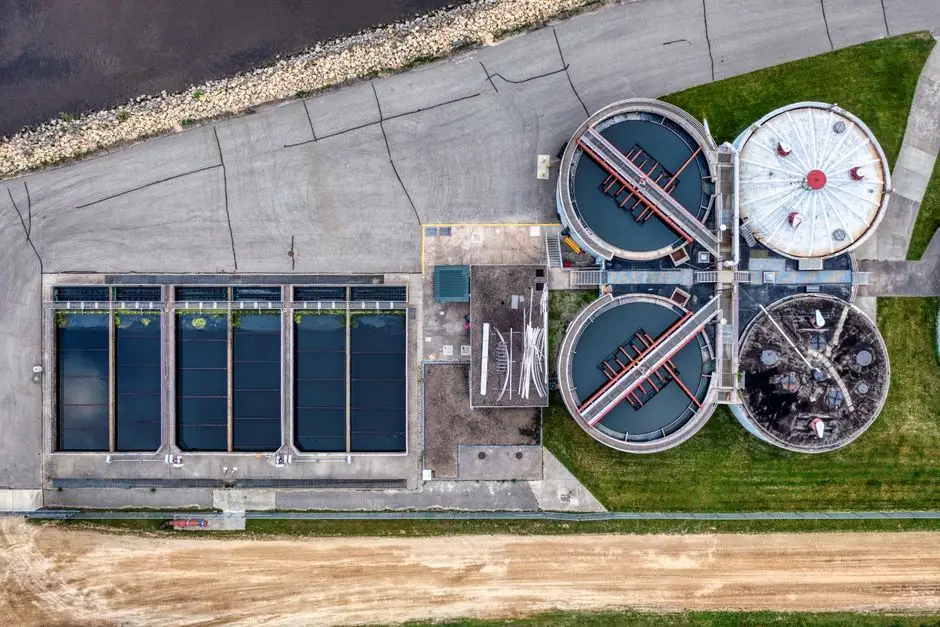
A gravity clarifier relies on Stokes-law settling, so particles with high specific gravity — heavy mineral fines — drop quickly while low-specific-gravity oils, emulsions, and unflocculated colloids tend to escape over the weir. Lamella clarifiers add inclined plates that shorten the effective settling distance, which raises the surface loading rate and shrinks the footprint versus a conventional circular or rectangular basin. The trade-off is mechanical, not chemical: a lamella does not create buoyancy, it just gives heavy particles less distance to fall. A gravity clarifier generally needs less operator chemistry skill than a DAF because it does not require a pressurized saturation loop, but it struggles when the influent carries a meaningful FOG or light-colloid fraction — the very fraction that appears in many Bay Minette mining and metals plants from hydraulic fluid leaks, cutting oils, and lubricant drips. In flows with high TSS but very little oil, a lamella clarifier is often the lowest-cost first stage; the HydropureWater lamella clarifier is a representative high-efficiency sedimentation design. The corollary is that a clarifier alone rarely hits a sub-50 mg/L TSS ceiling when light solids and oil are present, which is why a polishing step is so common downstream.
DAF vs Clarifier: 2026 Decision Matrix for Bay Minette Plants
Side-by-side, the two technologies optimize for different particle populations. A DAF is purpose-built for FOG and light suspended solids, and integrates floc conditioning, skimming, and settled-sludge augering in a single skid; a lamella clarifier is purpose-built for heavy, fast-settling mineral fines and is mechanically simpler but needs separate floc conditioning and sludge handling. Neither technology alone is optimal when both populations are present in the same waste stream — which is the normal case for a Bay Minette ore-washing-plus-machining plant. The matrix below organizes the criteria a plant manager actually weighs, drawn from the SigmaDAF/Clearwater DAF product literature (Clearwater Industries, 2026-04) and the lamella clarifier product line.
| Criterion | DAF (e.g., FPAC / FPBC / COMPACT) | Lamella / Gravity Clarifier |
|---|---|---|
| Primary mechanism | Micro-bubble flotation (30-50 µm bubbles) + skimmer + bottom auger | Gravity settling on inclined plates; sludge recirculation + flocculation |
| Best-fit particle population | FOG, light suspended solids, low-specific-gravity floc | High-specific-gravity mineral fines, fast-settling solids |
| Footprint / packaging | Skidded; ≤66 GPM single skid, >66 GPM modular two-skid | Compact inclined-plate basin; small footprint vs. conventional clarifier |
| Chemistry requirement | Hard prerequisite: coagulant + flocculant + pH control, 15-45 s flash mix in floc tubes or impeller tanks | Wider chemistry window; flocculant still helps on fine fractions |
| Standard materials | 304SS standard; 316SS or polypropylene available on request | Material selection available for corrosive service |
| Sludge streams produced | Two: floated scum (skimmer) and settled sludge (auger) | One underflow stream — typically easier to feed to a filter press |
| Startup water requirement | Clean water required to fill the saturation loop at startup | No clean-water commissioning requirement |
| Operator skill | Higher — PLC, chemistry, skimmer speed, sludge discharge | Lower — primarily sludge pump and chemistry tuning |
Reference models for the DAF column above are the FPAC (low-profile, very high solids), FPBC (high-profile, lamella plate pack, low-to-medium solids), and COMPACT DAF (turnkey, ≤66 GPM single skid), all from SigmaDAF/Clearwater (Clearwater Industries, 2026-04).
When to Choose DAF, When to Choose a Clarifier, and When to Combine Them
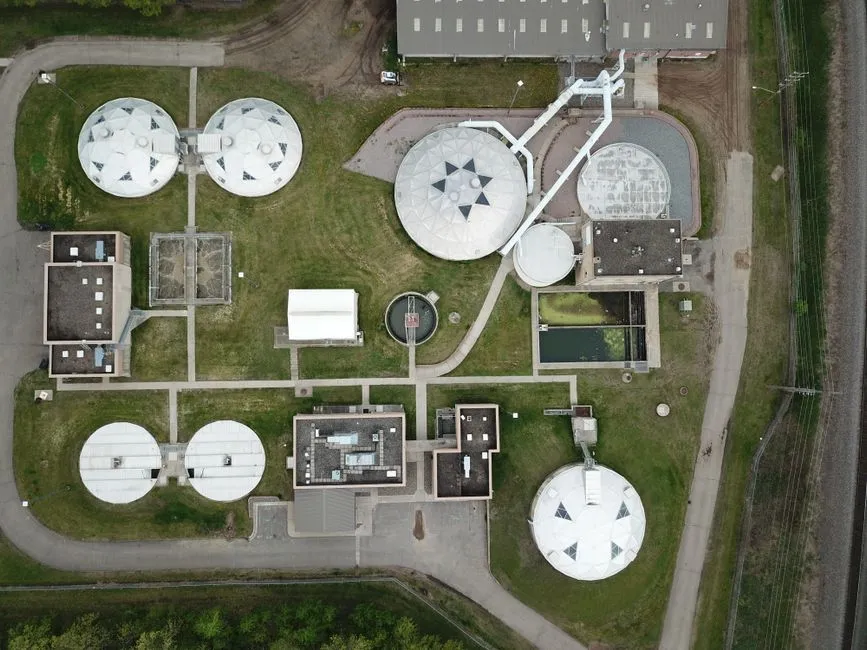
The 2026 decision rule for a Bay Minette plant is driven by which particle population dominates the influent, what the FOG fraction looks like, and what the 40 CFR Part 437 subcategory plus MAWSS local limits actually require — confirm those current limits before specifying. Choose a DAF when FOG and light colloids dominate, when the target is sub-30-50 mg/L TSS on a continuous basis, or when a downstream membrane bioreactor or media filter cannot tolerate oil fouling — this is the common path for fabricated metals, finishing, and lube-bearing streams (Clearwater Industries, 2026-04). Choose a lamella clarifier when the influent is dominated by heavy, fast-settling mineral fines with little oil, when on-site chemistry is limited, or when the lowest OPEX is the priority and the TSS target allows a higher effluent concentration. Choose both — clarifier upstream, DAF polish — when the plant has heavy mineral TSS and lubricant FOG in the same waste stream, which is the configuration most Bay Minette mining and metals plants with ore washing plus machining under one roof should evaluate for 2026. The clarifier takes out the heavy mineral load cheaply, the DAF polishes the light solids and oil to the discharge envelope, and the combined underflow plus float can be routed to a single sludge dewatering filter press. For a worked example of the same combined-train logic in a different US jurisdiction, see the DAF or clarifier for fabricated metals wastewater in East Hempfield, PA buyer guide, and for operator-side tuning once the unit is in service, the DAF pressure flotation troubleshooting guide is the practical companion. The Davisburg mining DAF-vs-clarifier guide and the Shidler OK mining DAF-vs-clarifier 2026 guide cover the same selection logic in other mining geographies.
2026 Sizing and Compliance Inputs to Send a Supplier
Send the following four blocks of information with any quote request so a supplier can return a sized, comparable proposal for a DAF, a lamella clarifier, or a combined system. The buyer must obtain the actual current values from their pretreatment coordinator and lab — the supplier cannot responsibly size the unit without them. Influent characterization: hourly and peak flow in GPM (or m³/h), TSS, FOG, pH, temperature, plus a metals scan for any species regulated under 40 CFR Part 437 for the ore subcategory being processed. Effluent targets: the 40 CFR Part 437 subcategory limits applicable to the ore being processed, plus any local MAWSS commercial/industrial discharge limits, both at the values current in 2026 — confirm exact analytes and current limits with your pretreatment coordinator. Site constraints: available footprint, indoor versus outdoor installation, ambient temperature range (matters for DAF saturation efficiency), power supply, clean water source for DAF startup, and downstream sludge handling — typically a sludge dewatering filter press fed by an automatic chemical dosing system for polymer conditioning. Reference models for the quote: for DAF sizing, the SigmaDAF/Clearwater FPAC (low-profile, very high solids), FPBC (high-profile, lamella, low-to-medium solids), and COMPACT DAF (turnkey, ≤66 GPM single skid) are the three reference platforms to ask the supplier to price against (Clearwater Industries, 2026-04). With those four blocks in hand, a Bay Minette plant manager can compare DAF, clarifier, and combined-train quotes on the same basis.
Frequently Asked Questions
What 2026 budget range should a Bay Minette mining or metals plant expect for a DAF versus a gravity clarifier?
Pricing varies with flow rate, material of construction (304SS vs 316SS vs polypropylene), and whether the unit is a packaged COMPACT DAF skid or a custom-built FPAC/FPBC system, so there is no defensible single 2026 price without a sized spec. The actionable check is to request two itemized quotes — one for a SigmaDAF/Clearwater COMPACT DAF sized to your peak GPM, and one for a lamella clarifier of the same flow — and compare them on a 20-year lifecycle basis that includes polymer consumption, sludge hauling, and any 316SS upgrade for corrosive service. Ask each supplier to price the same downstream sludge dewatering train so the comparison is apples-to-apples.
How do I pick the right DAF or clarifier supplier for a 40 CFR Part 437 / MAWSS project in 2026?
The actionable check is to require the supplier to demonstrate prior delivery of the specific reference model being quoted — FPAC, FPBC, FPHF, or COMPACT DAF from SigmaDAF/Clearwater, or an equivalent lamella clarifier — to a mining or metals site with comparable TSS, FOG, and metals loading. Ask for the most recent reference installation date, the influent and effluent data from that site, and confirmation that the proposed material (304SS, 316SS, or polypropylene) is appropriate for your specific conductance and chloride profile. A supplier who cannot produce that evidence for the exact model and material should be cut from the bid list.
Can a single DAF or clarifier hit my 40 CFR Part 437 TSS and FOG limits on its own in 2026?
A DAF can hit sub-30-50 mg/L TSS and most FOG envelopes when the influent FOG fraction is the dominant load and the heavy-mineral fraction is small (Clearwater Industries, 2026-04). A lamella clarifier can hit comparable TSS numbers when the influent is dominated by fast-settling heavy mineral fines with little oil. When both populations are present — the typical Bay Minette ore-washing-plus-machining case — a single unit rarely hits both the TSS and FOG limits simultaneously, and a clarifier-upstream-of-DAF train is the configuration most plants should evaluate. Confirm the exact 2026 40 CFR Part 437 subcategory numbers and the current MAWSS local limits with your pretreatment coordinator before committing to a single-unit design.
What is the 2026 lead time and delivery picture for a DAF or lamella clarifier in the southeastern US?
Packaged units such as the COMPACT DAF (≤66 GPM, single skid) typically have shorter engineering-to-delivery cycles than custom FPAC, FPBC, or FPHF builds because the platform is pre-engineered. Lead times for custom DAF tanks in 316SS or polypropylene, and for large lamella clarifier packages, depend on fabrication shop load at the time of order. The actionable check is to request a written ship-date commitment tied to PO receipt and to ask the supplier to identify the fabrication location and the trucking route into Baldwin County, AL, so you can plan installation around your outage window.