What changes for a Davisburg metals or mining plant in 2026
Davisburg sits in Oakland County, Michigan, within the service area of the Walled Lake–Novi WWTP, and any primary clarifier specified in 2026 must be sized to that receiving authority's current pretreatment limits. Confirm the exact numeric oil & grease, TSS, pH, and individual-metal limits with the authority before locking in equipment; do not assume historical values still apply, and do not treat "typical sewer authority limits" as a substitute for the actual local envelope.
Mining and metals streams in this region split into two practical fractions. Floating emulsified oils, lubricants, cutting fluids, and FOG favour dissolved air flotation. Heavy, fast-settling mineral fines — iron oxide, silica dust, scale, and metal hydroxide precipitates from pH adjustment — favour a lamella/inclined-plate sedimentation clarifier. Coarse screening, pH control, and chemical conditioning always sit upstream of the primary clarifier; whichever unit you choose is rarely the only treatment step on the train.
Both technologies are mature. Sigmadaf Clarifiers, in a joint venture with Clearwater Industries for North America, has completed more than 800 projects across 25+ countries since 1994 (Clearwater/Sigmadaf, 2026-04-27), so the 2026 question is not which technology is newer, but which one fits the dominant solids fraction and the local discharge envelope. For a head-to-head view beyond Davisburg, see the parallel DAF vs clarifier for mining wastewater in Ashcamp factory guide.
How a DAF clarifier works for metals and mining streams
A dissolved air flotation clarifier clarifies wastewater by attaching micro-bubbles to flocculated particles and lifting them to the surface, where a skimmer removes the float. Clearwater/Sigmadaf specify micro-bubbles 30–50 microns in diameter (Clearwater/Sigmadaf, 2026-04-27; Clearwater, 2026), and heavier particles that do not attach settle and are removed by an auger at the bottom of the tank. That dual-removal behaviour is what makes DAF tolerant of the mixed solids load typical of a metals or light-mineral stream.
Construction is 304 stainless steel as the standard, with 316SS and polypropylene available for corrosive or high-chloride mining streams (Clearwater/Sigmadaf, 2026-04-27). Kemco describes DAF as one stage in a train that also includes coarse filtration, pH control, and downstream sludge dewatering by filter press (Kemco, undated), and the same logic applies to mining and metals streams: the DAF is the primary clarifier, not a standalone treatment plant.
Chemical conditioning precedes the DAF. Coagulant and pH adjustment are dosed first, then polymer flocculant, and the mixing is done either in serpentine flocculator tubes with a 15–45 second flash mix and dedicated dosing points for each chemical, or in chemical mix tanks with impeller agitators when longer contact time is required (Clearwater, 2026). For metals precipitation, the chemistry — pH setpoint, hydroxide versus sulfide precipitation, and the order of addition — must be designed before the DAF, not after, because the floc characteristics drive both bubble attachment and downstream sludge handling. An automatic chemical dosing system ahead of the DAF keeps the precipitation pH inside the band the OEM sized for.
For influents dominated by emulsified oils, FOG, and light TSS, the DAF clarifier systems for mining and metals streams offered in FPAC, FPBC, FPHF, and COMPACT configurations cover small-to-very-large flow rates from a single 66 GPM skid upward (Clearwater/Sigmadaf, 2026-04-27; Clearwater, 2026).
How a lamella clarifier works for settleable mining solids
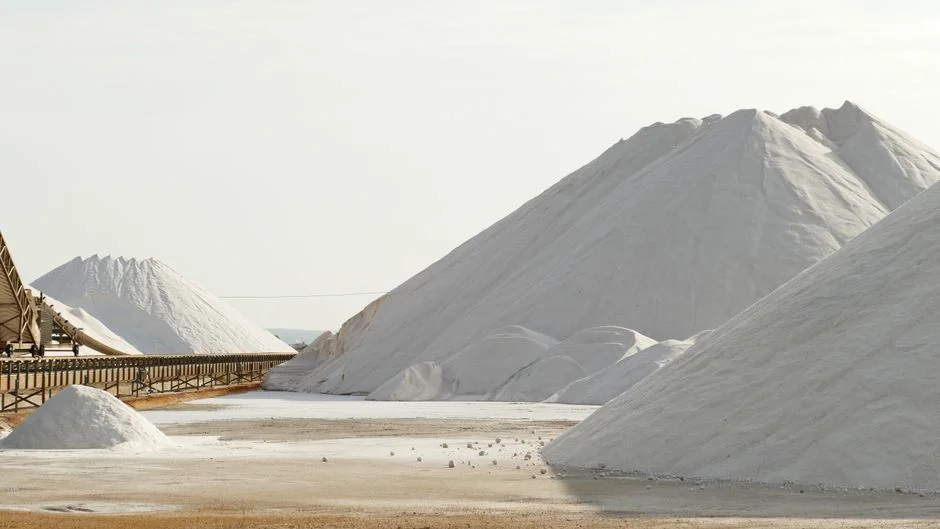
A lamella clarifier — also called an inclined-plate settler — uses a stack of plates set at 55–60° to shorten the effective settling distance. A particle that would otherwise have to fall through the full depth of a tank only has to travel to the nearest plate surface; once there, it slides down into a sludge hopper. That geometry allows a lamella clarifier to handle heavy mineral fines in a footprint that is a fraction of an equivalent circular clarifier.
It is a largely passive device. There is no saturation tank, no recycle pump, and no skimmer; the moving parts are limited to the sludge scraper or underflow pump and, in some designs, an occasional plate-wash system. This design translates to lower energy use and fewer operator interventions than a DAF.
Lamella clarifiers perform best on streams where the target contaminant has a specific gravity noticeably higher than water: mineral fines, metal hydroxide precipitates, sand, and scale — exactly the heavy fraction in a Davisburg mining or metal-finishing stream. They are not a good fit for emulsified oils, FOG, or light suspended solids, which do not settle reliably even on inclined plates.
Sizing is by surface loading rate (m³/m²·h) and plate spacing, and both of these are inputs the OEM must supply for your specific influent. The engineering values for your design should be requested from the supplier as part of the bid package rather than assumed. A typical lamella clarifier for settleable mining fines is a configured package; the OEM's process engineer sets the surface loading and plate geometry for your solids.
DAF vs lamella clarifier: side-by-side for metals and mining
The table below scores the two technologies against the criteria that drive a 2026 specification in a Davisburg metals or mining plant. Use it to assign a numeric or categorical value against each criterion for your specific influent.
| Criterion | Dissolved Air Flotation (DAF) | Lamella / Inclined-Plate Clarifier |
|---|---|---|
| Best-fit influent | Emulsified oils, FOG, cutting fluids, light TSS (Clearwater/Sigmadaf, 2026-04-27; Kemco) | Heavy mineral fines, metal hydroxide precipitates, sand, scale |
| Flow envelope | FPAC, FPBC, FPHF, and COMPACT models; single skid up to 66 GPM, modular two-skid above 66 GPM (Clearwater/Sigmadaf, 2026-04-27; Clearwater, 2026) | Sized by plate area and tank footprint; scales with footprint |
| Solids handling | Float sludge is typically thin and voluminous; downstream dewatering by filter press is standard (Kemco) | Underflow sludge is already thickened and easier to handle |
| Chemical dependency | Coagulant + pH adjust + polymer flocculant, dosed in floc tubes (15–45 s flash) or mix tanks (Clearwater, 2026) | Often runs on pH adjustment alone for simple metal hydroxide precipitates |
| Footprint and energy | Saturation tank, recycle pump, skimmer — more equipment and more kW | Largely passive; lower energy use |
| Standard construction | 304SS standard, 316SS and polypropylene for corrosives (Clearwater/Sigmadaf, 2026-04-27) | PP, FRP, or 304/316SS — material is application-specific |
| PLC integration | COMPACT DAF includes PLC for chemical dosing, skimmer speed, sludge discharge (Clearwater/Sigmadaf, 2026-04-27; Clearwater, 2026) | Confirm control scope with supplier; not all lamella units ship with full PLC |
For a process engineer, the table reduces to a single question: which fraction dominates the influent? If the floatable fraction dominates, DAF wins; if the settleable fraction dominates, lamella wins; if both fractions are present, a hybrid train is required.
Which one should a Davisburg factory choose in 2026
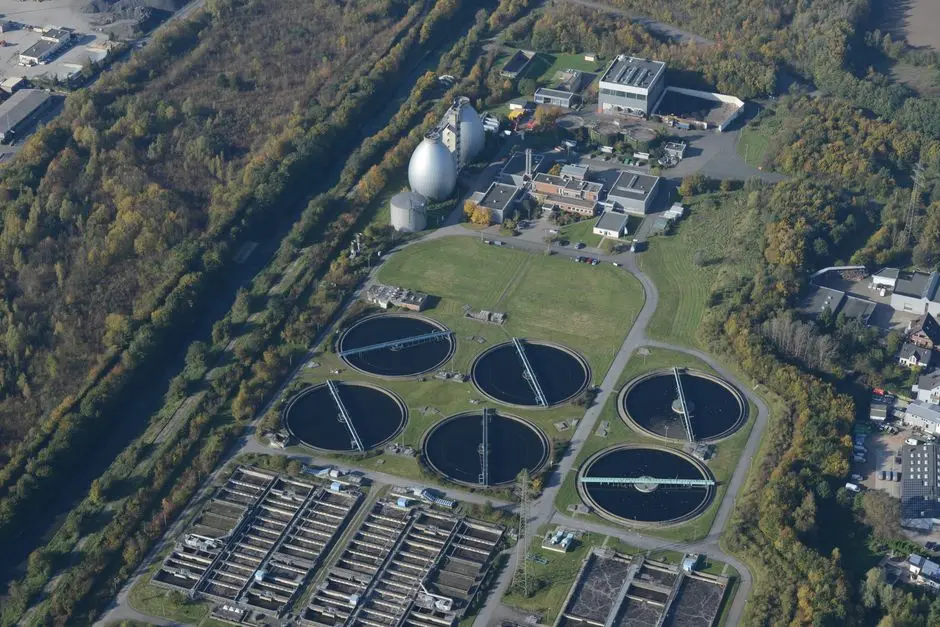
Choose a DAF clarifier if your stream carries emulsified oils, lubricants, cutting fluids, FOG, or light TSS. The micro-bubble float step makes these streams treatable in a compact footprint, and Clearwater/Sigmadaf document the 30–50 micron micro-bubble mechanism that drives that separation (Clearwater/Sigmadaf, 2026-04-27; Clearwater, 2026). A COMPACT DAF skid is the right starting point for flows at or below 66 GPM; the modular two-skid design handles flows above that threshold.
Choose a lamella clarifier if your stream is dominated by heavy mineral fines — iron, silica, scale, metal hydroxide precipitates — and you want a passive, low-energy primary clarifier. In that case, your engineering effort should go into confirming the surface loading rate, plate spacing, and plate angle with the OEM, as those variables determine whether the unit settles your fines inside the available footprint.
Many Davisburg metals and mining plants need both, in series. The right primary train is lamella (or a coarse-screening step) first to drop the heavy settleables, then DAF for the emulsified oils and fine floatables. Request this hybrid configuration from your OEM rather than specifying either unit alone, as specifying only the DAF forces it to handle settleables it was not designed for, and specifying only the lamella forces it to handle floatables it cannot remove.
Before sizing either unit, confirm the Walled Lake–Novi WWTP 2026 pretreatment limits for oil & grease, TSS, and individual metals with the authority. The binding limit on a metals or mining stream is usually one of the metals — copper, nickel, zinc, lead — and the chemistry to hit that limit is designed upstream of either clarifier. See the parallel guide on DAF vs clarifier for fabricated metals wastewater in Canton for a neighbouring-Oakland-County comparison.
Sizing and supplier-selection inputs to request in 2026
Take the following checklist into every OEM meeting to ensure you receive a defensible 2026 specification.
- Provide 24-hour composite influent data: design flow (m³/h), TSS, FOG or oil & grease, pH range, temperature, and the individual metal concentrations relevant to your stream.
- From the DAF supplier, request: micro-bubble size, recycle ratio, hydraulic residence time, skimmer speed range, expected float-sludge solids %, and material of construction (304SS / 316SS / PP per Clearwater/Sigmadaf, 2026-04-27).
- From the lamella clarifier supplier, request: surface loading rate at design flow (m³/m²·h), plate spacing, plate angle, expected underflow sludge concentration, and footprint including the sludge hopper.
- Confirm PLC scope on both units. The COMPACT DAF includes a PLC screen for chemical dosing, skimmer speed, and sludge discharge (Clearwater/Sigmadaf, 2026-04-27; Clearwater, 2026); verify the lamella bid includes the same level of control integration if you choose that route.
- Ask for a 2026 jar-test or pilot report on a stream chemically similar to yours, not just generic reference lists. Kemco emphasises on-site testing as the basis for system design (Kemco).
- Confirm upstream and downstream interfaces: coarse screening ahead of the primary clarifier, automatic chemical dosing, and sludge dewatering downstream.
A supplier that cannot or will not provide bubble size, recycle ratio, surface loading rate, and plate geometry in writing is not ready to be specified.
Frequently Asked Questions
Is a DAF or a clarifier cheaper for a Davisburg metals plant in 2026?
<Frequently Asked Questions
For a Davisburg metals or mining plant in 2026, should I choose a DAF or a lamella clarifier as the primary clarifier?
The choice depends on the specific gravity and density of your suspended solids. A DAF (Dissolved Air Flotation) system is superior for mining wastewater containing oil, grease, or low-density particles that naturally float, typically achieving removal efficiencies of 85-95% for these contaminants. In contrast, a lamella clarifier is optimized for heavy, inorganic mineral tailings and metal precipitates that exhibit a specific gravity significantly greater than 1.0, allowing for efficient gravity-based settling in a compact footprint.
If your Davisburg facility processes high-volume, high-density metal fines, a lamella clarifier is generally more energy-efficient, as it lacks the complex air-saturation pumps required by DAF units. However, if your wastewater stream contains emulsified oils or light polymers from processing chemicals, a DAF is necessary to achieve the buoyancy required for effective separation.
How much does a DAF system cost for a small-to-medium Davisburg factory in 2026, and what drives the price?
For a small-to-medium mining operation in 2026, a turnkey DAF system typically ranges from $85,000 to $220,000, depending on flow capacity and material construction. Prices are primarily driven by the metallurgy of the tank (304 vs. 316L stainless steel for corrosion resistance), the sophistication of the automated sludge scraping mechanism, and the inclusion of integrated chemical dosing skids.
Additional cost drivers include the integration of high-pressure recycle pumps and air-saturation tubes, which must be sized according to the specific chemical oxygen demand (COD) and total suspended solids (TSS) loading of your effluent. Shipping to the Davisburg area and local site-specific rigging requirements also account for 10-15% of the total project expenditure.
What information do I need to give a DAF or clarifier supplier to get an accurate 2026 quote?
To receive an accurate quote, you must provide a certified lab analysis of your wastewater stream, specifically detailing TSS concentrations (mg/L), oil and grease content, pH levels, and the presence of any heavy metals such as lead, copper, or zinc. You must also specify your design flow rate in gallons per minute (GPM) or million gallons per day (MGD), along with the peak hourly flow rate to ensure the equipment is not undersized during surge events.
Furthermore, provide a site layout plan noting the available square footage for the equipment and the proximity to existing utility connections. Providing your current discharge permit limits—specifically those mandated for the Walled Lake–Novi region—is critical for the supplier to determine if additional tertiary polishing stages are required beyond the primary clarification unit.
How long does it take to deliver and install a DAF or lamella clarifier in the US in 2026?
In 2026, lead times for custom-engineered DAF and lamella systems range from 16 to 24 weeks from the date of approved submittals. This timeframe accounts for the procurement of specialized stainless steel alloys and the fabrication of internal plate packs or saturation modules. Standard modular units may be available in as little as 10 weeks if currently held in domestic inventory.
Installation and commissioning typically require an additional 2 to 4 weeks on-site. This includes mechanical setting, piping integration, electrical wiring for control panels, and the mandatory 3-to-5-day performance testing period to ensure the system meets local discharge requirements before full-scale operation begins.
Will a DAF or a lamella clarifier on its own meet the 2026 Walled Lake–Novi WWTP discharge limits for metals and oil & grease?
Neither a DAF nor a lamella clarifier is typically sufficient on its own to meet stringent municipal discharge limits if the metals are in a dissolved state. These units are physical separation devices designed to remove settleable or floatable solids; they cannot remove dissolved metal ions, which require chemical precipitation, pH adjustment, or flocculation/coagulation pretreatment steps before entering the clarifier.
To comply with Walled Lake–Novi WWTP standards, you will likely need an integrated system consisting of a reaction tank for pH correction and polymer injection, followed by your primary clarifier. If your effluent contains high levels of dissolved metals or complex emulsions, a secondary polishing stage, such as an organoclay filter or media filtration, is often required to reach the low parts-per-billion (ppb) concentrations mandated by current environmental regulations.