What cooling and blowdown streams does a Ghaziabad data centre actually produce?
A Ghaziabad data centre in 2026 typically operates on closed-loop direct-to-chip or chilled-water cooling, not US-style evaporative systems, so the wastewater design must be sized for two distinct streams, not one large evaporative blowdown. The first is the small blowdown from any hybrid cooling towers, adiabatic coolers, humidification, and chiller side-stream filtration. The second is domestic and grey wastewater from the campus (toilets, pantry, RO reject from drinking-water dispensers), which is lower-strength but must be handled separately under the 2025 Indian bulk-user reuse rules.
Most Indian data centres built in the last decade have deliberately avoided water-intensive evaporative cooling, so commissioning volumes run 3,000–10,000 L per MW and annual top-up is 100–1,000 L per MW per year for leak and maintenance makeup, not the 3–5 million gallons per MW per year of US evaporative systems (Sify via LinkedIn, 2025-12). Closed-loop direct-to-chip systems recirculate more than 95% of their coolant, with only maintenance and leak losses leaving the loop (Schneider Electric, 2026-09-29). For similar Indian context, see the data-centre cooling blowdown treatment in Meerut engineering guide.
Where hybrid or adiabatic cooling towers are still deployed, blowdown is roughly 25–30% of makeup water at 4 cycles of concentration, with TDS in the 1,200–6,000 mg/L range and suspended solids typically 10–50 mg/L (Genesis Water Tech). That blowdown is a concentrated brackish stream with calcium, magnesium, silica, alkalinity, and accumulated treatment chemicals, not a dilute stream, and the design must respect that.
Blowdown chemistry: why Ghaziabad source water changes the design
Blowdown concentrates makeup-water dissolved solids 4–8×, so the contaminants that dominate scaling and fouling are calcium, magnesium, silica, alkalinity, biocides, corrosion and scale inhibitors, and biofilm fragments shed from the cooling system (Genesis Water Tech). The right influent data to collect before any vendor sizing is therefore the makeup-water TDS, hardness as CaCO₃, silica, chloride, and sulphate, plus the residual concentrations of any treatment chemicals carried over.
Conventional brackish-water reverse osmosis on this stream plateaus at 75–80% recovery, because silica, calcium carbonate, and calcium sulfate reach scaling limits; pushing higher with extra stages only adds booster pumps and recirculation loops without solving the chemistry (IDE Tech). High-recovery closed-loop designs address this by controlled salt precipitation in a fluidized bed, removing sparingly soluble salts as dense pellets so the downstream RO can run at around 95% overall recovery with about 1 mg/L silica in permeate (IDE Tech). The mechanical principle is sound, but the operating point must be calibrated to actual Ghaziabad source-water chemistry, not assumed averages.
The article cannot quote a Ghaziabad-specific TDS or hardness number because no source in the research provides it; the engineer must request the latest UP groundwater analysis from Jal Nigam and confirm any treated-sewage supply from Ghaziabad Nagar Nigam before sizing. Legacy cooling-water chemistry also matters: chromate and high-phosphate programs can disqualify blowdown from reuse or discharge and force segregation as a hazardous stream (Genesis Water Tech), so a site audit of existing chemical inventory is non-negotiable before committing to a train.
Indian and UP regulatory frame a Ghaziabad data centre must satisfy
Every data-centre wastewater system in UP must hold Consent to Establish and Consent to Operate under the Water (Prevention and Control of Pollution) Act, 1974, administered in Uttar Pradesh by the Uttar Pradesh Pollution Control Board (UPPCB). The treatment train and disposal route chosen on paper will be tested against the specific consent conditions UPPCB issues for the Ghaziabad site, not against a generic national template.
The 2025 central rules require bulk users consuming more than 5,000 L/day to increase wastewater treatment and reuse, with a national target of 50% wastewater reuse by 2031 (Schneider Electric citing India Water Portal, 2026). The Bureau of Energy Efficiency's 2023 District Cooling Guidelines separately encourage treated wastewater for cooling-tower makeup where feasible, so the policy direction is converging on treated-sewage or on-site greywater reuse rather than freshwater makeup. State-level data-centre policy is moving in the same direction: Rajasthan's 2025 data centre policy embeds wastewater recycling, zero liquid discharge (ZLD), rainwater harvesting, and groundwater recharge, and AWS has announced treated-sewage use at upcoming India data-centre sites in Mumbai and Hyderabad (Schneider Electric, 2026-08-08).
For a Ghaziabad project, the practical reading is that a 50%-reuse-by-2031 trajectory is a planning constraint, not a target to renegotiate later. Specifying a treatment train that physically cannot deliver that trajectory will create a retrofit obligation once the consent is renewed.
Treatment-train options, from side-stream filtration to full ZLD
The credible unit processes for a Ghaziabad blowdown train, in order from front-end to brine end, are side-stream spiral filtration, ultrafiltration (UF), reverse osmosis (RO), nanofiltration (NF), mechanical vapour compression (MVC), and full ZLD with a crystallizer. Each plays a specific role; the engineer selects based on the chosen end-use strategy, not by stacking everything. A multi-media filter for side-stream cooling-water filtration is the typical first barrier, with a PVDF ultrafiltration system as RO pretreatment ahead of any membrane stage. Chemical conditioning is handled by an automatic antiscalant and biocide dosing skid, and membranes are specified and replaced via spare RO and UF membrane elements.
| Unit process | Operating envelope | Role in the train | Indicative global benchmark (USD) |
|---|---|---|---|
| Self-cleaning side-stream spiral filter (10–25 µm) | 1–5% of circulation flow | Front-end suspended-solids and biofilm control; protects downstream RO/NF | USD 50,000–200,000 capex per installation (Genesis Water Tech) |
| Ultrafiltration (UF), 0.01–0.1 µm PVDF | 10–30 psi, 90–95% recovery, backwash every 1–3 months | RO pretreatment and standalone biological/particulate barrier | Not separately quoted in research; sized by membrane area |
| Reverse osmosis (RO) on blowdown | 150–400 psi, 50–85% recovery, 95–99% dissolved-solids removal, permeate 10–50 mg/L TDS | Core dissolved-solids and hardness cut; permeate reused as cooling-tower makeup | USD 250,000–500,000 installed for a 50,000 GPD system; OPEX USD 1.50–3.00 per 1,000 gallons (Genesis Water Tech) |
| Nanofiltration (NF) | 75–150 psi, 70–85% recovery, permeate TDS 30–50% of feed | Lower-pressure softening when hardness rather than total TDS limits reuse | Not separately quoted in research |
| Mechanical vapour compression (MVC) | 95–98% recovery on RO concentrate, distillate <10 mg/L TDS | Volume reduction of RO concentrate; produces high-purity distillate | USD 1–3 million capex for 10,000–30,000 GPD; 15–25 kWh per 1,000 US gallons (Genesis Water Tech) |
| Full ZLD: RO (70–80%) → MVC (95% of concentrate) → crystallizer | 95–99% overall recovery; solid salt cake as only waste | Eliminate liquid discharge where site is water-scarce or consent forbids discharge | USD 3–8 million capex; OPEX USD 5–15 per 1,000 gallons (Genesis Water Tech) |
| IDE MAXH₂O Desalter (closed-loop high-recovery RO) | ~95% overall recovery, ~1 mg/L silica in permeate | Fluidized-bed precipitation of silica and CaCO₃ onto seed pellets, then RO in closed loop | Not separately quoted in research |
The Indian industrial RO system for cooling-tower blowdown reuse is the workhorse of this train, but the capex and opex numbers in the table are global USD benchmarks and must be re-quoted in INR against current Indian EPC bids, the Ghaziabad grid power tariff in ₹/kWh, and any local civil-cost premium.
Choosing between reuse, discharge, ZLD and treated-sewage makeup
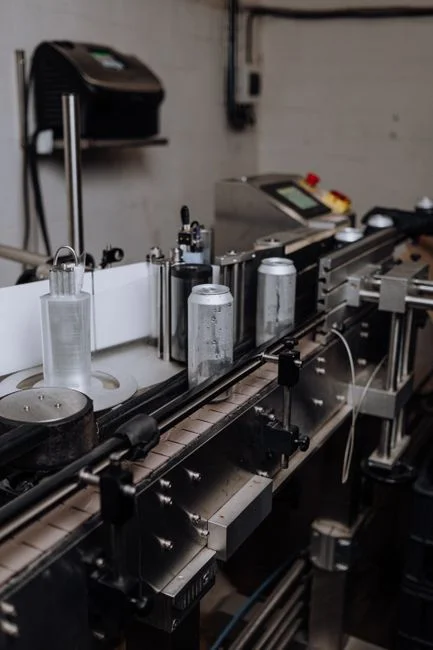
The four credible end-use strategies for a Ghaziabad data centre are cooling-tower makeup reuse, compliant discharge, partial or full ZLD, and treated-sewage (or on-site greywater/rainwater) makeup. The default is reuse, with treated-sewage makeup becoming the policy-preferred option for new Indian hyperscale builds, and ZLD reserved for sites where freshwater is unavailable or discharge is categorically refused.
| End-use strategy | Typical recovery | Key constraints | Where it fits in Ghaziabad |
|---|---|---|---|
| Cooling-tower makeup reuse | 60–85% blowdown recovery (Genesis Water Tech) | RO permeate blended with standard makeup; requires compatible cooling-water chemistry | Default for most data-centre projects |
| Compliant discharge | Not recovery-driven | TDS, metals, biocide residuals against municipal limits; some jurisdictions set TDS <1,500 mg/L, effectively prohibiting direct blowdown discharge (Genesis Water Tech) | Only if UPPCB consent permits and a viable receiving drain exists |
| Partial or full ZLD | 80–90% volume reduction (partial); 95–99% (full) | High capex/opex; full ZLD with crystallizer justified only when freshwater unavailable or discharge refused | Consider only if Ghaziabad groundwater is restricted or consent forbids any liquid discharge |
| Treated municipal sewage (UF → RO → dosing → UV) as cooling-tower makeup | Driven by sewage availability, not blowdown recovery | Sewage quality variability; must be engineered to cooling-tower specs, not assumed potable-equivalent (Schneider Electric, 2026-09-29) | Policy-preferred in India; AWS has announced this approach at upcoming Mumbai and Hyderabad sites (Schneider Electric, 2026-08-08) |
An MBR system for campus sewage and treated-sewage makeup, with chemical-free UV polishing for reuse water, is the credible core of a treated-sewage makeup train and aligns the project with the 2025 bulk-user rules and the BEE 2023 District Cooling Guidelines in a single design move. Underground packaged options like the data-centre cooling blowdown treatment in Meerut reference design show how this is being deployed in similar NCR-adjacent cities.
Decision framework for the Ghaziabad project team
- Step 1 — confirm the cooling architecture first. Closed-loop direct-to-chip or chilled-water systems drastically reduce blowdown volume versus hybrid/evaporative layouts, and the smaller the blowdown the easier the UPPCB consent case (Sify via LinkedIn, 2025-12; Schneider Electric, 2026-09-29).
- Step 2 — collect Ghaziabad-specific source data. Request the latest groundwater TDS, hardness, silica, chloride, and sulphate from Jal Nigam, the local grid power tariff in ₹/kWh, and the availability of treated sewage from Ghaziabad Nagar Nigam. None of these numbers are in the research and none should be invented; they are the gating inputs for any binding vendor quote.
- Step 3 — pick the end-use strategy against the 2025 bulk-user reuse rule and the 50%-reuse-by-2031 target, choosing between RO reuse, partial ZLD, full ZLD, or treated-sewage makeup, and document the rejected options for the consent file.
- Step 4 — size the train from the required cycles of concentration (4–6 typical for hybrid towers), then add UF/RO/MVC stages, then check the RO concentrate disposal route against UPPCB consent limits and the site's freshwater balance.
- Step 5 — integrate cooling-water chemistry with the recovery system. Non-phosphate, low-toxicity programs such as bio-organic flocculants and tablet-based biocides and scale inhibitors reduce membrane fouling and discharge toxicity (Genesis Water Tech), which protects both the RO membranes and the UPPCB consent conditions. An automatic antiscalant and biocide dosing skid, a chlorine dioxide generator for biocide control, and a high-efficiency sedimentation tank for solids pre-removal are the standard chemistry and pre-treatment building blocks of this step.
For engineers benchmarking the Ghaziabad design against comparable Indian projects, the data-centre wastewater and cooling blowdown treatment in Virar guide and the data-centre cooling blowdown treatment in Callao, Peru reference show the same train architecture under different source-water and tariff conditions. The AI in wastewater treatment 2026 outlook piece is a useful sanity check on which parts of the train an AI control layer can realistically optimise versus where deterministic engineering still drives the design.
Frequently asked questions
What does a Ghaziabad data centre wastewater and cooling blowdown treatment train actually cost in 2026?
The only defensible cost data in the research is global USD benchmarks: a 50,000 GPD RO skid at USD 250,000–500,000 installed with OPEX of USD 1.50–3.00 per 1,000 gallons; MVC at USD 1–3 million for 10,000–30,000 GPD; full ZLD at USD 3–8 million capex with OPEX of USD 5–15 per 1,000 gallons (Genesis Water Tech). For a Ghaziabad budget, request INR quotes from at least three Indian EPCs and convert the operating cost into ₹/kL using the actual Ghaziabad Discom tariff in ₹/kWh, not a generic national average.
Which supplier or technology path should we select for a Ghaziabad hyperscale project?
Supplier selection should be driven by three inputs the buyer must obtain locally: the latest Ghaziabad groundwater analysis from Jal Nigam (TDS, hardness, silica, chloride, sulphate), the local grid power tariff in ₹/kWh, and the treated-sewage availability statement from Ghaziabad Nagar Nigam. With those in hand, shortlist vendors on (a) demonstrated reference plants in water-stressed Indian cities, (b) compliance with the BEE 2023 District Cooling Guidelines and UPPCB consent conditions, and (c) guaranteed recovery and membrane life at the Ghaziabad inlet TDS rather than at a generic benchmark.
Is full ZLD required for a Ghaziabad data centre, or can we reuse blowdown as cooling-tower makeup?
ZLD is not a default Indian requirement; it is one end-use strategy among several. Cooling-tower makeup reuse typically achieves 60–85% recovery and is the default for most data-centre projects (Genesis Water Tech), and the 2025 bulk-user reuse rules plus the BEE 2023 District Cooling Guidelines actively push toward treated-sewage or on-site greywater reuse rather than ZLD. Full ZLD is justified only where freshwater is unavailable, or where UPPCB consent categorically refuses liquid discharge; partial ZLD at 80–90% volume reduction is often more economic than full crystallisation in that case (Genesis Water Tech).
What compliance risks should we flag to UPPCB before specifying the train?
The three risks that have to be closed out in the consent application are: the cooling-water chemistry (legacy chromate or high-phosphate programs disqualify blowdown from reuse or discharge, Genesis Water Tech), the concentrate disposal route (RO and MVC concentrates must have a documented receiver under UPPCB consent, not just a drain), and the treated-sewage makeup source (treated water is not automatically fit for cooling and must be engineered to cooling-tower specs, Schneider Electric, 2026-09-29). Each of these is a discrete consent condition; closing them on paper before sizing prevents a forced retrofit at consent renewal.