What Counts as Domestic Sewage Treatment in Algiers in 2026
Domestic sewage treatment in Algiers in 2026 means biological removal of organic load, suspended solids, and pathogens from residential, hotel, hospital, and mixed community flows before discharge or reuse, with design choices shaped by the city's Mediterranean climate, intermittent sewer coverage, and water-stress context. Local research shows that planted vertical subsurface flow constructed wetlands on LECA and sand substrates can remove 85% of total suspended solids from a heavily variable effluent — a relevant benchmark for hybrid or polishing-stage design. In practice, buyers in Algiers select between anoxic/aerobic (A/O) package plants such as the WSZ series (1–80 m³/h, fully automated, buried), MBR membrane bioreactors (10–2,000 m³/day, <1 μm effluent) for reuse-grade output, constructed-wetland polishing, or vermifiltration for decentralised clusters. The right choice depends on flow, footprint, discharge versus reuse target, and operator skill, not on a single universal technology.
For a consulting engineer, a hotel or residential developer, or a municipal contractor in Algiers, the scope here is the combined blackwater and greywater stream from residential blocks, hotels, hospitals, schools, and offices — the same envelope used by the WSZ underground A/O package plant reference design (HydropureWater verified catalog). It is not refinery or heavy-industrial effluent, even though regional research on Algiers-region wastewater — including the Canna indica wetland study (Sustainability doi:10.3390/su14084394) and the El-Kerma/Oran STP work (PubMed 40825918) — informs tertiary-stage design choices that apply to smaller domestic sites.
Before a process is selected, an Algiers buyer must lock in: design flow in m³/day, peak factor, influent BOD/COD/SS ranges, the discharge-versus-reuse target, available footprint, burial versus above-grade preference, and the operator skill level available on site. Each of these inputs cuts the equipment shortlist down before a single datasheet is opened.
Influent Characteristics and Algerian Discharge Context
Domestic sewage in the small-to-medium range covered by packaged biological systems typically arrives at BOD 150–300 mg/L, COD 250–500 mg/L, SS 150–350 mg/L, and NH₃-N 20–40 mg/L — values used as a design starting point, not as a guaranteed site figure. Hotel flows diverge from that envelope: they carry higher fats, oils, and grease (FOG) and lower NH₃, which is why a DAF or grease trap is normally specified upstream of the biological stage; the DAF units on the equipment shortlist are rated 4–300 m³/h, sized to the same envelope as the WSZ package plant at 1–80 m³/h and the MBR at 10–2,000 m³/day (HydropureWater verified catalog). DAF pre-treatment for high-FOG hotel and hospital flows is the practical way to keep FOG from blinding membranes or smothering biofilm.
The Algiers-region research base documents highly variable composition in the effluents that pass through local treatment systems, which is the explicit rationale for studying the robustness of planted CWs (Sustainability doi:10.3390/su14084394). That variability is a sizing signal, not a footnote: equalisation tank volume, peak factor, and buffer before any biological stage should all be set generously, because the same report concludes that Canna indica-planted vertical subsurface flow CWs on LECA and sand still achieved 85% total suspended solids removal against that variation. Without buffering, the biological stage takes the swing.
The discharge-versus-reuse decision is the second axis that shapes the train. Sea outfall, wadi discharge, and on-site reuse for irrigation or toilet flushing each push the design in a different direction: sea and wadi discharge tolerate more relaxed BOD/SS targets, whereas reuse for irrigation or toilet flushing typically requires the <1 μm filtered quality of a submerged PVDF MBR. Specific Algerian discharge parameters are not present in the supplied research and must be obtained locally — current decree texts, municipal Algiers requirements, and any receiving-body limits — before final sizing.
Process Options Compared: A/O Package, MBR, Constructed Wetland, Vermifiltration

No single technology wins every duty in Algiers. The defensible 2026 answer is a process family chosen against flow, footprint, reuse target, and operator skill, then matched to a packaged unit envelope.
The anoxic/aerobic (A/O) package plant combines biological contact oxidation, sedimentation, and disinfection in a single buried unit. The WSZ series runs 1–80 m³/h, is fully automated with no operator required, and is specified for residential communities, hotels, hospitals, factories, and rural areas; it can be installed below grade with landscaping above, or trailer-mounted for mobile deployment (HydropureWater verified catalog). It is the default where land burial is acceptable, the operator pool is thin, and reuse is not the primary driver.
The MBR membrane bioreactor uses submerged PVDF membranes with <1 μm filtration, producing near-reuse-quality effluent in a footprint roughly 60% smaller than conventional activated sludge, across a 10–2,000 m³/day envelope (HydropureWater verified catalog). MBR is the right answer on a tight Algiers site where the buyer wants reuse-grade water for irrigation or toilet flushing and is willing to trade operator simplicity for tighter process control. The WSZ underground A/O package sewage treatment plant is the lower-skill alternative when reuse is not required.
Constructed wetland polishing with planted vertical subsurface flow on LECA and sand removed 85% of total suspended solids from a variable Algiers-region effluent (Sustainability doi:10.3390/su14084394). CWs are best framed as a tertiary or polishing stage, or as the main stage on lower-cost, lower-skill sites where land is available. Vermifiltration — filtration combined with earthworms — is described in the supplied research as efficient, viable, requiring less expertise, and decentralised; it is appropriate for peri-urban clusters and small communities but at lower hydraulic capacity than packaged biological systems (IntechOpen doi:10.5772/intechopen.103920).
| Process | Envelope | Footprint | Effluent quality | Operator skill | Best fit in Algiers |
|---|---|---|---|---|---|
| A/O package (WSZ) | 1–80 m³/h | Buried, small surface footprint | Discharge-grade; can be polishing-staged | Low (fully automated, no operator) | Residential, hotels, hospitals, rural communities |
| MBR (submerged PVDF) | 10–2,000 m³/day | ~60% smaller than CAS | Reuse-grade, <1 μm | Moderate (PLC-controlled) | Reuse-driven sites, tight footprints, hotel/residential |
| Constructed wetland polishing | Site-dependent | High land area | Polishing on already-treated effluent; 85% TSS removed on variable Algiers-region effluent (Sustainability doi:10.3390/su14084394) | Low | Tertiary stage, rural/peri-urban where land is available |
| Vermifiltration | Low hydraulic capacity | Moderate | Lower-strength discharge; not reuse-grade in most cases | Low | Peri-urban clusters, small decentralised communities |
The domestic sewage treatment in Tangier — Boukhalef WWTP process design guide uses the same framework on a neighbouring Maghreb duty and is a useful cross-check on envelope selection.
Sizing for Algiers Residential, Hotel, and Community Duty
Three duties cover the bulk of the small-to-medium domestic STP market in Algiers, and each maps to a different process family.
A 200-room hotel is dominated by kitchen and laundry flows. Peaking factor is high, FOG load is high, and NH₃ is comparatively low. The defensible train is a rotary mechanical bar screen at the headworks, a DAF unit ahead of the biological stage for FOG removal, then either an A/O package plant (1–80 m³/h) for discharge-grade effluent or an MBR membrane bioreactor for reuse-grade effluent when the hotel wants to reuse water for landscape irrigation or toilet flushing. The rotary mechanical bar screen for headworks protection stops rags and fibrous debris from blinding the biological stage on these flows.
A 500-unit residential block produces a steadier organic load with a morning/evening peak. NH₃ is the main nutrient to control, FOG is lower than a hotel, and burial is usually preferred so the developer can landscape over the unit. The WSZ package plant is sized within its 1–80 m³/h envelope, buried, and run as a fully automated, no-operator system; an MBR is the right choice only if the developer has a reuse contract in hand.
A peri-urban cluster with intermittent sewer connection is the decentralised duty. The El-Kerma/Oran STP analysis work and the regional research base both point at the same conclusion: variable influent composition has to be designed for (PubMed 40825918; Sustainability doi:10.3390/su14084394). A buried WSZ package plant, a constructed wetland polishing stage, or a vermifiltration train are all defensible; the choice depends on land availability, the operator pool, and whether reuse is on the table. Buffer volume and flow equalisation must be sized before any biological stage in this duty.
Burial also matters for hotel and high-end residential buyers in Algiers, where above-grade equipment is undesirable; the WSZ underground configuration preserves the surface for car parks, gardens, or hardscape (HydropureWater verified catalog).
Equipment Shortlist: Matching Process to HydropureWater Units
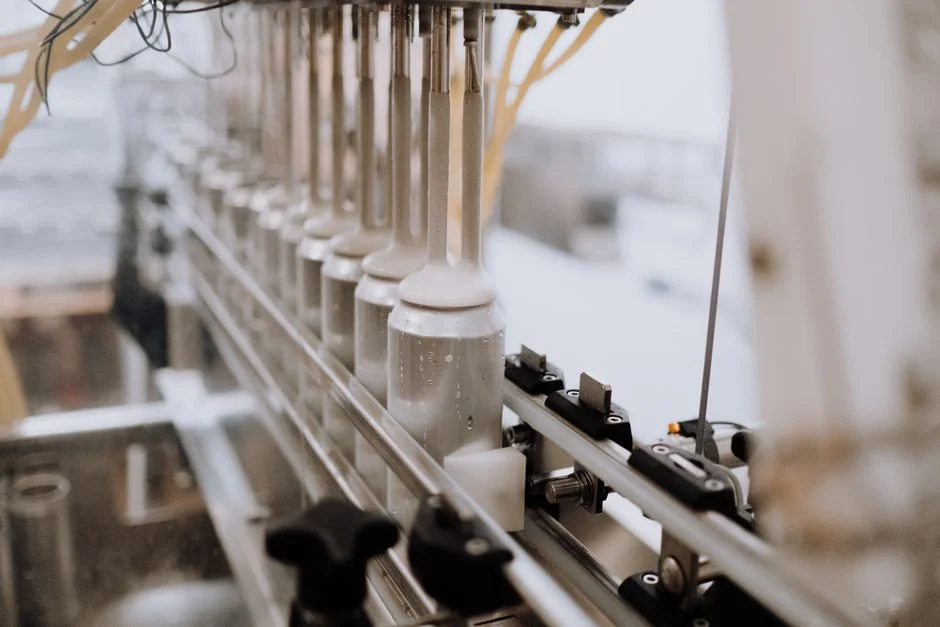
The biological decision maps to a specific equipment shortlist that an engineer or developer in Algiers can quote against.
- Primary biological unit: WSZ underground A/O package plant for residential and hotel duty; MBR membrane bioreactor for reuse-grade effluent and tight footprints (HydropureWater verified catalog).
- Headworks protection: rotary mechanical bar screen (GX series) to remove rags, plastics, and fibrous debris that would otherwise blind the biological stage.
- Pre-treatment for high-FOG flows: DAF system rated 4–300 m³/h for suspended solids, FOG, oil and grease on hotel and hospital food-service streams.
- Disinfection: chlorine dioxide generator in EU Drinking Water Directive 98/83/EC and WHO-aligned configurations, or UV-C steriliser for chemical-free disinfection where chlorine-resistant organisms such as Cryptosporidium and Giardia are a concern.
- Sludge line: plate and frame filter press for sludge dewatering paired with an automatic chemical dosing system for conditioning, sized to the biological stage's waste activated sludge.
| Process stage | Equipment | Capacity envelope | Why it matters in Algiers |
|---|---|---|---|
| Headworks | Rotary mechanical bar screen (GX series) | Site-specific | Protects downstream biology from rags and plastics |
| FOG / SS pre-treatment | DAF system | 4–300 m³/h | Hotel and hospital food-service flows; protects membranes |
| Biological | WSZ A/O package plant | 1–80 m³/h | Buried, fully automated, no operator; residential/hotel default |
| Biological (reuse) | MBR membrane bioreactor (submerged PVDF) | 10–2,000 m³/day | <1 μm effluent for irrigation/toilet flushing on tight sites |
| Disinfection | ClO₂ generator / UV-C steriliser | Site-specific | Matches reuse vs discharge target |
| Sludge | Plate and frame filter press + chemical dosing | Site-specific | Dewaters waste activated sludge for off-site disposal |
Cross-references that support the same envelope logic appear in the domestic sewage treatment in Agadir — M'zar plant design and stages guide and the packaged sewage treatment plant for housing developments article for housing-association duties elsewhere.
Buyer's Checklist for 2026: Cost, Compliance, and Supplier Risk in Algiers
Compliance: confirm the local Algerian discharge parameters the project must meet, the receiving body (sea, wadi, irrigation), and whether reuse targets apply. Specific numerical limits are not present in the supplied research and must be obtained from the current decree and the receiving municipality before any sizing is frozen.
Cost inputs to request from suppliers in 2026: package price, civil works, shipping to Algiers, installation, commissioning, and a 5-year spares quote. These are the line items a buyer must request — not assumed ranges — because the supplied research does not contain pricing data.
Supplier risk: verify manufacturer track record on similar domestic projects, availability of membrane and consumable spares, after-sales response in Algeria, and whether the PLC control system supports remote monitoring. The WSZ "fully automated, no operator" and MBR "fully automated PLC-controlled" specs are contractually testable on this point (HydropureWater verified catalog).
Reuse and discharge proof: ask for documented removal rates and reference plants of similar duty. The 85% total suspended solids removal figure from the Algiers-region planted CW study (Sustainability doi:10.3390/su14084394) is a defensible benchmark for the polishing stage and a useful pass/fail line in a supplier's reference plant data.
Frequently Asked Questions
What is the right STP process for a 200-room hotel in Algiers in 2026?
For a 200-room hotel with high FOG and a peaking flow, specify a rotary mechanical bar screen at the headworks, a DAF unit for FOG removal, and either a buried WSZ A/O package plant (1–80 m³/h) for discharge or an MBR (10–2,000 m³/day) for reuse-grade effluent. The MBR is the right answer when reuse for irrigation or toilet flushing is contracted; otherwise the WSZ keeps the operator pool to zero (HydropureWater verified catalog).
How much does a domestic STP cost in Algiers in 2026?
Cost depends on flow envelope, discharge versus reuse target, civil works, shipping, and commissioning. The supplied research does not contain pricing, so request a written quote that itemises the package, civil works, shipping to Algiers, installation, commissioning, and a 5-year spares list before comparing suppliers.
What should I check before choosing an STP supplier in Algeria?
Check the manufacturer's track record on similar domestic projects, membrane and consumable spares availability, after-sales response time in Algeria, and whether the PLC supports remote monitoring. The "fully automated" specification on both the WSZ and MBR units is contractually testable and should be tied to a service-level agreement (HydropureWater verified catalog).
Can constructed wetlands be used as the main treatment stage in Algiers?
Yes for lower-strength, lower-flow, land-available sites, where the research base supports a robustness case: planted vertical subsurface flow CWs with Canna indica on LECA and sand removed 85% of total suspended solids from a highly variable Algiers-region effluent (Sustainability doi:10.3390/su14084394). For reuse-grade output on a tight site, use MBR; for discharge-grade on a buried site, use WSZ. Vermifiltration is the decentralised alternative where land and operator skill are constrained (IntechOpen doi:10.5772/intechopen.103920).