Why Chittagong Housing Schemes Need a Packaged STP in 2026
A packaged sewage treatment plant for a Chittagong housing development in 2026 is typically a factory-built, factory-tested unit using MBBR or MBR biology with disinfection, sized at roughly 120–150 litres per person per day of wastewater. For a multi-block residential scheme, this places most developments in the 5–10 KLD apartment band or larger, with FRP construction preferred for the city's coastal salinity and seasonal flooding. Such a plant must meet discharge standards enforced by the Department of Environment under the Environment Conservation Rules, because rivers around Chattogram routinely fall below the Environmental Quality Standard per the DoE's 2023 surface and ground water report.
Bangladesh's Department of Environment enforces discharge standards under the Environment Conservation Act 1995 and the Environment Conservation Rules, with mobile courts issuing fines for non-compliant discharge, as detailed in the DoE Enforcement Guidelines (PureLife 2026 guide). The DoE's Surface and Ground Water Quality Report 2023 found that rivers around Dhaka, Chattogram and Khulna routinely fall below the Environmental Quality Standard, driven heavily by untreated municipal sewage and effluent. New buildings and projects in Bangladesh increasingly require environmental clearance, and apartment density around Chittagong is rising while land for soak pits shrinks. PureLife lists Chattogram among the cities where packaged STPs have moved from optional to necessary in 2026, and a similar logic applies to Australian coastal builds covered in the Brisbane housing STP 2026 guide.
Chittagong-Specific Site Constraints That Drive Plant Selection
Chittagong sits on a coastal floodplain with a high water table, which rules out deep burial of steel tanks without buoyancy protection and pushes designs toward shallow-burial or skid-mounted FRP packages. These environmental factors necessitate specific material and installation choices to ensure long-term structural integrity.
Seasonal monsoon flooding and heavy rainfall require sealed tanks, correct siting above historic flood lines, and overflow protection, points PureLife highlights for Bangladesh installations. Coastal salinity intrusion in groundwater means materials must resist chloride corrosion; FRP is the typical recommendation because of its corrosion-proof properties and 15–20+ year service life with an annual maintenance contract (PureLife 2026). Phased housing developments around Chittagong often need modular capacity that can be added in blocks, favouring skid- or trailer-mounted packaged units such as the WSZ underground integrated STP over cast-in-place concrete plants. A concrete civil tank buried below the monsoon water table is a long-term structural risk in many Chattogram suburbs, which is why factory-built FRP skids dominate the housing segment here.
Packaged STP Technologies Compared for Housing Projects
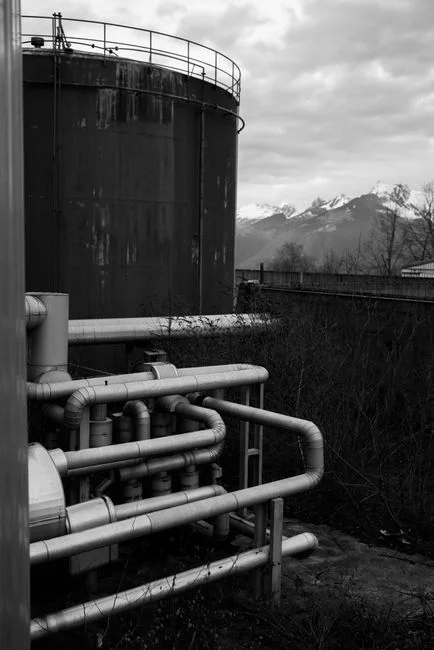
A conventional packaged STP uses primary settling, aerobic activated sludge or MBBR, a clarifier with return activated sludge, and UV or chlorine disinfection (PureLife 2026). Selecting the right technology depends on the desired effluent quality and the available site footprint.
Green Genesis describes a Bangladesh-deployed variant using tube-settler primary tanks delivering around 75% TSS removal and 25–30% BOD removal, feeding a SAFF or FAB aerobic bio-reactor with fine-bubble diffusers that achieves around 60–65% BOD removal, followed by a secondary tube-settler clarifier with return activated sludge to the primary chamber. MBR integrates a submerged PVDF membrane module with activated sludge, delivering near-reuse-quality filtrate at under 1 micrometre in a footprint roughly 60% smaller than a conventional layout of similar capacity, as published in the HydropureWater MBR packaged plant data sheet. WSZ-series A/O contact oxidation packages combine anoxic and aerobic stages with sedimentation and disinfection in a single buried unit, fully automated with no operator required, covering 1–80 m³/h for residential communities, hotels, hospitals and rural areas per the WSZ product data. Reuse potential rises with treatment polish: a packaged STP effluent can be reused for landscaping, washing and toilet flushing, and a downstream RO plant can lift it further where higher-purity reuse is needed (PureLife 2026).
| Parameter | MBBR packaged STP | MBR packaged STP | A/O contact oxidation (WSZ) |
|---|---|---|---|
| Typical BOD removal | ~90–95% in a well-run two-stage MBBR train | Up to ~99% with submerged membrane polish | ~90–95% with anoxic + aerobic stages |
| Effluent TSS | Moderate, depends on clarifier | Very low (membrane-retained) | Moderate, depends on clarifier |
| Footprint vs conventional | Smaller than CAS, larger than MBR | Roughly 60% smaller than CAS of same capacity (HydropureWater MBR data) | Compact single buried unit |
| Reuse suitability | Landscaping, flushing | Near-reuse, polishing RO optional | Landscaping, flushing |
| Operator skill | Low to moderate | Moderate (membrane care) | Low; PLC automated, no operator required (WSZ data) |
| Retrofit / phased fit | Good | Good, modular skids | Good, modular skids |
| Monsoon / flood resilience | Sealed FRP, siting above flood line | Sealed FRP, siting above flood line | Sealed FRP, siting above flood line |
For a Chattogram housing project where land is tight and the receiving Karnaphuli tributary is already stressed, the choice usually comes down to reuse target, footprint budget, and operator capacity. MBBR is the workhorse for BOD removal at the lowest unit cost; MBR is the right answer when the developer wants reuse-grade water or the smallest civil footprint; WSZ A/O contact oxidation suits fully buried, low-operator installations for residential communities in the 1–80 m³/h band.
Sizing a Packaged STP for a Chittagong Housing Development
PureLife's sizing rule is to estimate 120–150 litres of wastewater per person per day, multiply by the number of residents, and add a small buffer (PureLife 2026). Accurate capacity calculation is critical to ensure the plant handles peak loads without sacrificing effluent quality.
PureLife's capacity bands place a single family at roughly 1 KLD, a large villa at 1–2 KLD, and a small apartment building at 5–10 KLD or more. Worked example for a 200-unit Chittagong apartment block at, say, 4.5 residents per unit: 900 residents × up to 150 L/person/day ≈ 135 m³/day, placing the development in the HydropureWater MBR packaged plant range of 10–2,000 m³/day, and well inside the WSZ 1–80 m³/h envelope when run over a 24-hour cycle. A buffer of 20–30% is added for peak evening flows, infiltration during monsoon, and future phased occupancy; final sizing should follow a site assessment, not just population math (PureLife 2026). For mixed-use blocks with commercial frontage, treat the commercial load as a separate inflow and add it after the residential figure rather than blending it into the per-person rate.
DoE Compliance and Reuse Rules for Housing STPs in Bangladesh
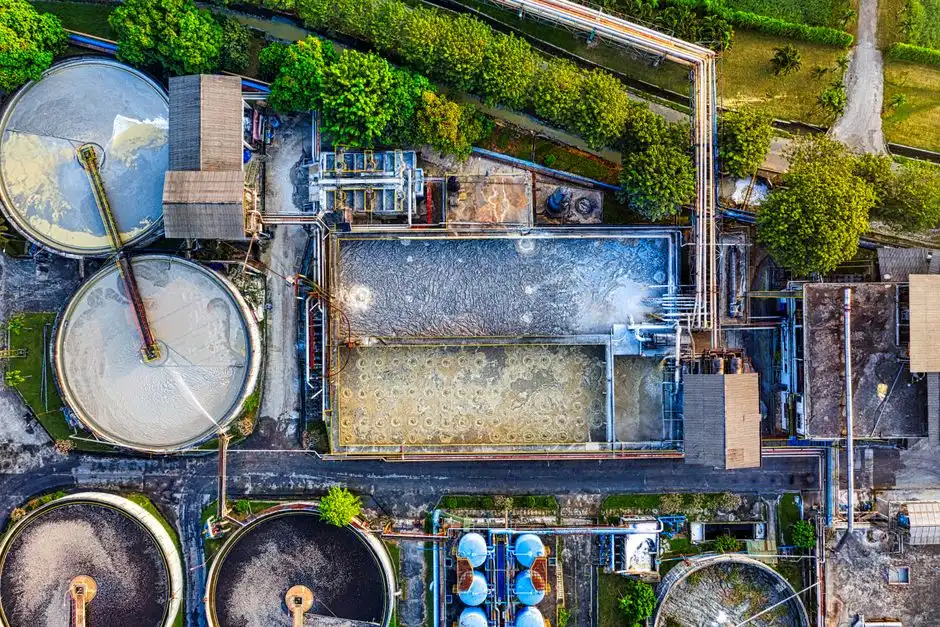
Treated effluent must meet the discharge and Environmental Quality Standards set in the Environment Conservation Rules and enforced by the DoE; current numeric BOD, COD, TSS and pH limits are published in the latest DoE water quality report (PureLife 2026). Understanding these regulatory requirements ensures that the selected treatment train remains compliant over the project's life cycle.
Modern packaged STPs are designed for low power consumption; the main load is the aeration blower, and running costs are typically offset by water-reuse savings. The biological process pauses briefly without power but recovers when electricity returns; the blower can be backed up by a generator for uninterrupted operation. Treated STP water is reused for gardening, landscaping, car washing and toilet flushing, with optional RO polish for higher-grade reuse; for projects near industrial outfalls, the industrial effluent discharge guidelines 2026 article covers the parallel compliance path. For housing developments, the relevant ceiling is the domestic discharge EQS, not the industrial one — a common point of confusion at the design stage.
Choosing a Supplier and Comparing Quotes
Cost depends on capacity in KLD, treatment technology, material (FRP vs concrete), level of automation and site conditions, with a small domestic unit far cheaper than an apartment-scale system; PureLife advises a site-specific quote rather than a published price (PureLife 2026). Evaluating vendors requires looking beyond the initial purchase price to ensure long-term operational viability.
A reputable supplier should provide FRP construction for corrosion resistance, an annual maintenance contract option, spare-parts availability, and documented performance against the DoE's Environmental Quality Standards. The HydropureWater MBR packaged plant and WSZ underground integrated STP ranges are pre-engineered, factory-built, skid- or tank-mounted units with PLC automation, which compresses on-site civil work and shortens installation from weeks to days. Ask vendors for a process flow diagram, an expected effluent quality table (BOD, COD, TSS, faecal coliforms), a power-consumption figure, a footprint drawing, and a maintenance schedule before signing. The same shortlist logic is used for inland schemes such as the Yerevan housing STP buyer's guide, where FRP, automation, and AMC availability also dominate the scoring matrix.
Frequently Asked Questions
What packaged STP technology is best for a Chittagong housing development?
For most multi-block residential schemes the choice is between MBBR, MBR and A/O contact oxidation. MBBR is the workhorse for BOD removal at the lowest unit cost; MBR is preferred when the developer wants near-reuse water or the smallest footprint, since the HydropureWater MBR packaged plant delivers membrane-grade filtrate in roughly 60% of the conventional footprint. WSZ A/O contact oxidation suits fully buried, low-operator installations in the 1–80 m³/h band.
How much does a packaged STP for a 200-unit Chattogram apartment block cost to buy and install?
PureLife states that price depends on capacity in KLD, treatment technology, material (FRP vs concrete), level of automation and site conditions, and that a small domestic unit is far cheaper than an apartment-scale system (PureLife 2026). Because prices move with capacity and specification, PureLife advises requesting a site-specific quote rather than relying on a published figure. The inputs a buyer should request from each bidder are: KLD at the design buffer, FRP vs concrete tank material, PLC scope, blower redundancy, AMC terms, and an effluent quality table against the DoE EQS.
What KLD size do I need for a 200-unit apartment block in Chittagong?
Using PureLife's 120–150 L/person/day rule, 200 units at 4.5 residents gives roughly 900 residents and about 108–135 m³/day of wastewater, before adding a 20–30% buffer for peak evening flow, monsoon infiltration and phased occupancy. That places the scheme inside the HydropureWater MBR 10–2,000 m³/day band and the WSZ 1–80 m³/h envelope on a 24-hour cycle. Final sizing should follow a site assessment that checks grease load from any food-and-beverage tenants, not just the residential count.
How do I compare STP suppliers in Bangladesh beyond headline price?
Score each bidder on FRP construction for chloride resistance, PLC automation level, AMC and spares availability in Chattogram, and documented effluent performance against the DoE Environmental Quality Standards, rather than on the lowest quotation. Insist on a process flow diagram, an expected effluent quality table covering BOD, COD, TSS and faecal coliforms, a power-consumption figure, a footprint drawing, and a written maintenance schedule before signing (PureLife 2026; HydropureWater product data).