Why Agadir Needs a Different Sewage Treatment Playbook
The Souss-Massa region is Morocco's most water-stressed coastal economy, and that single fact overrides every default assumption a generic sewage guide offers. Agriculture consumes 80–90% of total water use in Morocco, so the M'zar plant's 30,000 m³/day of treated wastewater delivered to agricultural irrigation, golf courses and green spaces in Agadir is treated as a strategic reuse resource rather than a disposal stream (Water 2021, doi:10.3390/w13070954).
Effluent temperatures at Agadir WWTPs stayed in the 18–20 °C range in winter and remained below 30 °C year-round across the February and July 2020 sampling, which keeps biological kinetics stable and rules out cold-climate derating for open or covered plants (Nature 2024, doi:10.1038/s41598-024-76773-4). The chronic local issue is salinity plus suspended matter rather than organic load: the city's wastewater remains biodegradable (COD/BOD5 = 1.34 ± 0.14), but reuse eligibility is governed by salt balance, not just BOD removal (Springer 2019, doi:10.1007/s13201-019-0958-0). For any hotel, resort or housing estate designing a private plant, that means the design envelope is set by the reuse contract, not by the effluent pipe.
For a project engineer sizing a 10–2,000 m³/day plant, the practical consequence is that biological treatment is necessary but not sufficient. The plant has to deliver an effluent that is safe for localized irrigation, has a plan for the salt it will inherit, and can be defended to a procurement committee that already knows M'zar is operating 8.5 km south of the city at 1,800,000 PE and 50,200 kg/day of organic load (Water 2021). The 100 mg/L reuse threshold is the number that drives layout, equipment selection and disinfection choice, not the BOD removal percentage on a supplier's datasheet.
What the M'zar Reference Plant Actually Proves
M'zar is a four-stage train built in 2002 on the coastal dunes about 8.5 km south of Agadir (30°20′28.1″ N, 9°35′35.0″ W), and it is the only local plant with continuous, peer-reviewed performance data, so any private proposal has to be benchmarked against it (Water 2021, doi:10.3390/w13070954). The stages are screening, grit removal and degreasing at the headworks, anaerobic lagoon primary treatment, sand infiltration-percolation as the secondary stage, and ultraviolet disinfection as the tertiary polish. The 2.5-day hydraulic retention time, combined with effluent pumps that run roughly 10 minutes per day, is why the M'zar sand stage is described as essentially passive with negligible electrical demand (Water 2021).
Across COD, BOD5 and the bacteriological parameters monitored, M'zar sustains a removal rate above 97.46%, and the UV-polished water (PWUV) sits comfortably below the 100 mg/L national reuse standard for localized irrigation, even though the same PWUV carries 289.24 mg/L of nitrate, a feature the academic team uses to argue for the fertilizer offset value of reuse (Water 2021). At the current 30,000 m³/day flow, the nitrate load is equivalent to 2.08 t/day of nitrogen, which is a useful framing for a hotel owner or developer who is being asked to justify reuse in cash terms. Sludge is digested in the same deep settling tanks and dries to roughly 40% solids after three weeks, rising to about 60% under Agadir's optimum sunshine, which sets a realistic dewatering target for any package plant in the same climate (Water 2021). For anyone reading the Moroccan market, the relevant cross-reference is the broader Domestic Sewage Treatment in Morocco (2026 Engineering Guide).
Three Process Trains That Work for Off-Grid Sites Near Agadir
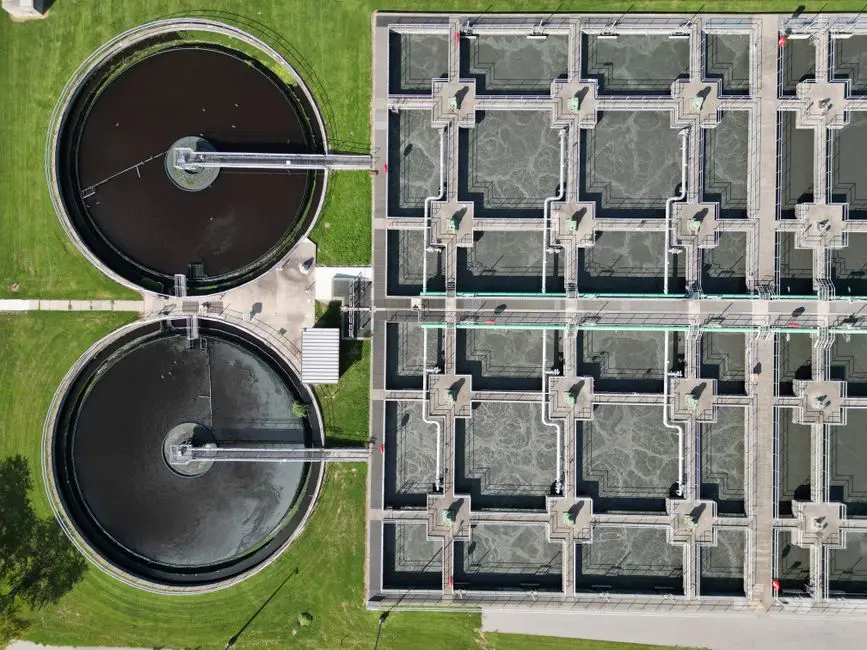
For off-grid sites between roughly 10 m³/day and 2,000 m³/day, the realistic technology envelope is narrower than vendor brochures suggest. The 2020 Agadir metagenomic study sampled six WWTPs and documented anaerobic decantation, activated sludge, sand infiltration-percolation and naturally aerobic lagoons as the in-use processes in the cluster (Nature 2024, doi:10.1038/s41598-024-76773-4). Anaerobic decantation relies on bacteria to break down organic matter without oxygen, produces biogas and is suited to high-strength wastewater; activated sludge uses aerobic microorganisms in the presence of oxygen and is the default for municipal sewage. Sand infiltration-percolation filters wastewater through sand beds as a natural polishing step, and naturally aerobic lagoons are shallow ponds that treat wastewater through sunlight- and wind-driven aerobic processes but require large land areas and extended retention times (Nature 2024).
Translating that into a buyer's menu, the first option is an MBR membrane bioreactor wastewater treatment system that delivers near-reuse-quality effluent with sub-1 µm filtration in roughly 60% of the footprint of a conventional activated-sludge plant. The second option is a buried A/O WSZ package sewage treatment plant that combines anoxic/aerobic contact oxidation with sedimentation and disinfection in a single buried unit, handles 1–80 m³/h, runs with no on-site operator and can sit below grade with landscaping above (HydropureWater verified product catalog, 2026). The third option is a sand infiltration-percolation train that replicates the M'zar logic at a smaller footprint, accepting the larger land take and 2–3 day retention in exchange for very low electrical demand.
Vermifiltration using earthworms has been documented as a low-expertise decentralised option in semi-arid regions facing water shortages, but the published design and efficiency work targets septic-tank-scale flows, not the 100 m³/day-and-above volumes typical of Agadir's hotel and residential projects (IntechOpen, doi:10.5772/intechopen.103920). For that flow band, the MBR, WSZ A/O and sand infiltration-percolation options are the only ones with a documented local reference plant behind them.
Matching the Train to Your Flow, Footprint and Reuse Goal
The decision matrix below maps the three off-grid trains against the variables that drive a 10–2,000 m³/day project in Souss-Massa. Values come directly from the cited sources; gaps are flagged as inputs a buyer must request from a supplier.
| Parameter | MBR membrane bioreactor | Buried A/O WSZ package | Sand infiltration-percolation |
|---|---|---|---|
| Indicative flow range | ~10 m³/day up to 2,000 m³/day (buyer to confirm with supplier) | 1–80 m³/h (≈ up to 1,920 m³/day), verified catalog figure | Scales by sand-bed area; large footprint required |
| Footprint vs. conventional activated sludge | ~60% smaller than conventional systems (vendor description; to be confirmed for the specific site) | Below-grade installation; landscaping above possible | Largest of the three; 2.5-day HRT drives land take |
| Effluent quality for reuse | Sub-1 µm filtration, near-reuse quality | Suitable as a biological stage; needs downstream disinfection for 100 mg/L reuse | M'zar reference exceeds 97.46% removal on COD, BOD5 and bacteriology (Water 2021) |
| Power demand | Continuous; membranes, blowers, pumps | Fully automated; on-site power required | Negligible: pumps run ~10 min/day in the M'zar reference (Water 2021) |
| Sludge handling | Surplus activated sludge; dewatering needed | Surplus sludge; dewatering needed | Co-digested in the same tanks; 40–60% dryness in Agadir sunshine (Water 2021) |
| Best fit | Hotels/resorts reusing on landscape or golf course | Hotels, residential compounds, rural sites needing below-grade install | Sites with sandy substrate and enough land; rural, low-density |
For flows up to ~80 m³/h, the buried A/O WSZ package is the lowest-footprint option and can be installed below grade, which matters for Agadir resorts where visible plant is a planning issue. For flows where the effluent will be reused on a golf course or large landscape area, the MBR delivers the most consistent reuse quality but requires stable power and routine membrane maintenance; the relevant spares are documented for the DF series flat sheet MBR membrane module. For sites with sandy substrate and ample land, sand infiltration-percolation borrows the M'zar logic directly, including the solar sludge-drying benefit, but it carries the largest footprint and the longest retention. Headworks on any of these three trains should start with a rotary mechanical bar screen for headworks to protect downstream membranes or sand beds from ragging and grit.
Reuse Quality, Salinity and the 100 mg/L Threshold
The Moroccan reuse standard for agricultural use by localized irrigation is 100 mg/L on the controlling parameter, and the M'zar UV-polished water runs well under that ceiling, which is why 30,000 m³/day of M'zar effluent is contracted to agriculture, golf courses and green spaces in Agadir (Water 2021, doi:10.3390/w13070954). The same effluent carries 289.24 mg/L of nitrate, and at the 30,000 m³/day flow that equals 2.08 t/day of nitrogen, so reuse in Souss-Massa is justified on fertilizer offset as well as water offset (Water 2021). For a private developer, that dual value is the single most useful framing to put in front of a procurement committee, because it converts reuse from a compliance cost into an operating benefit.
The constraint a generic guide misses is salinity. The Agadir collection network carries industrial inputs that elevate salt and suspended matter, so the authors of the M'zar evaluation explicitly call for industrial pre-treatment and for the application of Moroccan indirect-discharge standards, on the grounds that reducing salinity in the collection network is a precondition for sustainable reuse (Water 2021). A private plant cannot fix the municipal network, but it can require its own discharge contract to set salt limits and can put a salt-management step (industrial pre-treatment screening, brine bleed, or dedicated irrigation-zone blending) ahead of the reuse header tank. Disinfection is the other moving part. UV is the only tertiary stage documented in the local reference train, and it is selected because it adds no salinity to the effluent, unlike chlorination; the operating principles and chemical-byproduct profile are covered in the linked piece on UV Disinfection Water Treatment: Low Chemical Byproducts in 2026. The hardware counterpart is a UV sterilizer for water treatment sized for the post-biological effluent, not for raw water.
| Reuse / risk parameter | M'zar benchmark | Implication for an off-grid plant |
|---|---|---|
| Localized irrigation reuse ceiling | 100 mg/L national standard; M'zar PWUV sits well below (Water 2021) | UV polish sized for actual post-biological effluent, not potable raw water |
| Nitrogen in reuse water | 289.24 mg/L nitrate in PWUV; 2.08 t/day N at 30,000 m³/day (Water 2021) | Reuse can be sold internally on fertilizer offset, not just water offset |
| Dominant local risk | Salinity and suspended matter, not organics (Water 2021; Nature 2024) | Salt-management step and industrial pre-treatment controls are mandatory |
| Sludge dryness | ~40% after 3 weeks; ~60% under Agadir optimum sunshine (Water 2021) | Solar drying is feasible; thermal drying is not required in this climate |
| Biogas / GHG benefit | 23 kg CO₂e avoided per 1 kg CH₄ recovered (Water 2021) | Covered anaerobic stage earns carbon value; relevant for ESG reporting |
Sludge is the other reuse line item. The M'zar reference dries to 40–60% solids in Agadir sunshine, which removes the case for a thermal dryer on any new plant in the same climate (Water 2021). The downstream dewatering step, where mechanical dewatering is still required to hit a transportable cake, is typically a plate and frame filter press for sludge dewatering fed from a high-efficiency sedimentation tank thickened upstream.
Buyer and Compliance Checklist for an Agadir Project
Use this list in writing when you approach suppliers or the relevant authority. Each item maps to a documented local data point, not a vendor claim.
- Size the design for the daily flow plus a salinity factor, because Agadir's municipal wastewater is biodegradable (COD/BOD5 = 1.34 ± 0.14) but marked by chronic salinity and suspended matter that affect reuse eligibility (Springer 2019, doi:10.1007/s13201-019-0958-0).
- Ask any supplier for documented removal rates on COD, BOD5 and bacteriological parameters at the offered hydraulic retention time, and compare them against the >97.46% benchmark M'zar sustains, rather than accepting catalogue "removal efficiency" language (Water 2021).
- Require the supplier to demonstrate that the disinfection stage is sized for the post-biological effluent, not potable raw water, and that it reliably meets the 100 mg/L localized-irrigation reuse ceiling in this region (Water 2021).
- Require a sludge-handling plan that uses Agadir's solar drying potential (40–60% dryness in three weeks under local sunshine) rather than a thermal dryer, and confirm the dewatering device's cake output and hauling mass (Water 2021).
- For any anaerobic stage, price the avoided emissions at 23 kg CO₂e per 1 kg of methane recovered as a transferable ESG line item, since the same conversion factor applies to any covered digester in the region (Water 2021).
Frequently Asked Questions
What is the realistic budget envelope for a 10–2,000 m³/day sewage plant near Agadir?
The 2026 Moroccan market for MBR, WSZ A/O and sand infiltration-percolation trains in this flow range is quoted project by project, so there is no defensible single price in the cited research. The actionable check is to ask each shortlisted supplier for a bill of quantities tied to the influent characterisation (BOD, COD, TSS, salinity), the contracted reuse end-use, and the salt-management step, then normalize those quotes on a per-m³-treated-per-day basis before comparing.
How do I choose between a local package supplier and an imported MBR skid for a resort or housing estate?
Use the M'zar benchmark as the audit tool. Confirm that whichever supplier you select can show documented removal on COD, BOD5 and bacteriological parameters at the offered HRT that meets or exceeds 97.46%, and that the disinfection stage is sized for the actual post-biological effluent rather than potable water (Water 2021, doi:10.3390/w13070954). The compliance check that catches most import-only bids is lead time for the DF-series flat sheet MBR membrane module spares and the on-call service window for membrane cleaning; the buried WSZ package is the lower-risk option when no on-site operator is available, because the catalog confirms fully automated operation with no operator required.
Can a small hotel or rural development meet the 100 mg/L reuse standard without a full MBR?
Yes, if the biological stage is followed by UV disinfection sized for the post-biological effluent, as M'zar does with its infiltration-percolation secondary stage and UV tertiary stage to keep PWUV under the 100 mg/L localized-irrigation ceiling (Water 2021). The trade-off is land: sand infiltration-percolation needs the 2.5-day hydraulic retention time M'zar uses, which means a larger footprint than a buried WSZ A/O package at the same daily flow.
What is the dominant water-quality risk I should plan for, BOD or salinity?
Salinity and suspended matter, not organics. The M'zar evaluation and the 2020 Agadir metagenomic study both flag the salinity-plus-suspended-matter combination as the parameter that governs reuse eligibility and that requires industrial pre-treatment controls on the collection network, even though the wastewater remains biodegradable (Water 2021; Nature 2024). Any private plant discharging to a soakaway, wadi or irrigation network should include screening, grit removal and a salt-management step in addition to the biological stage.
Related Equipment
- UV sterilizer for water treatment — specifications, capacity range, and technical data
- plate and frame filter press for sludge dewatering — specifications, capacity range, and technical data