
Why Tangier Needs a Modern Domestic Sewage Network
The Tangier-Tetouan-Al Hoceima region has a renewable water potential of roughly 4 billion m3/year, yet supply is concentrated in the Ibn Battouta Dam, which serves drinking water for Tangier and Assilah (Arab Water Council case study, Boukhalef project). Bacteriological analysis of the M'harar and Tahaddart Wadis in the Tangier basin documents ongoing contamination from raw domestic wastewater discharges, together with metal pollution from the Tangier–Rabat highway corridor (Ecoeet, 2024). Before 2015, Tangier's collected wastewater was discharged directly into the Mediterranean Sea; the Boukhalef plant was built specifically to end that practice (Arab Water Council). Treated wastewater reuse is a national priority, financed under Morocco's National Shared Sanitation Plan, which positions domestic sewage treatment in Tangier as a strategic public-health and water-security asset.
How the Boukhalef Plant Works
The Boukhalef WWTP uses an activated-sludge biological system with a tertiary treatment stage, producing reuse-quality effluent for irrigation (Arab Water Council case study). Influent combines domestic sewage from the Rabat Road area, Boukhalef South and Gezenaya centre with domestic and industrial effluents from Gezenaya and the Tangier Free Zone — a mixed load that demands robust equalisation and biological capacity, not a purely domestic design curve. Current capacity is 10,700 m3/day; expansion works in the third phase will raise this to 42,700 m3/day. The plant occupies 4.3 ha inside the Gzenaya industrial zone, with a 120 L/s pumping station feeding an 8 km Phase 1 reuse network, two 6,000 m3 storage tanks added in Phase 2 and 21.5 km of additional distribution network (Arab Water Council).
| Parameter | Value | Source |
|---|---|---|
| Treatment process | Activated sludge + tertiary | Arab Water Council case study |
| Current capacity | 10,700 m3/day | Arab Water Council case study |
| Target capacity (Phase 3) | 42,700 m3/day | Arab Water Council case study |
| Footprint | 4.3 ha in Gzenaya industrial zone | Arab Water Council case study |
| Influent mix | Domestic (Rabat Road, Boukhalef South, Gzenaya centre) + domestic/industrial from Gzenaya and Tangier Free Zone | Arab Water Council case study |
| Operator | Amendis (northern Morocco water and electricity operator) | Arab Water Council case study |
For smaller sites with a similar load profile, a buried A/O package sewage plant provides an activated-sludge and sedimentation train in a single factory-built unit, sized for decentralised applications.
The Three-Phase Reuse Rollout
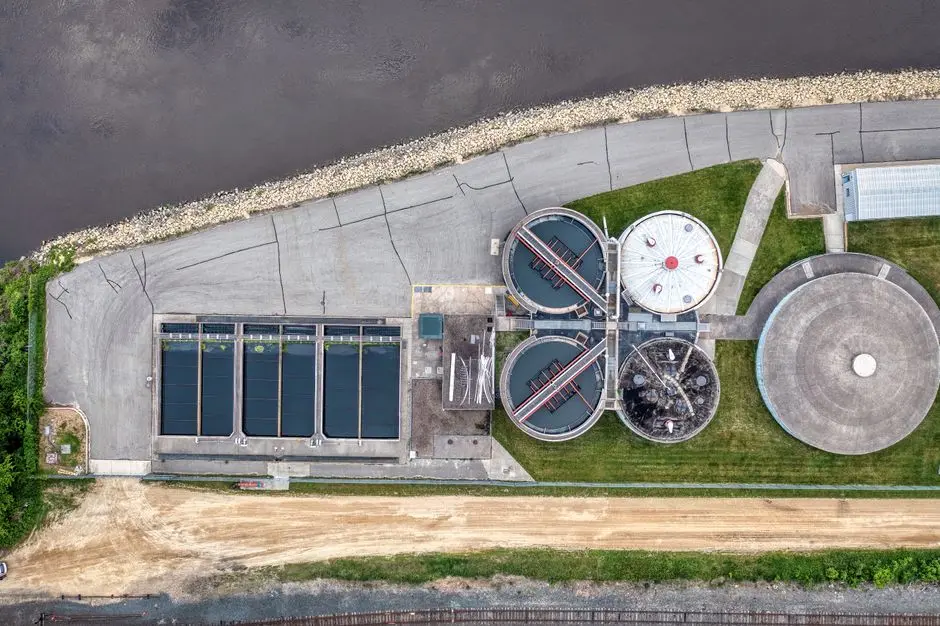
Phase 1 (2015) commissioned the Boukhalef WWTP, laid 8 km of reuse pipeline and installed a 120 L/s pumping station, irrigating 110 ha including the Qatari Diar Golf Course (Arab Water Council). Phase 2 (2019) added two storage tanks totalling 6,000 m3, a 120 L/s discharge station, a second tertiary treatment unit and 21.5 km of network, irrigating 115 ha of a planned 141 ha (70 ha at Royal Golf Tangier). Phase 3, currently in progress, will lift WWTP capacity to 42,700 m3/day and add 150 ha of irrigated area across the rest of the city; the reuse study of record is Amendis, 2021, 'Étude d'extension du système de réutilisation des eaux traitées de la STEP Boukhalef'. Cumulative irrigated area at full build-out is 283 ha — a scale the Arab Water Council case study flags as 'disproportionate in its distribution at the district level' for routine maintenance. The same source quantifies the scheme as saving an estimated 3 million m3/year from the Ibn Battouta Dam.
Reuse targets of this scale depend on storage and settling upstream of distribution, which is why schemes of this type typically pair biological treatment with a high-efficiency sedimentation tank ahead of the tertiary disinfection step.
What This Means for Developers, Hotels and Factories Outside the Network
Sites connected to Amendis's collector fall under the Boukhalef service area and benefit from municipal treatment and reuse — no on-site plant required, but trade-effluent discharge control still applies. Hotels, resorts, industrial sites and rural communes outside the Boukhalef catchment typically need a packaged or modular biological plant to meet reuse for irrigation (golf courses, green space) or discharge to wadi or sea. The Arab Water Council case study confirms that the Gzenaya/Tangier Free Zone corridor mixes domestic and light industrial waste, so equalisation, oil/grease removal and biological treatment must be sized for shock loads, not purely domestic curves. Treated wastewater reuse on golf courses and public green space is a national priority under the National Shared Sanitation Plan, which makes reuse-quality discharge a regulatory expectation. The Ecoeet (2024) bacteriological survey of the M'harar and Tahaddart Wadis also shows that raw domestic wastewater remains the main source of microbiological contamination in surface water around Tangier, reinforcing why on-site treatment is necessary outside the Boukhalef catchment. Where effluent quality must approach reuse standards in a compact footprint, an MBR membrane bioreactor is the conventional technology choice.
Choosing and Sizing a Package Plant for the Tangier Context
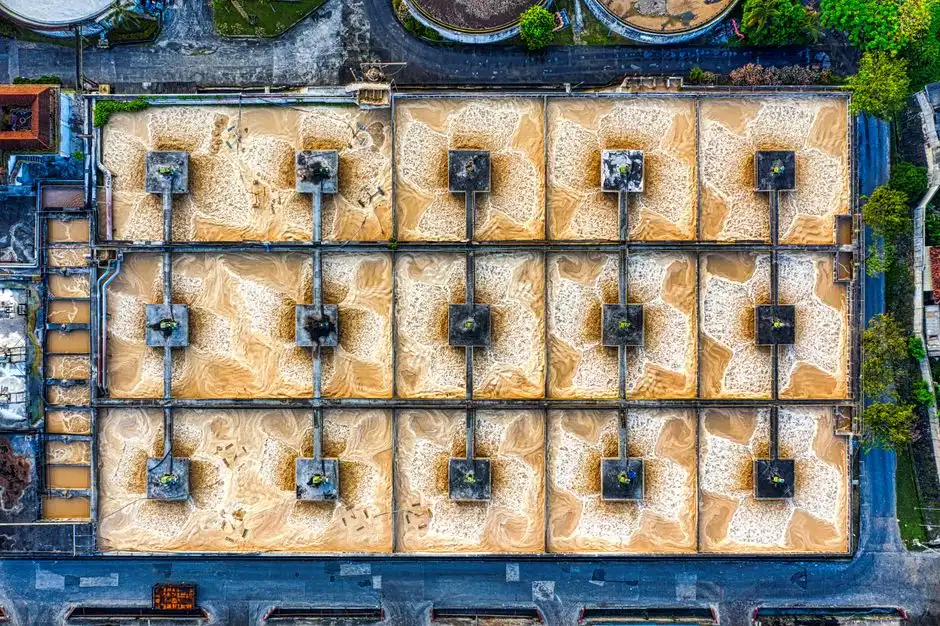
Technology selection depends on the reuse target: buried A/O package units such as the WSZ series handle 1–80 m3/h of mainly domestic sewage with no on-site operator; MBR systems deliver near-reuse effluent at sub-micron clarity in a smaller footprint and are better suited to irrigation of public green space or golf course fairways (HydropureWater verified product catalog, WSZ series; Arab Water Council case study). Specify inlet screening — a rotary mechanical bar screen — and, if light industrial load is possible, dissolved air flotation upstream of the biological stage to protect membranes and meet suspended-solids targets. The disinfection step should be selected for the end use: a UV disinfection system for chemical-free reuse on landscape, or a chlorine dioxide generator where a residual is required in the distribution network. Use the Arab Water Council case study as a public-sector benchmark — 10,700 m3/day current and 42,700 m3/day future, tertiary quality, 3 million m3/year of reuse offset — and request that any supplier proposal demonstrate equivalent reuse KPIs and energy intensity per m3 of treated flow, with proof of periodic effluent testing rather than commissioning data only.
| Decision criterion | Buried A/O package (WSZ) | MBR system | Implication for Tangier |
|---|---|---|---|
| Typical capacity range | 1–80 m3/h | Sub-micron clarified effluent at small-to-mid flow | WSZ suits hotels/resorts; MBR suits reuse-grade green space |
| Operator requirement | Fully automated, no on-site operator (per product spec) | Membranes require periodic cleaning and integrity checks | WSZ fits sites without plant staff |
| Footprint | Larger, buried below grade | Smaller, above-grade skid | MBR is preferable where land is constrained |
| Effluent quality | Secondary, suitable for discharge | Near-reuse, suitable for golf course / public green space | Aligns with National Shared Sanitation Plan reuse targets |
| Pre-treatment needed | Inlet screening | Inlet screening + DAF if industrial load possible | Matches Gzenaya / Tangier Free Zone influent character |
Monitoring and Reuse-Quality Risk
The Arab Water Council case study lists 'unclear responsibility for the quality of treated wastewater within golf courses' as a project weakness — buyers should write reuse-water quality and monitoring responsibility into any contract from day one. Ongoing bacteriological contamination of Tangier wadis from domestic wastewater is documented in the Ecoeet (2024) survey, which means any on-site plant should plan for periodic effluent testing against Moroccan reuse values, not just initial commissioning. For sites handling trade effluent in parallel, compliance with current 2026 industrial discharge limits and compliance requirements must be embedded in the same monitoring plan.
Frequently Asked Questions
What reuse-quality benchmarks should a Tangier package plant be designed to meet?
Buyers should align with the Boukhalef benchmark: tertiary activated-sludge effluent reused to irrigate 283 ha of municipal green space and golf courses at full build-out, displacing about 3 million m3/year from the Ibn Battouta Dam (Arab Water Council case study). Request that suppliers demonstrate periodic effluent testing against Moroccan reuse values, not just commissioning results.
Is it more cost-effective to connect to the Amendis network or build a private plant?
Inside the Boukhalef catchment, connection to the Amendis collector removes the need for an on-site biological plant but trade-effluent control still applies (Arab Water Council). Outside the catchment — hotels, rural communes, industrial sites — a packaged or modular plant is the practical option; request an itemised capital and energy cost per m3 of treated flow from each shortlisted supplier.
Which influent loads in the Tangier area need special attention?
The Boukhalef influent mixes domestic sewage with domestic and industrial effluents from Gzenaya and the Tangier Free Zone (Arab Water Council). For a private site, that means specifying equalisation, oil/grease removal and biological capacity sized for shock loads, not purely domestic curves.
How do I shortlist suppliers for a Tangier reuse plant?
Use the Boukhalef data as the public benchmark — 10,700 m3/day current, 42,700 m3/day future, tertiary quality — and require each supplier to demonstrate equivalent reuse KPIs, energy intensity per m3, monitoring responsibility, and lead time for delivery to northern Morocco, with reference projects in Morocco-wide domestic sewage treatment context or comparable Mediterranean sites such as domestic sewage treatment in Hurghada. For the core biological train, a buried A/O package sewage plant is the typical small-flow reference unit.