Why a Vienna Factory Cannot Copy a Generic ETP Layout
The design of an effluent treatment plant (ETP) is tailored to the requirements of a specific site, so no two ETPs are identical (UNIDO, Introduction to Treatment of Tannery Effluents, 2011). A Vienna-based textile, food, metalworking, or chemical factory sits inside a regulatory stack that a generic case study from another jurisdiction does not address, and that stack—not the unit operations—fixes the equipment specification.
The binding European framework for most Vienna plants is the EU Industrial Emissions Directive 2010/75/EU (IED); where domestic discharge applies, the Urban Waste Water Directive 91/271/EEC sits alongside it, and national implementation runs through the Austrian Abwasseremissionsverordnung (AEV) sector ordinances (e.g., AEV for textile finishing, metalworking, or the food sector). Vienna adds a second layer: most industrial sites discharge to the mixed public sewer and are therefore Indirekteinleiter under the Wiener Kanalisation rules, which forces tighter pretreatment than direct discharge because the municipal plant must meet its own downstream obligations. That combined envelope—IED + AEV + Wiener Indirekteinleiter—sets the effluent targets for COD, BOD, TSS, heavy metals, AOX (textile), and hydrocarbons (metalworking) that the DAF and downstream stages must hit.
The ETP Building Blocks Used in Austrian Industrial Plants
Austrian authorities audit an ETP as three sequential levels: primary physical/chemical, secondary biological, and tertiary polishing (Quora, What is the mechanism of an effluent treatment plant (ETP)?, 2019). Inside that frame, Dissolved Air Flotation (DAF) often acts as a primary or secondary clarifier, replacing or supplementing a settling tank where space is limited or FOG/emulsions dominate. The role of DAF in a refinery ETP is a protective barrier before the biological stage, and that logic applies to Vienna's metalworking, food, and light-chemical sectors: the DAF removes emulsified oil and fine solids that would otherwise coat and kill the biomass in the biological step (Quora, What is dissolved air flotation (DAF)?, 2025). As the DAF cannot stand alone, the buyer should plan the auxiliary equipment coordinated with it: a rotary bar screen at headworks to remove rags and gross solids, an equalisation tank to smooth hydraulic and load peaks, a chemical dosing stage for coagulation and flocculation, sludge dewatering for the floated skimmings, and a disinfection step on the polished stream. In the UNIDO tannery reference, at least one pumping or lifting station is required, typically located before the rotary screen, because the system cannot rely on gravity alone (UNIDO, 2011).
How a DAF Unit Actually Works Inside That Train
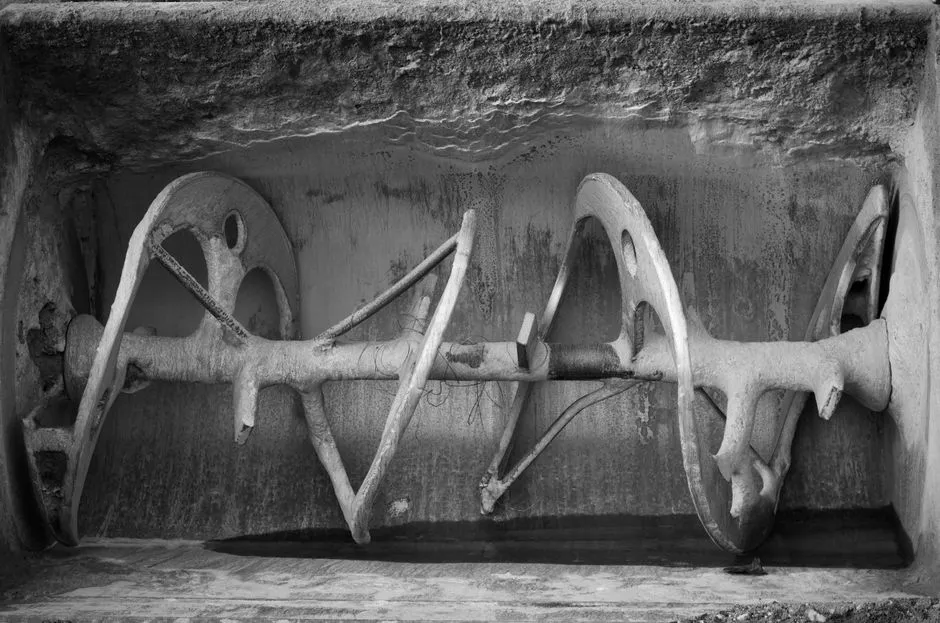
A DAF unit takes a side-stream of clarified effluent, pressurises it, and saturates it with air in a dedicated drum; on return to the flotation tank, the pressure drop releases millions of micro-bubbles—typically between 10 and 100 µm in diameter—that attach to suspended solids and tiny oil droplets (Quora, What is dissolved air flotation (DAF)?, 2025). The bubble–particle aggregate floats, the mechanical skimmer scrapes the thick froth layer into a sludge hopper, and clarified water exits over a downstream weir. Two design variables a Vienna buyer should interrogate on every proposal are the recycle ratio and the air-to-solids ratio, as these determine whether the DAF can hit the site's TSS and FOG targets without over-pressurising the saturator. Failure modes include hydraulic shock when the equalisation tank is missing or under-sized, oil breakthrough when the coagulant is under-dosed, and rag fouling when the bar screen is omitted or bypassed—all of which are preventable at the design stage and are the first items a Viennese permitting reviewer will check. For a discussion of vendor-side selection criteria see the best DAF unit for industrial wastewater in 2026 spec framework, and for the equipment itself the HydropureWater DAF system range covers the standard configurations a buyer will be comparing.
Sizing a DAF and ETP for a Vienna Site: The Inputs You Need
A vendor requires a fixed influent/effluent envelope to provide a defensible quote. The table below maps the inputs a Vienna plant should provide, and the upstream constraints a vendor should be challenged on, rather than any assumed flow or cost range.
| Input / constraint | What the vendor needs | Why it matters in Vienna |
|---|---|---|
| Hourly and peak flow (m³/h) | 24-h diurnal curve, peak factor, future expansion allowance | Drives DAF hydraulic sizing and equalisation volume; Vienna sites often run compact footprints so peak handling is critical |
| Influent concentrations | TSS, COD, BOD, FOG, pH, temperature | Sets coagulant dose and recycle ratio on the DAF, and FOG load to the biological stage |
| Sector-specific pollutants | AOX (textile), hydrocarbons (metalworking), nitrate/TKN (food) | Determines whether AEV sector limits or Vienna Indirekteinleiter limits govern the design |
| Effluent targets | Applicable AEV sector limit AND Wiener Indirekteinleiter limit | The tighter of the two is binding; both must be quoted on the proposal |
| Ambient constraints | Cold winter influent temperature, hard water, available roof/footprint | Winter biology kinetics, coagulant demand from hardness, and packaged vs civil layout decisions |
| Order-of-magnitude match | Standard model range against envelope | Use the published DAF model range (4–300 m³/h, 13 standard sizes) as a sizing envelope, but require site-specific jar testing and a flow test before ordering |
A sizing decision should be backed by jar tests on the actual Vienna influent and a documented flow test, and the HydropureWater automatic chemical dosing system scope should be sized against the same influent envelope.
Process Train Comparison: DAF-First vs Sedimentation-First for a Vienna Factory
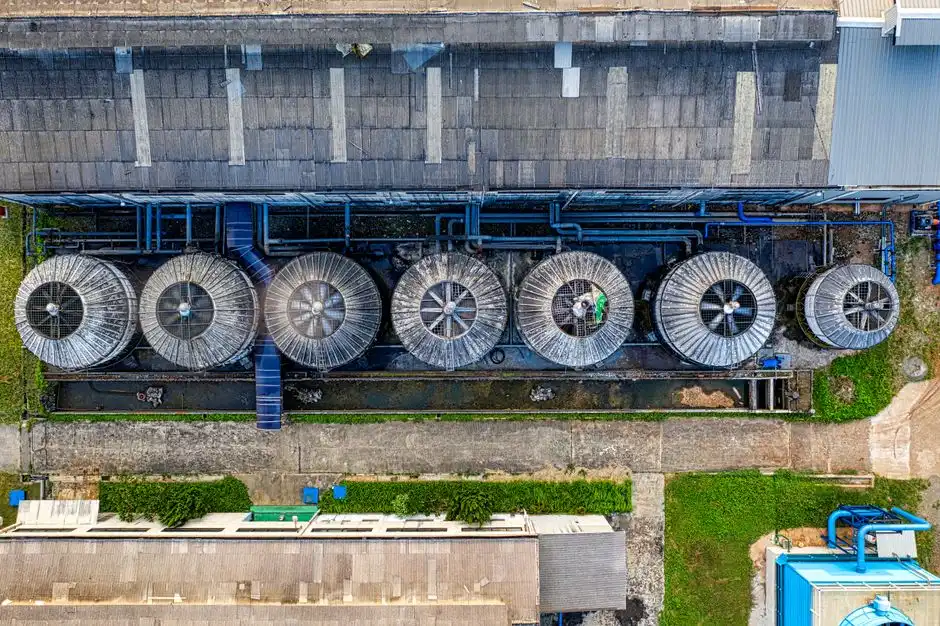
The choice between a DAF-first and a sedimentation-first train is a trade-off between footprint, FOG/emulsion load, and downstream biology protection. DAF is superior for emulsion-breaking, while sedimentation may lower chemical OPEX when flows are steady and FOG is low. The UNIDO position is that in some cases, mainly due to space shortage, solids are removed by flotation—usually by the dissolved-air flotation (DAF) system (UNIDO, 2011)—which is directly relevant to dense Vienna industrial sites. The typical Vienna pattern for food, metalworking, and petrochemical-like streams is DAF after screening/equalisation and before biological treatment, because DAF removes the oil and FOG load that would otherwise coat the biomass in the biological stage (Quora, 2025). A defensible hybrid is a lamella clarifier for bulk TSS reduction followed by a polishing DAF, which is effective where raw TSS is high and biological protection remains necessary. The table below compares the two trains.
| Criterion | DAF-first train (screen → EQ → DAF → bio → polish) | Sedimentation-first train (screen → EQ → settler → bio → DAF polish) |
|---|---|---|
| Footprint | Compact, packaged DAF-led layout suits Vienna's dense sites | Larger clarifier footprint, more civils |
| FOG / emulsion load | Removes emulsified oil and fine solids before biology | Only settles free oil and grit; emulsions pass forward |
| Chemical OPEX | Higher coagulant/polymer demand on the DAF | Lower chemical demand if influent is stable |
| Biological protection | Strong — DAF acts as the protective barrier before biomass (Quora, 2025) | Weaker — emulsions reach the biological stage |
| Best-fit Vienna sectors | Metalworking, food (oily), light chemical, refinery-like streams | Low-FOG streams where flows are steady and biology is robust |
For plants in other jurisdictions facing similar ETP/DAF requirements, see the industrial ETP and DAF system for a Luanda factory and the industrial ETP and DAF system for an Algiers factory engineering guides.
Supplier and Equipment Checklist for an Austrian Plant
The Austrian purchasing decision relies on documentation as much as hardware. The buyer should require, as a single package: CE marking, ATEX conformity for any zone-classified area, an EU reference list with comparable flows and influents, and German-language O&M manuals. On the engineering side, the package must include a factory acceptance test (FAT) report, a site acceptance test (SAT) protocol, pilot or jar-test data matched to the Vienna influent, and a compliance map from the proposed DAF/ETP to the applicable AEV sector ordinance and to the IED 2010/75/EU BAT conclusions. On the commercial side, the buyer should require a stated spare-parts guarantee period, a documented response time from an EU-based service point, and confirmation that the supplier can integrate downstream stages—sludge dewatering via a plate and frame filter press and disinfection via a chlorine dioxide generator—so the plant is delivered as a coordinated chain. Any vendor offering a fixed "one-model-fits-all" DAF for a Vienna factory is signalling a lack of familiarity with the AEV/Indirekteinleiter regime, and the buyer should require site-specific sizing backed by the IED/AEV compliance map.
| Evidence category | Item the vendor must provide | Why it matters for Vienna permitting |
|---|---|---|
| Regulatory | CE marking; ATEX conformity where zone-classified; compliance map to AEV sector ordinance and IED 2010/75/EU BAT conclusions | Defines the binding limit set the ETP is designed to hit |
| Documentation | German-language O&M manuals; FAT report; SAT protocol; EU reference list with comparable flows | Austrian operator language and a defensible reference base |
| Process | Jar-test or pilot data on Vienna influent; site-specific DAF sizing (recycle ratio, air-to-solids ratio) | Proves the DAF will hit TSS/FOG targets on this wastewater, not a generic one |
| Commercial / service | Spare-parts guarantee period; EU-based service response time; ability to integrate sludge dewatering and disinfection | Delivers the plant as a coordinated chain, not loose boxes |
| Compliance discharge | Confirmation that both AEV sector limits and Wiener Indirekteinleiter limits are quoted on the proposal | The tighter of the two is binding and must be visible on the bid |
For the wider 2026 compliance frame that sits on top of this supplier checklist, see the industrial effluent discharge guidelines for 2026.
Frequently Asked Questions
What regulatory regime actually governs a DAF-led ETP at a Vienna factory in 2026?
The binding set is the EU Industrial Emissions Directive 2010/75/EU (IED), the Austrian AAbwV/Abwasseremissionsverordnung (AEV) sector ordinances, and—because most Vienna sites discharge to the mixed sewer—the Wiener Kanalisation Indirekteinleiter rules; the tighter of the AEV and municipal limits governs the design, and the supplier's compliance map should show both.
What should a Vienna plant budget for a DAF-led ETP, and how should the cost line be structured?
Ask the vendor for a CAPEX split across the DAF unit, the chemical dosing skid, the equalisation tank, sludge dewatering, and disinfection, plus an OPEX line for coagulant, polymer, and sludge haulage—and require a sensitivity analysis
Frequently Asked Questions
Does a factory in Vienna legally need a DAF as part of its ETP?
There is no specific legal mandate requiring Dissolved Air Flotation (DAF) technology by name; however, factories must comply with the Austrian Wastewater Emission Ordinance (Abwasseremissionsverordnung - AEV). If the factory's discharge exceeds the chemical oxygen demand (COD), total suspended solids (TSS), or fats, oils, and grease (FOG) limits established for the specific industrial sector, a DAF is frequently the most compact and efficient technical solution to achieve compliance before discharging into the Vienna sewer network (Wien Kanal).
What is the typical capital cost range for an industrial DAF system in Austria in 2026?
For a standard industrial DAF unit integrated into a Vienna-based ETP, capital expenditure typically ranges between €80,000 and €250,000 for equipment alone, depending on throughput capacity (m³/h) and automation levels. When including civil works, piping, chemical dosing skids, and sludge dewatering peripherals, total project costs for a medium-scale facility often fall between €350,000 and €750,000, accounting for current Austrian labor rates and high-grade stainless steel (AISI 316L) construction requirements.
How do I shortlist DAF or ETP suppliers for a Vienna industrial plant?
Shortlisting should prioritize firms with documented experience in meeting Austrian water quality standards and familiarity with the Vienna municipal discharge ordinances. Verify that the supplier holds ISO 9001 certification and can provide local technical support within a four-hour response window. Preference should be given to vendors who offer pilot-scale testing on-site to validate the specific treatability of the factory’s effluent against the strict AEV parameters.
How long does it take to design, build, and commission a DAF and ETP for a Vienna factory?
The total project lifecycle typically spans 8 to 14 months. This includes 2 to 3 months for detailed engineering and permitting with the Vienna water authority (Magistratsabteilung 30), 4 to 6 months for equipment fabrication and procurement of specialized components, and 2 to 3 months for on-site installation, integration with existing factory systems, and final commissioning to ensure effluent stability.
What happens if my Vienna factory's wastewater fails an AEV compliance check?
Failure to meet AEV standards triggers an administrative procedure under the Austrian Water Act (Wasserrechtsgesetz). The factory will receive a formal notice from the authorities, which may include mandatory remediation deadlines, significant daily fines, or an increased sewage discharge tariff (Schmutzwasserabgabe). In cases of severe or repeated non-compliance, the authorities have the legal power to suspend the factory’s operating permit or disconnect the facility from the municipal sewer system until corrective measures are verified.