Why Ra's Bayrut data centers need a dedicated blowdown strategy
A data center in Ra's Bayrut, Lebanon, needs a cooling-tower blowdown treatment train that combines side-stream mechanical filtration, ultrafiltration (UF, 0.01-0.1 µm) and reverse osmosis (RO) sized for a recirculating system that, per S2, loses 25-30% of makeup water as blowdown at 4 cycles of concentration, with blowdown total dissolved solids (TDS) of 1,200-6,000 mg/L. RO can deliver 95-99% salt rejection and 50-85% recovery, returning permeate of 10-50 mg/L TDS to the cooling loop. The main decision is between blowdown reuse, municipal/sea discharge, and partial zero liquid discharge (ZLD), with the 0.93 L/m³ indirect water penalty from S1 confirming reuse is essentially freshwater-equivalent in volume terms.
The Ra's Bayrut shoreline sits inside a Mediterranean wet-bulb regime that pushes evaporative cooling systems harder than a temperate-inland site: ambient wet-bulb drives evaporation up, which lifts makeup demand and pushes operators toward higher cycles of concentration (COC) to limit freshwater intake. Higher COC shrinks blowdown volume but concentrates it; S2's blowdown profile of 1,200-6,000 mg/L TDS, 10-50 mg/L suspended solids, accumulated treatment chemicals, and active biological content is exactly what a Mediterranean tower fed on municipal or desalinated supply will generate once you push past 3 COC. S1 frames the macro stakes: cooling towers account for 20-30% of water demand at power plants, and substitution with reclaimed water has been projected to save up to 300 million gallons per day of freshwater withdrawals across Texas power plants (Stillwell & Webber, 2014, via S1, published 2026) — a benchmark that says hyperscale operators globally now treat blowdown as a strategic resource, not waste.
For a Lebanese engineer, three site-specific drivers sharpen the design brief. First, Mediterranean intake water often carries elevated silica and seasonal alkalinity swings that complicate antiscalant selection on any downstream RO. Second, the local electricity grid's carbon intensity directly determines whether the life-cycle case for reuse holds up: S1 finds that a wastewater scenario has about twice the global warming potential (GWP) of freshwater, with treatment energy driving roughly 80% of the difference, and that a fully decarbonised grid erases most of that penalty. Third, the receiving environment and the local Ministry of Environment permit conditions determine whether discharge is even on the table.
No source in the supplied research supplies Lebanon-specific ambient wet-bulb, electricity tariff or municipal discharge tariff figures. Treat these as project-specific inputs to be confirmed with Électricité du Liban, the local utility, and the Ministry of Environment — the qualitative constraints are clear, but the numeric sizing inputs must come from local authorities before any EPC commits to capex.
The three end-use strategies: reuse, discharge compliance, or zero liquid discharge
S2 names three primary objectives that fix the entire downstream design: cooling-tower makeup reuse, discharge compliance, and zero liquid discharge. Each demands a different treatment train, a different recovery target, and a different economic case. Choosing the objective is the single most important decision an engineer makes on this project; equipment selection follows from it.
Reuse as cooling-tower makeup is the highest-value path because the permeate replaces fresh water that would otherwise be bought and treated. S2 reports 60-85% recovery rates for this configuration, with RO permeate at 10-50 mg/L TDS blending cleanly with existing makeup. The economic argument strengthens wherever the alternative water tariff is high or unreliable — a real concern for a Mediterranean coastal site with seasonal supply stress. Discharge compliance becomes the objective where a permitted outfall exists but TDS, metals or biocide residuals are capped; S2 reports direct discharge fees of $5-15 per thousand gallons in water-stressed regions and TDS limits below 1,500 mg/L in stricter jurisdictions, both of which can force blowdown through TDS-reduction membranes even when no reuse is intended.
ZLD combines membrane concentration, mechanical vapor compression (MVC) or brine concentrators, and crystallisation. S2 reports 95-99% overall recovery and capex of $3-8 million plus opex of $5-15 per thousand gallons treated, and describes full ZLD as justified only when alternative water is unavailable or discharge is prohibited. The realistic middle ground for most Mediterranean sites is partial ZLD: concentrate blowdown to reduce liquid discharge volume by 80-90% and dispose of the residual brine under a special permit, deep-well injection or contracted hauler. The S2 capex and opex figures are global benchmarks from the supplied research; treat them as such and request local EPC pricing before any board paper.
| Strategy | Recovery (S2) | Typical capex (S2) | Typical opex (S2) | When it fits |
|---|---|---|---|---|
| Cooling-tower makeup reuse | 60-85% | Driven by RO skid size (e.g. $250k-500k for 50,000 GPD) | $1.50-3.00/kgal (RO) | Freshwater cost or reliability is the binding constraint |
| Discharge compliance | Set by permit, not maximised | Driven by TDS-reduction membranes only | Avoided discharge fees drive payback | Permitted outfall exists but TDS/biocide caps are binding |
| Partial ZLD (MVC + RO) | 85-95% overall | RO skid plus $1-3M for 10,000-30,000 GPD MVC | MVC energy 15-25 kWh per 1,000 US gal distillate | Discharge volume must drop 80-90% but full crystallisation is uneconomic |
| Full ZLD (with crystalliser) | 95-99% | $3-8M system-level | $5-15/kgal treated | No permitted discharge and no alternative water |
Pretreatment: side-stream filtration and ultrafiltration before any membrane
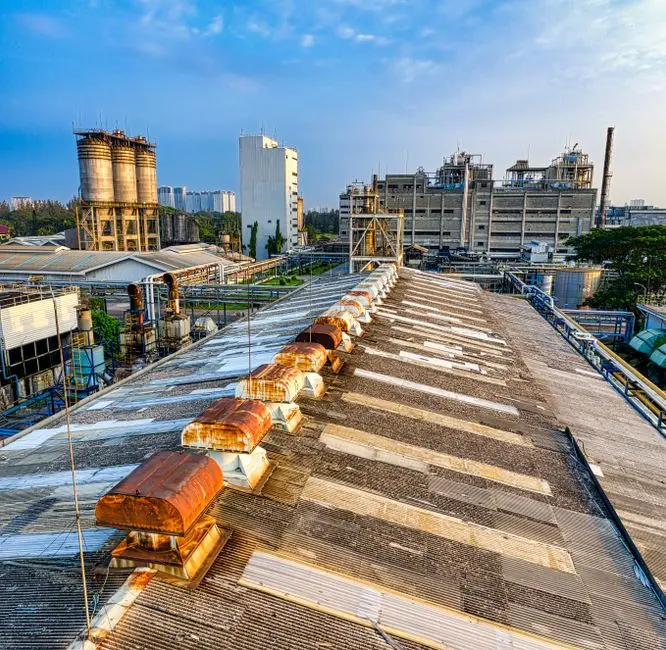
A blowdown RO train will fail inside months if pretreatment is undersized. S2 recommends installing side-stream filtration at 1-5% of total circulation flow, with self-cleaning spiral units achieving 10-25 µm removal. That step cuts blowdown suspended solids to levels downstream UF and RO can handle without rapid fouling, and the cascade matters: cleaner heat-exchanger surfaces reduce fouling, biological activity drops as biofilm attachment sites shrink, and suspended solids in blowdown fall into a band the membranes will accept.
Ultrafiltration sits between side-stream filters and RO, with 0.01-0.1 µm pore size removing suspended solids, bacteria, viruses and high-molecular-weight organics. S2 places UF operating pressure at 10-30 psi, recovery at 90-95%, and chemical cleaning every 1-3 months depending on feed quality. S2's pretreatment rule for RO/NF is unambiguous: feed should be filtered to <10-15 µm, conditioned with antiscalant, and pH-adjusted, and failure to meet this is the most common cause of membrane scaling on blowdown service. A multi-media filter for side-stream cooling-water polishing handles the bulk suspended-solids cut, while an ultrafiltration system for blowdown pretreatment takes the water down to a silt-density index that RO membranes tolerate. A coarse rotary mechanical bar screen upstream of the multimedia filter protects the media bed from gross debris carried in with intake or blowdown return.
For Ra's Bayrut sites specifically, the supplied research does not include local intake-water characterisation. Treat the influent turbidity, biocide residual, and seasonal silica as data to be confirmed by jar testing on a representative feed before any membrane is procured — S2's general envelope is the right starting point, but the Mediterranean-specific number set has to come from site work.
Reverse osmosis and nanofiltration: the workhorse for blowdown reuse
RO is where blowdown becomes reusable makeup. S2 specifies RO operating pressure at 150-400 psi to overcome osmotic pressure of concentrated blowdown, with 95-99% dissolved-solids rejection, permeate TDS of 10-50 mg/L, and 50-85% recovery limited by scaling as concentrate TDS rises. That recovery window is the design lever: pushing recovery up cuts downstream concentrate volume but accelerates membrane scaling, and the trade-off is mediated by antiscalant chemistry, feed temperature and concentrate composition.
S2's only quantified RO economic band for this service is a 50,000 GPD system treating blowdown at $250,000-500,000 installed, with operating cost of $1.50-3.00 per thousand gallons including energy, chemicals, membrane replacement and maintenance. These are global benchmarks and should be cited that way; the actual Lebanon figure depends on the EPC, the grid tariff, and the cost of antiscalant and membrane logistics into the country. Request a vendor-quoted figure before any board paper, and ask for an installed-cost breakdown that separates skids, piping, electrical and building works.
Nanofiltration (NF) is the lower-energy alternative when hardness and sulfate, not total TDS, drive the limit. S2 places NF at 75-150 psi with 70-85% recovery and permeate TDS of 30-50% of feed — meaning NF permeate is unsuitable as direct RO replacement but ideal when the goal is to soften blowdown so it can be recycled to the cooling loop at higher COC without precipitation. Antiscalant selection matters more on Mediterranean feeds than on the generic US case: S2 flags hybrid catalytic-plus-inhibition formulations as outperforming traditional scale inhibitors on high-silica or high-COC feeds, which is directly relevant where intake silica is elevated. Membrane element selection and replacement cadence are not quantified in the supplied research for the Lebanon grid; treat these as engineering decisions driven by feed characterisation and pilot data, not as values you can lift from a catalogue. An industrial RO system for blowdown reuse sized with S2's pressure and recovery envelope, paired with RO and UF membrane elements matched to the feed, is the core skid. An antiscalant and pH-adjustment dosing skid closes the pretreatment loop that S2 calls the most common cause of membrane scaling.
| Parameter | UF (S2) | NF (S2) | RO (S2) |
|---|---|---|---|
| Pore size / cut-off | 0.01-0.1 µm | Selective (hardness, sulfate) | Salt-rejecting |
| Operating pressure | 10-30 psi | 75-150 psi | 150-400 psi |
| Recovery | 90-95% | 70-85% | 50-85% |
| Rejection / permeate quality | Solids, microbes, HMW organics | Permeate TDS 30-50% of feed | 95-99% salt rejection; permeate 10-50 mg/L TDS |
| Role in blowdown train | Pretreatment to RO, or standalone for biological control | Softening to enable higher COC | Demineralisation for direct cooling-tower makeup |
When partial ZLD makes sense: MVC, brine concentrators, evaporation ponds
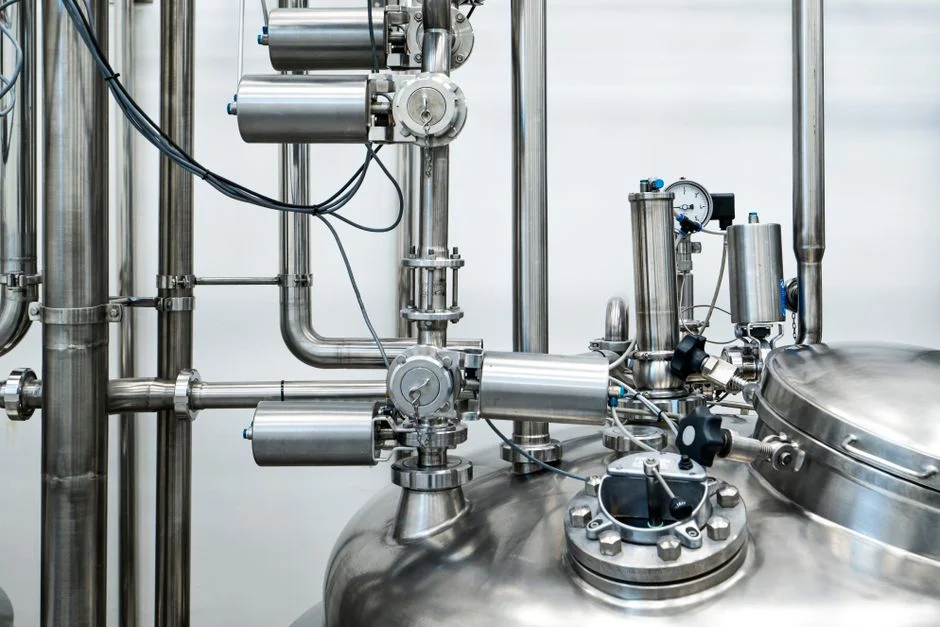
Thermal concentration is the next step once membrane recovery hits its scaling ceiling. S2 reports mechanical vapor compression (MVC) at 95-98% water recovery from concentrate, with distillate TDS below 10 mg/L and energy use of 15-25 kWh per 1,000 US gallons of distillate. S2 places MVC capex at $1-3 million for 10,000-30,000 GPD systems — a number that immediately tells you partial ZLD only pays for itself at sites where RO recovery is genuinely scaling-limited or where the receiving body cannot accept the concentrate at any realistic fee. A combined RO + MVC train (50-75% RO recovery, 95% recovery of the RO concentrate) reaches 85-95% overall system recovery with a much smaller liquid discharge than RO alone, which is usually the right answer for a Mediterranean coastal site that needs to minimise — not eliminate — its brine stream.
Brine concentrators using waste heat from generators or chillers can shift the energy balance, but S2 notes few data centers have enough waste heat to justify this without purpose-built heat supply. Solar evaporation ponds are listed by S2 as workable in arid climates with high evaporation and low rainfall. Ra's Bayrut has high summer evaporation but also winter rainfall and humid shoulder seasons, so land area, stormwater management and rainwater dilution of brine have to be evaluated — do not assume a generic "arid" pond is appropriate without local hydrology data. A high-efficiency sedimentation tank upstream of any thermal stage protects MVC heat-exchanger surfaces, and a plate-frame filter press dewateres the residual brine solids before final disposal.
Discharge path for a Ra's Bayrut campus: site wastewater and ancillary streams
Blowdown is one stream inside a larger effluent envelope. A data center also produces sanitary wastewater, RO concentrate during high-COC operation, humidification-pad bleed, and occasional generator wash water. S2 notes discharge fees of $5-15 per thousand gallons in water-stressed regions and TDS limits below 1,500 mg/L in stricter jurisdictions — both of which can apply to a coastal Mediterranean discharge point, depending on the outfall classification and the receiving-water body. S1's reuse-vs-freshwater life-cycle analysis reports an indirect water penalty of about 0.93 L/m³ for the wastewater reuse train, which S1 calls "nearly negligible" at less than 0.1% of the direct displacement benefit (S1, 2026) — a defensible number to put in front of a sustainability or permitting reviewer who asks whether reuse "really" saves water.
For sanitary and process streams, a packaged biological plant with disinfection is the standard pre-treatment step. S1's broader finding is that the GWP case for reuse is grid-dependent: under a decarbonising grid the carbon penalty shrinks to a small residual, with chemical production as the main remaining contributor (S1, 2026). Treat the design population-equivalent, the local discharge standard, and the receiving-body dilution as project-specific inputs that the EPC and the Ministry of Environment will set, not values you can lift from a generic guide. An MBR system for site sanitary and process wastewater paired with a chlorine dioxide generator for cooling-loop biological control covers both the sanitary envelope and the biological-control loop that protects the cooling tower from planktonic and biofilm regrowth. The same MBR skid handles RO concentrate neutralisation before discharge if the local permit accepts a treated concentrate stream.
Frequently Asked Questions
What cycles of concentration should a Ra's Bayrut cooling tower target before adding blowdown treatment?
S2's baseline is 4 COC, at which 25-30% of makeup water leaves as blowdown. The trade-off is straightforward: pushing COC higher (5-6) cuts blowdown volume but lifts blowdown TDS into the 1,200-6,000 mg/L window, which is where membrane pretreatment chemistry and antiscalant selection start to drive capex. The decision should be made jointly by the cooling-water treatment vendor, the RO skid vendor and the EPC, using site-specific silica and alkalinity data that the supplied research does not provide.
What is the realistic installed cost of a blowdown RO skid?
The only capex figure the supplied research supports is S2's $250,000-500,000 installed for a 50,000 GPD RO system treating blowdown, with opex of $1.50-3.00 per thousand gallons. These are global benchmarks, not Lebanon-quoted numbers. Request a vendor-installed cost that breaks out skids, piping, electrical, building works, freight into Ra's Bayrut and commissioning before locking the budget.
Which membrane technology should a Mediterranean data center pick for blowdown reuse?
Use S2's decision logic. UF alone is the right answer when biological and particulate control are the only targets. NF is the right answer when hardness and sulfate, not total TDS, drive the discharge or reuse limit — it runs at 75-150 psi with 70-85% recovery. RO is the right answer when full demineralisation is needed and permeate must return to the cooling loop as 10-50 mg/L TDS makeup; expect 150-400 psi and 50-85% recovery. The selection is driven by feed characterisation, not by equipment preference.
When does zero liquid discharge become mandatory rather than optional?
S2's trigger conditions for full ZLD are: no economically available freshwater, no permitted discharge point, or discharge fees and TDS caps that make partial ZLD the lowest net-cost option. For most Mediterranean coastal sites, partial ZLD (RO concentrate fed to MVC, 85-95% overall recovery) is the realistic ceiling — full ZLD only pays back where one of the three S2 triggers is met. The decision requires a site-specific capex/opex comparison against the cost of an additional freshwater supply, which the supplied research does not quantify for Lebanon.