Why Columbus Chemical Plants Are Asking the DAF-vs-Clarifier Question in 2026
Columbus-area organic chemicals, specialty chemicals, and plastics manufacturers discharging to the sanitary sewer are subject to 40 CFR Part 414 categorical pretreatment standards layered on the 40 CFR Part 403 general framework, with day-to-day enforcement carried out by the City of Columbus Sewerage and Drainage Division through its local limits and industrial waste permits (City of Columbus Sewerage and Drainage Division, 2026).
That regulatory frame makes the choice between a Dissolved Air Flotation (DAF) clarifier and a lamella sedimentation clarifier a critical 2026 capital decision. Batch reactors, kettle washes, and resin-cleanout cycles at Ohio chemical plants drive real swings in FOG, TSS, and pH, and a primary clarifier that absorbs those swings is now a procurement requirement. Either DAF or a lamella clarifier can be the right answer for a given stream; the wrong approach is to default to one technology without mapping the influent profile to the categorical standard and the plant's actual variability. For a related regulatory walkthrough aimed at chemical plants in another jurisdiction, see this chemical-plant 2026 pretreatment compliance guide.
How a DAF Clarifier Actually Works on a Chemical Plant Stream
A DAF clarifier floats contaminants rather than settling them. The unit uses a recirculation loop in which clarified effluent is pressurized and saturated with air; when that saturated stream is depressurized into the flotation tank, it releases 30–50 micron microbubbles (Clearwaterind, 2026-04-27). Those microbubbles attach to flocculated particles and lift them to the surface, where a paddle skimmer scrapes the floated sludge into a collection trough (Clearwaterind, 2026-04-27). Heavier particles that do not float settle into a collection zone at the bottom of the tank and are removed by an auger — meaning every DAF also contains a sedimentation component (Clearwaterind, 2026).
DAF systems require chemically conditioned wastewater to function. The stream must be treated with coagulant, pH adjustment, and polymer flocculant dosed through serpentine floc tubes (15–45 second flash mix) or staged mix tanks to enlarge particles for microbubble attachment (Clearwaterind, 2026-04-27). On a chemical plant stream, this conditioning step stabilizes pH swings, emulsified oils, and metals before flotation, making chemical dosing equipment an essential part of the DAF scope. During start-up, the unit must be filled with clean water to protect the recirculation pump and air saturation system; filling with raw wastewater will discharge dirty effluent and can damage the saturation loop (Clearwaterind, 2026). For a system-level view of the equipment described here, the HydropureWater DAF system product page covers the same recirculation-and-saturation architecture.
How a Lamella Clarifier Handles the Same Wastewater
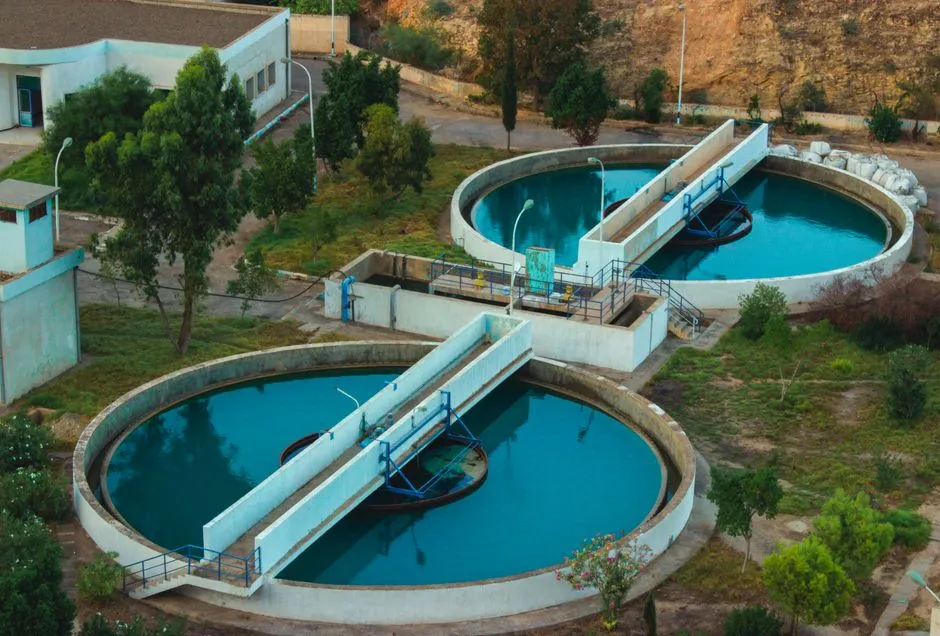
A lamella clarifier separates solids based on gravity, not buoyancy. Inclined plates or tubes shorten the effective settling distance, so settleable solids drop onto the plate surfaces and slide into a hopper while clarified water rises through the inclined channels. Because the driving force is gravity, a lamella clarifier performs best when the target particles have a specific gravity meaningfully above water and when the stream carries little oil or FOG. Chemical conditioning remains necessary to enlarge particles so they settle rather than remain in colloidal suspension, though the floc does not need to be floatable. The result is a mechanically simple package: no saturation loop, no pressurized recirculation pump, and no surface skimmer. For plants evaluating this technology, the HydropureWater lamella clarifier uses the same plate-pack principle. This configuration offers a lower operator skill requirement than a DAF, though it maintains a tighter tolerance for hydraulic surges and floatable loads.
DAF vs Clarifier: Side-by-Side for Columbus Chemical Plants
The two technologies function as substitutes for a defined influent profile rather than direct replacements for one another. The table below outlines the operating characteristics that drive a 2026 selection under 40 CFR Part 414.
| Decision factor | DAF clarifier | Lamella clarifier |
|---|---|---|
| Best-fit influent | Streams with FOG, emulsified oils, low-specific-gravity flocs, and TSS surges (Clearwaterind, 2026-04-27) | Steady, settleable-solids-dominated streams at moderate flow rates |
| Flow regime tolerance | Tolerates flow and load swings because microbubble attachment is less sensitive to detention time than gravity settling (Clearwaterind, 2026) | More sensitive to hydraulic surges; inclined-plate performance depends on stable upflow velocity |
| Chemical conditioning | Requires coagulant, pH adjustment, and polymer dosing; chemistry is sensitive to polymer type and dose (Clearwaterind, 2026-04-27) | Requires coagulant and flocculant; floc must be settleable rather than floatable |
| Sludge handling | Float-skimmed sludge, often thicker and easier to dewater; settled-solids fraction handled by bottom auger (Clearwaterind, 2026) | Conventional settled sludge; typically paired with a filter press for dewatering (Kemco Systems) |
| Footprint and building integration | COMPACT skid integrates chemical conditioning, sensors, and PLC; single skid ≤66 GPM, modular two-skid above (Clearwaterind, 2026-04-27) | Mechanically simple; no saturation loop, no skimmer, lower headroom requirement |
| Operator skill | Manage saturation pressure, air-to-solid ratio, skimmer speed via PLC (Clearwaterind, 2026-04-27) | Closer to a conventional sedimentation basin in skill requirements |
For a Columbus chemical plant tying into the City of Columbus Sewerage and Drainage Division's local limits, choose DAF when floatable organics, emulsified oils, or load surges dominate; choose lamella when the stream is steady and the solids are heavy; and plan a hybrid train when both fractions are present in meaningful quantity.
Matching the DAF Model Family to a Chemical Plant's Flow and Load
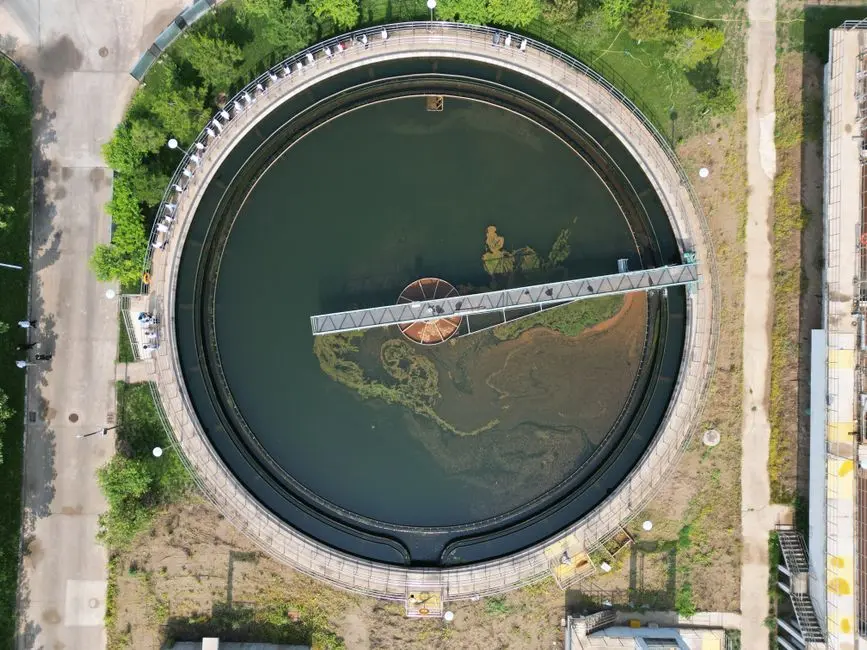
The SigmaDAF/Clearwaterind model family — FPAC, FPBC, FPHF, and COMPACT — addresses specific flow and load envelopes suited to batch chemistry. The model characteristics below are taken directly from the manufacturer's published descriptions (Clearwaterind, 2026-04-27).
| Model | Profile / hydraulics | Flow and load envelope | Where it fits a Columbus chemical plant |
|---|---|---|---|
| FPAC | Low-profile, cross-flow DAF with a large free surface area | Small-to-medium flow rates with very high solids loads (TSS, FOG) | Batch chemical reactors with concentrated dumps; skimmer capacity buys headroom for slug loads |
| FPBC | High-profile DAF with lamella plate pack | Low-to-medium solids loads, including low-buoyancy particles; maximum separation efficiency at very low overflow rates | Chemical streams with fines that resist flotation in a standard DAF |
| FPHF | High-flow DAF combining cross-flow and countercurrent flow | Large flows with medium-to-large solids loads | Larger Columbus plants where continuous high flow is the norm |
| COMPACT | Pre-assembled turnkey skid with chemical conditioning, sensors, instruments, and PLC control | Single skid ≤66 GPM; modular two-skid above 66 GPM | Small or mid-sized chemical plants that want fast installation and indoor siting |
For most Columbus-area chemical plants in 2026, the COMPACT skid serves as the starting point because it packages chemical conditioning, sensors, and PLC control into a footprint that fits an indoor retrofit. Plants with concentrated, intermittent dumps should look at the FPAC for skimmer headroom, while plants with low-buoyancy fines should look at the FPBC. The full mechanical and instrumentation package is described on the HydropureWater DAF system product page.
A 2026 Decision Framework for Ohio Chemical Manufacturers
A defensible 2026 selection starts with the regulation. Identify the 40 CFR Part 414 subcategory that applies to the discharge and the City of Columbus Sewerage and Drainage Division local limits that overlay it; the primary clarifier must be sized to those limits. The regulatory frame, the influent profile, and the available footprint drive the decision, and the following branches allow a plant engineer to sketch a recommendation before contacting suppliers.
- If the stream carries significant FOG, emulsified oil, or low-specific-gravity flocs, default to DAF — pick FPAC, FPBC, FPHF, or COMPACT based on flow and load — and add biological or advanced polishing downstream.
- If the stream is steady, low-FOG, and dominated by settleable inorganic or heavy organic solids, a lamella clarifier typically delivers the required removal at lower capital and operating cost.
- If the stream contains both floatable and settleable fractions in meaningful quantity, plan a hybrid train: DAF as primary, followed by a lamella or sedimentation step to catch the heavier fraction that settles in the DAF hopper.
- In all cases, budget for chemical conditioning equipment — coagulant, pH adjustment, polymer dosing — and downstream sludge dewatering.
For a broader view of the 2026 effluent rule environment, the 2026 industrial effluent discharge guidelines cover the cross-industry limits and compliance mechanics that frame local enforcement. The HydropureWater automatic chemical dosing system covers the coagulant, pH, and polymer dosing scope that the decision tree assumes. Downstream, a HydropureWater plate and frame filter press handles the dewatering of the floated or settled sludge before disposal, and pairs with the DAF train described by Kemco Systems for typical industrial installations (Kemco Systems).
Frequently Asked Questions
How does a chemical plant in Columbus decide between a DAF and a lamella clarifier in 2026?
Start with the 40 CFR Part 414 subcategory and the City of Columbus Sewerage and Drainage Division local limits, then map the influent. Streams with FOG, emulsified oils, low-specific-gravity flocs, or large TSS surges point to a DAF; steady, low-FOG streams dominated by settleable solids point to a lamella clarifier; mixed streams usually need a hybrid train (Clearwaterind, 2026-04-27; City of Columbus Sewerage and Drainage Division, 2026).
What does a DAF system cost a chemical plant in Columbus in 2026?
Pricing depends on flow rate, solids loading, materials of construction, and the level of chemical conditioning and instrumentation packaged with the skid. Buyers should request a sized quotation tied to their categorical limits, peak flow, and target TSS/FOG removal rather than relying on a generic price list, and should confirm that the quote includes the chemical dosing skid, PLC, and start-up support. For a comparison, see the sister DAF-vs-clarifier guide for Trenton chemical plants.
Which DAF model fits a small Columbus chemical plant with batch production?
For batch production with intermittent, high-concentration dumps, a COMPACT skid at or below 66 GPM, or a modular two-skid COMPACT above 66 GPM, is the typical fit because it packages chemical conditioning, sensors, and PLC control into a single indoor-friendly footprint; plants with very high TSS or FOG slugs should also evaluate the FPAC for its free-surface skimmer capacity (Clearwaterind, 2026-04-27).
What should a buyer check when selecting a DAF or clarifier supplier in Ohio?
Confirm