Why Chemical Wastewater in Madison Forces a Real Choice Between DAF and Clarifiers
Madison-area specialty chemical, agrochemical, and pharmaceutical intermediate plants generate process wastewater that mixes free oils, emulsified fats-oils-greases (FOG), and suspended solids across a pH range that a single settling tank cannot reliably handle. A conventional clarifier separates particles by gravity, capturing settleable suspended solids efficiently but failing on the floating fraction. A dissolved air flotation clarifier lifts low-specific-gravity contaminants on 30–50 micron microbubbles, capturing the oil and FOG fraction a clarifier misses.
These two mechanisms are complementary, leading chemical producers to run side-by-side evaluations rather than defaulting to one technology. Local supply is a factor: SigmaDAF USA, the joint venture between Spain-based SigmaDAF Clarifiers and Wisconsin-based Clearwater Industries, is headquartered in Brown Deer, WI, and manufactures DAF systems in-house for the North American market. This places Madison plants inside a domestic DAF supply chain rather than a trans-Atlantic procurement path. Clearwater Industries has manufactured industrial wastewater equipment in Wisconsin since 1996, and parent SigmaDAF Clarifiers has completed more than 800 projects across 25+ countries since 1994, according to Clearwater Industries (clearwaterind.com, equipment page, dated April 27, 2026).
How a DAF Clarifier Actually Treats Chemical Wastewater
A DAF unit is a pressurization-then-release separator that requires a specific sequence of operations. Clean water fills the DAF tank first because pressurizing raw wastewater would carry suspended solids through the recirculation pump and air saturation vessel. A recirculation pump then sends a side stream of clarified water to a pressurization-saturation vessel where compressed air dissolves into it under pressure; on release into the main tank, the dissolved air comes out of solution and forms 30–50 micron microbubbles (Clearwater Industries, clearwaterind.com/equipment, 2026-04-27). Those microbubbles attach to incoming flocculated particles and float them to the surface, where a paddle skimmer scrapes the float blanket into a collection trough; heavier particles settle to a bottom collection zone and are removed by an auger.
DAF performance depends on chemical coagulation and flocculation upstream. Coagulant, pH adjustment, and polymer flocculant are dosed into flocculation tubes arranged in a serpentine pattern that provides a 15–45 second flash-mix contact time, with sample valves and a pH sensor in-line for verification (Clearwater Industries, clearwaterind.com, undated process page). When a chemical reaction needs longer contact time—such as slow pH shifts from a batch reactor discharge—separate mix tanks with impeller agitators are staged ahead of the tubes, with one tank per chemical. These flocculation tubes and mix tanks condition particle size so microbubbles can attach and lift the load. A PLC-controlled coagulant and flocculant dosing skid keeps those doses consistent across shifts.
DAF vs Conventional Clarifier: Side-by-Side Comparison
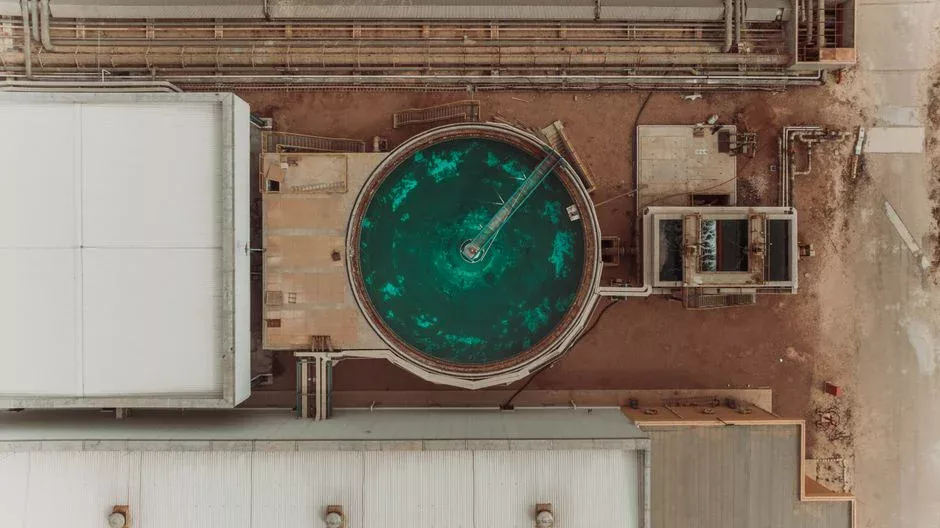
The comparison centers on the mechanism, as the two technologies remove different fractions of the same waste stream. DAF lifts floatables on 30–50 micron microbubbles, while a conventional clarifier—whether a circular settling tank or a lamella plate settler—drops settleables to the bottom under gravity. They overlap on heavy suspended solids, diverge on oils and FOG, and behave differently regarding chemical dose, footprint, and sludge character. The table below outlines the engineering trade-offs a Madison chemical engineer must present to procurement.
| Parameter | Dissolved Air Flotation (DAF) | Conventional / Lamella Clarifier |
|---|---|---|
| Primary removal mechanism | 30–50 micron microbubbles lift low-specific-gravity particles to the surface (Clearwater Industries, 2026-04-27) | Gravity settling of settleable suspended solids |
| Best-fit contaminant fraction | Oils, FOG, emulsions, light suspended solids | Heavy, readily settleable suspended solids with negligible oil |
| Chemical conditioning required | Coagulant + pH adjustment + polymer flocculant dosed through flocculation tubes (15–45 s flash mix) or mix tanks | Generally lower polymer consumption; HydropureWater lamella clarifier (20–40 m/h surface loading) cites up to 30% lower chemical use |
| Hydraulic sizing | SigmaDAF USA designs cover small-to-medium flowrates (FPAC, FPBC) through high-flow (FPHF) and the pre-assembled COMPACT DAF, which switches to a two-skid modular layout above 66 GPM (Clearwater Industries, 2026-04-27) | Lamella plate settlers achieve high surface loading rates; circular clarifiers sized to settling velocity |
| Sludge character | Thicker, more dewatered float sludge when chemistry is optimized (Clearwater Industries process page) | Heavier underflow sludge, typically wetter |
| Materials for chemical service | SigmaDAF USA standard 304SS, with 316SS and polypropylene available on request for corrosive streams (Clearwater Industries, 2026-04-27) | Material selection by vendor; depends on stream chemistry |
| Footprint vs. flowrate | Compact skid options available; COMPACT DAF is plug-and-play with PLC control | Lamella designs compress footprint versus conventional circular clarifiers |
These technologies perform different jobs, as a chemical plant that runs oily reactor washes through a lamella clarifier will send FOG out the overflow, whereas a properly conditioned DAF will produce a float blanket and a clarified effluent.
When a Madison Chemical Plant Should Pick DAF
DAF is the preferred choice when the stream contains free oils, emulsified FOG, or low-specific-gravity suspended solids. Specialty and pharmaceutical intermediate plants often run batch reactors with periodic solvent washes and emulsifier carryover, creating a light fraction that a clarifier cannot reliably capture. SigmaDAF USA offers four standard DAF platforms for this work: the FPAC for small-to-medium flowrates with very high solids loads, the FPBC for low-to-medium loads including low-buoyancy particles (built with lamella pack technology), the FPHF for high flows with medium-to-large solids loads, and the COMPACT DAF as a pre-assembled turnkey skid with PLC control that switches from a single skid to a two-skid modular configuration above 66 GPM (Clearwater Industries, clearwaterind.com/equipment, 2026-04-27). The HydropureWater DAF system line covers 4–300 m³/h across 13 standard models, aligning with most specialty chemical plant flow envelopes.
Local serviceability provides a distinct advantage. SigmaDAF USA is headquartered in Brown Deer, WI—about 90 minutes from Madison—and Clearwater Industries has manufactured industrial wastewater equipment in Wisconsin since 1996 (Clearwater Industries, 2026-04-27). For a plant requiring pilot testing, commissioning support, or replacement parts on a tight schedule, proximity often outweighs minor differences in nominal removal efficiency.
When a Conventional Clarifier Is the Better Answer
A conventional clarifier is ideal when the stream is dominated by settleable suspended solids with negligible oil or FOG, and when capital cost, polymer consumption, and footprint are the primary constraints. A lamella plate settler can operate at 20–40 m/h surface loading rates and uses up to 30% less chemical than conventional designs, per the HydropureWater high-efficiency sedimentation tank specification. For a Madison plant running a mostly inorganic washwater stream, such as salt-laden rinse water from a crystallization step, this combination is effective.
However, a clarifier downstream of a chemical reactor requires protection through pH adjustment and equalization. The absence of a flotation step means emulsified or light fractions will pass through and either accumulate in the clarifier or carry into the downstream process. If the plant's WPDES permit limits oil and grease, or if the next unit operation is a membrane or ion-exchange step that cannot tolerate FOG fouling, a clarifier-only train is a fragile choice. The most defensible strategy is to match the technology to the specific fractions the stream carries.
2026 Selection Framework for Madison Chemical Plants
This framework provides a sequence for Madison chemical engineers to follow when evaluating treatment options. No vendor quote is defensible without the inputs in Step 1, and no DAF vs clarifier recommendation is defensible without the jar testing in Step 2.
- Characterize the stream. Pull 24-hour composite samples for TSS, FOG, COD, BOD, pH, temperature, and emulsified-oil fraction across at least one full production campaign.
- Run jar testing. Jar tests set the coagulant, pH adjuster, and polymer flocculant doses; DAF removal relies on this chemistry, so the test results size the dosing system as well as the DAF unit.
- Match technology to flowrate band. For 4–300 m³/h specialty chemical flows, the HydropureWater DAF system (4–300 m³/h, 13 standard models) covers the envelope; the SigmaDAF USA COMPACT DAF handles larger flows with a two-skid modular configuration above 66 GPM (Clearwater Industries, 2026-04-27). For high surface-loading settleable streams with no oil burden, the HydropureWater lamella clarifier (20–40 m/h surface loading) is the benchmark.
- Confirm Wisconsin permitting. Verify that the selected technology meets the discharge or pretreatment limits in the plant's WPDES permit before placing the order, and document the jar-test results as the basis for compliance.
| Decision Input | Favors DAF | Favors Conventional / Lamella Clarifier |
|---|---|---|
| Dominant contaminant fraction | Oils, FOG, emulsions, light suspended solids | Heavy, settleable suspended solids |
| Flowrate band | 4–300 m³/h covered by 13 standard HydropureWater DAF models; COMPACT DAF modular two-skid above 66 GPM | High surface-loading settleable streams; lamella 20–40 m/h |
| Chemical dose appetite | Higher (coagulant + pH + polymer required for bubble attachment) | Lower (up to 30% reduction on the lamella design) |
| WPDES compliance risk on oil & grease | DAF float blanket captures FOG before discharge | Clarifier passes FOG; downstream polishing required |
| Footprint / capex pressure | Skid-mounted options available; PLC-controlled | Lamella design compresses footprint vs. circular clarifier |
For plants considering broader treatment upgrades, the cavitation air flotation system for pharmaceutical wastewater guide covers a distinct technology, and the AI process control for chemical wastewater plants engineering guide addresses how dosing and skimmer control can be tightened once the unit is in service. For non-chemical industries with similar FOG profiles, the pressure flotation system engineering guide is a useful contrast regarding bubble-generation design.
Frequently Asked Questions
How much does a DAF system cost for a Madison chemical plant in 2026?
Public price lists for DAF systems in this flow range are not available, so quoted figures should be treated as illustrative rather than budgetary. A defensible budget request requires a pilot or jar-test report, the design flowrate in m³/h or GPM, the target influent TSS and FOG concentrations, and the WPDES discharge limits. Collect these four inputs from any vendor before accepting a price.
How do I choose between DAF suppliers in Wisconsin?
Compare three factors in writing: the unit's materials of construction for your specific chemical stream (SigmaDAF USA ships 304SS standard with 316SS and polypropylene on request, per Clearwater Industries,
Frequently Asked Questions
Is DAF or a clarifier better for chemical plant wastewater in Madison, WI?
In Madison, the choice depends primarily on the density and settling velocity of your chemical pollutants. Dissolved Air Flotation (DAF) is generally superior for chemical wastewater containing emulsified oils, fats, or low-density particulates that have a specific gravity close to or less than 1.0, as it utilizes micro-bubbles to float contaminants for surface skimming.
Clarifiers are more effective for heavy, inorganic solids with a specific gravity significantly greater than 1.0 that settle rapidly via gravity. For Wisconsin-based chemical facilities, you must also evaluate seasonal temperature impacts on viscosity, as colder wastewater in Madison can hinder settling rates in clarifiers, often making DAF the more reliable choice for consistent effluent compliance.
What flowrate can a HydropureWater DAF system handle for a chemical factory?
HydropureWater DAF systems for industrial chemical applications are modular and typically configured to handle flowrates ranging from 5 to 1,500 gallons per minute (GPM) per unit. High-capacity systems can be operated in parallel arrays to accommodate larger factory throughputs exceeding 5,000 GPM.
The specific hydraulic loading rate (HLR) for these systems is usually designed between 2 and 4 GPM per square foot of surface area, depending on the chemical oxygen demand (COD) and total suspended solids (TSS) concentrations present in your influent stream.
When does a lamella clarifier outperform a DAF system for chemical wastewater?
A lamella clarifier outperforms DAF when the wastewater contains a high concentration of heavy, non-floatable mineral solids or metal hydroxides that precipitate rapidly. Because lamella units utilize inclined plates to increase the effective settling area, they offer a smaller footprint than conventional circular clarifiers while maintaining high removal efficiency for dense particulate matter.
Economically, a lamella clarifier is often preferred if the chemical process requires minimal energy input, as these systems do not require the air saturation pumps or compressors essential to DAF operations. They are ideal for high-solids applications where the cost of compressed air for flotation would be prohibitive.
How do I size a DAF unit for a specialty chemical plant in Wisconsin?
Sizing a DAF unit requires calculating the hydraulic surface loading rate based on the peak flow of your plant and the rise rate of the specific chemical flocs generated during your pretreatment phase. For specialty chemicals, you must conduct a bench-scale jar test to determine the required air-to-solids ratio, which typically ranges from 0.01 to 0.05 ml of air per mg of solids.
You must also account for the Wisconsin Department of Natural Resources (WDNR) discharge limits and the specific retention time needed to achieve flocculation. A standard design factor includes a safety margin of 20% above peak hydraulic flow to account for potential variations in chemical batch processing or wastewater temperature fluctuations.
What influent data do I need before choosing between DAF and a clarifier for chemical wastewater?
To make an informed decision, you must analyze your influent for total suspended solids (TSS), oil and grease (O&G), chemical oxygen demand (COD), and pH levels. It is critical to determine the particle size distribution and the specific gravity of the suspended contaminants, as these dictate whether flotation or sedimentation is physically viable.
Additionally, you must collect data on influent temperature ranges, as seasonal changes in Madison can alter the settling velocity of particles and the solubility of dissolved air. Providing a full characterization of chemical additives, surfactants, and potential hazardous constituents is also necessary to ensure that the chosen system materials meet chemical compatibility standards for long-term operational integrity.