What a Cavitation Air Flotation System Actually Does
A cavitation air flotation (CAF) system is a flotation-based clarifier that uses mechanical cavitation, not a pressurized air-saturation tank, to generate microbubbles directly inside the wastewater. The microbubbles attach to oil droplets, grease, suspended solids and colloids, floating them to the surface where a skimmer removes them. For pharmaceutical effluent, vendor data reports up to 95% suspended-solids reduction and 99% oil-and-grease removal in a physicochemical train, with major reductions in COD and BOD. CAF is built in AISI 304/316 stainless steel and is sold in 3 to 250 m³/h capacities. Dissolved or colloidal active pharmaceutical ingredients, however, are a separate problem that standalone flotation does not address, per the 2026 hydrodynamic-cavitation review in Ultrasonics Sonochemistry.
CAF sits inside the air-flotation family that Wang, Hung and Shammas classify in their Humana Press flotation chapter (2005) as dissolved-air, induced-air and dispersed-air flotation. CAF is an induced-air variant driven by an external aerator rather than a pressure loop, which is why a CAF skid is mechanically simpler than a DAF and why the bubble-formation physics differ from the saturation-tank release described in the same handbook (Wang, Hung & Shammas, 2005, Physicochemical Treatment Processes, Humana Press). For an engineer evaluating pretreatment for an API or formulation plant, the practical question is not "which flotation is newest" but "which flotation fits the matrix and the downstream regulatory envelope." The target contaminant list for any flotation clarifier remains the same: free oil, emulsified grease, suspended solids and colloids. That is the operating envelope of CAF, and it is also the limit of CAF — anything truly dissolved is outside it.
This boundary matters for pharmaceutical wastewater because the dissolved fraction often carries the regulatory weight. The 2026 review by Liu, Gaudino, Lee and Cravotto in Ultrasonics Sonochemistry 129:107843 frames hydrodynamic cavitation as an advanced-oxidation process, not a clarification process, for removing pharmaceutical residues from water. That distinction is the single most important procurement lesson: do not buy a flotation unit to do the job of an AOP. A CAF can be the right pretreatment ahead of an AOP, MBR or SBR; it cannot replace them.
Inside the CAF Vessel: How Mechanical Cavitation Generates Microbubbles
Air in a CAF vessel is drawn in from the outside by a specially designed aerator and introduced pressurized into the contact zone, where, in contact with the wastewater, micro air bubbles are generated (SIGMADAF product page, 2025). The mechanical detail is what differentiates a CAF from a DAF: there is no saturation vessel, no air compressor and no pressurized recycle loop producing the bubble stream. Instead, the aerator's hydrodynamics create cavitation events that shear the entrained air into fine bubbles inside the wastewater itself. Those bubbles then collide with oil droplets, grease particles and suspended solids, attach, and float the combined particle-bubble agglomerate to the surface, where a skimmer sweeps it off (SIGMADAF product page, 2025).
Heavier solids that do not attach to bubbles sediment to the bottom of the same vessel and are collected separately. The floated scum and the settled sludge are both routed to a sludge container. Part of the clarified effluent is recirculated inside the unit to prevent solids deposition on internal surfaces, a useful detail when comparing wash-water and cleaning-in-place (CIP) event handling at a pharmaceutical plant (SIGMADAF product page, 2025). For plants with batch discharges and high-CIP swings, this internal recirculation is one of the design features that keeps the contact zone from fouling between peaks.
The underlying bubble-particle attachment and rise theory is laid out in the academic literature that any pharma engineer should keep on file: Wang, Fahey and Wu, "Dissolved Air Flotation" in Physicochemical Treatment Processes (Humana Press, 2005, pp. 431–500), and the broader flotation fundamentals in Shammas, Wang and Hahn (2010) cited in the same Humana Press chapter series. These chapters are useful at the vendor meeting because they let you anchor a process guarantee — bubble size distribution, hydraulic retention time, recycle ratio — to a published method rather than to a marketing claim.
For the pharmaceutical case, the practical question is whether the bubble population a CAF produces is fine enough to lift the small droplets and colloids that dominate API mother-liquors and fermentation residues. Vendor literature emphasizes that microbubbles form inside the contact zone without prior dissolution, but the actual bubble size distribution, gas-to-liquid ratio, and aerator tip speed must be confirmed in a jar test on the actual plant wastewater before sizing — surfactant-rich CIP effluent behaves very differently from a generic oil-in-water emulsion.
CAF vs DAF: A Pharmaceutical-Effluent Decision Matrix
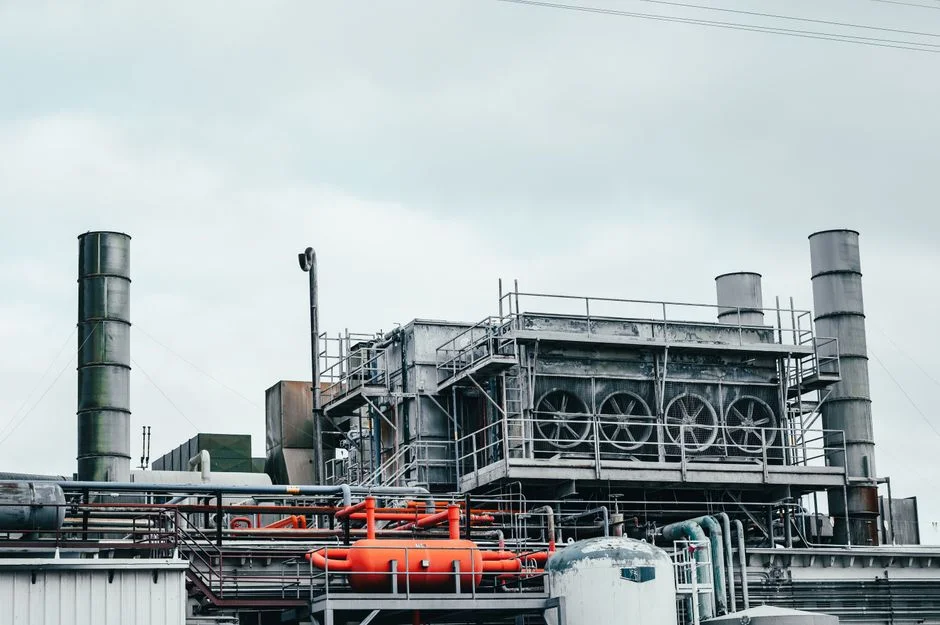
The simplest way to score CAF against DAF on a real project is to lay the engineering parameters side by side. DAF dissolves air in a side stream under 4–6 bar and releases it through nozzles; CAF draws air from outside and generates microbubbles in-situ by mechanical cavitation (SIGMADAF product page, 2025; SIGMADAF video, 1 Dec 2025). That single mechanical difference drives the equipment-count, footprint, instrument-count and maintenance differences that follow. The table below pulls the engineering parameters a procurement engineer actually needs into one place — the kind of matrix the marketing pages deliberately avoid because it forces an honest comparison.
| Parameter | Dissolved Air Flotation (DAF) | Cavitation Air Flotation (CAF) |
|---|---|---|
| Bubble source | Air dissolved in a pressurized side stream, released through nozzles (4–6 bar) | Air drawn in by external aerator; microbubbles formed in-situ by mechanical cavitation (SIGMADAF product page, 2025) |
| Major equipment | Pressure pump, saturation tank, air compressor, recycle loop, nozzle manifold | External aerator, contact/clarification vessel, skimmer, sludge collection (no compressor, no saturation tank, no pressurized recycle) (SIGMADAF video, 1 Dec 2025) |
| Footprint and skid count | Larger; multiple skids (pump, saturation, compressor) | Smaller; single rectangular vessel (SIGMADAF product page, 2025) |
| Operating cost axis | Compressor and saturation tank drive ongoing power and maintenance | Removed compressor and saturation tank are the marketed cost advantage; per-m³ energy figures must be requested per project (SIGMADAF video, 1 Dec 2025) |
| Vendor-published removal performance | Established DAF reference data; project-specific | Up to 95% TSS reduction; 99% oil-and-grease removal; major COD/BOD reductions in a complete physicochemical train (SIGMADAF product page, 2025) |
| Pharmaceutical fit — floatable/colloidal load (FOG, TSS, colloids, fermentation residues) | Yes, well-established | Yes, within the 3–250 m³/h capacity envelope (SIGMADAF product page, 2025) |
| Pharmaceutical fit — dissolved API residues | No — flotation does not destroy dissolved APIs | No — flotation does not destroy dissolved APIs; the 2026 Liu et al. review in Ultrasonics Sonochemistry 129:107843 treats pharmaceutical removal as an advanced-oxidation problem, not a flotation one |
| Sensitivity to surfactant-rich CIP and fermentation broth | Confirm by jar test on actual wastewater | Confirm by jar test on actual wastewater; high-surfactant matrices can change bubble-particle attachment |
| Verification standard | ASTM D-3921 for oil and grease; standard COD/BOD methods | Same — ASTM D-3921 and standard COD/BOD methods (Wang, Hung & Shammas, 2005, Humana Press) |
Two rows of that matrix are worth pausing on. First, neither DAF nor CAF addresses dissolved API residues. For that problem the 2026 Ultrasonics Sonochemistry review recommends HC combined with H2O2, persulfate, peroxymonosulfate, percarbonate, Fenton, catalysts, ozonation, or photocatalysis hybrids. Second, the operating-cost row is honest: the vendor markets CAF as "cost-effective" specifically because the compressor and saturation tank are removed, but exact kWh/m³, polymer demand and maintenance-hour figures are not published and must be requested per project. A buyer who treats the "cost-effective" line as a number will oversize the budget; a buyer who turns it into a request for a per-m³ energy and polymer demand quotation will get a defensible comparison.
Where CAF Fits in a Pharmaceutical Effluent Train
API and formulation wastewater typically contains high-strength COD/BOD, spent solvents, fermentation residues, antibiotic residues, suspended biomass and emulsified cleaning agents. CAF addresses the floatable and colloidal fractions of that stream, not the dissolved API load (Liu et al., 2026, Ultrasonics Sonochemistry 129:107843). In a typical train, CAF sits after pH adjustment/coagulation-flocculation and before biological treatment (MBR or SBR) or a polishing/oxidation step — the same role a DAF plays in the textbook reference design carried into the Humana Press flotation chapter series.
For a pharmaceutical plant already running an MBR, CAF can also act as a secondary clarifier protecting the membranes from FOG shock loads, or as a tertiary polishing step upstream of RO reuse. The table below maps the unit operation to the fraction it actually controls, which is the conversation that fails most often at the procurement stage when a "one clarifier fits all" assumption creeps in.
| Effluent fraction | CAF role | Required downstream step |
|---|---|---|
| Free oil, FOG, suspended solids, colloids (CIP emulsions, fermentation residues) | Primary removal — up to 95% TSS and 99% oil-and-grease (SIGMADAF product page, 2025) | Biological (MBR/SBR) for residual organic load; existing HydropureWater Dissolved Air Flotation (DAF) System sites can retrofit a CAF ahead of the existing DAF for FOG shock-load protection |
| High-COD/BOD bulk organics | Partial reduction as part of a physicochemical train; exact percentage depends on coagulant/flocculant dose and matrix (SIGMADAF product page, 2025) | Biological treatment (MBR/SBR); an HydropureWater MBR membrane bioreactor system is the typical downstream polish |
| Dissolved or colloidal APIs, antibiotic residues, spent solvents | Not addressed by flotation alone | Advanced oxidation — HC + H2O2, persulfate, PMS, percarbonate, Fenton, catalysts, ozonation or photocatalysis hybrids (Liu et al., 2026) |
| Polymer and coagulant dosing | Chemistry must be matched to the matrix | Use a controlled HydropureWater automatic chemical dosing system ahead of the CAF to keep dose stable during batch swings |
Two practical rules follow. First, source segregation still matters: spent solvent streams, fermentation broth and CIP washwater should be characterized separately, because the bubble-particle attachment in a CAF responds to the surfactant and ionic strength of each stream. Second, jar tests on the actual plant wastewater — not generic data sheets — are the only honest way to size the unit. Vendor data reports headline removal numbers (95% TSS, 99% oil-and-grease), but those are envelope figures, not a guarantee for your specific mother-liquor composition.
2026 Design and Specification Checklist for a Pharma-Grade CAF
The fastest way to convert this article into a real CAPEX conversation is to walk into a vendor meeting with a written specification. The five items below are the minimum a 2026 pharma-grade CAF enquiry should include. First, specify AISI 304 or AISI 316 stainless-steel wetted parts to meet pharmaceutical hygiene and corrosion expectations (SIGMADAF product page, 2025). Second, confirm the unit capacity falls within the proven 3 to 250 m³/h envelope, with redundant units sized for peak CIP and batch-discharge events (SIGMADAF product page, 2025). Third, demand jar-test data on the actual plant wastewater, not generic data sheets — surfactant-rich CIP and fermentation broths change bubble-particle attachment behaviour, and only a jar test on the real matrix gives a defensible polymer dose and hydraulic retention time.
Fourth, anchor performance verification to ASTM D-3921 for oil and grease and to standard COD/BOD methods, and align the train with the air-flotation design fundamentals in Wang, Hung and Shammas (Humana Press, 2005) so the process guarantee is tied to a published method rather than a vendor slide. Fifth, plan a downstream polishing or advanced-oxidation step for dissolved API residues — flotation alone is not sufficient for the dissolved-fraction problem flagged in Liu et al., Ultrasonics Sonochemistry 129:107843, 2026. The dissolved-fraction problem is where most engineer-buyers fail at audit, because the flotation skid looks compliant on the inlet and outlet TSS numbers while the dissolved API load is untouched.
For the dosing step upstream of the CAF, an HydropureWater automatic chemical dosing system keeps coagulant and flocculant dose stable during batch swings, which matters when CIP events drive the influent surfactant load. For the biological polish downstream, an HydropureWater MBR membrane bioreactor system handles the residual COD/BOD and protects the RO reuse stage that some formulation plants are now adding to their 2026 water-reuse plans. Plant engineers comparing supplier options for the broader train can review a related DAF vs clarifier selection guide for chemicals wastewater and a 2026 supplier shortlist and compliance-cost data for a 2026 plant before the vendor meeting.
Frequently Asked Questions
What does a cavitation air flotation system actually remove from pharmaceutical wastewater?
CAF removes the floatable and colloidal fractions — free oil, emulsified grease, suspended solids and colloids — and, as part of a physicochemical train, it can deliver up to 95% TSS reduction and 99% oil-and-grease removal with major reductions in COD and BOD (SIGMADAF product page, 2025). It does not remove dissolved or colloidal active pharmaceutical ingredients; that fraction is an advanced-oxidation problem, not a flotation problem (Liu et al., 2026, Ultrasonics Sonochemistry 129:107843).
How should I budget a CAF unit for an API plant in 2026, and what cost inputs do I need from the vendor?
The CAPEX line item is the stainless-steel skid in the 3–250 m³/h envelope, and the OPEX axis is dominated by the absence of a compressor, saturation tank and pressurized recycle (SIGMADAF product page, 2025; SIGMADAF video, 1 Dec 2025). Because the vendor markets the configuration as "cost-effective" without publishing per-m³ energy or polymer-demand numbers, the actionable procurement check is to request a per-m³ energy figure (kWh/m³), a polymer demand figure (kg/m³) and an annual maintenance-hour estimate specific to your plant's influent — those three numbers let you compare a CAF quotation against a DAF quotation on equal terms.
Where does CAF sit in a pharmaceutical effluent train relative to DAF, MBR and advanced oxidation?
CAF sits after pH adjustment and coagulation-flocculation and before biological treatment (MBR or SBR) or a polishing/oxidation step, mirroring the role of DAF in the reference design carried in Wang, Hung and Shammas (Humana Press, 2005). For a plant already running an MBR, a CAF can be added ahead of the membranes as a FOG shock-load guard, or downstream as a tertiary polisher before RO reuse. The actionable engineering check is to confirm by jar test on actual plant wastewater — not generic data — that the bubble-particle attachment still holds at peak CIP and fermentation-batch conditions.
How do I select a CAF supplier for a 2026 pharmaceutical project without over-trusting a marketing claim?
The actionable supplier-selection check is to require three documents in writing before any purchase order: a jar-test report on the actual plant wastewater, a process guarantee tied to ASTM D-3921 and standard COD/BOD methods (not to a vendor slide), and a written statement of which downstream step will address dissolved API residues — because no flotation clarifier on its own solves that problem (Liu et al., 2026, Ultrasonics Sonochemistry 129:107843). A supplier that will not commit to those three documents in writing is not yet a qualified vendor for a regulated pharmaceutical train.