
Why Textile Wastewater Pushes Engineers Toward Pressure Flotation
Textile mills generate some of the most variable industrial effluents on a plant site, and that variability is why engineers reach for a flotation cell as the first separation step. In 2015, China's textile sector discharged 1.84 billion tons of wastewater and ranked third among 41 key industries for five consecutive years (2011–2015), while emitting 206,000 tons of chemical oxygen demand that year (PeerJ, citing the Ministry of Environmental Protection of China, 2015). The reuse gap makes capital investment in flotation commercially defensible: the textile water reuse rate is under 70%, versus an 80% national industrial average, and printing-and-dyeing reuse is only 30% (China National Textile and Apparel Council, 2018). Closing even part of that gap requires removing suspended fibers, sizing agents, oils, greases, and colloidal dye residues upstream of any reuse loop, and a plain clarifier cannot do that job reliably.
Academic and industry sources confirm that dissolved air flotation has been a standard primary-clarification step for high-load textile and leather plants for around sixty years, applied where pollutant loads exceed typical municipal levels (Industria Textila, 2018). The regulatory backdrop in the United States reinforces the case: 40 CFR Part 410 was promulgated in 1974 and amended in 1977 and 1982 (US EPA), and EPA's Effluent Guidelines Program Plan 15 (January 2023) announced an expanded review of PFAS use and discharge in textile mills, meaning any new flotation step is part of a tightening compliance pathway rather than a one-off capex. For a 2026 spec, this combination of reuse pressure, influent character, and regulatory trajectory is the reason a HydropureWater DAF system belongs at the head of a textile effluent train.
How a Pressure Flotation Unit Actually Works
Pressure flotation separates suspended solids, oils, greases, and colloidal matter by exploiting the solubility of air in water under pressure. In the standard dissolved air flotation (DAF) configuration, a recycle or feed stream is saturated with compressed air at 0.3–3 bar and then released into a flotation cell, where supersaturation drives dissolved air out of solution as a cloud of micro-bubbles (Municipal economy of cities, 2005). Those bubbles attach to particles, oils, and fiber fragments, forming buoyant aggregates that rise to the surface; a rotating or chain skimmer removes the float layer, and the clarified underflow passes to the next treatment stage.
A second variant, hypobaric flotation, works in the opposite direction. Wastewater at atmospheric equilibrium is introduced into a closed cell held at 0.3–0.5 bar depression, which causes dissolved air to come out of solution as bubbles without first being pressurized (Municipal economy of cities, 2005). The hypobaric approach avoids a pressurized recycle loop and the associated pump and air-saturation tank, but it depends on the influent already being close to air-saturation and is typically chosen on a project-specific basis. The following section outlines how these mechanisms integrate into a standard mill workflow.
Where Pressure Flotation Fits in a Textile Effluent Train
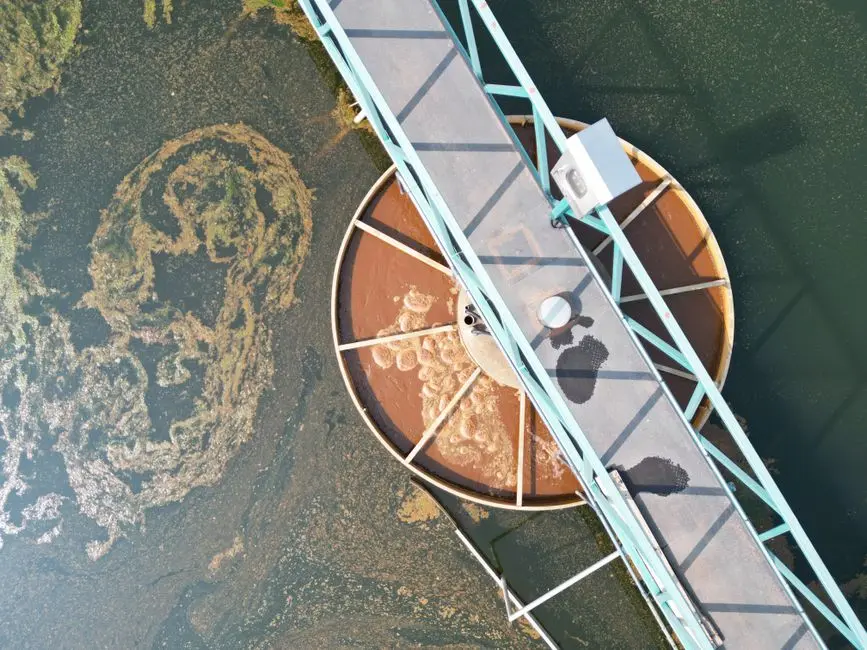
A DAF unit functions as a primary clarifier equivalent rather than a polishing step. A typical textile train runs: equalization → screening → coagulation/flocculation → DAF → biological treatment (activated sludge or MBR) → polishing/disinfection. The DAF's job is to remove the bulk of suspended solids, FOG, and colloidal dye before biological polishing, so that the aeration tank or MBR module sees a much more uniform influent. DAF units are explicitly proven in textile, food, pulp & paper, metalworking, petrochemical, and municipal pre-treatment applications, with flows 4–300 m³/h across 13 standard models in the HydropureWater DAF catalog, which covers the envelope most textile mills sit inside.
For a US spec, the receiving constraint usually drives the DAF sizing: most textile plants still discharge to a POTW rather than directly to surface water, so 40 CFR Part 410 subcategory limits apply to direct discharges and the local POTW's sewer use ordinance applies to indirect discharges. The DAF must be sized to local POTW FOG and TSS limits, and those limits are project-specific inputs you need to request from the receiving utility. The streams where DAF earns the most credit are desizing wash water (high BOD and starch/PVA sizing agents), scouring effluent (oils, waxes, and surfactants), and print/dye wash-off (color, surfactants, and suspended dye particles).
| Textile stream | Key contaminants | DAF fit |
|---|---|---|
| Desizing wash water | Starch/PVA sizing agents, high BOD, suspended solids | Strong — removes suspended sizing residue before biological stage |
| Scouring effluent | Oils, waxes, greases, surfactants, high temperature | Strong — FOG and colloidal matter float readily |
| Print and dye wash-off | Color, surfactants, residual dyes, fiber lint | Strong — removes color bodies and fiber fragments with coagulant aid |
| Combined equalization | Mixed loading, diurnal flow swings | Strong as primary clarifier equivalent ahead of biological treatment |
Design Parameters You Must Lock Before Sizing the Unit
Vendor sizing requires specific influent data, as a flow number alone is insufficient for a reliable design. The literature is firm on the mechanism ranges: 0.3–3 bar compressed-air saturation for pressurized DAF, and 0.3–0.5 bar depression for the hypobaric variant (Municipal economy of cities, 2005). Beyond that, the textile-specific numbers are not in the public research base and must be confirmed with the shortlisted vendor or a pilot run, not assumed.
| Parameter | What the literature / catalog says | What you must request from the vendor |
|---|---|---|
| Saturation pressure | 0.3–3 bar pressurized; 0.3–0.5 bar hypobaric depression (Municipal economy of cities, 2005) | Confirm pressurized vs. hypobaric choice and saturated-recycle design pressure |
| Flow envelope | 4–300 m³/h, 13 standard models (HydropureWater DAF catalog) | Confirm model and confirm peak vs. average hourly flow |
| Surface loading rate | Not specified in the public research for textile DAF | Vendor's guaranteed m/h and supporting pilot data |
| Recycle ratio and retention time | Not specified in the public research | Vendor's design recycle % and saturation tank residence time |
| Micro-bubble size and A/S ratio | Micro-bubble generation is the core mechanism (Industria Textila, 2018) | Bubble size distribution and air-to-solids ratio on the datasheet |
| Chemical conditioning | Coagulant + flocculant dosing is required for textile effluent | Specify a PLC-controlled chemical dosing skid so dose tracks flow |
| Skimming and sludge handling | Float layer removed by skimmer; downstream dewatering is project-specific | Skimmer type, float mass estimate, and downstream dewatering device |
Locking these parameters is what separates a defensible spec from a price-driven one. Without an influent envelope (TSS, COD/BOD, FOG, surfactant class, color, temperature, pH) and a target removal, no vendor can responsibly guarantee performance.
Pressure Flotation vs. Lamella Clarifier for Textile Plants
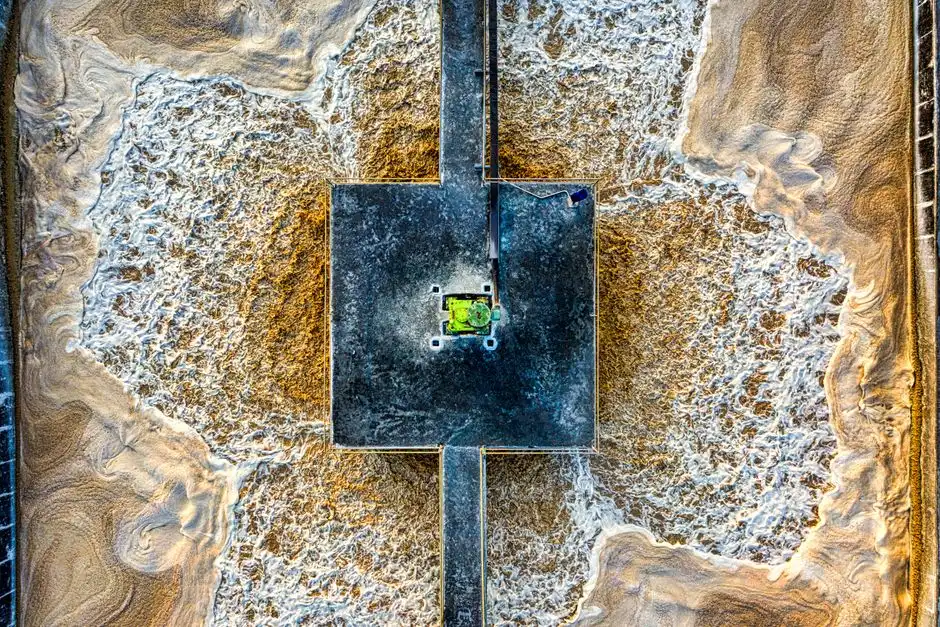
The procurement decision is usually between a DAF and a lamella clarifier, with the right answer depending on the influent character. DAF wins when the stream carries oils, greases, surfactants, and low-density colloids typical of textile wash-off, because micro-bubbles attach to exactly those particles. A lamella clarifier is generally more competitive for heavy, high-TSS mineral streams where the contaminant already wants to settle. Surface loading is a useful first filter: lamella clarifiers commonly target 20–40 m/h with inclined plates, while DAF surface loadings are lower and project-specific, so the DAF vendor must be asked for their guaranteed m/h figure on textile effluent.
| Decision factor | Pressure flotation (DAF) | Lamella clarifier |
|---|---|---|
| Best-fit influent | Oils, greases, surfactants, low-density colloids, dye wash-off | Heavy, high-TSS mineral streams |
| Surface loading | Lower, project-specific; confirm with vendor | Commonly 20–40 m/h with inclined plates |
| Chemical footprint | Coagulant + flocculant injection upstream | Coagulant + flocculant, typically lower polymer dose per m³ |
| Sludge character | Float sludge, easier to thicken, lower % solids | Settled underflow, higher % solids |
| Downstream dewatering | Plate-and-frame filter press sized to float mass | Plate-and-frame filter press sized to underflow |
| Typical role in textile train | Primary clarifier equivalent | Primary clarifier, or polish stage after DAF |
| Lamella reference | — | Lamella clarifier option |
For textile mills with mixed streams, the common configuration is DAF as primary plus a lamella clarifier option as a polish stage, but the deciding factor is the local POTW or NPDES limits. Request those limits from the receiving utility or your state agency before final selection, because a unit that meets lab TSS but misses local FOG will still fail acceptance.
Procurement Checklist: Specifying a 2026 DAF for Your Mill
Walk into the vendor conversation with this list closed out, and the RFQ becomes a 30-minute review instead of a six-week clarification loop. Confirm peak and average hourly flow in m³/h and the diurnal pattern; the HydropureWater DAF line covers 4–300 m³/h across 13 standard models, which fits most textile envelopes but does not substitute for a sized selection. Share the influent envelope (TSS, COD/BOD, FOG, surfactant class, color, temperature, pH); without these, no vendor can responsibly guarantee removal. Share the compliance envelope: 40 CFR Part 410 subcategory limits in the US, the receiving POTW's local sewer use ordinance, and any state PFAS monitoring requirements triggered by EPA's January 2023 Program Plan 15 review.
Specify the operating expectations: skimmer type, control system (PLC vs. relay), materials of construction for wetted parts, and a chemical-dosing interface tied to a PLC-controlled chemical dosing skid. Confirm after-sales terms: warranty on bubble-generation components, consumables list, and on-site commissioning. Tie the float sludge to a defined endpoint with a plate-and-frame filter press so the dewatering step is not left to the commissioning team to figure out. A useful cross-reference for the broader train is the textile ETP process design case study, and the DAF for textile industry design guide covers the equipment-selection logic in more depth. Compliance-driven specs should also cross-check the textile color discharge compliance reference, since color limits drive coagulant selection in many regions.
Frequently Asked Questions
What does a pressure flotation system cost for a textile mill?
The supplied research does not provide a textile-specific DAF price, so a budgetary figure cannot be quoted responsibly. Treat capital cost as a function of flow envelope (4–300 m³/h across the 13 standard models in the HydropureWater DAF catalog), influent character (TSS, FOG, surfactant load), and the chosen configuration (pressurized vs. hypobaric). Request a sized quotation with pilot or reference data for your specific stream before committing budget.
How do I choose between DAF and a lamella clarifier for a new textile ETP?
Use influent character as the first filter. If the dominant load is oils, greases, surfactants, and low-density colloids from scouring or dye wash-off, DAF is the right primary step. If the stream is heavy mineral TSS, a lamella clarifier is typically more competitive on surface loading and polymer dose. For mixed streams, DAF primary plus a lamella polish stage is common; the deciding factor is the receiving POTW or NPDES limits, which you must request from the local utility before final selection.
Which textile streams benefit most from a DAF pre-step?
Desizing wash water (high BOD, starch/PVA sizing agents), scouring effluent (oils, waxes, and surfactants), and print/dye wash-off (color, surfactants, and fiber lint) are the three streams where DAF earns the most credit, because the contaminants are buoyant, colloidal, or attached to fibers that float readily once coagulated.
What influent data must I give a DAF vendor before they can size a unit?
Peak and average hourly flow in m³/h with the diurnal pattern, plus TSS, COD/BOD