What 'Trusted' Means for Industrial Wastewater Treatment in 2026
A "trusted" wastewater treatment process for an industrial buyer in 2026 is one that meets three measurable criteria at the same time: it is documented in peer-reviewed engineering literature, it is paired with an automation layer that has published performance data behind it, and it satisfies the state-specific NPDES or equivalent discharge and reuse rules that govern the site. A 2023–2024 ACS ES&T Water review of computational modeling in wastewater treatment notes that deterministic, stochastic, and time-series models are now standard for predicting WWTP performance against tighter water-quality and energy-efficiency standards, which gives an engineer a defensible way to score vendor claims before capital is committed (ACS ES&T Water, 2023).
Automation is no longer a soft benefit: a 720-observation PLC–SCADA integration study reported an immediate energy-intensity reduction of 0.041 kWh/m³ (95% CI −0.056 to −0.026, p < .001), a 28.4 alarm-per-day drop (p < .001), and a 2.6 mg/L reduction in chemical intensity (p = .001), all after adjusting for influent flow, temperature, operating regime, and equipment availability (RAST Journal, 2024). These three numbers, used together, become a working definition of "trusted" that any proposal can be measured against.
For an industrial reader, this definition matters because vendor brochures tend to describe equipment in isolation. The control system, the influent profile, and the discharge rule get separated in the sales conversation; the definition above forces them back together. If a vendor cannot point to a model-based prediction of effluent quality, an automation system with documented performance outcomes, and a clear path to the relevant state permit, the proposal has not yet cleared the trust threshold.
The Core Unit Operations That Anchor a Trusted Industrial Train
Most trusted industrial trains are assembled from the same six block types, regardless of the specific industry. Pretreatment starts with a rotary mechanical bar screen to protect downstream pumps and biological stages from rags, plastics, and fibrous debris that arrive in industrial headworks. Physico-chemical separation follows, where a DAF system targets suspended solids, FOG, oil and grease, and colloidal matter; lamella clarifiers are used instead when flows are high-turbidity and surface loading is the limiting parameter.
The biological step is where the train diverges by industry. Conventional activated sludge handles a wide envelope of biodegradable load at modest footprint cost. An MBR membrane bioreactor system combines activated sludge with submerged PVDF membranes to push effluent toward reuse quality in a much smaller footprint, and is the right answer when discharge limits are tight or reuse is in scope. Anaerobic options such as UASB and EGSB recover biogas from high-strength biodegradable wastewater but respond slowly to load swings, so they are typically paired with a polish step.
Tertiary treatment is built from multi-media filtration and an ultrafiltration system with 0.03–0.1 μm pore range, which removes bacteria, colloids, and turbidity and protects any downstream RO. Disinfection is selected against the pathogen profile and the by-product rules: chlorine dioxide, UV-C, and ozone each carry different regulatory implications, and UV is the usual answer for chlorine-resistant organisms such as Cryptosporidium and Giardia. Sludge handling closes the mass balance through plate-and-frame filter presses or screw presses, and dewatering performance often decides the true lifecycle cost of the train.
Matching the Process Train to Industrial Influent
The unit operations above only become a "train" when they are matched to a specific influent. A plant engineer should treat the wastewater characterization report as the input and the process shortlist as the output; the table below is a defensible translation of that conversion for common industrial profiles. Where the influent is non-standard, the ACS ES&T Water review makes clear that deterministic and stochastic modeling is required to predict performance rather than assuming it from similar municipal data (ACS ES&T Water, 2023).
| Influent profile | Typical industries | Front-end unit operation | Biological step | Tertiary / polishing |
|---|---|---|---|---|
| High FOG, oil & grease | Food processing, meat, metalworking | DAF with chemical aid | CAS or MBR | Multi-media + UF (if reuse) |
| High TSS, variable flow | Textile, fabricated metals | Equalization + DAF or lamella | CAS or MBR | Multi-media filter |
| High biodegradable COD/BOD | Food & beverage, pulp & paper | Screening + equalization | MBR (tight footprint) or UASB/EGSB (biogas) | UF + RO if reuse |
| Refractory or toxic organics | Pharmaceutical, petrochemical | Equalization + source control | Specialized biological or AOP | UF + carbon + RO as needed |
| Reuse objective | Cooling make-up, boiler feed, process | Full pretreatment chain | MBR preferred | UF + RO + disinfection |
Two patterns are worth flagging. First, where reuse is the objective, the train is better designed for it from the start; retrofitting for reuse is consistently more expensive because pretreatment, equalization, and membrane protection all have to be re-tightened (Water & Wastewater, 2025). Second, the choice between DAF and lamella should track influent variability rather than capital cost: DAF handles FOG and chemical-aided separation, lamella handles bulk clarification at high flow.
Process Capability Matrix: DAF, MBR, UF, Lamella, Anaerobic
The matrix below restates the unit-operation choices above as a side-by-side capability comparison. The intent is to let the reader scan duty envelopes and pick the right unit operation for a specific job, not to crown a single winner. Where the ACS ES&T Water review notes that modeling is now standard for predicting WWTP performance, this matrix is the qualitative input set that the model expects (ACS ES&T Water, 2023).
| Unit operation | Primary duty | Typical influent target | Footprint / response | Where it fits |
|---|---|---|---|---|
| DAF | FOG, oil & grease, suspended solids | Chemical-aided, colloidal loads | Small footprint; fast response | Front-end workhorse for food, metalworking, oily wastewater |
| Lamella clarifier | High-turbidity clarification | High flow, moderate solids | Compact; reduced chemical demand vs. conventional | Bulk clarification upstream of biological step |
| MBR (submerged PVDF) | BOD removal + membrane filtration in one | Biodegradable COD/BOD with tight discharge | Much smaller than CAS; near-reuse effluent | Tight discharge limits or reuse duty |
| Anaerobic (UASB/EGSB) | High-strength biodegradable COD | Food & beverage, pulp & paper | Slow response to load swings; biogas credit | High loadings where anaerobic recovery is economic |
| UF (0.03–0.1 μm) | Bacteria, colloids, turbidity removal | MBR or CAS effluent | Compact skid; protects RO | Tertiary polish for reuse |
| Multi-media filter | SS and SDI control | Pre-RO feed | Compact; well-understood | Pre-RO workhorse |
| Plate-and-frame filter press | Sludge dewatering | Biological or chemical sludge | Batch; high cake solids | Closes the mass balance |
For deeper equipment-selection guidance, the industrial wastewater treatment equipment selection guide walks through influent-to-process mapping in more detail, and the digital twin wastewater treatment plant 2026 guide shows how to validate the chosen train against operational data before purchase.
Automation as a Trust Multiplier on Top of Equipment Selection
In 2026, "trusted" includes the control system, not just the tank and pump. The RAST Journal PLC–SCADA integration study ran an interrupted time series over 720 daily observations, half pre-integration and half post-integration, with statistical adjustment for the variables a buyer cares about: influent flow, temperature, operating regime, and major equipment availability (RAST Journal, 2024). The headline numbers are below.
| Indicator | Pre- vs. post-integration change | Statistical confidence |
|---|---|---|
| Energy intensity (kWh/m³) | Immediate −0.041; additional trend −0.00018/day | p < .001 (level); p = .002 (trend) |
| Composite stability deviation | −0.043 units | p < .001 |
| Excursion event rate | 78% of baseline (22% drop) | IRR 0.78, 95% CI 0.70–0.87 |
| Alarm rate | −28.4 alarms/day | p < .001 |
| Alarm flood event frequency | 73% of baseline | IRR 0.73, p < .001 |
| Manual override time | −1.6 percentage points | p < .001 |
| Chemical intensity | Immediate −2.6 mg/L | p = .001 |
| VFD speed variability (mechanism proxy) | −9.2% | p < .001 |
| Loop oscillation proxy | −0.36 units | p < .001 |
Three things matter about this evidence. First, the gains were not artifacts of one operating mode: storm-only, influent-matched, and outage-excluded sensitivity runs all returned the same direction and comparable magnitudes (RAST Journal, 2024). Second, the chemical-intensity and loop-oscillation changes point to a control-stability pathway, not a tuning artifact, which is why a PLC-controlled chemical dosing system specified as part of the SCADA layer is a defensible line item rather than an accessory. Third, the energy, alarm, and chemical gains compound over the asset life; the additional 0.00018 kWh/m³ per day trend is small per day but meaningful across a multi-year operating horizon.
Life-Cycle and Regulatory Fit: Where 'Trusted' Gets Decided
A CAPEX-only comparison almost always misranks the alternatives in industrial wastewater. The Imperial College enviroeconomic synthesis work shows that integrating life-cycle assessment into superstructure optimization can change the optimal process configuration materially, because reuse credits, chemical demand, and energy recovery are not visible in a purchase-order comparison (Spiral, Imperial College London, 2017). For a 2026 industrial project, the lifecycle question is not optional.
On the regulatory side, US industrial discharges are governed by the Clean Water Act through the NPDES program, and most states run their own authorized programs with materially different expectations. Nutrient removal is concentrated in the Chesapeake Bay watershed and around the Great Lakes; water reuse infrastructure is concentrated in the arid Southwest and in Florida, where reclaimed water has direct economic value; combined sewer overflow programs are concentrated in older Northeast and Midwest cities (Water & Wastewater, 2025). For an industrial buyer, that means the regulatory envelope is set state by state, and a train that is accepted in one state may not transfer directly to another.
Modeling and time-series tools from the ACS ES&T Water review should be used to validate that the proposed train will meet state-specific limits, not just the federal floor (ACS ES&T Water, 2023). Where reuse is in scope, align the unit operations with state reclamation credit arrangements and reuse permits from the start; retrofitting for reuse is consistently more expensive than designing for it (Water & Wastewater, 2025).
A 2026 Decision Framework for Selecting a Trusted Process Train
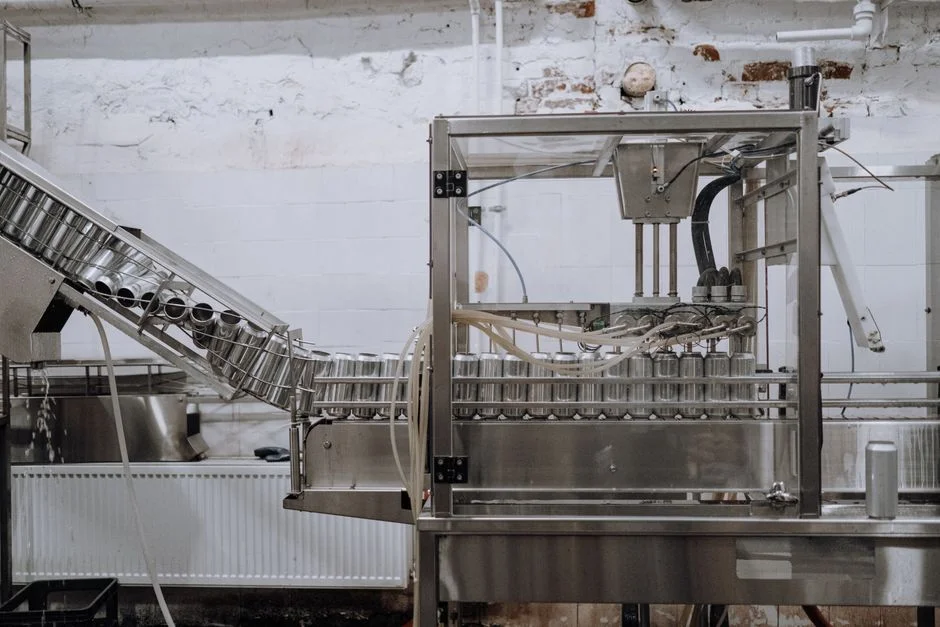
The workflow below is what a defensible 2026 selection looks like in a meeting. It assumes the influent characterization is already in hand and that the discharge or reuse objective is locked before the shortlist is built.
- Characterize the influent. Lock flow, BOD/COD, TSS, FOG, nutrients, toxics, and temperature swings before opening any vendor conversation.
- Build a unit-operation shortlist. Use the capability matrix above; reject any option that cannot meet the state-specific NPDES or reclamation limits.
- Run a model-based prediction. Use deterministic or stochastic models (per the ACS ES&T Water review) to forecast effluent quality and energy use, and run sensitivity on flow and load before any pilot.
- Add life-cycle assessment. Include LCA in the comparison so reuse, chemical demand, and energy recovery are priced in, not externalized (Spiral, Imperial College London, 2017).
- Specify the automation layer. Treat PLC/SCADA integration as a hard requirement; budget it to capture the energy, stability, and chemical gains quantified in the RAST Journal study (RAST Journal, 2024).
- Pilot, then scale with monitoring. Pilot where the influent is non-standard, then scale with monitoring tied to the same performance indicators: energy intensity, alarm rate, chemical intensity.
| Step | Output artifact | Evidence anchor |
|---|---|---|
| 1. Influent characterization | Characterization report with diurnal load profile | Site sampling; S4 state permit framework |
| 2. Unit-operation shortlist | 2–3 candidate trains | Process capability matrix (this article) |
| 3. Model-based prediction | Predicted effluent quality and energy use | ACS ES&T Water, 2023 |
| 4. Life-cycle assessment | LCA-adjusted cost and impact comparison | Imperial College, 2017 |
| 5. Automation specification | PLC/SCADA scope of work with KPIs | RAST Journal, 2024 |
| 6. Pilot + scale with monitoring | Pilot report; performance dashboard | RAST Journal KPIs; S4 reuse requirements |
This is the workflow the industrial wastewater treatment equipment selection guide is built around, and it pairs naturally with the high water volume management best practices for manufacturing 2026 for plants that are scaling flow or adding shifts.
Frequently Asked Questions
What budget range should an industrial buyer plan for a trusted wastewater treatment train in 2026?
The research base does not provide a defensible 2026 capital or operating cost figure for a complete industrial train, and the variance between a 50 m³/day food-processing DAF-plus-MBR system and a 5,000 m³/day petrochemical system is too wide for a single number. A buyer should request a site-specific CAPEX/OPEX split from each vendor, with chemical consumption, energy in kWh/m³, and sludge-handling cost broken out separately, and should require that the energy and chemical numbers be expressed as the same indicators used in the RAST Journal study (energy intensity in kWh/m³, chemical intensity in mg/L) so the proposal can be compared on a like-for-like basis (RAST Journal, 2024).
How do we choose between suppliers for an industrial wastewater project?
Score suppliers against the trust definition from this article: can they point to peer-reviewed or published evidence for the unit operations they propose, can they deliver an automation layer with documented performance data, and can they name the specific state NPDES or reclamation program the train is designed for (Water & Wastewater, 2025). Ask for at least two reference sites operating under comparable influent and permit conditions, request a pilot or witnessed performance test on your wastewater, and require that the automation KPIs (energy intensity, alarm rate, chemical intensity) be written into the acceptance test rather than left as soft targets.
Which unit operation should we pilot first when the influent is non-standard?
Pilot the operation that is most sensitive to influent variability and that the rest of the train depends on; in most industrial profiles that is the front-end separation step. For high-FOG food or metalworking wastewater, pilot the DAF with chemical optimization on your actual flow; for high-COD biodegradable streams, pilot the biological step (MBR or UASB/EGSB) with a side-by-side jar test. The ACS ES&T Water review makes clear that modeling should accompany the pilot, not replace it, because non-standard influents do not transfer cleanly from municipal performance data (ACS ES&T Water, 2023).
When is PLC/SCADA integration worth the added cost?
The RAST Journal study reports statistically significant gains in energy intensity, alarm rate, chemical intensity, and process stability over 720 daily observations under real treatment-plant variability, after adjusting for influent flow, temperature, operating regime, and equipment availability (RAST Journal, 2024). For any industrial train where energy cost, chemical cost, or alarm management is a real operating line item, automation pays back through the indicators above; the right test is whether the proposed SCADA scope can be tied to those specific KPIs in the acceptance test, not whether the vendor offers "automation" as a general feature.