Why the DAF-vs-clarifier question matters on a CR-V or MDX line
A Honda CR-V or Acura MDX program generates five wastewater streams that any clarifier decision has to handle at once: stamping wash water, phosphate/E-coat rinse, paint booth detack water, machining and grinding coolant, and general assembly wash. The dominant pollutants in each are not the same — FOG, paint solids, phosphate sludge, emulsified oils and suspended metals move through the plant in parallel — and the 2026 EV/auto plant footprint is smaller, more modular and more automation-driven than the legacy ICE plant that older comparisons were written for. A generic DAF-versus-clarifier answer does not survive contact with that stream mix.
For floatable, low-specific-gravity pollutants — oils, grease, paint solids, phosphate sludge, machining coolants — dissolved air flotation is the workhorse. Clearwater/SigmaDAF DAFs use 30–50 µm micro-bubbles to lift these particles to the surface for skimming, which is exactly what the paint shop and E-coat rinse generate. For streams dominated by settleable suspended solids with limited FOG, a lamella clarifier does the job at lower chemical dose: a HydropureWater lamella clarifier (20–40 m/h surface loading) settles grit and metals on inclined plates inside a compact skid. Selecting the right technology depends on mapping specific streams to the appropriate unit, or running them in series. A typical sizing for that program is a HydropureWater DAF system (4–300 m³/h, 13 standard models) upstream of polishing.
How a DAF actually treats oily auto wastewater
A dissolved air flotation unit pressurizes clarified water in a recirculation loop, saturates that water with air, then releases the pressure inside a separation tank so the dissolved air comes out of solution as a cloud of 30–50 µm micro-bubbles (Clearwater/SigmaDAF, 2026-04). These micro-bubbles attach to flocculated oil, grease and paint solids and lift them to the surface; a paddle skimmer scrapes the float into a collection trough while an auger pulls settled sludge from the bottom. Clearwater/SigmaDAF explicitly note that most DAF tanks include a sediment compartment with sludge extraction, so they handle both floatable and settleable fractions in one vessel.
Chemical conditioning is what makes a DAF work on a CR-V/MDX stream. Coagulant, pH adjustment and polymer flocculant are dosed upstream — typically through serpentine flocculation tubes that give a 15–45 s flash mix, or through mix tanks with impeller agitators for longer contact times (Clearwater/SigmaDAF). Jar testing sets the right dose and contact time for each line. A PLC-controlled chemical dosing skid is the 2026 default for keeping those doses stable across a shift.
Two DAF design points are relevant for procurement. First, the ClearFox round, vertical-flow polypropylene DAF claims up to 15% lower chemical consumption than rectangular horizontal DAFs because the round geometry eliminates dead zones. Second, the same ClearFox design claims up to 2× the dry solids in the floated sludge versus conventional DAFs, which lets a downstream plate-and-frame press be sized smaller and often removes the need for a separate thickener. These claims should be confirmed in a jar test or pilot on the actual CR-V/MDX stream before being written into a specification.
How a lamella clarifier treats the same stream differently
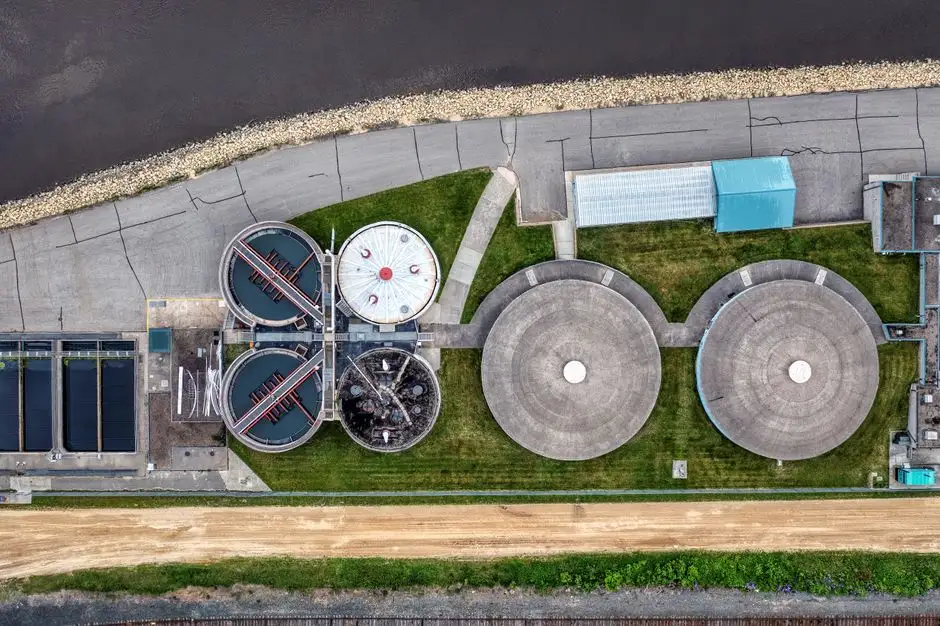
A lamella clarifier is a compact, inclined-plate sedimentation tank. Wastewater is flocculated, then flows upward through a stack of parallel plates at a 55–60° angle; settleable solids drop onto the plate surfaces and slide down into a sludge hopper, while clarified water rises to a collection launder. The plate geometry gives a high effective settling area inside a small footprint, and sludge recirculation over a floc blanket lets the unit run at the 20–40 m/h surface loading rate quoted for the HydropureWater lamella clarifier. HydropureWater's product literature claims up to 30% lower chemical consumption than conventional settling designs because of that recirculation blanket.
The lamella clarifier's weakness on a CR-V/MDX line is the pollutant mix the paint shop, E-coat rinse and machining coolant generate: it does not lift emulsified oils or low-specific-gravity paint solids to the surface. On those streams, a lamella will underperform a DAF on FOG, and the underflow it produces is a dilute sludge that typically still needs a downstream plate-and-frame filter press for sludge dewatering. For body-shop wash water that is mostly settleable grit with light oiling, a lamella is defensible; for paint detack and coolant it is not.
DAF vs clarifier for CR-V/MDX streams: head-to-head comparison
The table below condenses the Clearwater/SigmaDAF, ClearFox, HydropureWater and WesTech specifications into one decision matrix a plant engineer can use for procurement. Numbers are the published values from those four sources, with the source noted in the row. The bottom block maps each CR-V/MDX wastewater stream to the technology that fits it best.
| Parameter | DAF (dissolved air flotation) | Lamella clarifier (inclined-plate settling) |
|---|---|---|
| Dominant mechanism | Floatable lift by micro-bubbles (Clearwater/SigmaDAF, 2026-04) | Gravity settling on inclined plates (HydropureWater) |
| Target pollutant | FOG, oils, paint solids, phosphate sludge, emulsified coolant (Clearwater/SigmaDAF, 2026-04; ClearFox) | Settleable TSS, grit, suspended metals (HydropureWater) |
| Key spec | 30–50 µm micro-bubbles (Clearwater/SigmaDAF, 2026-04) | 20–40 m/h surface loading on inclined plates (HydropureWater) |
| Flow range | 1–250 m³/h (ClearFox); 4–300 m³/h, 13 standard models (HydropureWater); single skid ≤66 GPM, two-skid above (SigmaDAF COMPACT) | Set by plate area; surface loading 20–40 m/h (HydropureWater) |
| Materials of construction | 304SS standard, 316SS, polypropylene on request (Clearwater/SigmaDAF, 2026-04); polypropylene or HDPE standard (ClearFox) | 304SS / 316SS / coated carbon steel options; polypropylene plates |
| Automation | PLC control screen, automatic chemical dosing, optional remote monitoring (Clearwater/SigmaDAF, 2026-04; ClearFox) | PLC-controlled sludge recirculation and dosing skid; remote monitoring less standardized |
| Sludge dryness | Up to ~2× dry solids vs. conventional DAFs (ClearFox) | Dilute underflow, typically needs downstream dewatering press |
| Footprint | Compact; round vertical-flow design more space-efficient than rectangular (ClearFox) | Compact; inclined plates give high area in small footprint |
| Mobilization option | Trailer-mounted mobile DAF, single-day delivery and setup, ~47'-6" x 8'-6" (small) and ~51'-7" x 8'-6" (large), 3–5 ft clearance (WesTech) | Field-erected; limited trailer options |
Stream-by-stream mapping for a CR-V/MDX plant:
- Phosphate / E-coat rinse — DAF with chemical conditioning is the default; the float lifts phosphate sludge and residual oils off before biological polish.
- Paint booth detack water — DAF; the floatable paint solids and detackifier floc are exactly what 30–50 µm bubbles are designed to capture.
- Machining and grinding coolant — DAF; emulsified oil and tramp fluid lift cleanly while the coolant's suspended fines settle into the bottom auger.
- Body-shop wash water with mostly settleable grit — lamella clarifier is acceptable, especially if downstream dewatering is already in place.
- General assembly wash with light oiling — DAF; even at low oil load the float route is more robust than relying on a lamella to catch the light fraction.
Most EV/auto plants use DAF and lamella in tandem rather than choosing one exclusively. A DAF upstream of a lamella or settling stage is a common polish train on a CR-V/MDX line, because the DAF takes the floatable load off and the downstream stage catches what slips through. The related guides for DAF vs clarifier for fabricated metals wastewater in Anniston and DAF vs clarifier for mining and metals wastewater in Toomsboro apply this hybrid approach to adjacent industries.
2026 decision framework: which one should your CR-V/MDX plant choose
Three diagnostic questions drive a defensible 2026 spec. First: is the dominant pollutant floatable (FOG, paint, phosphate) or settleable (grit, metals)? Floatable streams — and on a CR-V/MDX line that is most of them — default to DAF. Settleable body-shop grit can stay on a lamella. Second: is the design flow under approximately 66 GPM (15 m³/h) and is the plant space-constrained? The SigmaDAF COMPACT DAF single-skid form factor is the 2026 default for small EV/auto lines and integrates chemical conditioning, sensors and a control panel on one skid. Third: does the downstream dewatering train already include a filter press? If yes, a lamella underflow is workable; if the plant wants to minimize sludge volume and skip a thickener, a DAF float that is already pre-thickened — ClearFox claims up to 2× dry solids — is the better fit and lets the downstream press be sized smaller.
Automation is a baseline expectation. Both DAF and lamella clarifiers should be specified with PLC control, and the chemical dosing skid should be PLC-controlled as well; Clearfox's DAF is offered with optional remote monitoring, and the SigmaDAF COMPACT DAF exposes dosing-pump, skimmer-speed and sludge-discharge setpoints through a PLC screen. For 2026 CR-V/MDX procurement, treat remote monitoring as standard so EHS can verify discharge compliance without walking the floor.
Pilot, jar test and procurement checklist for 2026
Step 1. Pull four weeks of influent data for the relevant CR-V/MDX stream — flow, TSS, FOG, oil & grease, pH, temperature, plus line-specific pollutants (phosphate, paint solids, coolant). Without that baseline, no DAF or lamella spec is defensible. Step 2. Run jar tests to set coagulant, pH adjuster and polymer flocculant doses and contact times. Clearwater/SigmaDAF explicitly recommend jar testing to understand proper mixing time before sizing the unit. Step 3. Where the budget allows, run a trailer-mounted DAF pilot to validate removal on the actual line; WesTech documents single-day delivery and setup for its mobile DAF, which makes a pilot feasible during a planned shutdown. Step 4. Match materials of construction to the stream — 304SS is the Clearwater/SigmaDAF default, with 316SS or polypropylene available where chlorides, acids or aggressive cleaners are present; ClearFox builds its DAFs in polypropylene and HDPE specifically for that reason. Step 5. Specify modular skid delivery, PLC automation, and integration with the plant's existing PLC-controlled chemical dosing skid to keep installation time low. This is also the right place to revisit the pressure flotation system engineering guide if the plant is weighing pressure flotation as an alternative.
Frequently Asked Questions
What is the typical 2026 capex and footprint difference between
Frequently Asked Questions
Should a Honda CR-V or Acura MDX factory use a DAF or a clarifier for its 2026 wastewater treatment?
For high-volume automotive production lines like the CR-V and MDX, the choice depends on the specific waste stream characteristics. Dissolved Air Flotation (DAF) is superior for treating paint shop effluent containing emulsified oils, surfactants, and low-density solids that do not settle readily. A clarifier is generally preferred for treating high-solids-loading streams, such as pre-treatment sludge or metal-hydroxide precipitation from assembly processes, where gravity settling is more efficient.
What is the typical 2026 capex and footprint difference between a DAF and a lamella clarifier for an auto assembly plant?
In 2026, a DAF system typically carries a 20% to 35% higher capital expenditure (CAPEX) than a lamella clarifier due to the inclusion of pressurized recycle pumps, air saturation tanks, and high-precision chemical dosing skids. However, the DAF offers a significantly smaller footprint, often requiring 40% to 60% less floor space than a conventional gravity clarifier of equivalent hydraulic capacity, making it ideal for the constrained layouts of modern EV and hybrid vehicle assembly plants.
Can a DAF system alone meet FOG, TSS and oil & grease discharge limits for a CR-V/MDX paint and E-coat line, or is a clarifier also needed?
A DAF system alone can typically meet stringent discharge limits for Fats, Oil, and Grease (FOG) and Total Suspended Solids (TSS) if the influent is pre-conditioned with proper coagulation and flocculation chemistry. However, if the paint shop wastewater contains heavy inorganic pigments or high-density metal fines, a DAF alone may struggle to achieve full compliance. In such cases, a clarifier is often needed as a secondary stage or to handle the primary heavy-solids separation to prevent overloading the DAF.
How do you size a DAF for a Honda CR-V or Acura MDX paint shop, and what is a realistic 2026 lead time for a skid-built unit?
Sizing is determined by the hydraulic loading rate, typically ranging from 2 to 4 gallons per minute per square foot (gpm/ft²) of surface area, and the specific solids loading capacity required for the paint booth overflow. Engineers must calculate the air-to-solids ratio, which should be maintained between 0.01 and 0.05 mg of air per mg of solids. For a custom skid-built unit in 2026, realistic lead times range from 22 to 34 weeks, depending on the availability of stainless steel components and integrated PLC control systems.
When does it make sense to put a DAF upstream of a lamella clarifier on the same EV/auto wastewater train?
A DAF should be placed upstream of a lamella clarifier when the wastewater contains a high concentration of floating contaminants, such as free oils and light-density paint solids, followed by a secondary waste stream containing heavy inorganic precipitates. By removing the floatables in the DAF first, you prevent the lamella plates in the clarifier from becoming fouled by grease, thereby maintaining the settling efficiency of the clarifier and extending the intervals between manual maintenance cleanings.