Why Laredo Chemicals and Metal Work Plants Need a Combined Pretreatment Strategy in 2026
A Laredo facility that runs both a chemicals line and miscellaneous metal work can trigger two overlapping federal categorical regimes from a single sewer connection. The 1976 OSTI industrial survey confirms that SIC 28 (Chemicals and Allied Products) contains 28 four-digit sub-classes ranging from industrial inorganics (SIC 281) to paints (SIC 285), industrial organics (SIC 286), and miscellaneous chemical products (SIC 289). The 1977 OSTI update documents that compliance with OSHA and EPA standards acts as a fixed operating overhead that raises SIC 28 energy consumption by roughly 6 percent on average (OSTI, 1977). That overhead is a useful proxy for the plant's pretreatment compliance burden: it is real, recurring, and must be designed in, not retrofitted.
The regulatory overlap appears in SIC 2899. The 1976 OSTI target document lists SIC 2899 "Chemical Preparations, N.E.C." products as including metal-treating compounds, plating compounds, and water-treating compounds, so a chemicals plant in Laredo that also runs a metal-finishing line can fall under both the SIC 28 categorical limits and the metal-finishing limits in 40 CFR Part 433 (OSTI, 1976). The 2026 compliance posture is set by EPA's general pretreatment regulations at 40 CFR Part 403 plus the category-specific limits in 40 CFR Parts 405-437, enforced locally by the receiving POTW under its NPDB authorization. The same logic is covered in our semiconductor pretreatment compliance guide, though the chemical-plus-metal-work overlap is Laredo-specific.
What the 2026 Pretreatment Framework Actually Requires
40 CFR Part 403 establishes the national pretreatment program, defines Significant Non-Compliance (SNC) criteria, and sets the monitoring, reporting, and self-audit baseline for every industrial discharger to a POTW. Categorical pretreatment standards sit at 40 CFR Parts 405-437, and each industrial category—including metal finishing, miscellaneous metal work, and the chemicals sub-categories—publishes its own pollutant tables tied to production-based or process-based equivalents. A Laredo plant that triggers more than one category must comply with the more stringent limit for each regulated pollutant at each outfall.
The local layer is where most Laredo plants encounter difficulties. The receiving POTW operates an NPDB-authorized program and typically caps additional parameters such as sulfides, ammonia, and total hardness above the federal floor, while setting site-specific pH, flow, and surcharge limits in its discharge ordinance. Self-monitoring and slug control plans are required by 40 CFR 403.8(f) and must be reviewed at least annually. Treat the slug control plan and spill-prevention plan as live documents in 2026, reissuing them after any process change, tank swap, or new chemistry SKU. A documented review cycle is the first item a SNC investigator requests during an enforcement inspection.
Identifying the Pollutants in a Combined Chemicals and Metal Work Waste Stream
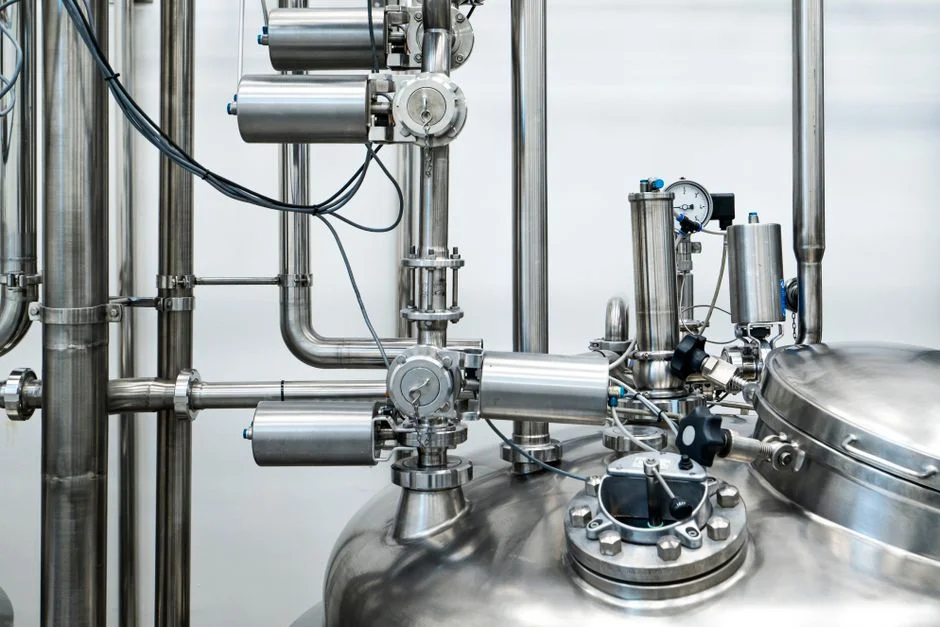
The plant must translate its process list into a pollutant list before sizing equipment. The 1976 OSTI document lists SIC 2899 products as including metal-treating compounds, plating compounds, and water-treating compounds, so a combined facility commonly needs to remove heavy metals (copper, nickel, zinc, chromium, lead, cadmium), free and emulsified oils, total suspended solids, COD, and pH-adjusting reagents in one stream (OSTI, 1976). The diversity of SIC 28 sub-classes identified in the same OSTI report—28 four-digit codes from alkalis and chlorine (SIC 2812) to paints and allied products (SIC 2851)—means a Laredo plant should map its actual SIC code and product mix before specifying treatment equipment.
The 1977 OSTI update documents that the largest-volume sub-classes in SIC 28 dominate total loadings, and the same Pareto pattern usually applies to wastewater loadings on a per-line basis (OSTI, 1977). The first engineering step is a plant-floor walkdown: list every process bath, rinse line, drag-out, and CIP stream, then assign each to a pollutant candidate for the DAF and chemical dosing train. The resulting list drives the bench-scale jar tests that justify coagulant and flocculant selection in 2026.
Building the 2026 Treatment Train: DAF, Dosing, Clarification, and Sludge Handling
The standard 2026 pretreatment chain for a combined chemicals and metal work plant in Laredo is equalization → pH correction → coagulation/flocculation dosing → dissolved air flotation (DAF) → metal hydroxide precipitation → lamella clarification → sludge dewatering. Each step removes a defined fraction of the pollutant load, and the chain is sized so that the final effluent clears both 40 CFR categorical limits and the local NPDB limits before reaching the POTW's compliance point.
Equalization dampens slug loads from batch rinses; pH correction brings the stream into the precipitation window for the target metals; coagulant and flocculant dosing destabilizes colloids and binds emulsified oils; the HydropureWater DAF system removes the bulk FOG and floated solids; metal hydroxide precipitation drops dissolved heavy metals as low-solubility hydroxides; the HydropureWater lamella clarifier polishes the supernatant; and the HydropureWater plate and frame filter press dewaters the hydroxide sludge for off-site disposal. Dosing is delivered by a HydropureWater automatic chemical dosing system with PLC-controlled coagulant, flocculant, and pH-adjuster injection on a skid, meeting 2026 expectations for repeatable, audit-traceable dosing. For background on the DAF-versus-clarifier decision, see the DAF vs clarifier comparison for fabricated metals.
| Process Step | Primary Pollutant Removed | Key 2026 Design Input | Audit Trace |
|---|---|---|---|
| Equalization | Flow and concentration spikes | Peak hourly flow from batch CIP and rinse drag-out | Level transmitter log |
| pH correction | Acidity / alkalinity outside precipitation window | Target pH setpoint from jar test for target metals | Inline pH chart, dosing logs |
| Coagulant / flocculant dosing | Emulsified oils, colloids, suspended solids | Dose (mg/L) and ratio from bench jar test | PLC dose log, jar test record |
| Dissolved air flotation (DAF) | FOG, floated solids, oil-water separation | Hydraulic loading, air-to-solids ratio, skimmer speed | Skimmer run-time, float solids log |
| Metal hydroxide precipitation | Dissolved heavy metals (Cu, Ni, Zn, Cr, Pb, Cd) | pH setpoint per metal, residence time for nucleation | pH chart, residual metal grab sample |
| Lamella clarification | Precipitated metal hydroxides, carryover floc | Surface loading, floc blanket control | Turbidity log, settler sludge volume |
| Sludge dewatering | Hydroxide sludge water content | Cake dryness target, filtrate quality | Filter press cycle log, cake weight |
Choosing Equipment: A Parameter Table for Laredo-Spec Engineers
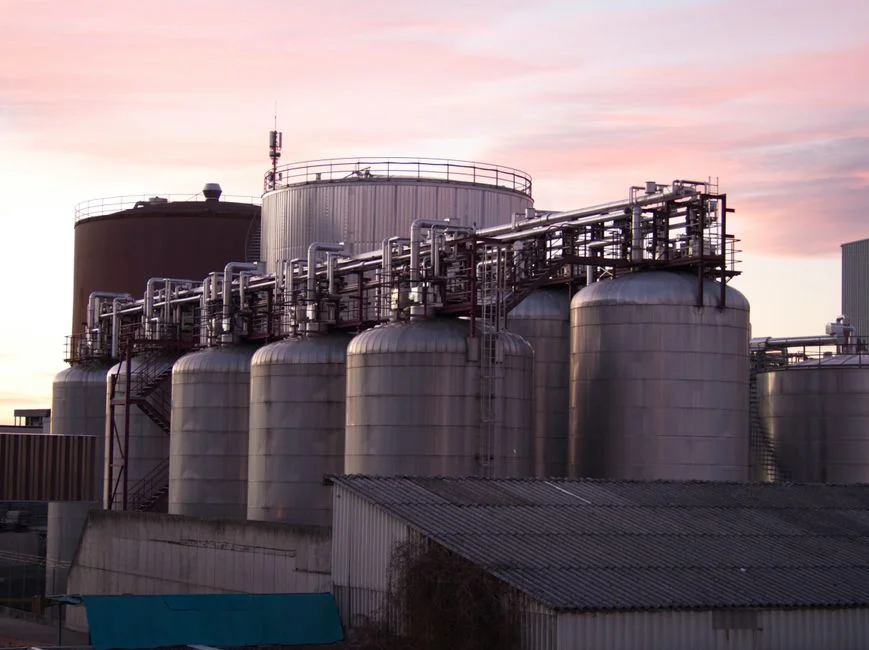
The parameter table below is a quick-reference matrix for engineers writing a 2026 CAPEX justification memo. HydropureWater DAF systems cover 4-300 m³/h across 13 standard models, with micro-bubble skimming for FOG and colloids and automated operation suitable for unattended shifts. The automatic chemical dosing system is PLC-controlled, skid-mounted, pre-wired, and factory-tested for rapid commissioning. The lamella clarifier is sized for 20-40 m/h surface loading with integrated flocculation, and the plate and frame filter press covers 1-500 m² of filtration area with closure options suited to hydroxide sludge from metal precipitation. Buyers should request a flow-paced dose control option, a redundant pH probe on the precipitation stage, and a filtrate turbidity cutoff on the filter press for 2026 compliance defensibility.
| Equipment | Capacity / Spec | Process Function | Integration Point |
|---|---|---|---|
| DAF system | 4-300 m³/h, 13 standard models, micro-bubble skimming | FOG, oil, and floated solids removal | Downstream of equalization and dosing |
| Automatic chemical dosing system | PLC-controlled coagulant, flocculant, pH; skid-mounted | Reagent injection and pH correction | Upstream of DAF and precipitation |
| Lamella clarifier | 20-40 m/h surface loading, integrated flocculation | Precipitated metal hydroxide settling | Downstream of precipitation, upstream of filter press |
| Plate and frame filter press | 1-500 m², manual / hydraulic / PLC closure | Hydroxide sludge dewatering | Receives clarifier underflow |
Monitoring, Sampling, and Self-Audit Routine to Avoid SNC Status in 2026
Significant Non-Compliance (SNC) is triggered by repeated daily-maximum or monthly-average exceedances, failure to install required monitoring, or chronic reporting gaps. Composite samplers should be installed at the compliance point (typically the discharge side of the final monitoring well) and at the process-side sample points required by 40 CFR 403.12, and they should be flow-paced rather than time-paced to capture slug events. For a detailed equipment selection walk-through, see the composite sampler buying guide.
A 30-60-90 day self-audit routine maps to the 2026 calendar. Days 0-30: confirm the compliance-point sampler is flow-paced, verify chain-of-custody seals, and baseline the slug control plan. Days 31-60: pull the last 12 months of DMRs and the last four quarterly POTW reports, flag any parameter within 10 percent of its limit, and re-issue the spill-prevention plan. Days 61-90: complete a Q1 2026 internal audit covering the slug control plan, the calibration log on every inline pH and turbidity probe, and the filter press cake disposal manifests, then file the next POTW report according to the control authority's NPDB authorization. Records should be retained for at least three years, aligned to EPA-specified minimums.
Frequently Asked Questions
What is a realistic 2026 CAPEX range for a combined chemicals and metal work pretreatment train near Laredo?
The supplied research does not contain a published price benchmark for an integrated equalization-plus-DAF-plus-lamella-plus-filter-press train. The defensible move is to request a budget proposal that itemizes the DAF system, the automatic dosing skid, the lamella clarifier, and the filter press separately, with each line tied to the equipment's stated capacity. A buyer should also request a separate line item for installation, instrumentation, and the first year's service contract, as these costs often equal the equipment cost on a turnkey 2026 project.
How should a Laredo plant select and qualify a pretreatment equipment supplier in 2026?
Use documented compliance evidence rather than marketing claims. Request at least three U.S. reference installations on metal-finishing or chemicals pretreatment with verifiable POTW discharge data, confirm that the DAF, dosing skid, lamella, and filter press are supplied by one vendor to ensure integrated responsibility, and require a written performance guarantee that ties the DAF effluent oil and the lamella effluent metals to numeric limits. Confirm the vendor can ship the skidded DAF and dosing system on a 2026 delivery window compatible with your POTW permit renewal cycle, and include the guarantee and delivery date in the purchase order as commercial terms.
What process-bath data do engineers need to collect before specifying a 2026 pretreatment train?
Walk the plant and record, for every process bath,