
Why Chemical Wastewater in Fort Smith Is a Different Decision
Chemical-plant wastewater is not a generic industrial stream. A Fort Smith facility running specialty, agrochemical, or basic organic/inorganic lines typically discharges a blend of surfactant-stabilized oil emulsions, residual solvents, salts, pH swings, and precipitated metal-hydroxide sludges rather than just settleable particulates. That mixture defeats single-technology thinking because the same tank must separate contaminants that physically want to float and those that want to sink. A second layer of complexity is regulatory: chemical manufacturers discharging to a municipal sewer fall under the EPA categorical pretreatment framework at 40 CFR 403 and the Arkansas Department of Energy & Environment (ADEE), with the receiving POTW setting the local numerical limits, surcharges, and sampling cadence. Fort Smith-area chemical plants should obtain their current POTW discharge envelope—local limits, surcharge parameters, and any categorical standards applicable to their SIC code—before sizing primary treatment, because that document drives the technology choice.
Two physical-separation problems exist within the same influent: light emulsified FOG, surfactant micelles, and fine colloids that resist gravity, and heavy precipitated sludges that settle readily. 2026 brings additional pressure: EPA pretreatment and PFAS-related initiatives continue to tighten effluent expectations, making primary treatment the compliance bottleneck. Generic food-processing or mining case studies do not capture this chemistry, which is why Fort Smith chemical buyers need a stream-specific framework rather than a vendor's slide deck.
How a DAF System Actually Treats Chemical Wastewater
A dissolved air flotation unit works by pressurizing a side stream of clarified water with air, then releasing that pressure inside the flotation tank so the dissolved air comes out of solution as 30–50 micron micro-bubbles (Clearwater, 2026-04). These micro-bubbles attach to flocculated particles and lift them to the surface, where a paddle skimmer scrapes the float into a collection trough; clarified effluent is drawn from below the float blanket, and heavier settleables drop to a bottom collection zone and are augered out (Clearwater, 2026-04). The dual float-and-settle behavior makes a DAF worth considering on chemical streams that contain both FOG and precipitated metals.
Chemical conditioning is not optional. Coagulants, polymer flocculants, and pH adjusters must be dosed upstream, either in 15–45 second serpentine flocculation tubes for fast-reacting chemistries or in agitated mix tanks when longer contact time is required (Clearwater, 2026-04). The dose envelope is stream-specific, which is why jar testing is required to set mixing time and dose before equipment is sized. Material selection also matters for chemical service: standard construction is 304SS, with 316SS, polypropylene, or other alloys available on request for corrosive chemistries (Clearwater, 2026-04). A Fort Smith buyer handling chloride-rich or acid/caustic streams should request alloy selection matched to the specific chemistry rather than accepting a standard carbon or 304SS build.
When a Lamella Clarifier Is the Right Primary Treatment
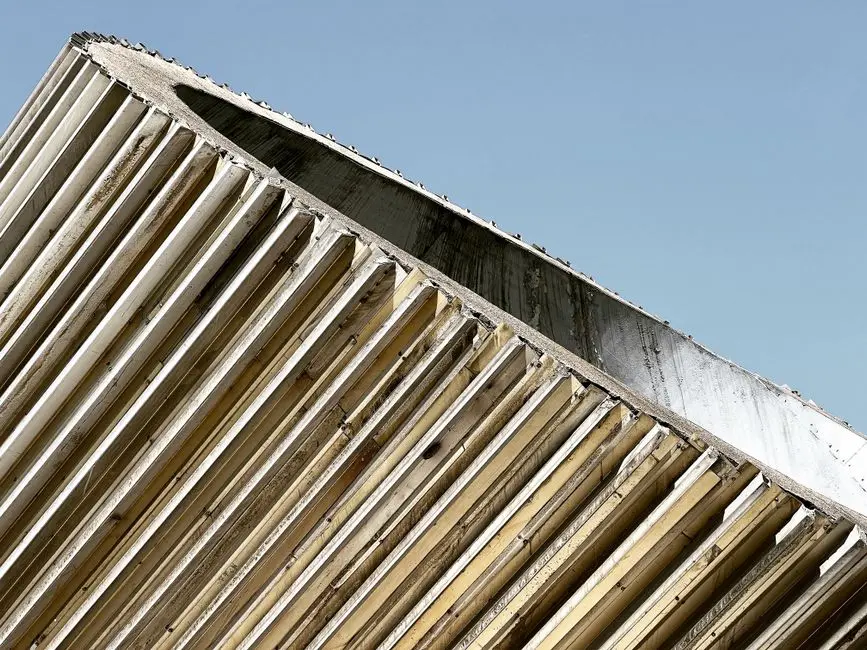
A gravity clarifier separates by letting heavier particles settle, and an inclined-plate (lamella) design shortens the effective settling path so the same footprint handles more flow at higher surface loading rates while reducing coagulant demand. The Ecologix mining case study shows a clarifier achieving ~90% solids reduction on a heavy-sediment stream at lower cost than a comparable DAF (Ecologix), and clarifiers generally have lower OPEX than DAF systems but underperform on emulsified oils (Ecologix Q&A).
For chemical streams dominated by precipitated metal hydroxides, lime-softening sludges, salt crystallization fines, or other heavy settleables, a lamella clarifier is typically the more economical primary step. The underflow sludge is also easier to dewater than a DAF float, which lowers downstream solids-handling cost. A Fort Smith facility running an inorganic or acid/alkali line with low FOG and high TSS should evaluate a HydropureWater lamella clarifier as the primary workhorse before defaulting to flotation.
DAF vs Clarifier for Chemical Wastewater: Side-by-Side Comparison
The table below ties mechanism, best-fit contaminants, evidence, and operating characteristics to the research, addressing the gaps a buyer must close on their own stream. The headline numbers come from the Ecologix comparison (food-stream FOG and mining-stream TSS); the chemical-stream narrative is qualitative because the supplied research does not include chemical-industry-specific removal percentages.
| Parameter | DAF (Dissolved Air Flotation) | Lamella Clarifier (Gravity) |
|---|---|---|
| Separation mechanism | 30–50 µm micro-bubbles lift floc to surface; bottom auger handles settleables (Clearwater, 2026-04) | Gravity settling on inclined plates; sludge removed from cone bottom |
| Best-fit contaminants | Emulsified oils, FOG, surfactants, light colloids, fine suspended solids | Heavy suspended solids, precipitated metal hydroxides, mineral sludges, salt fines (Ecologix) |
| FOG removal (food benchmark) | ~95% (Ecologix) | ~70% on the same stream (Ecologix) |
| TSS removal (mining benchmark) | Lower than clarifier on heavy-sediment streams | ~90% at lower cost (Ecologix) |
| Footprint | Compact; suited to high-efficiency, smaller-footprint lines (Ecologix) | Larger basin; lamella plates shrink footprint vs. conventional clarifier (HydropureWater catalog) |
| Mechanical complexity | Moderate — air compressor, saturation vessel, recirculation pump, skimmer (Clearwater, 2026-04) | Lower — pumps, sludge scraper, plate pack |
| OPEX tendency | Higher operating cost; DAF can be more cost-effective on oil-heavy streams (Ecologix Q&A) | Lower OPEX on heavy-solids streams (Ecologix Q&A) |
| Chemical conditioning | Coagulant + flocculant + pH adjustment, typically required (Clearwater, 2026-04) | Coagulant and pH adjustment typical; flocculant demand reduced by plate pack |
| Materials for chemical service | 304SS standard; 316SS, PP, or other alloys on request (Clearwater, 2026-04) | Typically 304SS; alloy and FRP/PP options common for corrosive duty |
| Sludge form | Float (thick, often dewaterable as-is) plus bottom underflow (Clearwater, 2026-04) | Underflow sludge; generally easier to thicken than DAF float |
For a Fort Smith chemical line with both emulsified FOG and a heavy TSS load, the comparison above demonstrates why a single technology is often insufficient: DAF wins on the FOG axis, the clarifier wins on the TSS axis, and the decision becomes a topology choice. A chemical-industry buyer evaluating a HydropureWater DAF system should request removal evidence for their specific stream, since the 95% and 70% figures above are food-stream benchmarks, not chemical-stream measurements.
Matching the Technology to Your Chemical Sub-Sector
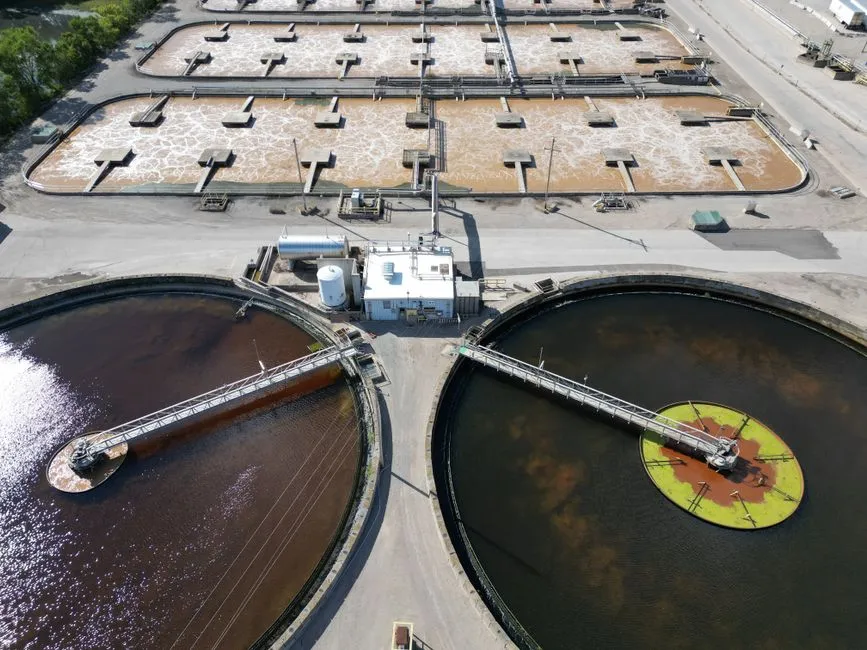
Sub-sector matters because the dominant contaminant class shifts the right answer. The table below maps common Fort Smith-area chemical sub-sectors to the primary-technology tendency supported by the research; it is a starting hypothesis, and each row assumes the absence of unusual chemistry that would push the plant toward a hybrid.
| Chemical sub-sector | Dominant wastewater character | Primary tendency | Secondary / polishing step |
|---|---|---|---|
| Soap, detergent, surfactant manufacturing | Heavy emulsified FOG, surfactant-stabilized oils, moderate TSS | DAF (Clearwater, 2026-04) | Lamella clarifier or biological if TSS or dissolved organics are also high (Ecologix Q&A) |
| Agrochemical and fertilizer production | Variable FOG, pesticide actives, high TSS, salt spikes | Hybrid DAF + clarifier justified (SSRN, 2024; Ecologix Q&A) | Biological polishing for dissolved organics (SSRN, 2024) |
| Petrochemical and basic organic chemicals | Oils, phenolics, light solvents, variable pH | DAF for floatable fraction (Clearwater, 2026-04) | Biological or advanced oxidation downstream |
| Inorganic and acid/alkali producers | Precipitated metal-hydroxide sludges, salt loads, low FOG | Lamella clarifier as workhorse | DAF only if FOG appears in the stream |
The sub-sector tendency is a starting point, not a procurement decision. A Fort Smith plant running an agrochemical line that occasionally sees surfactant breakthrough, for example, may still need a DAF as the first unit and a clarifier as the polish. The 40 CFR 403 categorical standards for the plant's SIC code, plus the receiving POTW's local limits, sit on top of this matrix and can flip the answer if a particular metal or solvent has a tight local limit.
Hybrid DAF + Clarifier and DAF + Biological Designs
Most 2026 chemical-plant installations are not single-technology. Ecologix confirms DAF and clarifiers can be combined in hybrid systems to address complex wastewater streams, with DAF taking out oil and the clarifier polishing residual solids (Ecologix Q&A). The SSRN study on combining DAF with Modified Moving Bed Biofilm Reactors (MMBBR) for synthetic oily wastewater reflects a trend of pairing physical separation with biological polishing (SSRN, 2024). That hybrid is the topology a Fort Smith chemical plant should evaluate if its influent is variable or contains both floatable organics and dissolved loadings that the clarifier cannot touch.
A defensible 2026 plant layout for a variable chemical influent is equalization → DAF for FOG and light colloids → lamella clarifier for residual TSS → biological or membrane step for dissolved organics. The economic case is strongest when influent swings: the first unit absorbs shock loads, the second provides a steady polish, which reduces chemical over-dosing and off-spec discharge events. An automatic chemical dosing skid tied to the equalization tank is the standard way to keep coagulant and flocculant use optimized across that swing, as the dose envelope is stream-specific and jar-test-derived (Clearwater, 2026-04).
A 2026 Decision Framework for Fort Smith Chemical Plants
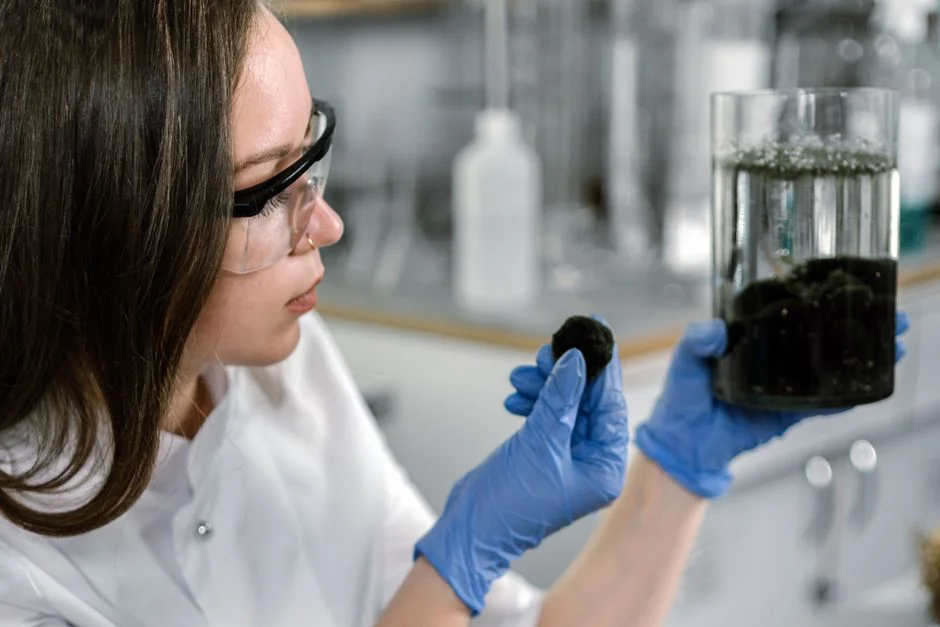
The framework below turns the comparison into a sequence a process engineer can run in the next plant meeting. Each step identifies the input the buyer must obtain, since the supplied research did not include Fort Smith-specific discharge limits or chemical-stream cost benchmarks.
- Audit the influent. Characterize FOG, TSS, pH range, and whether the dominant contaminant is floatable or settleable. Clearwater guidance on jar testing is the practical tool for the chemistry piece (Clearwater, 2026-04).
- Confirm the local discharge envelope. Obtain current pretreatment limits, surcharge parameters, and any categorical standards from the Fort Smith-area POTW and from ADEE before sizing.
- Run jar tests and pilot trials. Chemical streams are non-Newtonian, and the only reliable way to compare DAF vs clarifier on a specific stream is on-site testing plus chemical-dose optimization (Clearwater, 2026-04).
- Decide on topology. Single DAF, single lamella clarifier, or hybrid. Size using the higher of peak hourly or 95th-percentile flows, and specify alloy construction matched to the chemistry (Clearwater, 2026-04).
- Plan sludge handling. DAF float and clarifier underflow both feed dewatering; a plate-and-frame filter press is the typical match for the chemical-industry sludge profile.
Clarifiers generally have lower OPEX than DAF, but DAF can be more cost-effective on oil-heavy streams (Ecologix Q&A). A Fort Smith buyer should request chemical-specific OPEX ($/m³ treated) from vendors for both the DAF and the hybrid DAF + clarifier topology. Footprint and hydraulic-retention constraints often decide the topology even before OPEX, because chemical plants rarely have a free half-acre of pad for a conventional clarifier basin.
What is the typical cost difference between a DAF and a lamella clarifier
Frequently Asked Questions
Should a chemical plant in Fort Smith choose a DAF or a clarifier in 2026?
The choice depends on the specific gravity and settleability of your chemical byproducts. In 2026, Fort Smith facilities dealing with light oils, fats, or emulsions typically select Dissolved Air Flotation (DAF) because these contaminants rise faster than they settle. Conversely, if your process generates heavy metal precipitates or dense inorganic solids, a clarifier remains the industry standard for achieving consistent TSS removal.
Regulatory compliance with local Fort Smith pretreatment limits for BOD and COD is a primary driver. If your facility must meet stringent discharge permits for emulsified hydrocarbons, a DAF is generally more effective at achieving the required removal efficiencies compared to gravity-based settling.
How much does an industrial DAF system cost for a chemical plant, and what drives the price?
For a standard chemical plant in 2026, a skid-mounted industrial DAF system typically ranges from $85,000 to $250,000, excluding civil works and installation. Costs scale significantly based on the hydraulic loading rate (gallons per minute), the complexity of the chemical dosing skids required for flocculation, and the metallurgy of the tank construction.
The primary price drivers are the saturation system design, the automation level of the sludge scraper mechanism, and the choice between 304 or 316 stainless steel to withstand specific chemical corrosivity. Integration of advanced sensors for real-time dissolved oxygen and pressure monitoring also adds to the initial capital expenditure.
What is the difference between a DAF and a lamella clarifier for chemical wastewater?
A DAF system utilizes micro-bubbles to attach to suspended particles, forcing them to the surface for skimming, which is highly efficient for substances with a specific gravity near 1.0. This process typically achieves high solids removal in a small footprint, often within a 15-to-30-minute retention time.
A lamella clarifier uses inclined plates to increase the effective settling area, relying on gravity to sink heavier solids to a bottom hopper. While lamella clarifiers are superior for dense, inorganic precipitates, they generally have a larger physical footprint than a DAF system and require more maintenance to prevent solids buildup on the plate surfaces.
Can a DAF and a clarifier be used together in a chemical plant wastewater treatment train?
Yes, a combined treatment train is common in high-load chemical applications where the wastewater contains both heavy inorganic solids and floating oils or surfactants. In this configuration, the clarifier is placed upstream to remove primary settleable solids, protecting the downstream DAF from excessive sludge loading.
Using these technologies in series allows for a specialized polishing step. The clarifier handles the bulk of the dense material, while the DAF acts as a secondary clarifier to remove fine emulsions, colloidal matter, and residual fats, ensuring the final effluent meets discharge standards before entering the municipal sewer system.
What influent parameters should we test before deciding between DAF and clarifier for chemical wastewater?
Before selecting equipment, perform a full bench-scale treatability study focusing on Total Suspended Solids (TSS), Oil and Grease (O&G), and Chemical Oxygen Demand (COD). It is critical to measure the specific gravity of your solids and the zeta potential of the wastewater to determine the required chemical coagulant dosage.
Additionally, you must test for pH levels, temperature fluctuations, and the presence of surfactants or emulsifiers. These factors dictate whether particles will float or sink and determine the chemical conditioning required to achieve effective phase separation in either a DAF or a clarifier system.