
Why EV and Auto Plants in Lebanon, PA Fall Under Pretreatment Rules
Article 931 of the City of Lebanon, PA wastewater ordinance adopts the EPA's General Pretreatment Regulations at 40 CFR Part 403 and the Section 307 toxic-pollutant framework of the Clean Water Act. Any industrial discharger into the city's collection system falls under the ordinance text published at ecode360 (Article 931, passed 7-23-1984). A site becomes a Significant Industrial User when any one of three triggers is met: a discharge flow of 25,000 gallons or more per average work day, a flow greater than 5% of the POTW's flow, or the presence of toxic pollutants as defined under Section 307 of the Act (Article 931, ecode360).
EV battery facilities generate electrolyte-bearing rinse water with trace lithium, nickel, and cobalt; stamping and machining lines generate oily emulsions; paint shops generate overspray wash water with suspended solids and organics; phosphating and conversion-coating operations carry zinc, phosphate, and hexavalent chromium — all are regulated streams. Because the ordinance states that "no user shall ever increase the use of process water or, in any way, attempt to dilute a discharge as a partial or complete substitute for adequate treatment" (Article 931, ecode360), the only compliant path is to remove contaminants at source through a real treatment train. These specific waste streams require a structured approach to ensure compliance before sewer discharge.
The Federal Categorical Standards That Apply to an Auto or EV Site
40 CFR Part 403 serves as the primary regulatory framework, with specific effluent limits for EHS managers located in the subparts. 40 CFR Part 433 (Metal Products) covers forming, stamping, machining, and parts cleaning—the core of any OEM assembly or Tier-1 stamping shop in the Lebanon, PA region—and is the standard most often cited for a fabricated-metals pretreatment train. 40 CFR Part 467 (Metal Finishing) applies wherever the site performs electroplating, anodizing, or chromate conversion coating, which is common in EV battery enclosures, busbars, and hardware lines. A new source subject to a National Categorical Pretreatment Standard must apply for a Wastewater Contribution Permit within 180 days after the standard is promulgated, per Article 931 subsection (g) (ecode360). Existing permit holders must submit the information required by subsections (8) and (9)—including a compliance status statement and the shortest schedule for additional pretreatment—to the Superintendent within the same 180-day window. Article 931 lets the City of Lebanon adopt the federal standard directly or set site-specific limits that are at least as stringent as the categorical standard, so the actual numeric ceilings the plant must meet typically appear in the issued permit, not in the ordinance text itself.
Building a Treatment Train That Actually Passes an Inspection
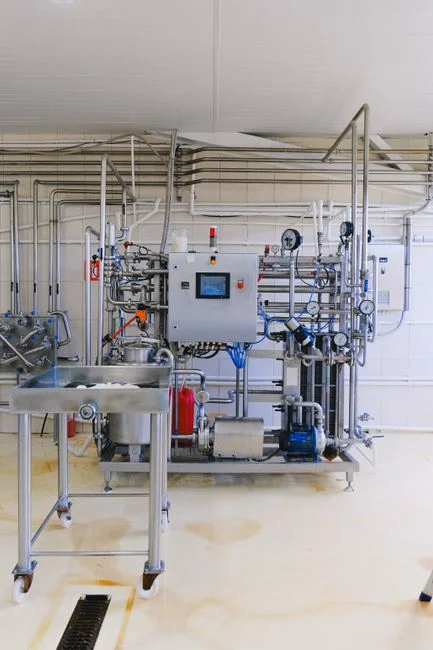
The treatment train should be specified in the same flow order the wastewater will see it, so each unit protects the next. A useful parameter map for the head of the train is:
| Unit Operation | Primary Target | What It Feeds |
|---|---|---|
| Coarse screening (rotary mechanical bar screen) | Rags, plastics, parts debris | Downstream pumps, DAF, oil/water separator |
| Oil/water separation (API or corrugated-plate) | Free and dispersed oils, floatables | DAF, explosion-hazard ceiling compliance |
| Dissolved air flotation (DAF) | Emulsified oils, TSS, paint overspray | Chemical precipitation / metal removal |
| Chemical precipitation / hexavalent Cr reduction | Dissolved metals (Zn, Ni, Co, Li, Cr³⁺) | pH adjustment and final polishing |
| pH adjustment | Acid/alkaline streams | POTW headworks or final clarifier |
| Sludge dewatering (plate and frame filter press) | DAF float and precipitation sludge | Off-site disposal; filtrate returned to head of train |
Coarse screening is the first step at the headworks to protect downstream pumps and DAF equipment from rags, plastics, and parts debris; a rotary mechanical bar screen for industrial headworks is the typical workhorse. Oil and grease removal is the next critical step for auto plants: an API or corrugated-plate oil-water separator ahead of the DAF unit protects the biological processes downstream and keeps the plant under the explosion-hazard ceiling in Article 931, which prohibits two successive readings above 5% of the lower explosive limit (LEL) and any single reading above 10% LEL at the point of discharge (ecode360). Dissolved air flotation is the standard workhorse for removing the emulsified oils, suspended solids, and paint-shop overspray that characterize auto plant wastewater; a Dissolved Air Flotation (DAF) system for auto plant oily emulsion removal is typically paired with PLC-controlled coagulant and flocculant dosing to hit the effluent targets the categorical standard sets. Metal-bearing streams—phosphating rinses, battery-electrolyte traces, and hexavalent chromium from conversion coating—require chemical precipitation or reduction; hexavalent chromium is reduced at low pH and the trivalent form is then precipitated as a hydroxide, with PLC-controlled chemical dosing for pH adjustment and metal precipitation handling both reagent feed and trim. Sludge from the DAF and precipitation steps must be dewatered on a plate and frame filter press for DAF and precipitation sludge; the filtrate returns to the head of the train, and the cake goes off-site for disposal.
The 2026 Compliance Cadence Plant Teams Cannot Miss
Article 931 establishes the compliance cadence for all industrial users. A new source subject to a categorical standard must apply for a Wastewater Contribution Permit within 180 days after the standard's promulgation (Article 931(g), ecode360). Within 90 days following the date for final compliance with applicable pretreatment standards—or, for a new source, within 90 days of commencing discharge to the POTW—the user must submit a baseline compliance report indicating the nature and concentration of all limited pollutants and the average and maximum daily flow for the regulated process units, as required by Article 931. Semi-annual self-monitoring reports are then due in June and December unless the applicable standard or the Superintendent requires more frequent sampling, and the analytical methods must follow 40 CFR Part 136 (Article 931, ecode360). Any new or expanded process that triggers a different categorical standard restarts the 180-day permit-application clock and may require a revised schedule of incremental milestones—engineer retained, preliminary plans complete, final plans complete, contract executed, construction started, construction complete (Article 931(9)A, ecode360). The Lebanon Authority may also charge fees for permit review, monitoring, inspections, and consistent-removal program participation, so these should be budgeted from project concept rather than treated as a surprise (Article 931, ecode360).
How the Lebanon Authority Decides Your Site-Specific Limits

The City may apply to the approval authority to modify specific federal categorical limits in favor of local limits where the POTW demonstrates "consistent removal"—defined in Article 931 as reduction in 95% of samples when measured according to 40 CFR 403.7(c)(2)—provided the requirements of 40 CFR Part 403, Section 403.7, are met and prior approval is obtained (ecode360). Mass-based limits will be imposed where the Superintendent determines a user is diluting to meet numeric standards—a direct enforcement backstop to the ordinance's dilution prohibition. The permit itself sets the unit charge or user-fee schedule, limits on average and maximum constituent concentrations, and limits on rate and time of discharge; flow equalization may be required rather than merely allowed (Article 931, ecode360). For EHS managers translating the legal language into a defensible plant design, the issued permit—not the ordinance text—is the controlling document, and the schedule of milestones attached to it is a binding compliance deliverable.
Frequently Asked Questions
What does an EV or auto plant need to include in a baseline compliance report under Article 931?
The baseline report, due within 90 days of final compliance or commencement of discharge, must state the nature and concentration of all pollutants limited by pretreatment standards in the discharge from each regulated process unit, plus the average and maximum daily flow for those units, as required by Article 931 (ecode360). It must be supported by sampling and analysis performed under 40 CFR Part 136 methods and prepared by a reliable analytical laboratory.
How do we budget pretreatment equipment and compliance costs for a new EV or auto plant in Lebanon, PA?
A defensible budget must be built from project-specific inputs: the unit operations required by the applicable 40 CFR Part 433 or 40 CFR Part 467 subpart, the design average and peak flow, the influent concentrations of each regulated pollutant, the effluent targets the issued permit will set, the local user-charge schedule under Article 931, and the fees for permit review, monitoring, inspections, and consistent-removal participation (ecode360). Get line-item quotes for each unit—screening, oil/water separation, DAF, chemical precipitation, pH adjustment, and sludge dewatering—against those inputs rather than against assumed ranges.
How do we qualify a supplier or EPC for an Article 931 pretreatment skid?
Qualification should be evaluated against the Article 931 deliverables: documented experience with 40 CFR Part 433 (Metal Products) and 40 CFR Part 467 (Metal Finishing) compliance, the ability to provide 40 CFR Part 136-compliant sampling and analytics, a track record on the LEL ceiling and dilution-prohibition enforcement points, and a willingness to commit to the milestone schedule in subsection (9)A—engineer retained, preliminary plans, final plans, contract execution, construction start, construction complete (ecode360). For a reference frame on how peers in adjacent sectors structure the same procurement, see this brief on petroleum plant pretreatment compliance under 40 CFR Part 403 and this brief on fabricated metals pretreatment under 40 CFR Part 433.
What is the lead time from permit application to lawful discharge for a new source?
Article 931 fixes the application deadline at 180 days after the promulgation of the applicable National Categorical Pretreatment Standard, but the city does not publish a guaranteed review timeline in the ordinance text (ecode360). The schedule of incremental milestones required by subsection (9)A—engineering, preliminary plans, final plans, contract execution, construction start, and construction complete—drives the actual project calendar, and the completion date in that schedule "shall not be later than the compliance date established for the applicable pretreatment standards" (Article 931(9), ecode360). The lead time a buyer should request from the Superintendent and from each equipment vendor is the time from permit issuance to mechanical completion against that milestone schedule, not a generic delivery window.
Related Equipment
- Dissolved Air Flotation (DAF) system for auto plant oily emulsion removal — specifications, capacity range, and technical data
- rotary mechanical bar screen for industrial headworks — specifications, capacity range, and technical data
- PLC-controlled chemical dosing for pH adjustment and metal precipitation — specifications, capacity range, and technical data
- plate and frame filter press for DAF and precipitation sludge — specifications, capacity range, and technical data