What Blowdown Means for a Yekaterinburg Data Center
Cooling tower blowdown is the controlled purge from a recirculating cooling loop, bled off to keep dissolved solids below scaling thresholds; at 4 cycles of concentration roughly 25–30% of makeup water leaves the system as blowdown (Genesis Water Tech). In a Ural context, makeup is typically drawn from the municipal network fed by surface water in the Iset and Verkh-Isetsky pond system, which is hard and often carries elevated iron and silica.
As a result, blowdown chemistry in Yekaterinburg is harsher than the global baseline: total dissolved solids (TDS) reach 1,200–6,000 mg/L (4–8× makeup), suspended solids sit at 10–50 mg/L, and the stream carries accumulated biocides, corrosion inhibitors, and iron-rich corrosion byproducts (Genesis Water Tech; UGA Cooperative Extension TP-121, Saha 2026). A 100 MW facility can draw up to 2 million liters of water per day (IDE Tech, 2026), so even a modest blowdown ratio translates into a continuous, chemically loaded stream that the plant must either reuse or discharge. The applicable Russian rules are set at federal level and refined by basin councils and the municipal vodokanal; the reader must confirm the specific permit envelope for the Verkh-Isetsky or Iset basin before specifying discharge limits.
| Parameter | Typical Range in Cooling-Tower Blowdown | Source |
|---|---|---|
| TDS | 1,200–6,000 mg/L (4–8× makeup) | Genesis Water Tech |
| Suspended solids | 10–50 mg/L | Genesis Water Tech; UGA TP-121 (Saha 2026) |
| Hardness species | Ca, Mg, silica, alkalinity (concentrated) | Genesis Water Tech |
| Treatment chemicals | Biocides, corrosion inhibitors, scale inhibitors | Genesis Water Tech |
| Blowdown fraction at 4 COC | ~25–30% of makeup | Genesis Water Tech |
Why Yekaterinburg's Climate Changes the Blowdown Equation
Roughly two-thirds of data centers built since 2022 have been sited in water-stressed regions, according to a Bloomberg News analysis cited by the Lincoln Institute. Yekaterinburg is not in that category in the same way: the city sits on a Continental climate with sub-zero winters, abundant surface water, and an active district-heating network that returns large volumes of warm water to the system. That changes the economics. Reuse payback in Yekaterinburg is driven less by raw water scarcity and more by capital discipline, discharge-permit certainty, and any opportunity to align with district-heating or industrial reuse customers. Cold winters also enable long free-cooling hours and reduce evaporative loss, but summer peak loads still drive blowdown volume and concentrate cycles, so the worst-case summer profile must set the design. Ural makeup water is hard, often iron-bearing, and typically silica-bearing, all of which compound at higher cycles of concentration. The reader should ask the EPC and the local vodokanal for: a full source-water analysis, seasonal minimum and maximum temperatures, annual free-cooling hours, and any district-heating water reuse opportunities before locking the process flow.
The Reuse-First Treatment Train for Cooling-Tower Blowdown
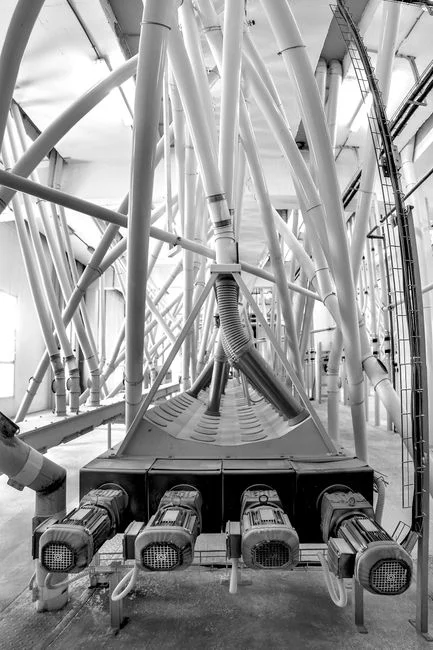
The default train for a Yekaterinburg facility combines side-stream filtration, ultrafiltration (UF), and reverse osmosis (RO) to convert blowdown back into cooling-tower makeup, with an optional brine-concentration step if sewer capacity is constrained. Stage 1 is side-stream filtration on the recirculating loop, sized at 1–5% of total circulation flow, with reference capital of $50,000–200,000 for typical data-center installations (Genesis Water Tech). This stage continuously removes suspended solids, biofilm fragments, and corrosion products and keeps downstream membranes within their fouling tolerance. Stage 2 is UF, typically a hollow-fiber UF system for blowdown pretreatment with 0.01–0.1 μm PVDF membranes operated at 10–30 psi, 90–95% recovery, and chemical cleaning every 1–3 months depending on feed (Genesis Water Tech). Stage 3 is RO, which delivers 95–99% salt rejection, permeate at 10–50 mg/L TDS, and 50–85% recovery limited by silica, calcium, and sulfate scaling; an antiscalant program and periodic cleaning are required (Genesis Water Tech; IDE Tech, 2026). Stage 4 is optional: a mechanical vapor compression (MVC) brine concentrator at 95–98% recovery with distillate below 10 mg/L TDS, used when approaching zero liquid discharge (ZLD) or when sewer discharge is constrained (Genesis Water Tech). The process flow is blowdown sump → side-stream filter → UF → RO → permeate to cooling-tower makeup, with RO concentrate routed to a brine concentrator (if used) and then to solid handling.
| Stage | Function | Key Operating Parameters | Reference Cost |
|---|---|---|---|
| Side-stream filtration | Continuous TSS, biofilm, corrosion-product removal | 1–5% of circulation flow; 10–25 μm | $50,000–200,000 installed (Genesis Water Tech) |
| Ultrafiltration (UF) | Biological and colloidal control ahead of RO | 0.01–0.1 μm; 10–30 psi; 90–95% recovery; CIP every 1–3 months | Site-specific (request quote) |
| Reverse osmosis (RO) | Dissolved solids and silica reduction | 150–400 psi; 95–99% rejection; 50–85% recovery; permeate 10–50 mg/L TDS | $250,000–500,000 installed for 50,000 GPD; OPEX $1.50–3.00 per 1,000 gal (Genesis Water Tech) |
| MVC brine concentrator (optional) | Volume reduction before solid handling | 95–98% recovery; distillate <10 mg/L TDS; 15–25 kWh per 1,000 gal | $1–3M for 10,000–30,000 GPD (Genesis Water Tech) |
Choosing Between Reuse, Discharge Compliance, and Zero Liquid Discharge
End-use selection must happen before equipment is purchased, because each objective pulls the design in a different direction. Cooling-tower makeup reuse delivers the highest value, typically 60–85% recovery and a direct reduction in fresh-water demand (Genesis Water Tech). Discharge compliance focuses on meeting local sewer or surface-water limits; its economic case rests on avoided discharge fees rather than water savings. ZLD is the most capital-intensive option, with $3–8M for full systems, OPEX $5–15 per 1,000 gal, and 95–99% overall recovery, and is justified only where discharge is prohibited or fresh water is unavailable (Genesis Water Tech). A partial ZLD configuration (RO + MVC) typically reaches 85–95% overall recovery at materially lower capex than full crystallization. For Yekaterinburg, the practical question is whether the local vodokanal will accept the RO concentrate volume and chemistry, and whether the basin council will accept a surface-water discharge envelope. The reader should request, before locking the end-use objective: basin discharge TDS limits, sewer connection availability and any pretreatment surcharges, and the local utility's stance on reuse of treated blowdown. The RO step is best served by an industrial RO unit for cooling-tower blowdown reuse sized against the summer peak blowdown flow, not the annual average.
| End-Use Objective | Recovery | Reference Capex | Reference Opex | Typical Justification |
|---|---|---|---|---|
| Cooling-tower makeup reuse | 60–85% | Site-specific (request quote) | Site-specific (request quote) | Freshwater offset, reduced discharge volume |
| Discharge compliance | Variable | Site-specific (request quote) | Site-specific (request quote) | Avoided discharge fees |
| Partial ZLD (RO + MVC) | 85–95% | Site-specific (request quote) | Site-specific (request quote) | Discharge-restricted sites |
| Full ZLD (with crystallizer) | 95–99% | $3–8M | $5–15 per 1,000 gal | Discharge prohibited or no fresh water (Genesis Water Tech) |
Cost, ROI, and Supplier-Selection Checklist
Two reference points anchor the budget conversation. A 50,000 GPD RO blowdown system installed runs $250,000–500,000 with OPEX of $1.50–3.00 per 1,000 gal, and an MVC brine concentrator at 10,000–30,000 GPD runs $1–3M with 15–25 kWh per 1,000 gal of distillate (Genesis Water Tech). Beyond the unit prices, the ROI case for a Yekaterinburg site should quantify four local drivers: avoided fresh-water cost, avoided discharge fees, reduced cycles-of-concentration chemicals, and any eligible efficiency or sustainability incentives. Procurement should also lock membrane and consumable pricing through a RO and UF membrane replacements sized for high-TDS blowdown agreement and ensure chemical dosing is delivered by a PLC-controlled antiscalant and biocide dosing skid matched to the seasonal feed-water profile. The supplier shortlist should be filtered on four questions: site references in cold-climate operation below freezing, Russian-language O&M documentation, local service coverage, and warranty terms on UF and RO membranes in a high-TDS blowdown service. Final capex and opex figures must be confirmed against vendor quotations and the local source-water analysis, since the Russian site will not match the U.S. reference points one-for-one.
Frequently Asked Questions
What regulatory body sets the discharge limits for cooling-tower blowdown in Yekaterinburg?
Russian discharge rules are set at federal level and refined by basin-level basin councils and the municipal vodokanal that owns the receiving sewer or water body. The facility engineer must request the specific permit envelope for the Verkh-Isetsky or Iset basin from the local basin council and the relevant vodokanal before specifying discharge limits, because the TDS, metals, and biocide thresholds in the permit drive the treatment objective. The same treatment train that meets U.S. NPDES pretreatment requirements (commercialwaterlab.com, 2026) does not automatically satisfy Russian federal and basin rules.
How much does a blowdown treatment train cost for a hyperscale data center in Yekaterinburg?
Reference points from the research are $250,000–500,000 installed for a 50,000 GPD RO blowdown system with OPEX of $1.50–3.00 per 1,000 gal, and $1–3M for an MVC brine concentrator at 10,000–30,000 GPD (Genesis Water Tech). Side-stream filtration adds $50,000–200,000 for typical data-center installations. The Russian site must be quoted against the actual summer peak blowdown flow, the local source-water analysis, and the local discharge-fee schedule, so a Yekaterinburg-specific price cannot be inferred from the U.S. reference figures alone; the buyer should request a line-item bid with a site visit and feed-water analysis attached.
What cycles of concentration can a Yekaterinburg plant target without fouling the membranes?
At 4 cycles of concentration blowdown is roughly 25–30% of makeup, with TDS at 1,200–6,000 mg/L and suspended solids at 10–50 mg/L (Genesis Water Tech). Pushing higher cycles is possible in cold weather because evaporation load is lower, but the limiting factors are silica, calcium, and sulfate scaling in the RO stage (Genesis Water Tech; IDE Tech, 2026). The buyer should request a feed-water projection at the proposed cycles of concentration, with silica and sulfate concentrations, from the EPC before committing to a target.
Which suppliers should a Russian buyer shortlist for a cold-climate CTBD train?
The shortlist should be filtered on cold-climate site references, Russian-language O&M documentation, local service coverage in the Urals, and warranty terms on UF and RO membranes in a high-TDS blowdown service. The buyer should also confirm that the supplier can integrate an industrial UF pretreatment, an industrial RO unit, and a chemical dosing skid into a single control philosophy, and that consumables like RO and UF membrane replacements are stocked regionally. Reference projects should be requested for both summer peak operation and winter start-up below freezing. For a parallel data-center blowdown guide in a contrasting hot, humid climate, see this parallel data-center blowdown guide for Can Tho, Vietnam, and for a comparable South Asian climate see the comparable data-center blowdown guide for Khulna, Bangladesh.