Why Belem Changes the Cooling Blowdown Problem
A hyperscale or colocation data center in Belem cannot copy a generic US or European blowdown specification without revisiting every line. Belem sits in the equatorial Amazon basin where ambient wet-bulb temperatures are high year-round, which compresses the cooling tower approach and forces a higher evaporation rate and a higher blowdown duty per MW of IT load than a temperate site. The generic 25-30% blowdown share at 4 cycles of concentration cited for general data center practice should therefore be treated as a lower bound for a Belem design case, not a settled figure. To verify the bound, request the wet-bulb design used in the cooling-tower guarantee and the implied evaporation plus drift loss at the design ambient, then confirm with the supplier that the assumed COC still meets the blowdown mass balance.
The same physical argument drives the second site-specific risk. New hyperscale capacity is concentrating along the Belem and Para cable-landing corridor, and that corridor draws from the same Guama and Tocantins surface-water and groundwater systems that already serve the metropolitan area. When several large evaporative cooling sites co-locate, the cumulative freshwater draw and the cumulative discharge to the same water body push the licensing authority to apply scarcity and water-quality rules more strictly than for a single isolated facility. The licensing regime in Brazil reinforces that pressure. Cooling tower blowdown is treated as an industrial wastewater under CONAMA Resolucao 430/2011 for effluent, with water use and discharge permits issued by ANA and SEMAS/Para, and those permits routinely restrict oils, suspended solids, and any substance that alters the quality of the receiving water. Together, the equatorial climate, the Amazon basin hydrology, and the Brazilian regulatory framework make blowdown treatment a license-to-operate issue, not a voluntary sustainability program, and that framing should drive the technology selection from day one.
What Is Actually in Belem Cooling Tower Blowdown
Cooling tower blowdown is the controlled purge of recirculating water that prevents dissolved solids, corrosion byproducts, and biological growth from concentrating to damaging levels. The contamination profile in Belem will follow the same envelope seen elsewhere, but the relative weight of silica, iron, and organic load will reflect Amazon surface water and the warm, year-round biological activity. According to general blowdown data from Genesis Water Tech 2026, blowdown typically carries total dissolved solids at 4-8 times the makeup water concentration, landing between 1,200 and 6,000 mg/L at 4 cycles of concentration. That figure is a starting point; site-specific feed water characterization is the only defensible basis for a Belem design.
Beyond dissolved salts, three other constituent groups drive pretreatment and membrane design. First, scaling minerals — calcium, magnesium, silica, and alkalinity — concentrate in the recirculating water and create precipitation risk, with silica often being the membrane-fouling bottleneck for warm, soft-to-moderately-hard Amazon surface water. Second, treatment chemistry residues — biocides, corrosion inhibitors, scale inhibitors, and dispersants — accumulate proportionally to COC, and legacy chromate and high-phosphate programs are largely absent in new Belem builds but are common in retrofits, where they constrain the choice of downstream membrane. Third, suspended solids at typically 10-50 mg/L from corrosion products, biofilm fragments, and airborne particulates, alongside biological content (planktonic bacteria, algae, and biofilm-formers) that is amplified by the warm Belem ambient. The combined effect is a feed stream that the pretreatment and membrane train must handle with margin, not at the edge of nameplate.
| Parameter | Typical range in blowdown | Design implication for Belem |
|---|---|---|
| Total dissolved solids (TDS) | 1,200-6,000 mg/L at 4 COC (Genesis Water Tech 2026) | Drives RO recovery limit and concentrate disposal |
| Scaling minerals (Ca, Mg, silica, alkalinity) | Concentrated 4-8x vs makeup | Antiscalant selection must cover silica and calcium phosphate |
| Biocides, corrosion and scale inhibitors | Accumulate with COC | Legacy chromate and high-phosphate programs limit membrane reuse; new builds can choose membrane-compatible chemistry |
| Suspended solids | 10-50 mg/L (Genesis Water Tech 2026) | Side-stream filtration required ahead of UF |
| Biological content | Planktonic bacteria, algae, biofilm-formers | Year-round warm Belem ambient increases biofouling risk on UF and RO |
Brazilian Compliance Pathway for Cooling Tower Discharge
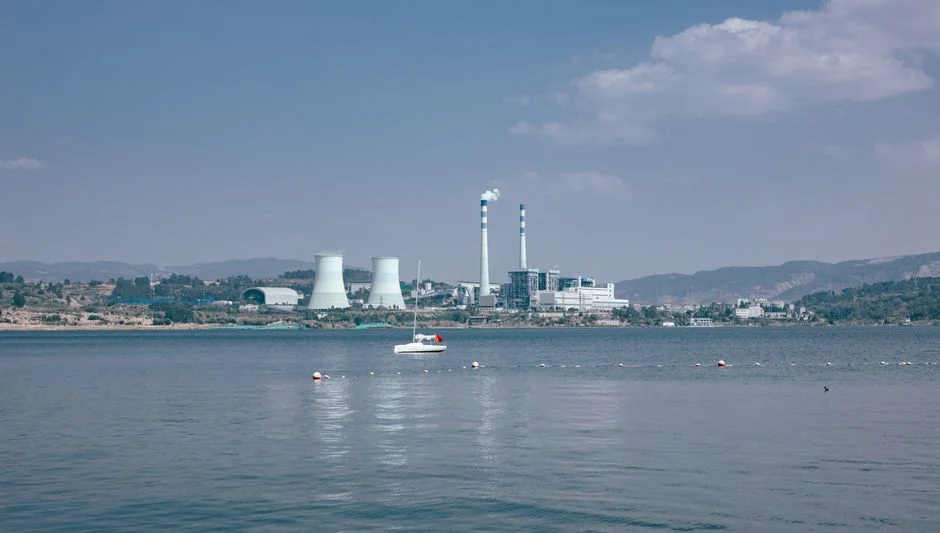
The compliance pathway for a Belem project is layered, and the design choice should follow the most restrictive layer the developer is likely to face during the operating life of the asset, not the easiest case at the licensing hearing. CONAMA Resolucao 430/2011 sets national limits for industrial effluents discharged to water bodies, including pH, temperature rise, oils, total suspended solids, and any substance that alters the quality of the receiving water. Cooling tower blowdown meets the definition of an industrial effluent under that resolution, which means the discharge cannot be presented to the authority as a benign utility stream.
Three practical pathways exist, and each has a different design implication. Discharge to the municipal sewer falls under the local operator's industrial pretreatment rules — typically Cosanpa in Belem — and TDS, metals, and biocide residuals are usually restricted, with discharge fees applied per cubic meter. Direct discharge to a receiving water body requires an outorga (water use grant) and a discharge permit from SEMAS/Para and ANA, with the effluent quality bar set by the receiving-water class under CONAMA 357/2005. Where a hyperscale project is licensed with zero-liquid-discharge-style conditions, the same CONAMA framework combined with ANA scarcity rules pushes the design toward reuse and concentration rather than discharge, and a concentrate management plan becomes part of the permit file. The right pathway is the one that aligns with the site water balance, the receiving-water class, and the developer's tolerance for discharge fees and concentrate hauling over a 10-15 year horizon.
Reference Technology Train for a Belem Data Center
The defensible train for a Belem hyperscale project is a four-stage system, with stages one to three as the baseline and stage four as a permit- or cost-driven option. The baseline train pairs side-stream spiral filtration with ultrafiltration as RO pretreatment, then RO to produce cooling-tower makeup-quality permeate, with chemical dosing on the cooling side tuned for membrane compatibility. The optional fourth stage adds mechanical vapor compression on the RO concentrate when discharge is restricted, concentrate disposal is costly, or licensing effectively requires zero liquid discharge.
Stage 1 is side-stream spiral filtration at 1-5% of circulation flow with 10-25 micron rating, reducing suspended solids and biological loading so downstream membranes are not fouled; generic capex for a typical data center installation is $50,000-200,000 with minimal operating expense beyond solids disposal and routine maintenance (Genesis Water Tech 2026). Stage 2 is ultrafiltration at 0.01-0.1 micron pore size, 10-30 psi operating pressure, and 90-95% recovery, operating as RO pretreatment to control biofouling, which is a year-round risk in Belem's warm ambient. Stage 3 is reverse osmosis at 50-85% recovery with permeate TDS at 10-50 mg/L suitable as cooling-tower makeup; for a 50,000 GPD skid, capex is $250,000-500,000 installed and opex is $1.50-3.00 per thousand gallons treated, including energy, chemicals, membrane replacement, and maintenance (Genesis Water Tech 2026). Antiscalant and pH control are mandatory given the silica and calcium phosphate scaling tendency of warm Amazon water. Stage 4 is optional mechanical vapor compression on the RO concentrate, with 95-98% recovery, distillate TDS below 10 mg/L, capex of $1-3 million for 10,000-30,000 GPD, and energy consumption of 15-25 kWh per 1,000 US gallons of distillate (Genesis Water Tech 2026), justified only when liquid discharge is restricted or has a high cost. Equipment selection for a Belem build should reference a UF system sized for tropical biofouling duty and an industrial RO system rated for high-silica feed.
| Stage | Function | Key parameters | Capex / opex (Genesis Water Tech 2026) |
|---|---|---|---|
| 1. Side-stream spiral filtration | Reduce TSS and biological loading on downstream membranes | 1-5% of circulation flow; 10-25 micron | Capex $50,000-200,000; minimal opex |
| 2. Ultrafiltration (RO pretreatment) | Remove particulates, bacteria, and high-MW organics | 0.01-0.1 micron; 10-30 psi; 90-95% recovery | Opex dominated by periodic chemical cleaning every 1-3 months |
| 3. Reverse osmosis | Produce cooling-tower makeup permeate | 150-400 psi; 50-85% recovery; permeate TDS 10-50 mg/L | 50,000 GPD skid capex $250,000-500,000; opex $1.50-3.00/kgal |
| 4. Mechanical vapor compression (optional) | Concentrate RO brine to near-ZLD | 95-98% recovery; distillate TDS <10 mg/L; 15-25 kWh/1,000 gal | Capex $1-3M for 10,000-30,000 GPD |
Choosing Between Reuse, Compliant Discharge, and ZLD
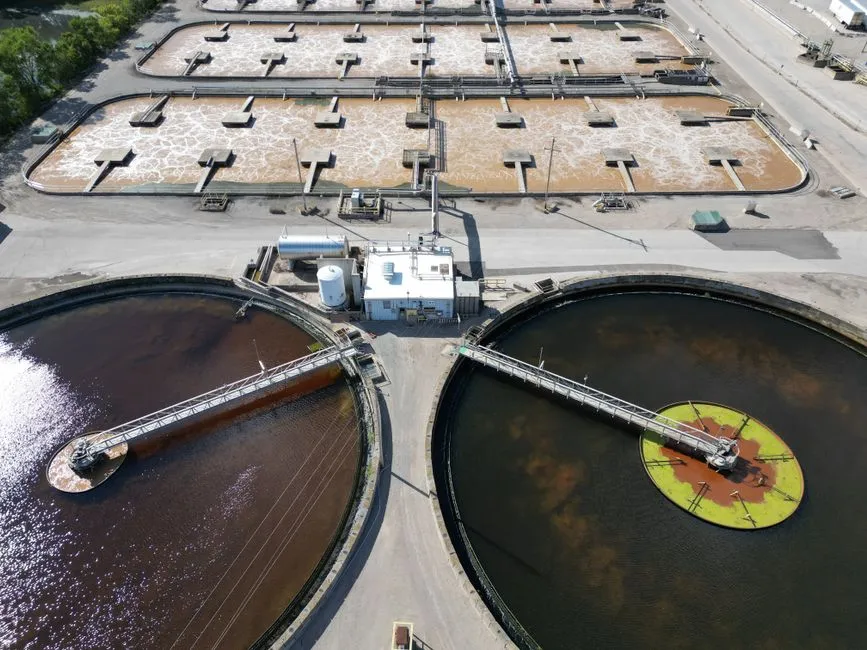
The end-use strategy, not the equipment list, drives the cost and risk profile. Three options cover the realistic envelope for a Belem hyperscale project, and a partial ZLD variant covers the middle ground. Cooling-tower makeup reuse achieves 60-85% recovery, is the highest-value option, and reduces both freshwater draw and discharge volume; it is the default choice where the site has stable cooling-tower chemistry and the cooling-tower makeup specification is compatible with RO permeate quality. Compliant discharge to sewer or surface water carries lower capex but exposes the operator to discharge fees and to tightening TDS and biocide limits as permits are renewed; this option only makes sense where the receiving infrastructure has capacity and the operator is willing to absorb fee escalation risk over the asset life. Full ZLD achieves 95-99% recovery at $3-8 million capex and $5-15 per thousand gallons opex (Genesis Water Tech 2026), and is justified only when discharge is effectively prohibited, freshwater cost is extreme, or licensing requires it. A partial ZLD with MVC on the RO concentrate can capture 80-90% of the water benefit at a fraction of full ZLD cost when the regulatory regime allows a small concentrated brine stream to be managed off-site, and that variant often matches the Belem permit envelope more closely than a full ZLD commitment.
Pretreatment, Chemical Compatibility, and Energy Trade-offs
The chemistry program on the cooling side determines whether the membrane train runs at nameplate recovery or collapses into a fouling crisis. A tablet-based or low-foaming, non-phosphate cooling-water chemistry is recommended where blowdown is fed to UF and RO, both to avoid membrane fouling and to keep discharge residuals within permit limits (Genesis Water Tech 2026). Antiscalant selection must explicitly cover silica and calcium phosphate, since warm Amazon water combined with high COC drives both scale families; a generic phosphonate-only program will underperform. Dosing accuracy matters as well, and a packaged automatic chemical dosing skid reduces the operator-dependence risk that often shows up as a year-two biofouling incident.
Energy and water trade-offs deserve an explicit line in the board paper. According to the Open Engineering 2026 LCA, a UF plus RO reuse train uses more than five times the energy of a freshwater case, but the energy penalty is partly offset by lower blowdown and chemical use, and the net GWP penalty shrinks significantly as the grid decarbonizes. The same study notes that an indirect water penalty of approximately 0.93 L per cubic meter results from the higher upstream electricity and chemical inputs, accounting for less than 0.1% of the direct displacement benefit. On-site solar or waste-heat recovery is worth evaluating to power MVC and high-pressure RO pumps, since Belem's equatorial irradiance is among the highest in Brazil; the buyer should request a renewable-supplement sizing alongside the MVC electrical load.
Procurement and Supplier Questions for a Belem Build
Procurement is where the engineering blueprint either survives contact with reality or gets rebuilt under commissioning pressure. Four questions belong in every Belem RFQ. First, request site-specific feed-water characterization rather than generic blowdown assumptions, because Belem surface water, groundwater, and humidifier makeup differ sharply in silica, iron, and organic load. Second, require guaranteed net recovery and membrane cleaning interval at the design COC, with antiscalant compatibility statements for the proposed cooling-water chemistry. Third, ask for installed cost and a five-year lifecycle cost separated into energy, chemicals, membrane replacement, and concentrate disposal, so the opex bands of $1.50-3.00 per thousand gallons for RO and $5-15 per thousand gallons for ZLD (Genesis Water Tech 2026) can be sanity-checked against the supplier's own number. Fourth, confirm that CONAMA 430/2011 and SEMAS/Para discharge compliance documentation, including monitoring scope and operator staffing, sit inside the supplier's commissioning scope rather than being left to the EPC. For context on how a comparable equatorial build is being specified, see the data center blowdown treatment in Khulna and the Can Tho data center blowdown guide, and for the broader Latin American pretreatment framing, the industrial wastewater treatment in Spain guide.
Frequently Asked Questions
What capex band should we budget for a Belem hyperscale cooling blowdown RO skid?
For a 50,000 GPD reverse osmosis skid treating cooling tower blowdown, the installed cost is $250,000-500,000 and the operating cost is $1.50-3.00 per thousand gallons treated, including energy, chemicals, membrane replacement, and maintenance (Genesis Water Tech 2026). Full ZLD packages serving a data center application typically run $3-8 million in capex and $5-15 per thousand gallons in opex, so the Belem board paper should compare the reuse baseline against ZLD only if discharge is restricted or freshwater cost is extreme.
How do we choose a supplier for a Belem blowdown treatment train?
Shortlist suppliers that can provide guaranteed net recovery and membrane cleaning interval at the design COC, written antiscalant compatibility with the proposed cooling-water chemistry, and installed cost separated from five-year lifecycle cost. Confirm that CONAMA 430/2011 and SEMAS/Para discharge compliance documentation, including monitoring scope and operator staffing, are inside the supplier's commissioning scope. Ask for two Belem or Amazon basin reference projects with operating data, not just sales records.
What does CONAMA 430/2011 actually require for cooling tower blowdown in Belem?
CONAMA Resolucao 430/2011 sets national limits for industrial effluents discharged to water bodies, including pH, temperature rise, oils, total suspended solids, and substances that alter receiving-water quality. Direct discharge in Belem additionally requires an outorga and a discharge permit from SEMAS/Para and ANA, with the effluent quality bar set by the receiving-water class under CONAMA 357/2005. The practical consequence is that unrestricted blowdown discharge is not a defensible design basis, and the RFQ should specify which pathway (sewer, surface water, or reuse) the supplier is designing to.
How often will the RO membranes need chemical cleaning in Belem's warm water?
General UF experience on cooling-tower blowdown feed shows chemical cleaning required every 1-3 months depending on feed water quality (Genesis Water Tech 2026). In Belem, where year-round warm ambient amplifies biofouling, expect the cleaning interval to sit at the shorter end of that range unless antiscalant and biocide programs are explicitly tuned for the train. Request the supplier's guaranteed cleaning interval at the design COC and the cost of cleaning chemicals as a separate line item in the lifecycle cost.